Leopoldo Marechal - Adam Buenosayres
Здесь есть возможность читать онлайн «Leopoldo Marechal - Adam Buenosayres» весь текст электронной книги совершенно бесплатно (целиком полную версию без сокращений). В некоторых случаях можно слушать аудио, скачать через торрент в формате fb2 и присутствует краткое содержание. Год выпуска: 2015, Издательство: McGill-Queen's University Press, Жанр: Классическая проза, на английском языке. Описание произведения, (предисловие) а так же отзывы посетителей доступны на портале библиотеки ЛибКат.
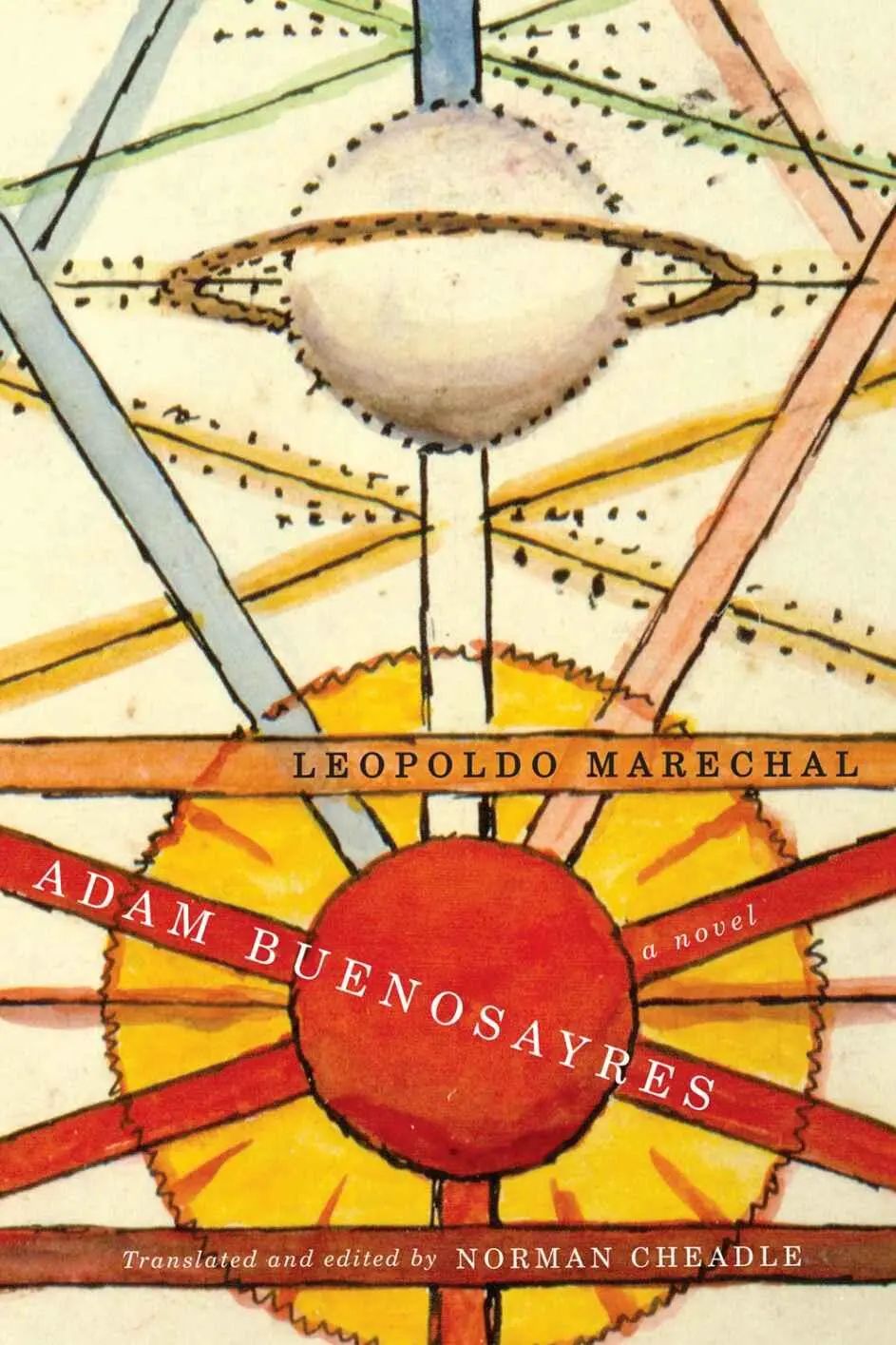
- Название:Adam Buenosayres
- Автор:
- Издательство:McGill-Queen's University Press
- Жанр:
- Год:2015
- ISBN:нет данных
- Рейтинг книги:5 / 5. Голосов: 1
-
Избранное:Добавить в избранное
- Отзывы:
-
Ваша оценка:
Adam Buenosayres: краткое содержание, описание и аннотация
Предлагаем к чтению аннотацию, описание, краткое содержание или предисловие (зависит от того, что написал сам автор книги «Adam Buenosayres»). Если вы не нашли необходимую информацию о книге — напишите в комментариях, мы постараемся отыскать её.
Adam Buenosayres — читать онлайн бесплатно полную книгу (весь текст) целиком
Ниже представлен текст книги, разбитый по страницам. Система сохранения места последней прочитанной страницы, позволяет с удобством читать онлайн бесплатно книгу «Adam Buenosayres», без необходимости каждый раз заново искать на чём Вы остановились. Поставьте закладку, и сможете в любой момент перейти на страницу, на которой закончили чтение.
Интервал:
Закладка:
— Bah! said Samuel modestly. Those flashes of brilliance happen to me to all the time.
— It exists. And the people of your race have been fostering it very cleverly. Just ask the Elders of Zion! 9
The philosopher laughed in the dark:
— Haven’t I been telling you?
— Yes, yes, Adam replied. But their own sensuality makes them fall into the snares they set for the sensuality of others. They invent idols for others, and end up adoring them themselves. Gold, for example, ought to be for them simply a means of domination. And they take it for end in itself!
— Who knows? objected the philosopher, touched to the quick.
— That’s why, concluded Adam, even if they attain certain positions, they’ll never achieve the domination they dream about.
— Who knows? Samuel muttered again. Who knows?
Side by side, the two of them embarked on the stretch of Warnes Street running from Vírgenes to Monte Egmont. From there, Adam had a clear view of the San Bernardo steeple, its clock burning in the night like the eye of a cyclops. Behind the steeple he sensed the presence of the stone figure whose broken hand was outstretched in a gesture of benediction. And, as so many times before, the mere evocation of that image caused him to feel a strange unease, a sense that someone was calling him from on high. That curtains of dense shadow were hanging between Adam and the voice that called him.
— And then, he said at last, there’s the theological reason.
— Which one? Samuel asked acridly.
— The curse of the Crucified One.
Samuel Tesler stopped short, as though he’d suddenly come upon the viscous mass of a reptile. Nevertheless, he dissimulated what he felt, a mixture of surprise, disgust, and fear. As he started to walk again, he laughed shakily.
— You can’t be serious, he said, suggesting that he found the theological argument very funny.
— The Other was the one who was speaking seriously, Adam answered. He predicted the ruin of Jerusalem and the dispersion of your race. Hasn’t it come true?
— It was a ploy on the part of the Roman Empire! thundered Samuel. A political ploy.
— The Empire fell twenty centuries ago, and the curse continues.
Samuel muttered something unintelligible.
— And how long is your famous curse going to last? he then asked, at once ironic, resentful, and conciliatory.
— Until the day when the Jews recognize en masse that they crucified their Messiah, answered Adam. And then…
But Samuel didn’t let him finish. Brandishing his fist in the dark, he shouted:
— He wasn’t the Messiah! He was a poor, sentimental madman!
— Apparently, Adam insisted, they had the Messiah in front of their noses and didn’t realize it.
It was futile. The philosopher was no longer listening. He shook his great head back and forth; he broke free from the grip of his friend and from the voice of his enemy. Deaf and blind, Samuel Tesler bellowed:
— He’s not the Messiah! Never!
And the Son of Perdition was already hanging from one arm of the fig tree. Seated at his tribunal, the man in the toga pointed at the man in the purple robe: I find no fault in him , he said as he turned to the multitude. And the multitude stirred restlessly like a tree in the wind: sharp profiles, hooked noses, beady eyes, black or red or white beards, voices like piccolos or horns, everything became agitated and confused amid a strong odour of fish stew. We would not have brought him before you if he were not guilty! shouted the multitude. And the Man in purple spoke not: a circlet of thorns dug into his brow; and blood trickled in big drops down his face, from forehead to honey-coloured beard and beyond, where it merged, purple on purple, with the royal cloak that in mockery had been wrapped round his ribs. The Man looked up at the sky, and the sky knew not whether to cloud over or come plummeting down with all its stars; for in that Man looking skyward, heaven, weeping, recognized the Lord Most High who set his vault upon firm pillars. And the Man turned his eyes to the earth, and the earth felt it was dying of anguish under the meekness of those eyes, for it saw in that Man the Wondrous Lord who had said: Let there be land , and there was dry land. But the multitude cried out (the horn cries, the piccolo cries): Crucify him! And the Son of Perdition was already hanging from an arm of the fig tree. Cold and grave, as though performing a rite ordained for all eternity, the man in the toga addressed the multitude: Shall I crucify your King? And the multitude laughed then (laughter of piccolo, laughter of horn): yellow teeth, ravaged gums, faces resembling birds, jackals, or pigs revealed themselves to the sun in their appalling nakedness. And the multitude cried out again: Crucify him! After which the man in the toga, grave and chill, ordered the sacrifice as if fulfilling a liturgy older than the angels. And the Son of Perdition was already hanging from an arm of the fig tree. 10
— So, Adam asked, what idea do you people have of the Messiah?
— A triumphant king, Samuel responded proudly. Conqueror, not conquered!
— An earthly emperor, part soldier and part banker? Adam asked again.
— I’d be satisfied, the philosopher grumbled, if he revealed to us the mysteries of the Kabbalah.
An admixture of ire, pride, and fatigue was exuding from his entire being:
— Maybe I’m the Messiah, he said. 11
And then added, desperately:
— I don’t give a damn! I’m sick of it all!
He booted a trash can out of his way. The container rattled over to the curb of the sidewalk.
— I don’t give a goddam! he said again. Anyway, I’m in my last incarnation.
He stopped short and looked attentively at the door of a house.
— Hey! he exclaimed gleefully. Hey!
The two passers-by had just arrived at what had once been the Balcarce mansion, 12now divided and subdivided into the hundred cells of a gigantic conventillo or tenement.
— What’s up? Adam asked warily.
— Here, Samuel dramatically pronounced as he pointed at the door, live the Three Graces of the barrio. Quite plumply incarnated, let me assure you.
— So what?
— I’m going to serenade them, laughed the philosopher, heading for the door.
Adam tried to hold him back:
— Don’t be a lout!
But Samuel was already at the threshold. Seizing the bronze door knocker, he banged it three times against the door. In the stillness of the night, the three knocks resounded terribly: the hundred dogs of the tenement all started to bark at once. Adam Buenosayres, filled with dread and anger, fled toward the corner of Warnes and Monte Egmont. He run was short, only thirty yards or so to the corner. Once there, he waited for the philosopher, who was close behind him, leaping and farting like a mule.
— You idiot! Adam admonished. We’re back in our own barrio!
— Barrio, schmarrio! swaggered Samuel, still panting.
He was looking around for another door to knock on, intent on repeating his feat. Realizing this, Adam took hold of his shoulders. But Samuel wrenched himself free.
— We’ll take a glass of caña at the gringo’s, he decided as he approached Don Nicola’s cantina. I’ve got a bestial thirst on.
— It’s closed, Adam objected, fervently wishing to be off.
— Either the gringo opens up for us, threatened Samuel, or I’ll tear the place down.
And right then and there he gave the sliding metal screen covering the doorway a ferocious kick. Then Adam lost his patience; he grabbed Samuel by one hand and twisted his wrist.
— Let me go! shouted Samuel, struggling like one of the furies.
But Adam kept on twisting his wrist, and Tesler finally gave up.
Читать дальшеИнтервал:
Закладка:
Похожие книги на «Adam Buenosayres»
Представляем Вашему вниманию похожие книги на «Adam Buenosayres» списком для выбора. Мы отобрали схожую по названию и смыслу литературу в надежде предоставить читателям больше вариантов отыскать новые, интересные, ещё непрочитанные произведения.






Обсуждение, отзывы о книге «Adam Buenosayres» и просто собственные мнения читателей. Оставьте ваши комментарии, напишите, что Вы думаете о произведении, его смысле или главных героях. Укажите что конкретно понравилось, а что нет, и почему Вы так считаете.