Leopoldo Marechal - Adam Buenosayres
Здесь есть возможность читать онлайн «Leopoldo Marechal - Adam Buenosayres» весь текст электронной книги совершенно бесплатно (целиком полную версию без сокращений). В некоторых случаях можно слушать аудио, скачать через торрент в формате fb2 и присутствует краткое содержание. Год выпуска: 2015, Издательство: McGill-Queen's University Press, Жанр: Классическая проза, на английском языке. Описание произведения, (предисловие) а так же отзывы посетителей доступны на портале библиотеки ЛибКат.
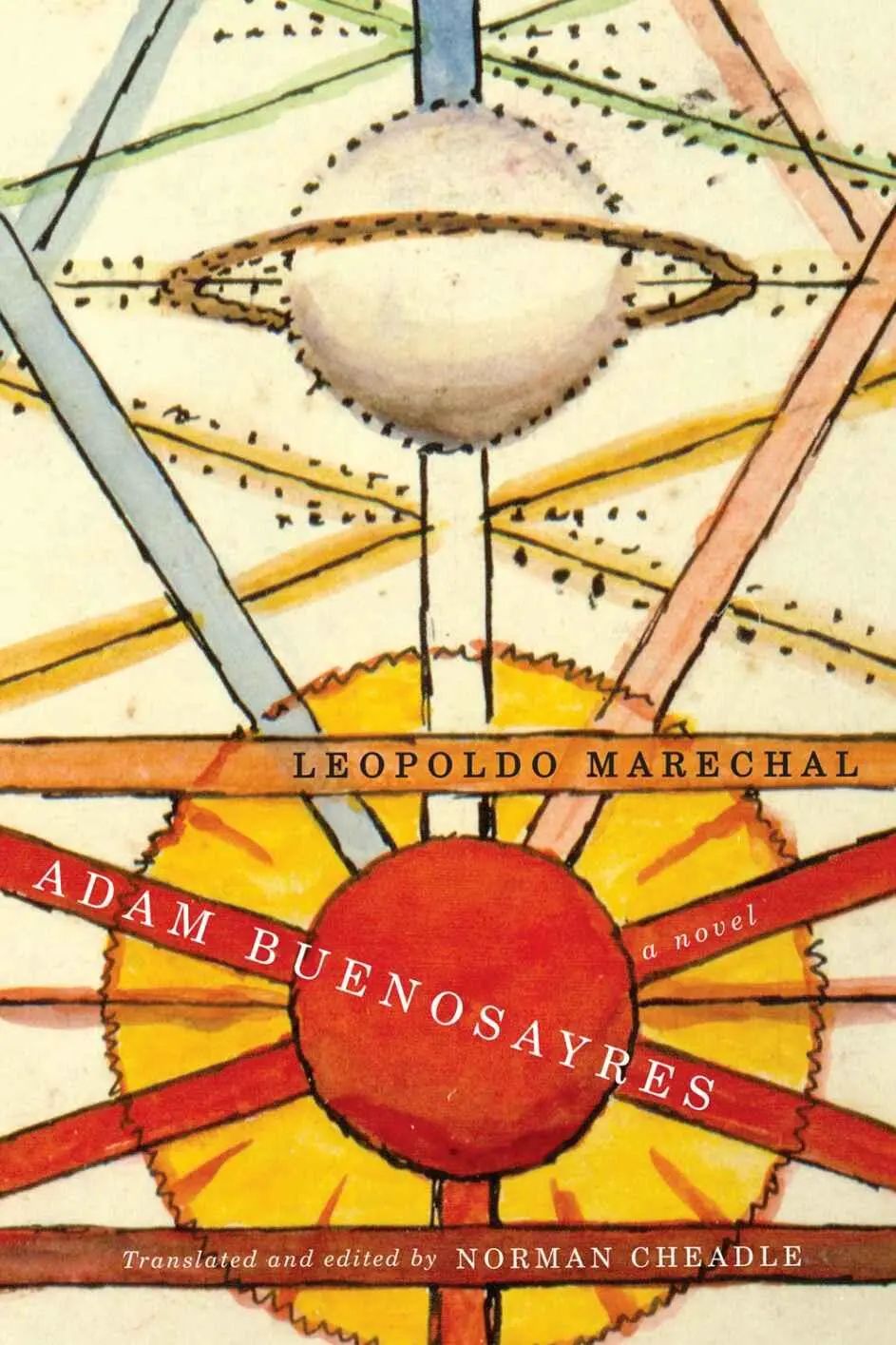
- Название:Adam Buenosayres
- Автор:
- Издательство:McGill-Queen's University Press
- Жанр:
- Год:2015
- ISBN:нет данных
- Рейтинг книги:5 / 5. Голосов: 1
-
Избранное:Добавить в избранное
- Отзывы:
-
Ваша оценка:
Adam Buenosayres: краткое содержание, описание и аннотация
Предлагаем к чтению аннотацию, описание, краткое содержание или предисловие (зависит от того, что написал сам автор книги «Adam Buenosayres»). Если вы не нашли необходимую информацию о книге — напишите в комментариях, мы постараемся отыскать её.
Adam Buenosayres — читать онлайн бесплатно полную книгу (весь текст) целиком
Ниже представлен текст книги, разбитый по страницам. Система сохранения места последней прочитанной страницы, позволяет с удобством читать онлайн бесплатно книгу «Adam Buenosayres», без необходимости каждый раз заново искать на чём Вы остановились. Поставьте закладку, и сможете в любой момент перейти на страницу, на которой закончили чтение.
Интервал:
Закладка:
Triple and unitary, massive and unstoppable, was the guffaw with which Adam, Schultz, and Franky celebrated Flores’s reply. The taita went rigid; Di Pasquo was confused. Del Solar and Pereda were aghast, Bernini dismayed. Juan José sat motionless with the defiant bottle between his thighs. The storm of laughter had not yet died away, when Samuel Tesler, shoving his chair back, stood up and raised a menacing fist.
— Enough of this farce, already! he roared. Vaudeville malevos , papiermâché taitas , take a look at a real man! If you wanna fight, I’m ready any time!
If only he had never said it! The challenge appeared to rouse Flores from his sluggishness. He slowly got up, as if impelled by a fatal necessity, and headed toward Tesler, his right hand hidden at his waist.
— Don’t do it, Flores! implored the malevo .
— It had to be! the taita rasped, sadly embarking upon the warpath.
Juan José and Di Pasquo tried to hold Flores back, Samuel paled, and the dissidents took cover behind the table. Just when the fight seemed inevitable, however, the unexpected intervened. Rivera, who had been quietly hanging back, got to his feet, slow and dignified, silent and grave, and with a single gesture literally transfixed the combatants. Stock still in surprise they stood, one and all, as the pesado Rivera, without a peep, executed the following manoeuvre. He took a few steps and, positioning himself in front of the defiant Israelite, he stopped, crossed his right leg over his left thigh, took off his shoe, lifted it in the air and brought it down conscientiously, parsimoniously, coldly on top of Tesler’s head. Putting his shoe back on, he turned on his heels and resumed not only his seat but also his meditative attitude.
Scarcely believing their eyes, everyone looked at Samuel, waiting for the inevitable reaction from the author of so defiant a challenge. But lo and behold! Our philosopher had gone into a state of ecstasy, and stayed like that for over a minute. Finally, he plopped himself down on a chair, buried his face in his hands, and started to laugh outrageously. His laughter, uncanny, inexplicable, choked by hiccups and belches, was for all that irresistibly contagious, and it wasn’t long before Trojans and Tyrians alike were infected. That was when Juan José tapped Del Solar on the shoulder.
— Beat it while you can, he grunted in his ear. Lucky for you they took it as a joke. If you stay any longer, I can’t answer for what happens.
Back-slapping, posthumous laughter, and sweet goodbyes filled the air. Del Solar was at his wits’ end as he tried to pry Samuel Tesler out of the kitchen, because the philosopher, wet-eyed and slurring his words, was swearing eternal friendship to the pesado . Bernini had less trouble in convincing Franky to go, since he’d already said goodbye to Flores, after demanding his autograph, which the taita had signed with ceremony. Schultz, for his part, meekly followed Pereda out of the house; the astrologer had got hold of the malevo Di Pasquo’s birthdate and promised to send his horoscope by return mail.
Adam Buenosayres had already gone out to the patio, with no help at all, and had groped his way into the dark backyard of the house. The voices he’d just heard, the gestures, forms and colours, all galloped madly through his mind.
— Absurd night! he laughed in his soul. O night of mine!
He passed near the fig tree, paused for a moment to peer into the shadows, and heard the dog Falucho growl in his doghouse.
— Not here, murmured Adam, perplexed.
He took another ten steps and glimpsed, on his right, a shape unclear to the sense of sight, but not to the sense of smell.
— The henhouse.
He followed its wire fence until he came to a reedbed beside the wall, its black lances pointing to the sky. There he unbuttoned his fly and urinated for a long while. While his bladder was draining, he looked up to the zenith where a few stars peeped out from behind scudding clouds. As invariably happened, the rapture of his eyes was answered by a sudden upsurge in his soul. He felt the grosser element of his inebriation fall away, giving way to a foggy, melancholic awakening of his conscience.
— Absurd night! he repeated, anxiously this time.
He turned on his heels and, buttoning up, started to make his way back. When he got to the fig tree, he noticed an amorphous bulk hanging on a string from a branch. Touching it warily, he felt a latent, cold viscosity.
— Live toads, he murmured. Witchcraft?
Three identical toads came to mind, hanging from the willow tree at the family home in Maipú: three live toads that swung in the wind for three days and three nights, as a twenty-year-old woman lay dying in the garden, her yellow fingers clutching a romantic novel.
— That’s enough! Where’re the others?
Adam Buenosayres crossed the patio, paused at the threshold of the funeral chamber, and peered inside. In the left corner, the three Crones, amazingly similar, were asleep, fingers still clutching their rosaries of black beads. In the other corner, a woman in mourning huddled into herself as though fearing she had no right to be there. In the middle of the room, by the light of the candelabras, the deceased Juan Robles lay in his wedding suit, a lump of mud slowly crumbling to dust.
Adam ran to the street door, crossed the threshold, and heard voices shouting to him from the corner.
HERE LIES JUAN ROBLES,
MUD-STOMPER.
THE CELESTIAL STOMPER
IS STOMPING HIM
BENEATH THE INVISIBLE HOOVES
OF HIS HORSE.
BOOK FOUR
Chapter 1
In the open doorway of his restaurant, Ciro Rossini — the great Ciro! — stood in deep melancholy, his eyes wandering as he spun the yarn of his autumnal thoughts. Having scrutinized the midnight sky and noticed in the east a threatening squadron of shit-coloured clouds, the proprietor of Ciro’s Gazebo said to himself in alarm:
Wind from the east,
rains like a beast. 1
As though the wind wished to corroborate Ciro’s private reflexion, a treacherous gust suddenly shook the manes of the trees along the street, tearing from them a whirlwind of coppery leaves that floated in the air before fluttering to the ground like dead wings.
— Diavolo! murmured Ciro Rossini, brushing two or three dead leaves from his hair, blackened by La Carmela lotion.
But Ciro’s funk was given visible form when his eyes took in the empty gazebo. God in Heaven, how deserted and sad it looked! Just yesterday it had been the scene of so much summer fun. Ciro looked at the rustic booths, now silent as tombs, which only a short time before had been brimful of words and laughter. An interminable sigh deflated his amateur baritone’s thorax. His gaze next passed over the infinity of empty tables filling the outdoor patio, and came to rest at last on the bandstand, where a covered piano, a shrouded bass drum, and three violins in their coffins anounced the death of music. Then, the great Ciro, the sad Ciro, shook his head from side to side, recalling the sonorous multitude that had gathered there, night after night, under more clement skies. Where were they now, the compadritos in white neckerchiefs, the thirsty gals, the folks from the barrio in their gaily coloured summer shirts, the hefty women who laughed aloud their love for the sizzling grill? Ah! They were gone with the wind, the same wind now sweeping leaves along Triunvirato Street.
Only five lost souls were there, still keeping the faith, and Ciro Rossini regarded them with a certain tenderness. They were the payador Tissone, Prince Charming, and the three standup comics of The Bohemians — five taciturn ghosts who hovered listlessly around the bandstand, amid the jumble of guitars and bandoneons. 2
Читать дальшеИнтервал:
Закладка:
Похожие книги на «Adam Buenosayres»
Представляем Вашему вниманию похожие книги на «Adam Buenosayres» списком для выбора. Мы отобрали схожую по названию и смыслу литературу в надежде предоставить читателям больше вариантов отыскать новые, интересные, ещё непрочитанные произведения.











Обсуждение, отзывы о книге «Adam Buenosayres» и просто собственные мнения читателей. Оставьте ваши комментарии, напишите, что Вы думаете о произведении, его смысле или главных героях. Укажите что конкретно понравилось, а что нет, и почему Вы так считаете.