Leopoldo Marechal - Adam Buenosayres
Здесь есть возможность читать онлайн «Leopoldo Marechal - Adam Buenosayres» весь текст электронной книги совершенно бесплатно (целиком полную версию без сокращений). В некоторых случаях можно слушать аудио, скачать через торрент в формате fb2 и присутствует краткое содержание. Год выпуска: 2015, Издательство: McGill-Queen's University Press, Жанр: Классическая проза, на английском языке. Описание произведения, (предисловие) а так же отзывы посетителей доступны на портале библиотеки ЛибКат.
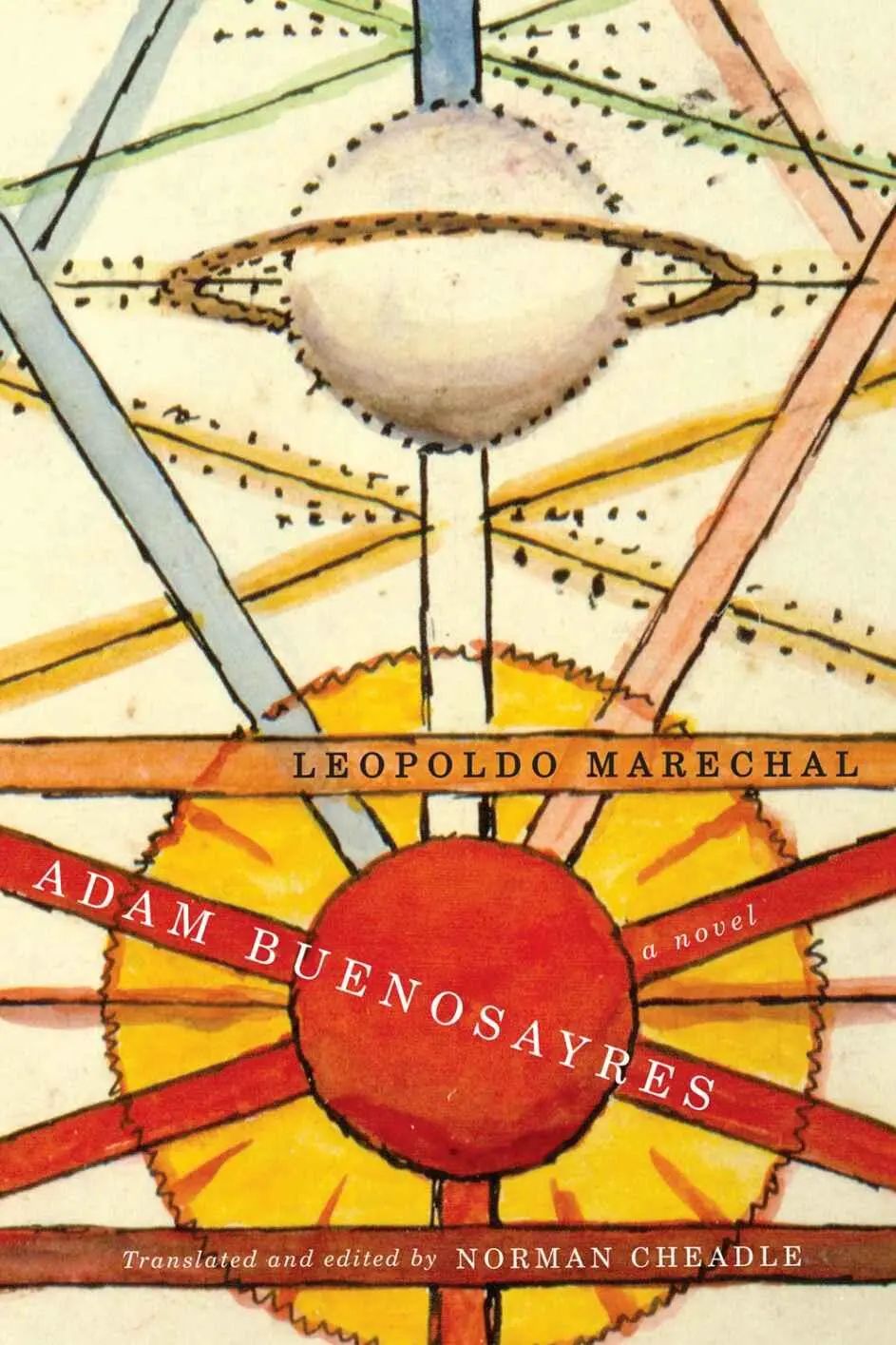
- Название:Adam Buenosayres
- Автор:
- Издательство:McGill-Queen's University Press
- Жанр:
- Год:2015
- ISBN:нет данных
- Рейтинг книги:5 / 5. Голосов: 1
-
Избранное:Добавить в избранное
- Отзывы:
-
Ваша оценка:
Adam Buenosayres: краткое содержание, описание и аннотация
Предлагаем к чтению аннотацию, описание, краткое содержание или предисловие (зависит от того, что написал сам автор книги «Adam Buenosayres»). Если вы не нашли необходимую информацию о книге — напишите в комментариях, мы постараемся отыскать её.
Adam Buenosayres — читать онлайн бесплатно полную книгу (весь текст) целиком
Ниже представлен текст книги, разбитый по страницам. Система сохранения места последней прочитанной страницы, позволяет с удобством читать онлайн бесплатно книгу «Adam Buenosayres», без необходимости каждый раз заново искать на чём Вы остановились. Поставьте закладку, и сможете в любой момент перейти на страницу, на которой закончили чтение.
Интервал:
Закладка:
— Poor guys! reflected Ciro. Tomorrow they’ll be working the greasy spoons for the price of coffee.
He turned his eyes away from all that desolation, and with tragic mien gave his Carmela -blackened hair a shake. No doubt about it, autumn was definitely here, and the days of the Gazebo were numbered. But what was behind Ciro’s funereal tone? Was it the lament of Avarice gone broke, wailing because the cash register’s cheery ring would soon be silenced? No, per Bacco ! Ciro Rossini, by Bacchus, the great Ciro was free of such base passions! And those who’d been been granted the incomparable pleasure of hearing him sing the arias “Una lacrima furtiva” or “Celeste Aida” would recognize that cruel destiny alone had robbed of glory a soul so sublimely inspired. What Ciro was lamenting in the depths of this autumn night was the twilight of joy. For Ciro Rossini, owner and entertainment manager of Ciro’s Gazebo, was at heart a festive genius; he worked on human joy as on a work of art. Had he been born in the halcyon days of ancient Greece, he would have organized the entourage of Dionysus or the dances of Core, the resurrected maiden.
But the great Ciro did not dwell long on his autumnal elegy, for just as he was checking the night sky’s symptoms a second time, he felt two arms wrap around his neck and something like an enormous broad-brimmed hat almost smothering him. Amazed in the extreme, Ciro Rossini returned the embrace of the unknown person. When he finally broke free and saw the other’s face, he exclaimed with delight:
— Carissimo!
In the unknown traveller deposited by midnight at his threshold, he recognized his friend Adam Buenosayres. The younger man now became solemn as he turned to the group of men behind him. Pointing to Ciro, he announced:
— Ciro Rossini, a great soul!
Adam Buenosayres turned back to Ciro, who was looking at him reverently, and introduced his companions in this way:
— Señor Schultz, astrologer. Señor Amundsen, globe trotter . 3Señor Tesler, Dionysian philosopher. Señor Pereda, criollo sopher and grammarian. Señor Bernini, moralist, polygraph, and boxer.
Each of the strangers in turn held out his arms to Ciro and embraced him warmly. And the great Ciro, though detecting on their breath the evidence of well-known elixirs of the spirit, did not fail to appreciate their sweet and cordial effusions, and likewise took each and every one of the men just named to his breast. Puffing for breath, he exclaimed:
— Giovinezza! Giovinezza! 4
They were the same travellers who earlier that night had stared into the face of terror and death. A beat-up Lacroze streetcar, every one of its screws squealing, had just brought them from the remote regions of Saavedra. They’d got off at the corner of Triunvirato and Gurruchaga, and then at the suggestion of Adam Buenosayres had come to Ciro’s Gazebo, where they stood now waiting at the entrance, their eyes still haunted by nocturnal abominations. All were there except their leader, Del Solar. (Unhappy with the conduct of the heterodox faction in a certain famous kitchen, he’d parted company.) Ciro Rossini, perceiving the invisible sign of Art on their brows, inquired at last:
— All artists?
— All of us, answered Adam, beaming proudly at Ciro.
The great Ciro trembled like a noble steed of combat at the sound of the cornet, and raised his eyes heavenward:
— Art! he sighed. Art!
His rapture lasted only an instant. Returning to reality, he affectionately upbraided the group:
— Santa Madonna! he cried. Why are you standing there like that? Avanti, avanti!
His cry was a signal. Tumultuous and happy, following Ciro’s lead, the visitors irrupted into the Gazebo. Everything seemed to come alive again, even the empty booths and the weeping willow at the back, which gave its yellow locks a shake. Visibly surprised by the invasion, the five taciturn ghosts, as well as the decadent waiter setting their table by the bandstand, turned to stare in astonishment at the strangers, until Ciro, leading the troop, accosted them.
— My artists, he declaimed, introducing the five ghosts.
An irresistible wave of cordiality swept the visitors along: Adam, Pereda, and Schultz embraced the three members of The Bohemians, who couldn’t get over their surprise. Samuel Tesler, flush with bravery after his recent heroic experience, pumped the hand of the payador Tissone. Franky, in turn, threw his arms around Prince Charming, who, sullen yet dignified, didn’t seem too keen on Franky’s tender effusions.
— Popular art! Adam Buenosayres exclaimed weepily, still patting his Bohemian on the back.
— Criollo minstrel verse, thundered Pereda, not letting go of his Bohemian either. And Del Solar is missing out, the bloody fool!
Worried and suspicious, the trio of Bohemians exchanged furtive looks. Were these jokers having them on? And, Prince Charming, after Franky’s bearhug, sensed Bernini approaching and bridled:
— Hey! he snarled. Watch what you’re doing!
But the great Ciro, his rapture notwithstanding, was not a man to forget his duty. He turned to his friend Buenosayres.
— Bravissimo! he applauded. Bravissimo! Where shall I set your table?
— What! Adam answered severely, and he indicated the five ghosts. Popular art and intellectual art have just met in an embrace. We shall eat here, at the table of these gentlemen.
— Ecco! Ciro approved, without consulting the ghosts, who were already resigned.
Ciro turned and shook the decadent waiter following him:
— Subito! he cried. Put two tables together.
Then he counted up the commensals:
— Eleven places. Benissimo!
— Bad number for a banquet, Schultz complained.
— True, admitted Adam with concern. Two too many for the number of Muses.
The astrologer’s objection, apparently a trivial matter, nevertheless gave rise to a serious conflict that divided them into three factions. Schultz was obstinately refusing to sit at a table where the number of commensals exceeded the sum of the Muses. Franky Amundsen and the pipsqueak Bernini, in their own flamboyant style, said they shat, double-shat, and triple-shat on Pythagoras and every last one of his disciples. The third party included Adam Buenosayres, conciliatory; the five ghosts, gawking and slack-jawed; and Ciro Rossini, who had assumed an air of deep intelligence. Two motions were proposed to settle the dispute. Franky Amundsen’s idea, loudly rejected by the others, was that they draw straws to determine two sacrificial victims, who would be roasted on Ciro’s grill and served up to the remaining nine commensals. Adam had better luck when he suggested inviting Ciro Rossini to the table so they’d make a total of twelve, a harmonious number and, by his lights, highly significant. Schultz accepted this proposal, considering twelve to be the number of plenitude and citing as examples the twelve signs of the zodiac and the twelve deities of Mount Olympus. Harmony was promptly restored when Ciro accepted the invitation (not without protesting his absolute unworthiness for such a fabulous distinction), and they all took their seats around the table.
It wasn’t at all difficult to select the delicacies they were to wolf down. The majority of the guests opted, with a certain over-enthusiasm, for a gigantic mixed parrillada : grilled braided chitlins, large intestine, cow’s udder, bull’s testicles, sausages à la criollo , and ribs, all to be abundantly washed down with a little Vino de la Costa , whose praises Franky sang to the skies. 5The astrologer Schultz, however, speaking for the minority, disdainfully rejected that menu worthy of Kaffirs, saying he’d be satisfied just by examining the victims’ entrails to get a read on whether or not the gods favoured the banquet. He actually got up, just like that, to head for Ciro’s kitchen before Adam Buenosayres took him by the shoulders and managed to dissuade him. That being accomplished, Adam was overcome by a fervid fit of Latinity; he turned to the great Ciro to ask if he could find two or three bottles of a certain Sicilian wine and a few of those almond-stuffed figs he’d tasted there on more than a few occasions. His national amour propre flattered, Ciro Rossini answered in the affirmative and gave the order to the dozing waiter. Ciro’s words filled Adam Buenosayres’s heart with Virgilian music; likewise, the hearts of Schultz and Pereda, who’d taken a sudden fancy to the cibus pastoris , the meal of shepherds just proposed by Adam.
Читать дальшеИнтервал:
Закладка:
Похожие книги на «Adam Buenosayres»
Представляем Вашему вниманию похожие книги на «Adam Buenosayres» списком для выбора. Мы отобрали схожую по названию и смыслу литературу в надежде предоставить читателям больше вариантов отыскать новые, интересные, ещё непрочитанные произведения.










Обсуждение, отзывы о книге «Adam Buenosayres» и просто собственные мнения читателей. Оставьте ваши комментарии, напишите, что Вы думаете о произведении, его смысле или главных героях. Укажите что конкретно понравилось, а что нет, и почему Вы так считаете.