Leopoldo Marechal - Adam Buenosayres
Здесь есть возможность читать онлайн «Leopoldo Marechal - Adam Buenosayres» весь текст электронной книги совершенно бесплатно (целиком полную версию без сокращений). В некоторых случаях можно слушать аудио, скачать через торрент в формате fb2 и присутствует краткое содержание. Год выпуска: 2015, Издательство: McGill-Queen's University Press, Жанр: Классическая проза, на английском языке. Описание произведения, (предисловие) а так же отзывы посетителей доступны на портале библиотеки ЛибКат.
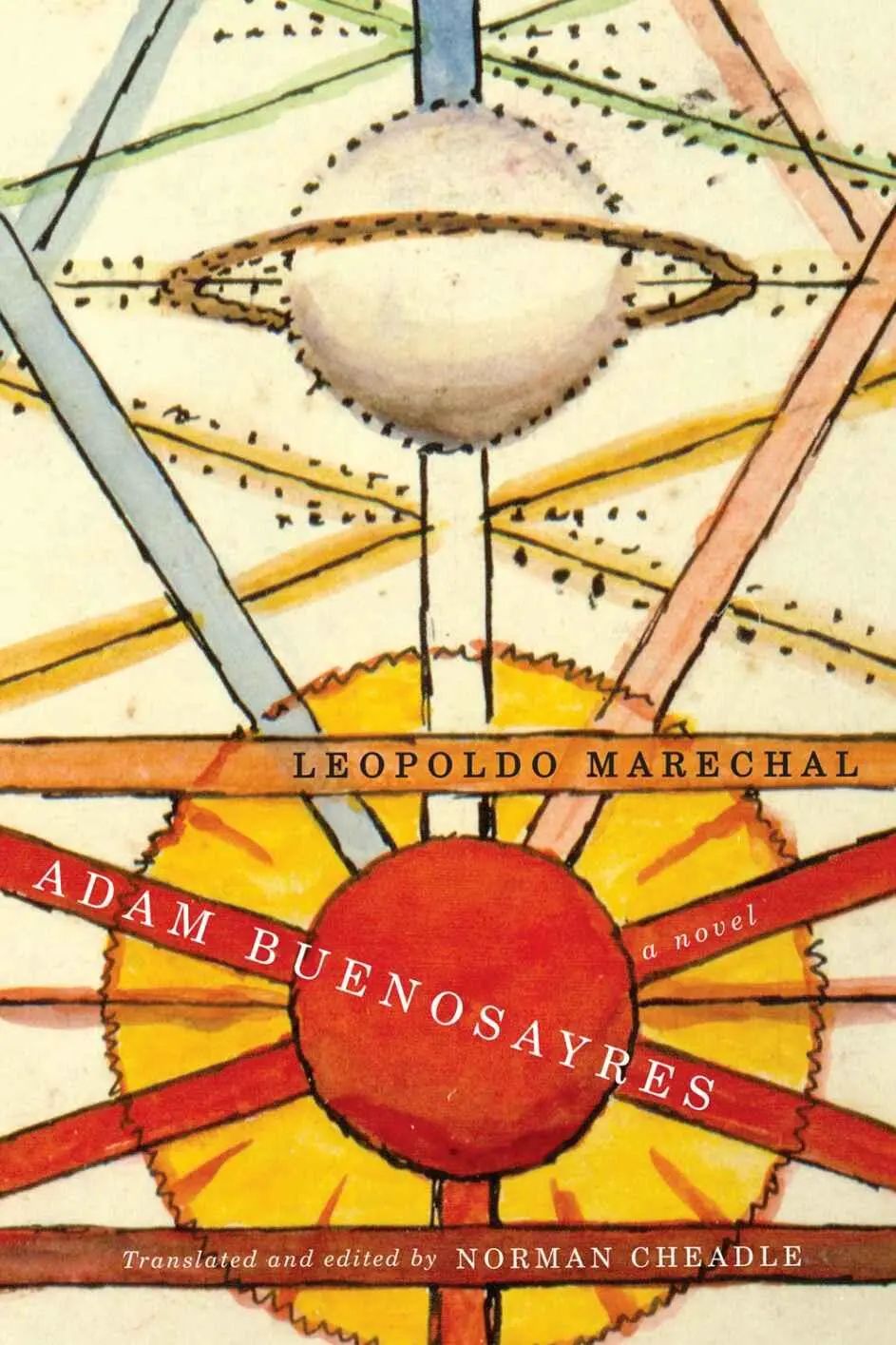
- Название:Adam Buenosayres
- Автор:
- Издательство:McGill-Queen's University Press
- Жанр:
- Год:2015
- ISBN:нет данных
- Рейтинг книги:5 / 5. Голосов: 1
-
Избранное:Добавить в избранное
- Отзывы:
-
Ваша оценка:
Adam Buenosayres: краткое содержание, описание и аннотация
Предлагаем к чтению аннотацию, описание, краткое содержание или предисловие (зависит от того, что написал сам автор книги «Adam Buenosayres»). Если вы не нашли необходимую информацию о книге — напишите в комментариях, мы постараемся отыскать её.
Adam Buenosayres — читать онлайн бесплатно полную книгу (весь текст) целиком
Ниже представлен текст книги, разбитый по страницам. Система сохранения места последней прочитанной страницы, позволяет с удобством читать онлайн бесплатно книгу «Adam Buenosayres», без необходимости каждый раз заново искать на чём Вы остановились. Поставьте закладку, и сможете в любой момент перейти на страницу, на которой закончили чтение.
Интервал:
Закладка:
— Poor soul! she said, indicating La Beba.
— Her repentance is sincere, Doña Martina admitted drily.
— What? grunted Doña Carmen, indignant at that obvious attempt to bargain her down. A heart of gold, Doña Martina, a heart of gold!
She was just getting launched on an eloquent panegyric to La Beba, when a sound from the other room cut her off in mid-sentence, tinged María Justa’s face with worry, and furrowed Juan José’s brow.
— Márgara! whispered Doña Carmen into the attentive ear of Doña Martina.
News of La Beba’s return and her presence in the funeral chamber had leaked into the other room, where the chorus, from the shadows, was watching every detail of Márgara’s portentous grief: sibilant threats, exhortations to clemency, rancorous proverbs and wise aphorisms, all boiled and bubbled in the patter of the chorus. Putting together bits and pieces from their buzz, Márgara had caught wind of something and suddenly sat bolt upright.
— Is she back? she asked the two neighbour ladies, staring at them with haggard eyes.
The Ladies in Red and in Blue dared not deny it, and lowered their brows under the terrible gaze. Their gesture told Márgara everything, and she started tearing at her hair.
— I don’t want her here! she screamed furiously.
— Calm down, calm down, suggested Doña Tecla.
But Márgara shook her tragic Gorgonian head.
— She killed my father! she yelled. I don’t want her here!
The figure of Juan José suddenly cut into the scene. Grimacing in anger, he turned to Márgara.
— Be quiet! he ordered. What’s all the shouting about!
Márgara’s breath went cold in her throat. Her mouth fell open and her eyes widened in fear, and she stared for a long moment at her brother. Then she fell back onto the bed, her Medusa curls slithering for an instant on the pillows. Juan José glanced around challengingly at the chorus of onlookers; their clamour toned down to a hum and then petered out altogether. At length, satisfied that order was restored, he turned his back on the scene, crossed the funeral chamber, and went out to the patio.
He exited with his eternal vegetative air, eyes on the ground, feet dragging. Suddenly he stopped. There, on the patio tiles, stood a pair of boots. Juan José looked at their patent leather and their sheepskin uppers, then noticed the bell-bottomed trouser cuffs. His eyes followed a trouser leg up to a short black jacket, then explored further to find a white neckerchief and a face overshadowed by the brim of a grey hat ringed in a black ribbon of mourning. The ghost of a smile began to appear on Juan José’s lips: there before him was the very effigy of the malevo Di Pasquo.
— My sympathies, grunted Di Pasquo, holding out a hand straight as a dagger-thrust.
— Thanks, responded Juan José, impassive.
Seeing that Di Pasquo wasn’t sure which way the wind was blowing, Juan José added:
— Go on in, friend. The men folk’re in the kitchen.
How to convey the excitement, the shivers of pleasure, but also the fresh anxieties that swept through the kitchen when Juan José came back in with the solemn figure of the malevo Di Pasquo in tow? In the first flush of exultation, the criollista scholars Del Solar and Pereda were delighted by the new arrival, anticipating rich observations with respect to the Italic influence on the final generation of malevos . But they quickly recognized the danger of an excessively violent clash between Di Pasquo and the taita Flores. For it was no longer merely a run-in between two antagonistic characters, but a confrontation of two different schools!
Moreover, it wasn’t exactly an opportune moment. The taita Flores had just swallowed his anger, barely, but not so the pesado Rivera. With every new explosion of hilarity from the heresiarchs, Rivera’s tense silence grew ever more ominous. And it’s fair to say the dissidents showed no sign of reining in their recklessness. Quite the contrary, for they’d taken control of the bottle, thanks to a moment’s distraction on the part of the pesado , and were now multiplying their toasts and outrageous gestures. One among them, however, was no longer laughing. Samuel Tesler (seeing the mists part before him and the open road ahead) must have been ruminating on some obscure scheme, judging by the double line that forked down his brow. With good reason did Pereda and Del Solar fear the storm clouds gathering in the kitchen! But they didn’t realize just how near the tempest was now.
The first indication came when the malevo Di Pasquo, after a general greeting to those in the room, went over to Flores, who stood waiting for him, silent and wary.
— Evenin’, said the malevo , extending his hand to the taita .
— Evenin’, replied Flores, reciprocating the gesture.
Their hands joined cautiously. The pipsqueak Bernini winked at Del Solar and whispered enthusiastically:
— The meeting of two great forces!
— Hmm! mumbled Del Solar, contemplating the two locked hands.
A commotion from the heterodox group made him turn his head. He saw Franky Amundsen pointing his index finger at the malevo Di Pasquo.
— Get a load o’ the get-up! cried Franky, amazed and amused.
— Whoz’t? asked Adam boozily.
— It’s the ítalomalevo ! announced Franky. A cross between the payador Gabino Ezeiza 15and la Traviata!
Another tremendous squall of hilarity followed this announcement. Del Solar had been monitoring the situation closely, and he sensed the glimmer of surprise in the malevo ’s face. Quickly, he took Pereda by the arm and ordered:
— Slip over there and tell those bloody fools to shut up!
Pereda obediently went over and berated the dissidents:
— Behave yourselves, barbarians! Let’s see if you can shut your traps! Or do you want to get your arses kicked?
The heresiarchs maintained a disdainful silence and went back to watching the manoeuvres of the enemy. At this point, the scene was arranged as follows. Di Pasquo, very serious, had just sat down next to Flores, an icy barrier apparently separating the two. Juan José was trying to open a bottle, a task apparently beyond his current abilities. Bernini, Pereda, and Del Solar had regrouped and were walking on eggs. Rivera, for his part, looked almost lifeless, so thick was his carapace of sullen silence. Turning now to the dissidents, we find that not one of them was stirring, yet all looked expectant. And this, as Del Solar realized in alarm, was even more frightening than the ruckus they’d been kicking up. Franky Amundsen, Adam Buenosayres, and the astrologer Schultz were all three staring squarely at the enemy, their heads up, their lips curled, their eyes glinting fiercely. Only Samuel’s head was bowed, deep in some cogitation that looked mighty suspicious.
All eyes and ears were now trained on Flores and Di Pasquo, and they understood they were expected to perform. They took sidelong glances at one another, but under so much pressure to say something, neither taita nor malevo could do it, fearing a wrong word might slip out.
— They’re scared to death of each other! Adam laughed into Franky’s ear.
— Shh! Franky admonished. Wanna bet they kiss and hold hands?
He said no more, for Di Pasquo was taking the initiative. Amid an absolute silence, and without looking at the taita , Di Pasquo formulated the following question:
— So what’re you up to, my friend Flores?
Nine pairs of ears waited anxiously for Flores’s response. They waited not in vain; the taita , more solemn than ever, gave this sublime answer:
— As you see, my friend. Vegetating .
Читать дальшеИнтервал:
Закладка:
Похожие книги на «Adam Buenosayres»
Представляем Вашему вниманию похожие книги на «Adam Buenosayres» списком для выбора. Мы отобрали схожую по названию и смыслу литературу в надежде предоставить читателям больше вариантов отыскать новые, интересные, ещё непрочитанные произведения.










Обсуждение, отзывы о книге «Adam Buenosayres» и просто собственные мнения читателей. Оставьте ваши комментарии, напишите, что Вы думаете о произведении, его смысле или главных героях. Укажите что конкретно понравилось, а что нет, и почему Вы так считаете.