Leopoldo Marechal - Adam Buenosayres
Здесь есть возможность читать онлайн «Leopoldo Marechal - Adam Buenosayres» весь текст электронной книги совершенно бесплатно (целиком полную версию без сокращений). В некоторых случаях можно слушать аудио, скачать через торрент в формате fb2 и присутствует краткое содержание. Год выпуска: 2015, Издательство: McGill-Queen's University Press, Жанр: Классическая проза, на английском языке. Описание произведения, (предисловие) а так же отзывы посетителей доступны на портале библиотеки ЛибКат.
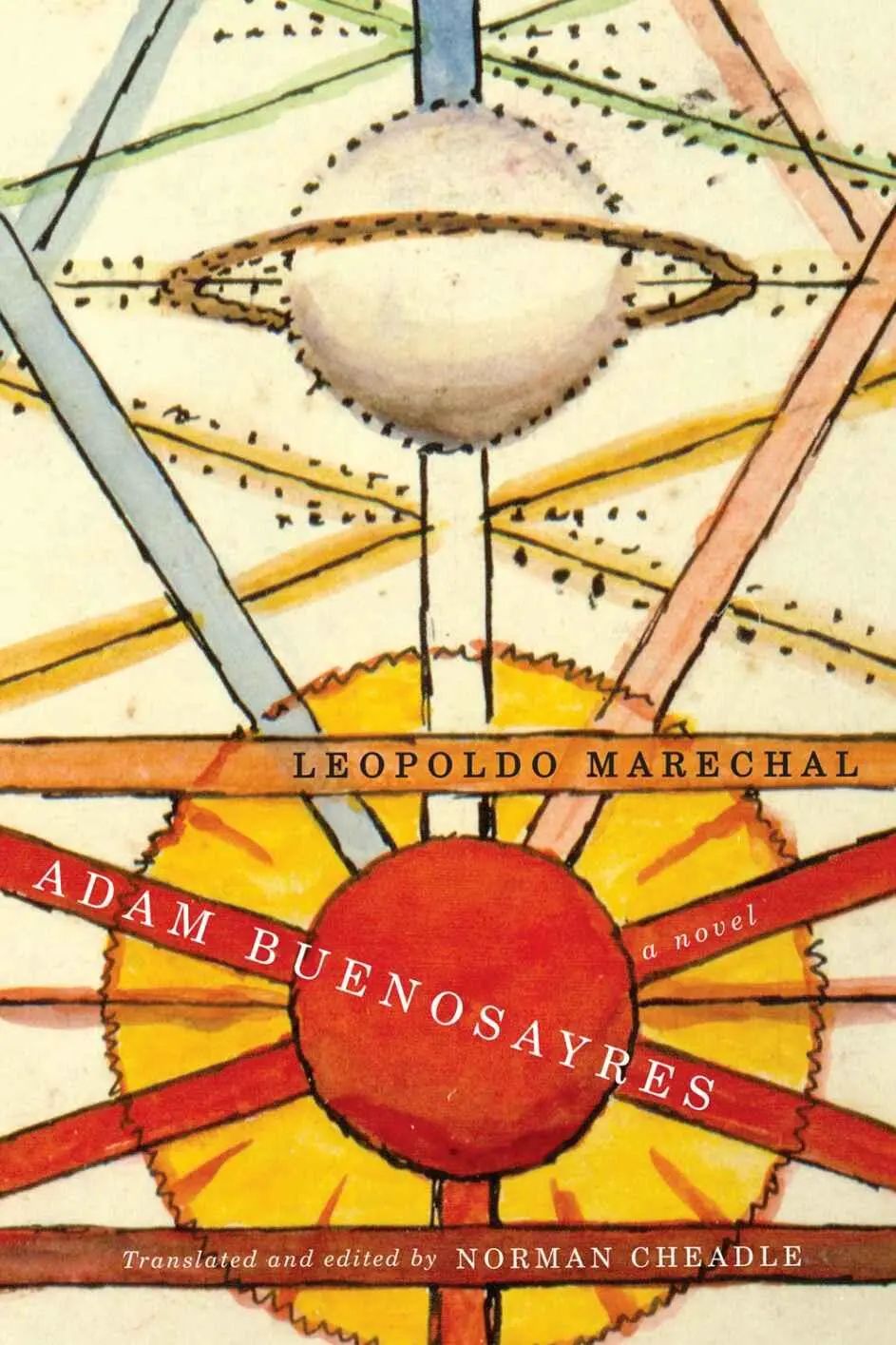
- Название:Adam Buenosayres
- Автор:
- Издательство:McGill-Queen's University Press
- Жанр:
- Год:2015
- ISBN:нет данных
- Рейтинг книги:5 / 5. Голосов: 1
-
Избранное:Добавить в избранное
- Отзывы:
-
Ваша оценка:
Adam Buenosayres: краткое содержание, описание и аннотация
Предлагаем к чтению аннотацию, описание, краткое содержание или предисловие (зависит от того, что написал сам автор книги «Adam Buenosayres»). Если вы не нашли необходимую информацию о книге — напишите в комментариях, мы постараемся отыскать её.
Adam Buenosayres — читать онлайн бесплатно полную книгу (весь текст) целиком
Ниже представлен текст книги, разбитый по страницам. Система сохранения места последней прочитанной страницы, позволяет с удобством читать онлайн бесплатно книгу «Adam Buenosayres», без необходимости каждый раз заново искать на чём Вы остановились. Поставьте закладку, и сможете в любой момент перейти на страницу, на которой закончили чтение.
Интервал:
Закладка:
At the same time, Adam Buenosayres, overwhelmed by anguish, was confiding an intimate secret to the discretion of his brother Franky: yes, the world of angels did exist, and he personally had been struggling with an angel for three months now. It wasn’t a body-to-body combat, naturally, but something like the thrashing of a fish that’s taken the hook and fights the pull of the fisherman. Attentive and respectful, Franky listened to his brother Adam, then embraced him tenderly and implored him to take it easy, assuring him that the fresh night air would soon smarten him up, incredibly sloshed though he was. But far from soothing Adam, Franky’s words only provoked another fit of tears of such emotive depth that Franky, in spite of himself, had to wipe moisture from his ocular conjunctivas.
Meanwhile, the dialectical combat between Samuel and Pereda was heating up — voices were growing shrill, the pipsqueak Bernini was itching to get into it, and Schultz was trying to put some kind of order into their ideas — when suddenly, a frightful shout came out of the dead of night, from not far off. They all went still. What voice could that be? Who was crying out in the night? But Franky quickly recovered his wits.
— It’s Del Solar! he exclaimed. Something’s happened to him.
He ran ahead of the others in the direction of the shout. After twenty paces, he saw a dark figure get up off the ground, vigorously cursing and swearing.
— What’s up? asked Franky, recognizing their guide.
— I tripped over something, said Del Solar. Don’t come near yet.
— What the hell is it? One of those conical angels?
— An angel it ain’t, Del Solar grumbled. Its smell is enough to turn your guts.
Sure enough, as the expeditionaries approached, they detected a suspect fetor in the air.
— It’s a dead body! Bernini finally exclaimed.
Before long they had gathered round the dark form outstretched on the ground. The stench had become unbearable, and they all held their breath, except for the astrologer Schultz, who was inhaling the pestilential air with relish, declaring with ascetic piety that the odour was a great tonic for the soul. Wild conjectures flew as the group tried to identify the shape. But Samuel Tesler, in the nick of time, activated his famous lighter and, by its dim light, the mystery was cleared up: the dark mass that had tripped Del Solar was a dead horse.
The animal appeared phantasmagorical in the quavering light. It was a pampa-brown horse, ugly as can be, with a big head and ungainly feet, its bone structure visible beneath its dirty, mangy hide. Both its eyes were wide open to the night (the left eye had been pecked at by some night buzzard). Its drooping lower lip revealed worn and stained teeth, and from those teeth Adam, almost in tears, plucked a blade of grass the horse would never finish chewing. 9The soil where it lay had been churned up, and Schultz surmised the poor beast must have struggled to stand up when in its death-throes. But he took a keen interest in the little pile of manure deposited beneath the horse’s tail, which elicited from the astrologer a few profound reflexions on the ars cacandi 10and its relation to death.
One can easily imagine the elegies those pious souls dedicated to the deceased pampa-brown. Franky Amundsen stared at it, apparently immersed in a morose meditation that finally yielded this heart-rending aphorism:
— That’s the way it goes!
— Poor old hack, said Bernini, giving the corpse a kick. Its owner left it here to croak — out of sight, out of mind.
— Must have been some ignorant gringo, protested Del Solar. No criollo would abandon his cob so heartlessly. 11
The entire group agreed with him. Thus encouraged, Del Solar began to curse the destiny of criollo horsedom. It had figured heroically in all the nation’s great episodes, but had now fallen into the coarse hands of city coachmen. The magnitude of its dishonour was plain to see in the noble steed they beheld before them, victim of a treacherous urbanism that was threatening to ensnare in its web all that was pure in the Argentine tradition. In his rapture, he quoted these memorable verses from a song already in the minds of the adventureres:
Dear little criollo horse,
short in stride
and long in wind. 12
Del Solar concluded by taking off his hat in reverence to the fallen beast. The others followed suit, revealing just how close their hearts were to the seraphic spirit of Saint Francis. Then, as though the blood of Martín Fierro were coursing through his veins, Franky Amundsen spoke out in solidarity with his guide: treacherous urbanization notwithstanding, the virtues of the centaur still glowed in our race, for within every Argentine there was a horse in potentia , as had just been revealed by the brilliant orator who had preceeded him. Adam, with no more audience than Schultz and the night, improvised a confused elegy featuring late afternoons in Maipú, radiant dawns, and a hundred horses beating the resonant earth like a drum at high noon on days whose paradisal taste still lingered, as he put it, on the tongue of his soul.
Franky Amundsen understood that so much melancholy risked breaking the spirit of his comrades. He pulled out a flat, gleaming metal bottle, marvellously fitted to his back pocket and endowed with a capaciousness that looked promising even to the least clinical eye. One by one the expeditionaries made use and abuse of the prodigious bottle. Then, prompted by their guide, they set out once more, not without taking their leave of the dead pampa-brown with a final glance. But no sooner had they set out than Del Solar stopped short as if in alarm.
— We’re screwed! he said as he turned to his comrades.
— What is it now? asked Franky.
— We’re lost!
This unpleasant news was not well received. The heroes muttered and grunted their discontent in a distinctly unfriendly way.
— Hell of a guide! Franky griped.
— It’s because of you guys! shouted Del Solar aggressively. All your goddamned arguing put me off the trail.
The injustice of these words exacerbated the group’s discontent to the point of mutiny. The darkness rumbled with hostile voices, malevolent laughter and threats of mass desertion. But then the astrologer Schultz intervened.
— Just a minute! he cried and turned to the guide. Let’s see, now. Where did the trail start?
— Just off Colodrero Street, Del Solar answered.
— In what direction does the street go?
— Northeast, assured Pereda, who as a sterling criollista carried the map of Buenos Aires etched upon his grey matter.
— Does the trail go in the same direction as the street? insisted Schultz.
— No, replied Del Solar. It veers off to the right.
— A lot?
— I’d say about forty degrees.
— Hmm, Schultz concluded, that means the trail follows an almost perfect northerly direction. He tilted his head back and seemed to search for something in the starry vastness.
— The Southern Cross! he exclaimed at last. Its main axis runs between the stars Alpha and Gamma, and right now it is almost perpendicular to the horizon. So Gamma marks the direction we must take.
His observations concluded, Schultz set off decisively, taking over as head of the platoon without a thought for the former guide, who brooded silently over his failure. The men now marched with the confidence inspired by science, their adventurous spirit renewed. The earth stretched out wide and free beneath their feet, and the southern sky enveloped them in the scrutiny of its stars. Although they could see nothing in the dark, their ears picked up myriad sounds from the night — beating feathers, clacking coleopteran wings, rustling leaves, creaking branches, the whole set of instruments being employed by invisible entities to sculpt the hard block of silence. The men breathed the strong odour of autumnal fields, the aroma of earth heavy with seed. A rush of wind, from who knows what far-off place, suddenly lashed the faces of the heroes, prompting various conjectures as to its origin and meaning. Adam Buenosayres, who made an image out of everything, 13took it for the very breath of the pampa. Samuel Tesler scented in that wind an “enormous freshness of Flood,” alleging a sense of smell directly inherited from his forefather Noah. Del Solar, drinking the wind in great draughts, was quick to smell fragrant haystacks, autumn stubble in April fields, crumbling cowflaps, damp clover patches, and little peaches baking in smoky ovens. And though Franky cast doubt on their freakish olfactory capacity, in truth they were filled with legitimate pride at the thought of their immense Argentine homeland, naked and virgin, like a child just delivered from the Creator’s hands. Pride turned to tenderness when the poet Buenosayres, transported in dreams to the eclogues of Maipú, began to sing:
Читать дальшеИнтервал:
Закладка:
Похожие книги на «Adam Buenosayres»
Представляем Вашему вниманию похожие книги на «Adam Buenosayres» списком для выбора. Мы отобрали схожую по названию и смыслу литературу в надежде предоставить читателям больше вариантов отыскать новые, интересные, ещё непрочитанные произведения.









Обсуждение, отзывы о книге «Adam Buenosayres» и просто собственные мнения читателей. Оставьте ваши комментарии, напишите, что Вы думаете о произведении, его смысле или главных героях. Укажите что конкретно понравилось, а что нет, и почему Вы так считаете.