Leopoldo Marechal - Adam Buenosayres
Здесь есть возможность читать онлайн «Leopoldo Marechal - Adam Buenosayres» весь текст электронной книги совершенно бесплатно (целиком полную версию без сокращений). В некоторых случаях можно слушать аудио, скачать через торрент в формате fb2 и присутствует краткое содержание. Год выпуска: 2015, Издательство: McGill-Queen's University Press, Жанр: Классическая проза, на английском языке. Описание произведения, (предисловие) а так же отзывы посетителей доступны на портале библиотеки ЛибКат.
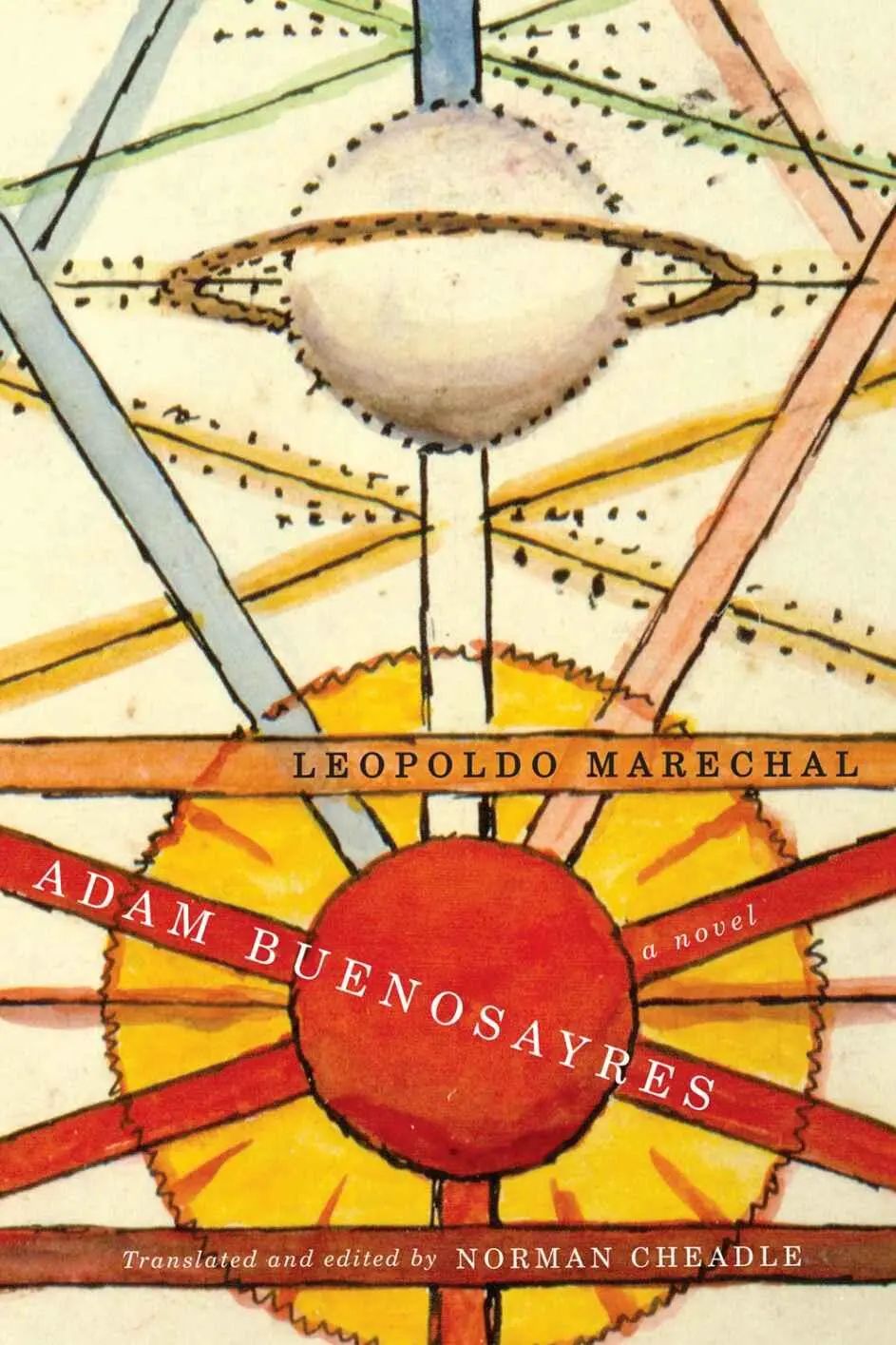
- Название:Adam Buenosayres
- Автор:
- Издательство:McGill-Queen's University Press
- Жанр:
- Год:2015
- ISBN:нет данных
- Рейтинг книги:5 / 5. Голосов: 1
-
Избранное:Добавить в избранное
- Отзывы:
-
Ваша оценка:
Adam Buenosayres: краткое содержание, описание и аннотация
Предлагаем к чтению аннотацию, описание, краткое содержание или предисловие (зависит от того, что написал сам автор книги «Adam Buenosayres»). Если вы не нашли необходимую информацию о книге — напишите в комментариях, мы постараемся отыскать её.
Adam Buenosayres — читать онлайн бесплатно полную книгу (весь текст) целиком
Ниже представлен текст книги, разбитый по страницам. Система сохранения места последней прочитанной страницы, позволяет с удобством читать онлайн бесплатно книгу «Adam Buenosayres», без необходимости каждый раз заново искать на чём Вы остановились. Поставьте закладку, и сможете в любой момент перейти на страницу, на которой закончили чтение.
Интервал:
Закладка:
— And I maintain that you’re lying through your beard! shouted the robust man, blind to his opponent’s clean-shaven face.
This anachronistic apostrophe (a reminiscence, no doubt, from long-ago classical readings) stung the little man like a whip.
— Me, lying? he snarled. Now I’m gonna tell you the way I see Buenos Aires and its problems!
But he didn’t, because the jester loudly interrupted him.
— Cut him off! he implored in the darkness. In the name of divine Saturn, for the sake of the sacred night, shut that pipsqueak up before he gets started. Can’t you see he’s picked up the scent of the Spirit of the Earth? The sly fox is about to club us again with his bloody theory!
It was a call to order, an exhortation to prudence heeded by all. Especially when their guide, chomping on his foot-long cigarette holder, declared in no uncertain terms that he hadn’t dragged them way-the-hell-and-gone just so they could horse around; no, they were there to accomplish a heroic exploit that would leave them either beaten to a pulp or covered with laurels. 3Fortunately, the counsel of these two men prevailed, and the group set out once more, intrepid, but in a sullen silence that boded no good.
Among the heroes walked one who, miraculously, had not yet intervened in the dispute — the man with the short legs. True, he’d made his presence felt during the course of the argument with a few hostile grunts and two or three orchestral guffaws. But the fact that he hadn’t actually got his oar in was an unmistakable sign that some nocturnal genie had just possessed him. Unless, as was more likely, his apparent restraint was the handiwork of the Catamarca firewater for which the short-legged man had that night displayed a devotion bordering on the fanatical. But whatever the reason, our hero was now brightening up and showing clear signs of excitement. And then something remarkable occurred: he began passing cigarettes out to his comrades. This unheard-of act plunged the group into profound consternation.
— Am I dreaming? asked the jester.
— Miracle! It’s a miracle! answered the others.
Filled with humility, the man with the short legs attributed the miracle to the generosity of Mercury, the god, he said, who’d stood by him through his perennial tribulations. After this confession, he pulled out his automatic lighter and lit his cigarette. The wavering flame revealed his facial contours: a hawkish nose, two enormous fan-shaped ears, thick sensual lips, all betraying the son of that race once favoured by Jehovah and later scattered like ashes for having stained their cruel hands with the blood of a god. In truth, the man of short legs was Samuel Tesler, the illustrious philosopher of Villa Crespo.
Next, without breaking his stride Samuel Tesler used his lighter to illuminate in succession the faces of each of his friends, and so it was that the four figures not yet named emerged from anonymity. Strictly in the order of their enlightenment, they were the following: Luis Pereda, theoretician of criollismo , the robust man who sways like a wild boar gone blind; Arturo del Solar, activist of criollismo and acting leader of the seven; Franky Amundsen, radio host and animator, heretofore known as the man of the jesting voice; and the pipsqueak Bernini, sociologist, the one we’ve been calling pint-sized.
His act of illumination complete, Samuel Tesler shut his lighter, and the night closed in darker than ever. Great God! At that moment of overwhelming darkness, the philosopher decided to let fly one his unnerving guffaws. Hearing it, the adventurers trembled for the first time.
— What’s the Israelite laughing about? asked Franky Amundsen uncertainly.
— Was that a laugh? Pereda doubted. It sounded more like the squawk of a vulture.
Franky assured him it was a human laugh. Unless, he added, the Israelite had without warning turned into a vile bird of prey under cover of night — not such an unlikely metamorphosis, given the structure of his nose. But the philosopher retained his normal shape, with which he was well satisfied, thanks to his incredible powers of self-suggestion.
— I was laughing to myself, he declared, as I thought how woefully inadequate is our earthly sense of hearing. Just ten minutes ago, a poor sentimental slob, drunk on mythology, if not on something worse, tried to make us believe he was hearing the voice of the river.
— Are you talking about me? shrieked Adam in the darkness.
— Quiet! said Franky. The Israelite’s got the floor.
— What he’s got, shot back Adam in a booze-thickened voice, is three sheets to the wind.
At this unjust accusation, the philosopher croaked something between a hiccup and a laugh.
— And why not? he said. Just as Anaxagoras was a sober man among drunks, I am a drunk among the sober.
— Well said, my son! exclaimed Franky, embracing Samuel. The confession honours you. That Catamarca firewater is the elixir of sincerity.
— Who said anything about firewater? retorted Samuel, stung to the quick. I’m referring to a higher state, the inebriation of Dionysus.
But Adam Buenosayres had got his dander up; he was struggling in the arms of Schultz and swearing to teach that Jew a lesson he wouldn’t soon forget.
— Lemme go! he bellowed like a street bully. We gotta settle this right now.
— He’s soft in the head! said Samuel scornfully. Only a moron could cast the River Plate in a mythological mould. Bah! It’s a dead river, a cocktail of water and mud. 4
At these odious words, the adventurers bristled with indignation.
— Hey, whoah there! thundered Pereda menacingly.
— Damnation! whinnied Franky. He’s insulted our Father River!
— What’d he say? shouted Adam. Just a minute here! I’ll teach that no-account bum!
Discord reigned once more among the group, and Del Solar cursed the hour when Franky Amundsen had included that pair of madmen in the expedition to Saavedra. Franky, in response, solemnly avowed that only the desire for self-improvement had moved him to solicit the company of the neo-sensitive poet and the illustrious philosopher, and that their drunkenness was more apparent than real, since thanks to them his eyes had been opened to a vast horizon of hitherto unknown wisdom. As for Luis Pereda, who had been following the details of the Buenosayres-Tesler conflict from a strictly criollista perspective, he thought the two champions ought to settle their differences in a knife fight, though he admitted it wouldn’t be easy to find such weapons in that place, at that hour. But then he suggested the two taitas have it out with pen-knives (and he happened to be carrying one with a bone handle, which he generously offered to any taker); a fight to the death, he added, was not strictly necessary, for a traditional slash across the face, or from ear to ear, was more than enough to salve a Christian’s honour, though it were caked an inch thick in filth. 5
Fortunately, at the height of the altercation, harmony was restored when Samuel unexpectedly donned the mantle of equanimity, an act that would subsequently earn him much praise, declaring he hadn’t had the slightest intention of offending his friend Buenosayres, for whom he felt — and was not ashamed to admit it — an absolutely indestructible fraternal devotion, notwithstanding the gaping lacunae he couldn’t help noticing in his philosophical formation. For his part, Adam — who never failed to respond to those ardent calls of human cordiality — didn’t even wait for Tesler to finish his apology before rushing toward him with outstretched hand. The sight of them embracing in the very gut of the night was enough to melt a heart of stone. Their literally intoxicating breaths commingled. All of a sudden Samuel broke down weeping like a Magdalene, imprecating himself as an ignoble drunk who’d just insulted his best friend the poet and his best poet friend. Adam, sobbing his heart out, swore up and down that Samuel wasn’t drunk but fresh as a rose, and that it was he, Adam Buenosayres, who deserved the dishonour for having drunkenly offended a man of genius who busted his ass night and day studying the most abstruse sciences. Samuel persisted in his self-accusation, Adam rebutted him again, and since neither was about to give way in that generous challenge, it wasn’t long before they were at loggerheads again and very nearly came to blows.
Читать дальшеИнтервал:
Закладка:
Похожие книги на «Adam Buenosayres»
Представляем Вашему вниманию похожие книги на «Adam Buenosayres» списком для выбора. Мы отобрали схожую по названию и смыслу литературу в надежде предоставить читателям больше вариантов отыскать новые, интересные, ещё непрочитанные произведения.









Обсуждение, отзывы о книге «Adam Buenosayres» и просто собственные мнения читателей. Оставьте ваши комментарии, напишите, что Вы думаете о произведении, его смысле или главных героях. Укажите что конкретно понравилось, а что нет, и почему Вы так считаете.