J. Ledgard - Giraffe
Здесь есть возможность читать онлайн «J. Ledgard - Giraffe» весь текст электронной книги совершенно бесплатно (целиком полную версию без сокращений). В некоторых случаях можно слушать аудио, скачать через торрент в формате fb2 и присутствует краткое содержание. Год выпуска: 2007, Издательство: Penguin Group, Жанр: Современная проза, на английском языке. Описание произведения, (предисловие) а так же отзывы посетителей доступны на портале библиотеки ЛибКат.
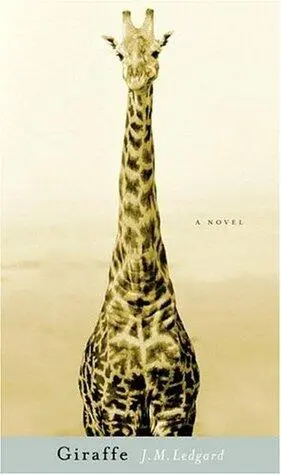
- Название:Giraffe
- Автор:
- Издательство:Penguin Group
- Жанр:
- Год:2007
- ISBN:нет данных
- Рейтинг книги:3 / 5. Голосов: 1
-
Избранное:Добавить в избранное
- Отзывы:
-
Ваша оценка:
Giraffe: краткое содержание, описание и аннотация
Предлагаем к чтению аннотацию, описание, краткое содержание или предисловие (зависит от того, что написал сам автор книги «Giraffe»). Если вы не нашли необходимую информацию о книге — напишите в комментариях, мы постараемся отыскать её.
In 1975, on the eve of May Day, secret police dressed in chemical warfare suits sealed off a zoo in a small Czechoslovakian town and ordered the destruction of the largest captive herd of giraffes in the world. This apparently senseless massacre lies at the heart of J. M. Ledgard's haunting first novel, which recounts the story of the giraffes from their capture in Africa to their deaths far away behind the Iron Curtain. At once vivid and unearthly, Giraffe is an unforgettable story about strangeness, about creatures that are alien and silent, about captivity, and finally about Czechoslovakia, a middling totalitarian state and its population of sleepwalkers.
It is also a story that might never have been told. Ledgard, a foreign correspondent for the
since 1995, unearthed the long-buried truth behind the deaths of these giraffes while researching his book, spending years following leads throughout the Czech Republic. In prose reminiscent of Italo Calvino and W. G. Sebald, he imbues the story with both a gripping sense of specificity and a profound resonance, limning the ways the giraffes enter the lives of the people around them, the secrecy and fear that permeate 1970s Czechoslovakia, and the quiet ways in which ordinary people become complicit in the crimes committed in their midst.
Giraffe — читать онлайн бесплатно полную книгу (весь текст) целиком
Ниже представлен текст книги, разбитый по страницам. Система сохранения места последней прочитанной страницы, позволяет с удобством читать онлайн бесплатно книгу «Giraffe», без необходимости каждый раз заново искать на чём Вы остановились. Поставьте закладку, и сможете в любой момент перейти на страницу, на которой закончили чтение.
Интервал:
Закладка:
FOG IS DRIFTING OUTSIDE, from the Svět. The concrete tanks by the gravel road are filling with carp. All the apples have fallen and leaves are clumped heavily against the boards of the outdoor ice-hockey rink. I sit here in the cafeteria, next to Eva. The political committee is showing us a short film, for our education.
“Lights out!” someone calls.
The screen lights up. An image is brought into focus. I see soldiers marching by, saluting at a parade. Now soldiers in fatigues are running along a Czechoslovakian riverbank. A missile shoots upward. The film cuts to a meadow in which children are playing. The children wear all the different folk costumes of Czechoslovakia. The title of the film is The Dress of Our CSSR!
The children sing and laugh. Some of them set up easels and paint pictures of sunshine and clowns, but also animals. The narration marks out these children as future workers at play. The sky darkens, sirens sound. The narrator shouts, “Danger! Look out, children! Dive! Dive!”
The children scream. They run about in circles. They tear at one another and fall to the ground. Some of them curl into balls, as insects do under a spray of insecticide. A blinding flash dissolves into a mushroom cloud. The film cuts back to the army, who are protecting us from destruction. The film ends. The People’s Militia, sitting uniformed in the front row, breaks into applause. They are a rabble, meant to protect the factory from sabotage during an uprising. Most have joined out of a lack of conviction: They believe in nothing, so there is nothing to hold them back. The rest of us are sleepwalkers by day. We do not remark on the banners draped around the town, such as here in the cafeteria: THE TRUE WORKER OBEYS THE WILL OF THE COLLECTIVE.
The Communist moment does not demand that I love it, or be awake to it. It asks only that I do not question it. What can I question? I am below politics. I do not read the articles in the newspaper that begin: “Strict penalties are not enough.,” “Revanchism is a tumor. ”
The political committee of the factory asked me to join their team for the mass gymnastics exercise in Prague. They said I was slight and sinewy enough to be the one lifted from the field to be the point of a red star formed by forty thousand workers. I refused. I am not a socialist heroine, such as appear in mass displays or as models for Communist statues with their hands stretched across in salute. I am an orphaned sleepwalker, named for the same. I dip shapes of glass on a factory floor whose sixteen windows have never been cleaned and cast a murky light, like the underside of the Vltava.
I sleepwalk from the cafeteria to the showers. I stand now under dribbling hot water and soap myself among older women. I am aerated. Water might course through me. I rise on tiptoe. I stretch my hands to the shower head. I wake in this steam. I am not bent double over the dipping machine, I am not watching a political film, nor am I outside in my crumbling town, whose ramparts are splitting, whose Gothic winged cow is broken and without flight, and whose stylish Hotel Crystal Palace stands infested and boarded up on the main square. The factory roof leaks. It is propped up by trees whose branches grow into the building. There are not enough toilets in here. I squat with the other women at lunchtime in that part of the undergrowth where we drop our cigarettes, and urinate there in yellow arcs.
I DRY MYSELF ON the broken tiles and sit on a wooden bench in the crowded changing room. We are all quiet. Even Hana is quiet. We sit here and we steam, with our palms down on our thighs. We are captive in disappointment. We become dull-eyed and stare without focus at the posters on the wall here: MEAT MEANS HEALTH! and PROTECT US, BORDER GUARDS!
I HAVE A SUDDEN SENSE of the other place I wish to stretch my hands over my head and lift off to. It is more than Prague and the America to which we send our Christmas fighter-jet decorations. It is beyond that part of the sky lined with the pure and holy. I cannot grasp it. I understand it only as a color seen on a butterfly wing, an unseen and unimagined color that lies outside the spectrum, into which glass can never be dipped.
Jiří — A Sharpshooter
ST. HUBERT’S DAY
NOVEMBER 3, 1974
IWAKE WITH A start. I see my breath. There is moonlight on the wooden floor. I hear the sound again. I sit bolt upright in my cot. It is closer. I hear it brushing against the side of the hut. I see a form in the window. A stag. It stares directly in, at the antlers arranged on the wall. I am still. I watch the stag breathe on the frosted windowpane, seemingly contemplating the trophies and skullcaps of its kind. It moves off now. Other deer follow it. By the time I get to the window, they are all gone into the forest.
The iron stove is still warm. I throw more wood in it. I brew a pot of chicory coffee. I drink it barefoot now on the steps outside the forestry hut, which are cold, made of stones set down in the forest by a glacier long ago. I am unsettled. It is the saint day of Hubert, the patron of hunters and butchers, who fell prostrate before a stag, between whose antlers was a figure of Christ, fading in and out as our black-and-white television sets do. I see a badger in the half-light, punching through ferns, deeper into this forest, my forest, which surrounds the Svět. The trees creak. It is autumn. Leaves are falling, falling.
I go back inside the hut. I dress. I tuck in my woolen shirt. I pull up my suspenders. I lace my boots up to my knees. I put on my jacket. I set a feather in my cap. I push back my thick, black-framed spectacles. I throw the bloodstained satchel over my shoulder. I take up my rifle, a Mannlicher-Schoenauer 6.5.
I am a forester and a hunter. My father was too, and his father before him. I shot my first boar in 1941, not far from this hut. I was a boy then. My view on hunting is sentimental. I believe in an unspoken pact between certain men and certain beasts; by hunting animals, I give them purpose. I am a Communist. I do not disguise my intentions: I am Communist because I wish to remain in the forest. If they ask me certain questions, I will set down my ax and rifle and leave. They do not ever ask me. They trust me because I am known to them only in the trees, where there are no politics, just as Hubert was loved as a young man because he was known only in moments of fraternity in the forest, away from the disputatious, where the only quarry was a beast. I do not have the face of a functionary. There are fools in every walk of life, including the Party. I say so openly. When I go to political meetings, I speak to the point. Unlike the careerists, I do not introduce into my written reports incidental characters who might be blamed if a criticism is raised or vanished if praise is forthcoming. I take responsibility for my actions. When I fell a tree, I count the number of its rings.
I check the magazine of my rifle now. I load the five rounds. I lock it. I walk away from the forester’s hut. I step quickly into evergreen larches, white firs, silver firs, deodars, Bosnian pines, Austrian pines, Hungarian oaks, downy oaks, sessile oaks, wild service, gray poplars, black walnut, hickory, and full-moon maples. I see the sky through the division of their leaves and the patterns at the base of their cones and in the brightly colored arils about their seeds. I belong to these trees. I wish to leap between them and live in them, in their branches, like some baron. Instead, I move dutifully along the forest floor, daubing trunks with arrows as I go; upward for trimming, downward for felling. I am always in shadow, glimpsing rather than seeing, so that when I emerge from the forest, even into the flat light about the Svět, I am dazzled.
The roots of the firs are sprung tight under me. I would feel myself lifted from the ground if I broke into a run now. I do not understand captivity in the same way as the fishermen who work the Svět. They are unduly exposed, without subtleties, on the water. The forest is not a cage, as they say. It is a shelter. Startled deer bound from the fields to the forest, not from the forest to the fields; their prance into the trees that sustain them is so acute and airborne as to seem the work of an unseen puppeteer, jerking them on wires.
Читать дальшеИнтервал:
Закладка:
Похожие книги на «Giraffe»
Представляем Вашему вниманию похожие книги на «Giraffe» списком для выбора. Мы отобрали схожую по названию и смыслу литературу в надежде предоставить читателям больше вариантов отыскать новые, интересные, ещё непрочитанные произведения.




Обсуждение, отзывы о книге «Giraffe» и просто собственные мнения читателей. Оставьте ваши комментарии, напишите, что Вы думаете о произведении, его смысле или главных героях. Укажите что конкретно понравилось, а что нет, и почему Вы так считаете.