J. Ledgard - Giraffe
Здесь есть возможность читать онлайн «J. Ledgard - Giraffe» весь текст электронной книги совершенно бесплатно (целиком полную версию без сокращений). В некоторых случаях можно слушать аудио, скачать через торрент в формате fb2 и присутствует краткое содержание. Год выпуска: 2007, Издательство: Penguin Group, Жанр: Современная проза, на английском языке. Описание произведения, (предисловие) а так же отзывы посетителей доступны на портале библиотеки ЛибКат.
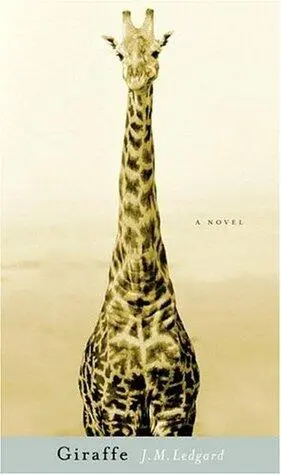
- Название:Giraffe
- Автор:
- Издательство:Penguin Group
- Жанр:
- Год:2007
- ISBN:нет данных
- Рейтинг книги:3 / 5. Голосов: 1
-
Избранное:Добавить в избранное
- Отзывы:
-
Ваша оценка:
Giraffe: краткое содержание, описание и аннотация
Предлагаем к чтению аннотацию, описание, краткое содержание или предисловие (зависит от того, что написал сам автор книги «Giraffe»). Если вы не нашли необходимую информацию о книге — напишите в комментариях, мы постараемся отыскать её.
In 1975, on the eve of May Day, secret police dressed in chemical warfare suits sealed off a zoo in a small Czechoslovakian town and ordered the destruction of the largest captive herd of giraffes in the world. This apparently senseless massacre lies at the heart of J. M. Ledgard's haunting first novel, which recounts the story of the giraffes from their capture in Africa to their deaths far away behind the Iron Curtain. At once vivid and unearthly, Giraffe is an unforgettable story about strangeness, about creatures that are alien and silent, about captivity, and finally about Czechoslovakia, a middling totalitarian state and its population of sleepwalkers.
It is also a story that might never have been told. Ledgard, a foreign correspondent for the
since 1995, unearthed the long-buried truth behind the deaths of these giraffes while researching his book, spending years following leads throughout the Czech Republic. In prose reminiscent of Italo Calvino and W. G. Sebald, he imbues the story with both a gripping sense of specificity and a profound resonance, limning the ways the giraffes enter the lives of the people around them, the secrecy and fear that permeate 1970s Czechoslovakia, and the quiet ways in which ordinary people become complicit in the crimes committed in their midst.
Giraffe — читать онлайн бесплатно полную книгу (весь текст) целиком
Ниже представлен текст книги, разбитый по страницам. Система сохранения места последней прочитанной страницы, позволяет с удобством читать онлайн бесплатно книгу «Giraffe», без необходимости каждый раз заново искать на чём Вы остановились. Поставьте закладку, и сможете в любой момент перейти на страницу, на которой закончили чтение.
Интервал:
Закладка:
“I’ve been thinking about Egypt,” the keeper says, sitting beside me. “I’ve been thinking of the flight into Egypt. Maybe it is our Egyptian geese, or this postcard I’ve received from the giraffe keeper in the Moscow Zoo.”
He holds up the card.
“It’s a painting on silt stone,” he says, “from a Soviet museum of Egyptology, showing geese lifting from the Nile.”
The geese are single brushstrokes of blue and gray, rising from green and yellow papyrus and lily pads.
Radio Vltava is playing Jan Jakub Ryba’s Ceská mše vánoční, or Czech Christmas Mass. I drink tea that the keeper brings me now. I say nothing, but think of the harvest mice in their snowed-up balks in the fields and of how strange Christmas is in the town after a year dipping decorations into Christmas colors and harvesting carp for Christmas dinners. The last carp are swimming in tanks beside the plague column. People come for them, not sleepwalking but awake. The carp are chosen, weighed, paid for, and laid on the cutting board. Their skulls of thin bone are heard to pop under the hammer like fingernails.
“I’ve been thinking again of the history of beasts in Czechoslovakia,” the keeper says. He puts a thermometer in my mouth. “Polar bears first,” he says, reading the temperature. “The first polar bear came through our town in 1799, on a cart headed for Austria. The next polar bears passed by in 1874, on a train with the return of the Austro-Hungarian expedition to the North Pole. That expedition failed to reach the Pole, just as other Austro-Hungarian explorers failed in their attempts to reach the source of the River Congo. Instead they discovered an archipelago north of Novaya Zemlya and named it Franz Josef Land and named a bay on one of the islands for the Czechoslovakian town where our composer Mahler was raised. There were twenty-four in the crew, most of them Austrian and Croatian. The only Czechoslovak came from a village that stood then at the other end of the Svět, near the sawmill. He was responsible for feeding the polar-bear cubs, whose kennels slid and rolled on the open deck in the Barents Sea.”
“Just as you said our giraffes were tossed around on the ocean on their journey here.”
“I was coming to giraffes,” he says, smiling.
He pulls out a newspaper-wrapped parcel tied with string.
“Merry Christmas, Amina.”
I sit up. I open it. It is a framed engraving of a young giraffe proceeding through an Alpine village, such as operatic Amina might have sleepwalked through. The giraffe is flanked by two keepers: an Austrian in a cadet-blue jacket and a Muslim in a white robe and sandals. Villagers move beside the giraffe, their mouths open in operatic chorus. Children throw their hats into the air and weave ecstatically between the infantrymen following behind.
“This is the first documented giraffe in the Austrian empire, crossing the Julian Alps,” he says. “It was one of only three giraffes in Europe then. It landed in Trieste in 1828 and walked from the Adriatic Sea all the way to Vienna, having already been carried across deserts on the back of a camel and by boat down the Nile. It caused a sensation. Ladies in Prague and Brno had giraffes embroidered into their gloves and danced ‘Galop à la Girafe’ at balls. Crowds flocked to Vienna. They clamored at its cage in the Schoenbrunn Zoo.”
“What became of it?” I ask.
“It was dead within a year. When they cut it open they found that its pelvis had been fractured when it was tied to the camel.”
“It must have walked all that way in pain.”
“It must have limped,” he says. “No one could have known from that animal how a giraffe galloped.”
THE GIRAFFE KEEPER HAS told me a little of zoos. I now know the Schoenbrunn to be the oldest. I know a cage is something that admits air and light, but no escape. I know the zoo evolved from a place of reflection into one of entertainment, in whose confines giant sloths were poked to death with the tips of walking canes and parasols, armadillos were stoned by curious youths, elephants died from eating the copper coins thrown at them, and giraffes slipped on unwashed floors and could not get up. I know the body of a Czech-speaking zookeeper was stuffed by a Venetian taxidermist and paraded, with glass eyes, on the back of a living camel through the towns of Austria for years afterward. I know the zoos of that time were no worse than the mental asylums, such as existed here in the town castle, where humans were chained to walls, or paced stone floors, goggle-eyed, smeared in their own excrement. I know visitors went by the fountain of St. George and paid an entrance fee into the asylum to watch and jab at lunatics, depressives, boneless women, and fireproof men, as if they were no better than sloths.
I sleep a few fitful minutes. I wake with a memory that does not belong to Christmas, except that it is another kind of nativity. I am thinking of the octagonal room in the castle. It is a rite of passage in the town to be pushed into that place, which is not so much a room as an eight-sided corridor, lined from floor to ceiling on all sides with specimen cases. The door is one such case, hidden on the inside. Each glass case is filled with fetuses, stillborn babies, and deformed children who have died in infancy. All the curious dead were brought here, along with limbs, eyes, tongues, organs, tumors, and strange growths cut out by surgeons and sunk whole, like the children, in jars of preservative. There are all forms of Siamese twins, unburied, floating across. There are triplets with a single face, and a child of perhaps five years, floating too, with no legs but with perfectly formed toes protruding from the buttocks, and a girl a little younger, bearing three legs. There are adult arms, double-length, bent like spaghetti. There are wax masks of various plagues and venereal diseases, of a cheek done through with many fine holes, as of a needle pushed in and out. I could not bear that place. I wailed to be let out. I wish I had never been pushed in and made aware of such suffering.
“ARE YOU FEELING BETTER?” he asks. “Your temperature is down.”
“Shall we let the giraffes out?”
“For a few minutes only,” he says. “It’s too cold even for Czechoslovakian giraffes.”
It is still dark and silver outside. The snow squeaks under my boots. I go around with the keeper as he opens the barn doors. The reticulated cow Sněhurka steps out. She gives no sign of recognition. She glides out, up to her ankles in the deep snow, not turning down to us. Steam rises off her in jigsaws and her breath comes in rivers of smoke from her nostrils.
“Look at her,” the keeper says, clapping his hands together in the cold. “Like a dragon in Franz Josef Land.”
The giraffes are desperately important to him in the way actors are important to a stage manager, seen always from behind or at side angles.
Sněhurka pushes her head back. She nods. She snorts and walks back in. No other giraffe ventures out. We close the doors and return to the keeper’s room. He pours me a brandy but does not lift my mood. He instead speaks of another Czechoslovakian zoo, on which bombs fell during the Second World War.
“There were SS bunkers in the woods behind the zoo, just as we have a secret military base in the forest behind our zoo,” he says. “When the bombs landed in the zoo, most of the animals were cut to ribbons. Those who survived, starved; there was hardly anything to eat at that time in the war. Millions of people were on the move. All the rare ducks were killed for food and the antelope roasted. Some soldiers shot at the polar bear, hoping for his meal, but found he was surviving on a crow, fallen dead from a tree. The director of the zoo had the soldiers arrested. He was a Sudeten German. He did the most to improve living conditions for zoo animals in Czechoslovakia. It was he who insisted cages be hosed down, the animals studied, and a proper diet observed.”
Читать дальшеИнтервал:
Закладка:
Похожие книги на «Giraffe»
Представляем Вашему вниманию похожие книги на «Giraffe» списком для выбора. Мы отобрали схожую по названию и смыслу литературу в надежде предоставить читателям больше вариантов отыскать новые, интересные, ещё непрочитанные произведения.



Обсуждение, отзывы о книге «Giraffe» и просто собственные мнения читателей. Оставьте ваши комментарии, напишите, что Вы думаете о произведении, его смысле или главных героях. Укажите что конкретно понравилось, а что нет, и почему Вы так считаете.