J. Ledgard - Giraffe
Здесь есть возможность читать онлайн «J. Ledgard - Giraffe» весь текст электронной книги совершенно бесплатно (целиком полную версию без сокращений). В некоторых случаях можно слушать аудио, скачать через торрент в формате fb2 и присутствует краткое содержание. Год выпуска: 2007, Издательство: Penguin Group, Жанр: Современная проза, на английском языке. Описание произведения, (предисловие) а так же отзывы посетителей доступны на портале библиотеки ЛибКат.
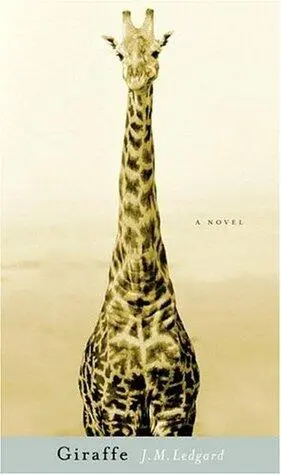
- Название:Giraffe
- Автор:
- Издательство:Penguin Group
- Жанр:
- Год:2007
- ISBN:нет данных
- Рейтинг книги:3 / 5. Голосов: 1
-
Избранное:Добавить в избранное
- Отзывы:
-
Ваша оценка:
Giraffe: краткое содержание, описание и аннотация
Предлагаем к чтению аннотацию, описание, краткое содержание или предисловие (зависит от того, что написал сам автор книги «Giraffe»). Если вы не нашли необходимую информацию о книге — напишите в комментариях, мы постараемся отыскать её.
In 1975, on the eve of May Day, secret police dressed in chemical warfare suits sealed off a zoo in a small Czechoslovakian town and ordered the destruction of the largest captive herd of giraffes in the world. This apparently senseless massacre lies at the heart of J. M. Ledgard's haunting first novel, which recounts the story of the giraffes from their capture in Africa to their deaths far away behind the Iron Curtain. At once vivid and unearthly, Giraffe is an unforgettable story about strangeness, about creatures that are alien and silent, about captivity, and finally about Czechoslovakia, a middling totalitarian state and its population of sleepwalkers.
It is also a story that might never have been told. Ledgard, a foreign correspondent for the
since 1995, unearthed the long-buried truth behind the deaths of these giraffes while researching his book, spending years following leads throughout the Czech Republic. In prose reminiscent of Italo Calvino and W. G. Sebald, he imbues the story with both a gripping sense of specificity and a profound resonance, limning the ways the giraffes enter the lives of the people around them, the secrecy and fear that permeate 1970s Czechoslovakia, and the quiet ways in which ordinary people become complicit in the crimes committed in their midst.
Giraffe — читать онлайн бесплатно полную книгу (весь текст) целиком
Ниже представлен текст книги, разбитый по страницам. Система сохранения места последней прочитанной страницы, позволяет с удобством читать онлайн бесплатно книгу «Giraffe», без необходимости каждый раз заново искать на чём Вы остановились. Поставьте закладку, и сможете в любой момент перейти на страницу, на которой закончили чтение.
Интервал:
Закладка:
There is no stand to be made here. I have given over the results. I have protested. That is all. The State has no interest in bad news. Train wrecks do not make it into its papers, much less contagion. It mercilessly enforces silence. I play my part. I enforce the directives of Soviet laboratories. I copy their methods immediately, without question. I put Russian journals on my shelf and keep British journals in my drawer.
“There’ll be a further investigation to make sure the laboratory is not responsible for releasing the contagion,” he says.
“You have no grounds for suspicion!”
He puts a hand on my shoulder, returning to his former manner. “I know,” he says. “That’s just the order. The collective farms are to go on producing. The borders of ČSSR are not to be closed, not even for a day.”
He turns to look out again at the fortress. “Wasn’t Gavrilo Princip imprisoned in there?” he asks.
“The assassin? Yes. You can see the cell, if you like. They’ve put a plaque on the door. He shot Franz Ferdinand and now he’s a martyr for Yugoslavia, an agitator for Slav brotherhood.”
“How was it in there?”
“The cell is above ground,” I say, “admitting light, but in other respects tubercular.”
“I am going directly to the zoo,” he says abruptly. “I wish to take some blood samples from the giraffes. I’ll need some jars.”
“Fine,” I say. “How many?”
“Fifty or so,” he says.
I pale. “Sorry?” I say, confused.
He smiles. “Didn’t they tell you?” he says. “It’s the largest herd in the world.”
“No,” I say. “No one told me.”
I lead him downstairs. We pass the vault doors. I see him back into his suit jacket and shoes. We walk wordlessly to the sealed room. I shuffle, he clips. He saunters through the seal, through the showers, to the other side. I see him through the grille of my office window, handing his driver a metal case containing fifty empty jars to be filled with giraffe blood.
~ ~ ~
Surely he shall deliver thee from the snare of the fowler, and from the noisome pestilence.
— PSALM 91Emil
ČARODĚ JNICE
APRIL 30, 1975
IT IS ČARODĚJNICE — the witching night, the eve of May Day. I try to mark the outlines of witches riding goats and broomsticks on the windless sky. I look for the outlines of demons gliding down on fibrous wings. Demons were meant to be as vertical as men or giraffes. They had the same promising hemodynamics, until gravity got the better of them in the core of the earth and made them inexpressibly hunched, like the hyena a Slovak once spoke to me of. There were witching nights in Czechoslovakia when witches and demons fell from the sky to forest clearings. There were cats gathered on their hind legs around a bubbling pot in these clearings and women who put a hand to the thigh of some malevolent force and were so possessed they could no longer see their own red-faced children, born of previous such unions, trotting around them, shitting maggoty apples as they went. I look again out of the car window. I see no outlines in the sky save a Czechoslovakian Airlines jet. It is witching night in our ČSSR of 1975. The children will dress as witches, the collective farmworkers will drink and throw broomsticks onto bonfires. That is all.
I STILL HAVE NOT STOOD on any shore. There has not been a moment when I might have walked into a graveyard in the salt marshes on the English coast and stumbled upon Magwitch in chains. I have not been swept back into the waters of the Heligoland Bight. I am a doubler. I serve the shipping company with transmissions in code of The Good Soldier Svejk and other too-obvious texts, and I serve hemodynamics. I have been sent to Switzerland. I sat cross-legged on a sunny platform at the St. Gotthard junction, tossing a five-franc coin, silver and heavy, over and over. I took the train, as instructed: Past the Tobler factory to the highest, wind-sheltered valley of the Upper Engadine.
I came to the village with the secret laboratory. It was autumn. The larch trees were aflame on the mountainsides. I walked through high grass and dandelions to a wooden barn in the center of a meadow. I pushed aside sheep hung with clanging bells. I entered. I found an elevator behind bales of hay. I descended several stories underground. There I examined vials of blood. I gave a talk on cerebral hemodynamics and was able to gather the information requested by the shipping company. Ascending once more, I saw the meadow anew as a line of defense. When the sheep collapsed, the authorities would know a contagion had escaped. There was a graveyard in the Swiss-Italian village in which were graves of alpinists. I wandered there and sat on the grass by the old church. I was in a great amphitheater of mountains. There was a freshly dug grave near me. I glanced at the new grave-stone, still not dug in, and was amazed. Buried there was:
EMIL FREYMANN 1901-1974
A man without an epitaph.
I SLEPT THAT NIGHT in the Hotel Saratz, overlooking the graveyard. A scientist from the laboratory had dinner with me and later sat with me on the balcony of my room, pointing out the various glaciers and the circling eagles: What you say is interesting, Emil. But the motives of animals have always been under investigation by man. Consider how even here in Switzerland, eels were put on trial by the church and excommunicated from Lake Luzern.
I AM BEING DRIVEN to the town with the zoo, by hop poles and vineyards. We enter the town now. I give instructions to pass through the town square. I see the plague column once again and factory women of good political orientation in another part of the square in vests and black pumps, huffing and puffing to a revolutionary tune, practicing a mass gymnastics exercise for the May Day parade. A committee member gives instructions through a megaphone. “Up and down!” he says. “Into the star.” He breaks off. “No. Ladies! Ladies. Try to give the impression of being a wave that rises and falls with the anthem.” The music starts again. The committee member claps his hands. “Again. Huddle together. Star shape! And up, and down.”
We drive on, around the Svět. We come to an armed checkpoint. A notice has been placed here: REVERED COMRADES! THE ZOO IS CLOSED FOR TECHNICAL REASONS. ITS GATES WILL REMAIN SHUT FOR THE COMING HOLIDAYS. THE ZOO DIRECTORATE KINDLY ASKS COMRADES TO POSTPONE
THEIR VISITS.
I SIT IN A TRAILER that was set down by crane next to the giraffe house at the beginning of the quarantine. I have replaced a vet from the Ministry of Agriculture. I have been ordered to oversee the liquidation of the giraffes that I ascended the Labe with. I am to shred any written reference here to them. There will be no talk of Camelopardalis bohemica because there can be no talk of the contagion. They will be killed without exception, but their absence will not be remarked on. The zoo will receive no explanation. The OIE offices in Paris will not be informed. Inquiries will be directed to nonexistent desks in the Ministry of Agriculture. Complaints will be met with threats of imprisonment. It will be as if the herd never migrated to Czechoslovakia or, having taken assisted passage here and become acclimatized, they simply walked out through open gates, heading north.
The zoo is circled with quicklime. Its administration and switchboard have been taken over by the security services. No outgoing telephone calls are allowed and there is only one incoming call each afternoon, to the giraffe house. Outside the zoo walls are army tents and a disinfection unit. The representative of the Central Infection Committee is there, together with the deputy minister of agriculture, the rectors of the Košice and Brno veterinary colleges, and security officers. Alois Hus has flown back into ČSSR this morning. He will be picked up by the secret police at Prague Ruzyně Airport. He will be escorted here, but he will not be permitted to enter the zoo. František Vokurka is also outside. I walked by him dressed in the chemical warfare suit I have been issued. He did not recognize me but told me to hold up. “You’re going too fast, comrade! You need to move like this, languidly, as if you are a frogman underwater.”
Читать дальшеИнтервал:
Закладка:
Похожие книги на «Giraffe»
Представляем Вашему вниманию похожие книги на «Giraffe» списком для выбора. Мы отобрали схожую по названию и смыслу литературу в надежде предоставить читателям больше вариантов отыскать новые, интересные, ещё непрочитанные произведения.



Обсуждение, отзывы о книге «Giraffe» и просто собственные мнения читателей. Оставьте ваши комментарии, напишите, что Вы думаете о произведении, его смысле или главных героях. Укажите что конкретно понравилось, а что нет, и почему Вы так считаете.