J. Ledgard - Giraffe
Здесь есть возможность читать онлайн «J. Ledgard - Giraffe» весь текст электронной книги совершенно бесплатно (целиком полную версию без сокращений). В некоторых случаях можно слушать аудио, скачать через торрент в формате fb2 и присутствует краткое содержание. Год выпуска: 2007, Издательство: Penguin Group, Жанр: Современная проза, на английском языке. Описание произведения, (предисловие) а так же отзывы посетителей доступны на портале библиотеки ЛибКат.
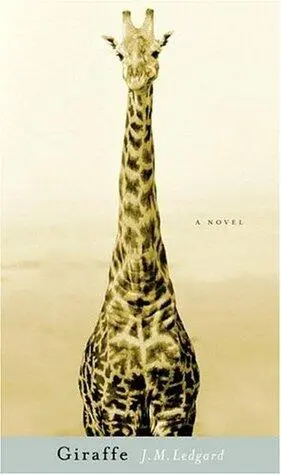
- Название:Giraffe
- Автор:
- Издательство:Penguin Group
- Жанр:
- Год:2007
- ISBN:нет данных
- Рейтинг книги:3 / 5. Голосов: 1
-
Избранное:Добавить в избранное
- Отзывы:
-
Ваша оценка:
Giraffe: краткое содержание, описание и аннотация
Предлагаем к чтению аннотацию, описание, краткое содержание или предисловие (зависит от того, что написал сам автор книги «Giraffe»). Если вы не нашли необходимую информацию о книге — напишите в комментариях, мы постараемся отыскать её.
In 1975, on the eve of May Day, secret police dressed in chemical warfare suits sealed off a zoo in a small Czechoslovakian town and ordered the destruction of the largest captive herd of giraffes in the world. This apparently senseless massacre lies at the heart of J. M. Ledgard's haunting first novel, which recounts the story of the giraffes from their capture in Africa to their deaths far away behind the Iron Curtain. At once vivid and unearthly, Giraffe is an unforgettable story about strangeness, about creatures that are alien and silent, about captivity, and finally about Czechoslovakia, a middling totalitarian state and its population of sleepwalkers.
It is also a story that might never have been told. Ledgard, a foreign correspondent for the
since 1995, unearthed the long-buried truth behind the deaths of these giraffes while researching his book, spending years following leads throughout the Czech Republic. In prose reminiscent of Italo Calvino and W. G. Sebald, he imbues the story with both a gripping sense of specificity and a profound resonance, limning the ways the giraffes enter the lives of the people around them, the secrecy and fear that permeate 1970s Czechoslovakia, and the quiet ways in which ordinary people become complicit in the crimes committed in their midst.
Giraffe — читать онлайн бесплатно полную книгу (весь текст) целиком
Ниже представлен текст книги, разбитый по страницам. Система сохранения места последней прочитанной страницы, позволяет с удобством читать онлайн бесплатно книгу «Giraffe», без необходимости каждый раз заново искать на чём Вы остановились. Поставьте закладку, и сможете в любой момент перейти на страницу, на которой закончили чтение.
Интервал:
Закладка:
“I’ve thought about this,” Vokurka says coolly. “This isn’t a hunt. It’s an execution. It’s not a matter of sighting an animal running away from you, between trees. The giraffes will be right above you. The giraffe keeper will guide them out. He’ll steady them for you. You’ll have no problem if you shoot precisely.”
“Tell me where I should shoot.”
“Not into the chest,” he says. “Never into the chest.”
He takes paper and a pencil. “Ever seen a giraffe close up?” he asks.
“Only from a distance,” I say.
I have never been inside the zoo. I have never seen a beast in a cage. In a trap, but not in a cage.
“Let me draw a giraffe for you.”
He sketches a vertical shape.
“You have to aim for the head,” he says. “The bullet must pass into the brain. That’s not easy. The brain is heavy, tens of kilos, and encased in thick bone.”
“Through the eye?”
“No. The best shot is here, just below and behind the ear,” he says, marking it with a cross. “The bone is less thick there, between the jaw and skull. It’s an aperture into the brain.”
“That’s a hard shot,” I say.
“The ear will cast a shadow,” he says. “You can aim for the center of that shadow. If you hit the giraffe here, where X marks the spot, it’s zhasne —lights out. The giraffe will die instantly, even if the neck cord is not severed.”
“How will I shoot them in the dark?” I say.
“Don’t worry about that,” the VB captain says, intervening once more. “The StB have brought in floodlights.”
“One thing,” I say.
“What’s that?” Vokurka asks.
“I’ll need liquor. I can’t do this without a drink.”
I WALK ALONE THROUGH the zoo, in my nuclear suit. I am out of the forest. I am revealed on concrete. I carry the rifle in one hand, the satchel in the other. I see the floodlights. I follow the footprints in the quicklime toward them. I pass zookeepers who are also in nuclear suits. They move between the cages with shovels and wheelbarrows of feed. I move on slowly, deliberately, as if underwater. I see a swallow, the first of the year. I hear a shotgun: I see pellets in the air like flies and the swallow torn and falling now. A man in a nuclear suit comes running up. He stares at me through goggles.
“We’ve orders to shoot them down,” he says.
I come to the giraffe house. A group of men stand by the wooden fencing. They are also in nuclear suits, but wear aprons over the suits. They are sharpening long knives. They are butchers from a rendering plant. There are two Škoda trucks of a special design, from that rendering plant, parked by the giraffe house.
“They’re supposed to be blood-tight,” a butcher says. “We’ll be here all night. You shoot them and we’ll cut them up and drive them off.”
A young man steps from a hut and walks toward me. He is not much older than my son. He wears a nuclear suit, but no hood. Blond hair falls diagonally across his face. He looks foreign.
“Comrade Sobotka?”
“Yes.”
“I’m Emil.”
“Emil what?”
“Just Emil. I’m the scientist.”
He folds his arms and unfolds them, as though he does not know where to put his hands. Behind him comes the giraffe keeper.
“I’m sorry,” I say to the keeper.
He looks away.
“The okapi?” I ask.
“One of them was shot,” he says. “The other is fine.”
Now comes an StB officer. He wields a camera with a telephoto lens, a Zenit PhotoSniper, as though it were also a weapon. He shouts, “Line up!”
We arrange ourselves in a line: secret policemen, butchers, a blond boy, a giraffe keeper.
“ČSSR is in danger,” the StB officer says. “Our national security is imperiled. The contagion must be contained.”
The butchers turn their knives on the points. I stand with my rifle at my side.
“Orders have been given for the destruction of every one of these giraffes. The zoo is sealed off at gunpoint. No one will be allowed to leave until the liquidation procedure is complete. No one will speak of these events. Anyone who does will be prosecuted and imprisoned. It will be as if this night never happened.”
“Who’s he kidding?” a butcher says beside me. “Here I am working for twelve crowns and fifty heller an hour and he’s going to shoot me after three warnings?”
THE SUN SETS. I see Čarodějnice bonfires burning beside the Svět. I see the puff of other shotgun discharges, and I see new swallows and an unkindness of ravens drop from the sky.
I make a plan now with the scientist Emil and the giraffe keeper. I can see by the way Emil sweeps back his hair over and over, through his surgeon’s gloves, and by his confession of nausea, that he fears this night as I do. The keeper seems not to be quite awake. His eyes are dulled from many days living in quarantine. His giraffes will be driven into the yard in groups of three or four. I will climb up on the fencing around the yard and fire off my shots. It will be too messy to shoot the giraffes inside, where they could not be easily separated and would be driven mad by the crashing deaths.
The floodlights the StB have arranged are useless. The light they shed is watery, useless. It is wrong to imagine that ČSSR has held within it some elite; the secret police are only a reflection of what is apparent.
“I have a flashlight,” the keeper says. “If you shine the light in their eyes they will be blinded and stayed for a moment. Then you can aim it where you need to shoot.”
He looks away and then, after a long pause, back at me.
“Are you the best shot?”
“I’m a fair shot,” I say. “No more.”
“Do your best,” he says. “Concentrate.”
I light a Red Star. The StB officer comes over with a paper bag.
“Here’s your drink,” he says to me. “Two bottles of Cuban rum.”
“Don’t get drunk,” the keeper says.
“To steady my hand,” I say.
“You’re to fire quickly,” Emil says. “One giraffe, two, three. Can you?”
“I’ll try,” I say.
“If it is not a clean shot, then fire again. I’ll run forward when the last of the giraffes falls.”
I CLEAN THE LENSES of my spectacles. I measure the yard. Thirty steps by forty. The giraffes will break stride and hit the fencing. I attend to the Mauser. I open and shut its bolt. I oil it.
There are fireworks breaking overhead now, from the outdoor ice-hockey rink in the town. I see my chance.
“Emil!” I call. “Send the first ones out. I’m ready.”
THE DOORS OF THE giraffe house open. A bull giraffe stands there. Giant. It makes no sound. It moves slowly out into the yard, clopping on the concrete. I climb up on the fence. I balance. Fireworks continue to burst overhead. It is gloomy, then suddenly white, then suddenly yellow, now bathed in green.
“Giraffe!” I shout, as though calling out, “Timber!” in the forest, as though the giraffe is a silver fir. “Giraffe!”
I level the barrel at the bull. I turn the safety catch to the left. I fire. I put a bullet into green light. It strikes below and behind the ear. It enters into the heavy brain. The giraffe does not slump, but is felled. There is a sound of breaking bone as it hits the ground.
The fireworks burst in red. I put bullets into red light now.
WHEN THE FIREWORK DISPLAY is over and there is no more illumination, the StB officer orders a butcher to hold up a flashlight for me. The keeper drives out three more giraffes. They circle in the yard. I take a long swig of rum.
“Shine the light in their eyes,” I say to the butcher. “Then at the back of the head, below the ear.”
The butcher does so. He shines a light on the X -marked spot, the aperture. I am quicker. I lift the Mauser. I level it, I fire. I swing, I level, I fire. I swing again, I level, I fire. They are felled.
Читать дальшеИнтервал:
Закладка:
Похожие книги на «Giraffe»
Представляем Вашему вниманию похожие книги на «Giraffe» списком для выбора. Мы отобрали схожую по названию и смыслу литературу в надежде предоставить читателям больше вариантов отыскать новые, интересные, ещё непрочитанные произведения.



Обсуждение, отзывы о книге «Giraffe» и просто собственные мнения читателей. Оставьте ваши комментарии, напишите, что Вы думаете о произведении, его смысле или главных героях. Укажите что конкретно понравилось, а что нет, и почему Вы так считаете.