J. Ledgard - Giraffe
Здесь есть возможность читать онлайн «J. Ledgard - Giraffe» весь текст электронной книги совершенно бесплатно (целиком полную версию без сокращений). В некоторых случаях можно слушать аудио, скачать через торрент в формате fb2 и присутствует краткое содержание. Год выпуска: 2007, Издательство: Penguin Group, Жанр: Современная проза, на английском языке. Описание произведения, (предисловие) а так же отзывы посетителей доступны на портале библиотеки ЛибКат.
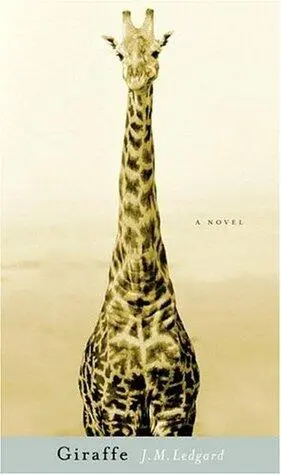
- Название:Giraffe
- Автор:
- Издательство:Penguin Group
- Жанр:
- Год:2007
- ISBN:нет данных
- Рейтинг книги:3 / 5. Голосов: 1
-
Избранное:Добавить в избранное
- Отзывы:
-
Ваша оценка:
Giraffe: краткое содержание, описание и аннотация
Предлагаем к чтению аннотацию, описание, краткое содержание или предисловие (зависит от того, что написал сам автор книги «Giraffe»). Если вы не нашли необходимую информацию о книге — напишите в комментариях, мы постараемся отыскать её.
In 1975, on the eve of May Day, secret police dressed in chemical warfare suits sealed off a zoo in a small Czechoslovakian town and ordered the destruction of the largest captive herd of giraffes in the world. This apparently senseless massacre lies at the heart of J. M. Ledgard's haunting first novel, which recounts the story of the giraffes from their capture in Africa to their deaths far away behind the Iron Curtain. At once vivid and unearthly, Giraffe is an unforgettable story about strangeness, about creatures that are alien and silent, about captivity, and finally about Czechoslovakia, a middling totalitarian state and its population of sleepwalkers.
It is also a story that might never have been told. Ledgard, a foreign correspondent for the
since 1995, unearthed the long-buried truth behind the deaths of these giraffes while researching his book, spending years following leads throughout the Czech Republic. In prose reminiscent of Italo Calvino and W. G. Sebald, he imbues the story with both a gripping sense of specificity and a profound resonance, limning the ways the giraffes enter the lives of the people around them, the secrecy and fear that permeate 1970s Czechoslovakia, and the quiet ways in which ordinary people become complicit in the crimes committed in their midst.
Giraffe — читать онлайн бесплатно полную книгу (весь текст) целиком
Ниже представлен текст книги, разбитый по страницам. Система сохранения места последней прочитанной страницы, позволяет с удобством читать онлайн бесплатно книгу «Giraffe», без необходимости каждый раз заново искать на чём Вы остановились. Поставьте закладку, и сможете в любой момент перейти на страницу, на которой закончили чтение.
Интервал:
Закладка:
I SEE VOKURKA. He does not approach me. He does not recognize me. He moves between the StB officers and the senior Communists. He is not as innocent as his name. He has grown predatory, into one of those tarpon he spoke of, who have learned to come up for air in the mangrove swamps while smaller fish asphyxiate in stagnant waters.
I FIND ALOIS HUS ALONE, sitting on quicklime. He looks up at me desperately, then with recognition.
“Freymann,” he says without surprise.
“Yes, Alois,” I say.
“You were in there?”
“I had a scientific interest,” I say awkwardly.
I am in my clothes now. I can put my hands in the pockets of my tweed trousers. I do so.
“Was the shooting done cleanly?” he asks.
“As cleanly as possible.”
His hands and knees are muddy.
“I’ve been in a field,” he says. “I’ve been on my knees all night. I’ve been listening to the shots.”
“I’m sorry,” I say.
“They didn’t have to kill them,” he says. “They could have done something else. It’s political. They don’t want animals running free.”
There is silence, then he strikes up again.
“They could have dug a pit and filled it with solution,” he says. “They could have walked the giraffes through the pit and ducked them under the solution, just for a moment.”
“Like a baptism?” I say.
“Yes,” he says, his eyes far away.
Amina
ČARODĚJNICE
APRIL 30, 1975
THEY HAVE SET UP a centrifugal fairground ride under the Gothic winged cow to celebrate May Day. You stand in a cage and it spins around. There are no doors, no belts. You spin around and around and gravity binds you in.
I cross the town square. I step over the sundial shadow of the plague column. Children with hooked paper noses go by me dressed in black. They carry broomsticks. One child chases the others, desperately, as though the space between them were a wasteland.
THERE WAS A TIME when witches were burned at the stake in the town square and the corpses were thrown into the Labe to float away, toward the sea. We are taught in our stories that there were three sisters before there were witches. Kazi had the gift of healing. Teta had the gift of finding what was lost. Libuše had the gift of foreknowledge and ruled this land before it was Czechoslovakia. She went down to flowing water and saw the future in the pools. She sat cross-legged on a carpeted platform under a linden tree. People came to her and she dispensed justice to them. Women had authority then; they were the shamans. When Libuše handed power over to men, many women refused to be subjugated. They rose up; they cut down hundreds of men in pitched battles. They fought for seven years, and when the men finally took power, many of the women fled to the forest. They were saturnine. They kept themselves apart. They became witches. They ruled the imagination of Czechoslovakia by night as the priests did by day. They nurtured the memory of the three sisters. They directed their spells against men and the animals that profited men. They lived in caves and in dwellings of green branches. They gathered wild herbs and seeds. They tapped sap from the trees and scooped out from hives combs of wild honey. Czechoslovakia came to be afraid of the witches. They believed the witches spread disease among their livestock. Every year on the witching night they took lengths of cord, had them blessed by the priest, and tied them around the throats of their cows and sheep. Only then did they celebrate the end of winter and carouse through the night, into May Day. Čarodějnice is no longer about the protection of animals, which are units of production, and have no blessing in the Communist moment. No cord is tied around the neck of a cow tonight, save to bind it tight in the dark shed of a collective farm.
I RUN TOWARD THE ZOO. I take the secret path, behind the chapel of St. Michael. I come to the town swimming pool. It is very beautiful now. It is filled for summer and is ghostly blue from the lights within it. I keep out of sight. I creep from the pool up the slope. I slip in the mud. I get up to the path that runs by the zoo wall. I can smell the elephants on the other side. I can hear them thumping. Soldiers are patrolling the path. They are marching up and down with their machine guns. Against what enemy? I wait in the shadows for them to pass. I find a gap in the wall. I squeeze through.
I find myself in the zebra enclosure. A crowd of maneless zebras is around me. They eye me. They roll back their lips. They whinny. They run away. A firework breaks overhead, and another. They are shooting up from the sandy floor of the outdoor ice-hockey rink. They rise in burning phosphor and explode into spheres, like Christmas decorations I have dipped.
I see a secret policeman standing by the ostriches. He is wearing some kind of warfare suit and holding a gun. I run the other way, toward the floodlights arranged over the giraffe house. I know all these paths now.
More fireworks are bursting. I come to the sycamore tree. I kneel down beside it. Red fireworks go up in celebration of the Communist moment of 1975. My world turns pyrotechnical. I feel inconsequential, not just slight and aerated, but invisible, as though I am looking for my reflection in a tray of red spheres in the factory. I see the giraffe house bathed in red, a truck idling red by the yard, three red giraffes in the yard, red men wearing warfare suits carrying knives, saws, and cleavers. I see a man balanced on the fence with a rifle.
“Giraffe!” I hear him shout.
I see the giraffes fall in Christmas red and shatter on the ground, like a decoration. The firework gives out. There is only the weak glow of floodlights.
I run toward the giraffes. I am knocked to the ground by a secret policeman. I get up unsteadily. My hip is bruised. I am awake. I see everything around me in great detail, but I am not in another place; I have not awoken as operatic Amina, in the arms of my love.
I am taken and locked in a trailer, where I can see nothing but hear shots ringing out in quick succession after long silences.
I am taken now to an StB officer. I brush the quicklime from my dress.
“How did you get in here?” he asks.
“Through the zebras.”
“What?”
“Through the cages.”
“You’re in serious trouble,” he says.
The giraffe keeper arrives.
“Amina!” he says quietly. “You’ve come.”
I push forward and embrace him. I have not seen him since the quarantine began.
“You’re under arrest,” the StB officer says.
The keeper steps in front of me.
“You’ll have to arrest me first,” he says.
“We need you,” the StB man says.
“She’s useful,” the keeper says. “The giraffes know her.”
We are silent. We stand off from one another. A young man, a scientist, comes forward. He takes the StB officer to one side. The keeper turns to me. “You can be a comfort to the giraffes,” he says. “You can do that.”
THE STB OFFICER HAS BEEN persuaded to let me stay. I must hold up a flashlight to the giraffes. I must still them in their eyes and then shine on a spot at the back of the head where the sharpshooter is meant to aim.
“If they see you in the last moment, that will be something,” the keeper says, but oddly.
I place my hands to his cheeks. I look at him closely through his goggles. He is sleepwalking. He has walked inward from this moment, far away. There are some who, though asleep, behave as though they were awake.
THE SHARPSHOOTER IS KINDLY, but drunk.
“Shine it at the back of the ear,” he says.
I aim the flashlight.
“Down. Across. That’s it!”
“Wait,” I say.
I run into the giraffe house. I go up the stairs to the loft. I take an armful of browse cut from the acacia trees overhanging the fountain of St. George. I bring it back to the fence. I sort the branches.
Читать дальшеИнтервал:
Закладка:
Похожие книги на «Giraffe»
Представляем Вашему вниманию похожие книги на «Giraffe» списком для выбора. Мы отобрали схожую по названию и смыслу литературу в надежде предоставить читателям больше вариантов отыскать новые, интересные, ещё непрочитанные произведения.




Обсуждение, отзывы о книге «Giraffe» и просто собственные мнения читателей. Оставьте ваши комментарии, напишите, что Вы думаете о произведении, его смысле или главных героях. Укажите что конкретно понравилось, а что нет, и почему Вы так считаете.