J. Ledgard - Giraffe
Здесь есть возможность читать онлайн «J. Ledgard - Giraffe» весь текст электронной книги совершенно бесплатно (целиком полную версию без сокращений). В некоторых случаях можно слушать аудио, скачать через торрент в формате fb2 и присутствует краткое содержание. Год выпуска: 2007, Издательство: Penguin Group, Жанр: Современная проза, на английском языке. Описание произведения, (предисловие) а так же отзывы посетителей доступны на портале библиотеки ЛибКат.
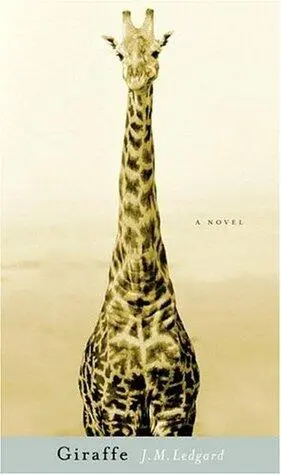
- Название:Giraffe
- Автор:
- Издательство:Penguin Group
- Жанр:
- Год:2007
- ISBN:нет данных
- Рейтинг книги:3 / 5. Голосов: 1
-
Избранное:Добавить в избранное
- Отзывы:
-
Ваша оценка:
Giraffe: краткое содержание, описание и аннотация
Предлагаем к чтению аннотацию, описание, краткое содержание или предисловие (зависит от того, что написал сам автор книги «Giraffe»). Если вы не нашли необходимую информацию о книге — напишите в комментариях, мы постараемся отыскать её.
In 1975, on the eve of May Day, secret police dressed in chemical warfare suits sealed off a zoo in a small Czechoslovakian town and ordered the destruction of the largest captive herd of giraffes in the world. This apparently senseless massacre lies at the heart of J. M. Ledgard's haunting first novel, which recounts the story of the giraffes from their capture in Africa to their deaths far away behind the Iron Curtain. At once vivid and unearthly, Giraffe is an unforgettable story about strangeness, about creatures that are alien and silent, about captivity, and finally about Czechoslovakia, a middling totalitarian state and its population of sleepwalkers.
It is also a story that might never have been told. Ledgard, a foreign correspondent for the
since 1995, unearthed the long-buried truth behind the deaths of these giraffes while researching his book, spending years following leads throughout the Czech Republic. In prose reminiscent of Italo Calvino and W. G. Sebald, he imbues the story with both a gripping sense of specificity and a profound resonance, limning the ways the giraffes enter the lives of the people around them, the secrecy and fear that permeate 1970s Czechoslovakia, and the quiet ways in which ordinary people become complicit in the crimes committed in their midst.
Giraffe — читать онлайн бесплатно полную книгу (весь текст) целиком
Ниже представлен текст книги, разбитый по страницам. Система сохранения места последней прочитанной страницы, позволяет с удобством читать онлайн бесплатно книгу «Giraffe», без необходимости каждый раз заново искать на чём Вы остановились. Поставьте закладку, и сможете в любой момент перейти на страницу, на которой закончили чтение.
Интервал:
Закладка:
“Now,” the sharpshooter says. “They’re opening the doors.”
I hold a branch up. A young male approaches. He leans toward the branch. I shine the light in his eyes. He stops. He pushes back his head, he stretches up. Tears roll down his cheeks.
“Giraffe!” the sharpshooter calls, then pulls the trigger.
The giraffe is hit. It falls.
I begin to cry. The sharpshooter climbs down from the fence. He sets down his rifle and holds me tight.
“Don’t cry,” he says. “Look at me.”
He smells of drink. He pushes back his spectacles.
“What you are doing is a mercy,” he says.
THE YARD IS FILLING with blood. The stench is stronger than the foulest cowshed. The giraffes do not lean. They do not notice me. The keeper and the scientist must light a fire under them to get them out of the giraffe house. Tails burn in the darkness.
All I can do is find their eyes and fill them with light.
I WATCH THE SCIENTIST move with precision through the blood. He puts jars to the springs of blood and fills and stoppers them. Butchers splash in behind him. I see one of the butchers holding up the head of a giraffe by the horns now, as though waiting for it to deflate.
FIRST LIGHT WASHES OVER the Svět. It is May Day.
“Go to the keeper,” the sharpshooter says. “You’ve done your part. There are only a few left. I can see them without the flashlight.”
I AM IN THE keeper’s room. He is not here. The light is breaking through as it did on the morning of Christmas Eve, when everything was as cold and crystalline as Franz Josef Land. From in here I can hear and smell what is going on outside. I am too awake to step inward to fireflies, butterflies. There is shouting from the butchers: Another giraffe is being hauled up into a truck. I block out the sounds. It is a mess in here. I push back my hair and kneel on the floor and sort the keeper’s papers and his studies of Czechoslovakian animal history.
“Don’t bother with that.”
It is the scientist. He is at the door.
“We’ll have to burn everything,” he says. “It’s all contaminated.”
“My dress?” I say bitterly.
“That will be burned too.”
He is covered in blood. His hair also. He lifts up his goggles.
“There can be no record of the contagion,” he says. “It will be exactly as if this night never happened.”
I drop the papers. They scatter over the floor. There will be no more notes of polar bears or of the giraffe with a fractured pelvis who walked over the Julian Alps.
“What is the contagion?” I ask.
“You’ve seen the swellings on their flanks,” he says.
“Most have no marks.”
“The State cannot afford the risk,” he says.
He takes off his surgical gloves, scrubs his hands, and snaps on a clean pair. He brushes back his hair. Strands are stuck together with blood.
“Did you read the stories of our early Slavs?” I ask.
“Yes,” he says.
“There was a story of a boy captured after a battle.”
“Why are you telling me this?”
“Your hair reminds me of that story.”
He arranges his jars of blood neatly on trays. He labels the test tubes. He takes a syringe. He draws blood from a jar. He injects it into one of the test tubes. He seals it. He checks it. He places it in a metal case. “My hair?” he asks.
“A raiding party was captured. They were roped together and sentenced to be executed from the youngest to the oldest and richest. The boy was near the front of the line. He had blond hair, down his back. His friends called him Fine Hair. He was untied and pushed forward. He spoke up when his enemies were about to execute him. He told them they could do what they wanted with him, but they were not to get a drop of blood on his hair.”
The scientist looks up from his test tubes and smiles now, a half-smile of this place, like the half-light cast by the floodlights.
“His enemies took his hair and had it wrapped around the forearm of a servant. ‘Now die,’ they said. The boy shrugged and knelt. He told the servant to hold his hair up tight when the ax fell. The ax came swinging. At the last moment, the boy jerked forward, dragging down the servant’s forearm with his locks. The blade cut off the servant’s hand. The boy’s hair was covered in the servant’s blood. He jumped up and berated his enemies for the mess they had made of his hair. They gathered around and beat their shields. They favored displays of courage. They were delighted with the boy. They gave him a sword and released him.”
“Where do you work?” the scientist asks.
“The Christmas-decoration factory in the town.”
“Why are you here? The keeper?”
I shake my head. “The giraffes. They awaken me.”
He nods. He is about to say something more, but stops. There is another rifle shot. He takes three empty jars and runs out again.
I AM ESCORTED FROM the zoo in the daylight. I cannot look back. I can only look down. The army dogs are barking outside the walls, the wolves answering from inside. I am giddy. I imagine the gorillas calling out to me as I pass: Viva! viva! viva! viva! Amina!
All the paths are quicklime, marked with footsteps, and little bodies of shot birds.
“Keep moving,” the secret policeman says.
So I do.
I AM IN A SHOWER. I lift my breasts. I scrub myself at their command. They hose me with disinfectant.
There is no operatic aria in here. I do not walk over a turning mill wheel to my lover. These men wear goggles and face masks. I see under their suits the red-star badge of the StB.
“You carry the contagion,” one of the men says.
“You are a risk to national security,” the other says.
“Once more,” they say together.
So we begin again with the disinfection.
They open the flap of a tent. They sit me down here on a bench. I put my head in my hands. My hair falls down. I am naked under these overalls. I am shoeless as in my sleepwalking, but am perfectly awake to this May Day. I cannot dull myself. I hear a voice speaking to me.
“My hair is clean now,” the scientist says.
I feel myself to be in that centrifugal ride. I go around and around. I cannot lift my arms up, much less lift off like John the Baptist toward an unimagined color. I am no longer aerated: The chlorine does not pass through me but burns my skin. The centrifugal ride has me. I am pinned to the cage. I am so heavy now, I cannot lift my head. I cannot reply.
Jiří
MAY DAY
MAY 1, 1975
IT IS MAY DAY. The gore I have produced is there for all to see. I wade through the yard. I climb the fence. Emil, if that is his given name, is here by the last truck, exposing film the StB officer took through the night: It will be as if this night never happened.
I walk away in this suit slowly, deliberately. I seem to hear zookeepers crying. A kangaroo hops up in its cage. I see other beasts indistinctly. I cannot tell one cage of apes from another. I come to the zoo gates. Secret policemen and functionaries come up to me.
I am slapped on the back.
I turn. It is Máslo.
“Well done, Sobotka!” he says excitedly.
I AM TAKEN INTO A disinfection unit. They take the Mauser and drop it in a vat of solution. They take the satchel, the thirty-three remaining cartridges, and the cigarettes.
“This is all for burning,” they say.
I am stripped of the suit. My spectacles are taken and dipped in solution too. Goggles are placed on my face.
“Eyes shut. Tighter.”
My hair is soaped and soaped again. They spray me with disinfectant. I am hosed as a horse is hosed. They take off the goggles and wash out my eyes and nose and now my ears and mouth.
I AM GIVEN BACK THE clothes I arrived in. I am led to an empty tent and made to wait here. It is a field-hospital tent. There are plastic windows stitched into it that let in a watery light.
Читать дальшеИнтервал:
Закладка:
Похожие книги на «Giraffe»
Представляем Вашему вниманию похожие книги на «Giraffe» списком для выбора. Мы отобрали схожую по названию и смыслу литературу в надежде предоставить читателям больше вариантов отыскать новые, интересные, ещё непрочитанные произведения.




Обсуждение, отзывы о книге «Giraffe» и просто собственные мнения читателей. Оставьте ваши комментарии, напишите, что Вы думаете о произведении, его смысле или главных героях. Укажите что конкретно понравилось, а что нет, и почему Вы так считаете.