J. Ledgard - Giraffe
Здесь есть возможность читать онлайн «J. Ledgard - Giraffe» весь текст электронной книги совершенно бесплатно (целиком полную версию без сокращений). В некоторых случаях можно слушать аудио, скачать через торрент в формате fb2 и присутствует краткое содержание. Год выпуска: 2007, Издательство: Penguin Group, Жанр: Современная проза, на английском языке. Описание произведения, (предисловие) а так же отзывы посетителей доступны на портале библиотеки ЛибКат.
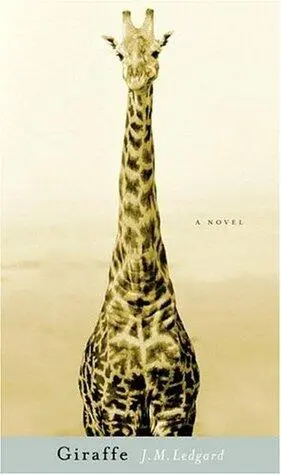
- Название:Giraffe
- Автор:
- Издательство:Penguin Group
- Жанр:
- Год:2007
- ISBN:нет данных
- Рейтинг книги:3 / 5. Голосов: 1
-
Избранное:Добавить в избранное
- Отзывы:
-
Ваша оценка:
Giraffe: краткое содержание, описание и аннотация
Предлагаем к чтению аннотацию, описание, краткое содержание или предисловие (зависит от того, что написал сам автор книги «Giraffe»). Если вы не нашли необходимую информацию о книге — напишите в комментариях, мы постараемся отыскать её.
In 1975, on the eve of May Day, secret police dressed in chemical warfare suits sealed off a zoo in a small Czechoslovakian town and ordered the destruction of the largest captive herd of giraffes in the world. This apparently senseless massacre lies at the heart of J. M. Ledgard's haunting first novel, which recounts the story of the giraffes from their capture in Africa to their deaths far away behind the Iron Curtain. At once vivid and unearthly, Giraffe is an unforgettable story about strangeness, about creatures that are alien and silent, about captivity, and finally about Czechoslovakia, a middling totalitarian state and its population of sleepwalkers.
It is also a story that might never have been told. Ledgard, a foreign correspondent for the
since 1995, unearthed the long-buried truth behind the deaths of these giraffes while researching his book, spending years following leads throughout the Czech Republic. In prose reminiscent of Italo Calvino and W. G. Sebald, he imbues the story with both a gripping sense of specificity and a profound resonance, limning the ways the giraffes enter the lives of the people around them, the secrecy and fear that permeate 1970s Czechoslovakia, and the quiet ways in which ordinary people become complicit in the crimes committed in their midst.
Giraffe — читать онлайн бесплатно полную книгу (весь текст) целиком
Ниже представлен текст книги, разбитый по страницам. Система сохранения места последней прочитанной страницы, позволяет с удобством читать онлайн бесплатно книгу «Giraffe», без необходимости каждый раз заново искать на чём Вы остановились. Поставьте закладку, и сможете в любой момент перейти на страницу, на которой закончили чтение.
Интервал:
Закладка:
The flap opens. A secret policeman brings in the girl who held up the flashlight for me. He sits her down across from me. She has been disinfected also. They have given her overalls to wear in place of her dress. She is bent over, her head in her hands. She does not look up. I cannot see whether she is weeping quietly or is asleep.
IT USED TO BE THAT farmers would take straw and rub it in the mouth of an infected cow and then take the straw and spread it in the mouths of the other cows, so the herd would share the sickness, be milked together, the milk dumped, and would together develop an immunity and recover. I do not know what the contagion is, or if it has been contained through destruction, just as you cut down trees to save a forest during a fire. Perhaps a swallow escaped into the night and infected the cowshed of a collective farm or a fox slipped out through the cages, like the girl slipped in. I know the May Day parade will proceed around the town square with red tractors and brigades of children whirring like clockwork to anthems. The cows will be milked across the ČSSR today, the milk poured out for children, and the surviving okapi will move about its cage in the zoo undisturbed, sneezing quicklime.
“REMEMBER,” THEY SAY. “You were hunting black grouse.”
“Yes,” I say.
“You can go, comrade.”
I AM GIVEN THE MAUSER. I do not have to sign for it. I have not signed my name to anything.
“The strap,” I say. “I’ll need the shoulder strap.”
They find it and hand it to me.
A TALL MAN GRABS ME NOW. I look up. It is Alois Hus, the zoo director. While I have been shooting, he has been crying. I flinch. He might hit me, or embrace me.
“Comrade Sobotka,” he says, embracing me. “Did any survive?” he asks.
“No.”
He bites his lip.
“Alois, forgive me,” I say. “It was a horrific night. I will have nightmares about it for the rest of my life.”
“Twenty-three of those giraffes were pregnant. Did they tell you?”
“No.”
“I’m happy it was you.”
“Just a single shot each time,” I say.
“This was the greatest migration,” he says. “You must understand that they found us on the grasslands, at the edge of red hills. They came to us. You can’t imagine.”
It is true. I understand okapi and cannot imagine what it is to be a giraffe and to move in harsh light at such a height, with long steps. I do not tell him of the burning pages of Red Truth swishing through the witching night, or of how difficult it was to thread those heavy heads with my sparkler. I do not tell him how the felling of each giraffe was more violent to me than finding birds’ nests and squirrels crushed in trees I have cut.
SOLDIERS ARE DRIFTING OFF toward the May Day parade together with secret policemen. I attach the shoulder strap to the Mauser. The barrel drips onto the white-powdered path. I see Emil sliding a metal case onto the backseat of his official car, a Tatra 501. He is showered and smartly dressed. He gets into the front seat and is driven off behind the last truck, just departed, carrying the cow Sněhurka.
I DO NOT TAKE a lift home to my village at the end of the Svět when one is offered to me. I walk up the hill to the forest by the town swimming pool. It is a bright morning. I see Michael touching the pink roof of his chapel, lancing demons and hydras. I break into a run. I enter the trees like a deer from a field.
There is the pine-fresh smell. I am in my living gloom. I go across, deep into the forest, where an okapi might hide. The forest floor is a trampoline of fir roots under me. I pass the secret military base. Its siren will sound out the Communist moment at midday. Squirrels and birds will scatter. Deer will lift their heads. Missile silos will open, as a carp opens its mouth at the surface of the Svět. The siren will cease. The silos will close again. Some of the soldiers will leave the base through a gate in the electrified fence and celebrate May Day with a game of soccer in a clearing.
Tomáš — A Slaughterhouse Man
ČARODĚJNICE
APRIL 30, 1975
COME OFF IT,” I say, upset. “We’ve just finished our shift.”
“Tomorrow is May Day,” Jaro says.
We’re a team, Jaro and I. He drives the truck, I cut the meat.
“There’s a new television drama starting tonight,” I say.
“There’s a bonfire celebration,” Jaro says. “It’s witching night.”
“No dice, boys,” the boss says. “Finish your beers. This is the job you were warned about.”
It’s true — we have been warned. We spent a week getting the metal paddles of the Destruktor in order. We were told to prepare the machines for the heaviest kind of horses.
WE DRIVE BACK to the plant. There’s an StB officer here. It must be something different. I was thinking brewery horses, or something. We’re all here. Every driver, every butcher.
“Sharpen your knives and look alert, boys,” the boss says.
“This is a matter of national security,” the StB man says.
“You’ll be properly compensated, if we keep our mouths shut,” the boss says.
WE’RE GIVEN INSTRUCTIONS. Take the Vamberk road, head for the mountains, keep away from the industrial towns, through a forest to a zoo. A zoo! Well that narrows it down. Jaro and I take the three-ton Robur, the other boys are all in seven-ton Škodas.
THE VB HAVE US lined up on a gravel road that runs along one of those big fishponds. We’ve been waiting here for hours. That’s how it goes. You wait around to get at the animals, and then they expect you to steal in and sweep them up in a minute, and we’re telling them, “No, pal. We’re not garbagemen. We’re slaughterhouse men. We’ll take our fucking time.”
SOLDIERS COME BY THE TRUCKS calling for butchers.
“Just the butchers,” they say.
So I go with the other butcher boys up to the zoo. I went to a zoo once when I was a kid, but I can’t remember anything. It’s a real army-and-secret-police powwow here. They’re everywhere, these guys. Sure enough, when they get us through the gates, they have us put on some kind of nuclear-war suit, so we look like idiots to one another now. We march through the zoo in these suits with our butchers’ aprons over the top and all the knives and cleavers hanging off our belts, and I’m thinking, What happens if I accidentally cut a hole in this suit — what happens to me then? I see a rhinoceros and one of the boys points out some small deer asleep on the ground. We go up the hill to the giraffe house. Jesus and Mary. Giraffes! It’s all about giraffes. They give us another speech. The same thing as back in the plant. Only this time they say there is a plague, a contagion or something, not harmful to us, to people, but harmful to other animals. I guess that explains the powder all over the place.
THE KILLING BEGINS. We’re not usually in on the kill. We usually pick up dead animals at the end of fields or on a riverbank and such. They’re animals you never think much about, except at lunchtime, cows and sheep mostly, which are meant to die. This is something different. It turns your stomach. They run the giraffes out into the yard. There is a hunter balanced on the fence. There are fireworks coming up from some celebration and the hunter — he calls himself a hunter — shoots the giraffes by the light of the fireworks.
green
blue
yellow
red
The fireworks have run out now and it’s me, some luck, holding up a flashlight at the fence. I’m supposed to shine it in the eyes of the giraffes, sort of stun them, and then at the back of the head to form some kind of target for the hunter. The yard is filling with blood. It’s getting ripe. The giraffes are too scared to run out. So the keeper starts lighting their tails with bits of burning newspaper.
Читать дальшеИнтервал:
Закладка:
Похожие книги на «Giraffe»
Представляем Вашему вниманию похожие книги на «Giraffe» списком для выбора. Мы отобрали схожую по названию и смыслу литературу в надежде предоставить читателям больше вариантов отыскать новые, интересные, ещё непрочитанные произведения.




Обсуждение, отзывы о книге «Giraffe» и просто собственные мнения читателей. Оставьте ваши комментарии, напишите, что Вы думаете о произведении, его смысле или главных героях. Укажите что конкретно понравилось, а что нет, и почему Вы так считаете.