J. Ledgard - Giraffe
Здесь есть возможность читать онлайн «J. Ledgard - Giraffe» весь текст электронной книги совершенно бесплатно (целиком полную версию без сокращений). В некоторых случаях можно слушать аудио, скачать через торрент в формате fb2 и присутствует краткое содержание. Год выпуска: 2007, Издательство: Penguin Group, Жанр: Современная проза, на английском языке. Описание произведения, (предисловие) а так же отзывы посетителей доступны на портале библиотеки ЛибКат.
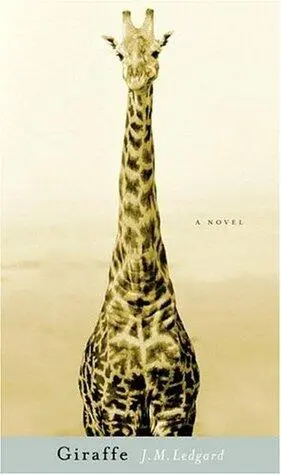
- Название:Giraffe
- Автор:
- Издательство:Penguin Group
- Жанр:
- Год:2007
- ISBN:нет данных
- Рейтинг книги:3 / 5. Голосов: 1
-
Избранное:Добавить в избранное
- Отзывы:
-
Ваша оценка:
Giraffe: краткое содержание, описание и аннотация
Предлагаем к чтению аннотацию, описание, краткое содержание или предисловие (зависит от того, что написал сам автор книги «Giraffe»). Если вы не нашли необходимую информацию о книге — напишите в комментариях, мы постараемся отыскать её.
In 1975, on the eve of May Day, secret police dressed in chemical warfare suits sealed off a zoo in a small Czechoslovakian town and ordered the destruction of the largest captive herd of giraffes in the world. This apparently senseless massacre lies at the heart of J. M. Ledgard's haunting first novel, which recounts the story of the giraffes from their capture in Africa to their deaths far away behind the Iron Curtain. At once vivid and unearthly, Giraffe is an unforgettable story about strangeness, about creatures that are alien and silent, about captivity, and finally about Czechoslovakia, a middling totalitarian state and its population of sleepwalkers.
It is also a story that might never have been told. Ledgard, a foreign correspondent for the
since 1995, unearthed the long-buried truth behind the deaths of these giraffes while researching his book, spending years following leads throughout the Czech Republic. In prose reminiscent of Italo Calvino and W. G. Sebald, he imbues the story with both a gripping sense of specificity and a profound resonance, limning the ways the giraffes enter the lives of the people around them, the secrecy and fear that permeate 1970s Czechoslovakia, and the quiet ways in which ordinary people become complicit in the crimes committed in their midst.
Giraffe — читать онлайн бесплатно полную книгу (весь текст) целиком
Ниже представлен текст книги, разбитый по страницам. Система сохранения места последней прочитанной страницы, позволяет с удобством читать онлайн бесплатно книгу «Giraffe», без необходимости каждый раз заново искать на чём Вы остановились. Поставьте закладку, и сможете в любой момент перейти на страницу, на которой закончили чтение.
Интервал:
Закладка:
OTHER BOYS COME TO clean up. The Destruktor will keep heating up. It’ll keep turning. The metal blades will start churning. Those giraffes won’t want to be liquidated. They’re heavier than brewery horses. They’ll bend the blades out of shape. The boys will have to stop the machine, let it cool, climb in there with hammers, chest-wading, and beat the blades back into shape. They’ll start it up again. They’ll turn the heat up. The drum will start turning over again. It’ll get hotter and hotter and darker and darker. It’s hell in the Destruktor. It’s the kind of place where an angel would unsheathe his sword, where life is undone. Those giraffes will lose their spots in there. The hair will come off their tails where it wasn’t singed off with the burning newspapers, their flesh will soften and peel from the bone. Their eyes, their lips, their little horns, their lungs, brains, veins and arteries, the ligaments holding their necks in place, the vertebrae themselves, their hooves, the little unborn one, will all melt. The drum will keep turning. They’ll just be ligaments and bones. The ligaments will snap, the bones will break, and break again. They’ll be a slop, slopping, a berry porridge. The drum will keep turning. All the liquids that made those giraffes will evaporate. They’ll just be dry meal left, to feed to cattle.
~ ~ ~
Sub specie aeternitatis.
Emil
MAY DAY
MAY 1, 1975
THERE WAS A JOURNEY in 1973 when Sněhurka stood behind me. I leaned back against her legs on a barge, and I looked back at her through a narrow window on a truck, when she opened her eyes to a beekeeper and to the beer offered up by villagers. I follow her now to the rendering plant. She lies in the truck ahead of me, like a fallen tower of the Qasr al-Qadim. I could not watch her death, or take a sample of her blood. I imagine it now, as I have imagined her birth and her captivity. She kicked out in the giraffe house until her legs were broken. She ran on broken legs. The crack of the rifle came to her like the sound of thunder. She was hit. Gravity snatched at her. She was hit again, and she fell. There was a coldness, a sinking. She felt no pain; she was aware only of memory slipping from her, as dreams slip from the waking. She died. She could see a zebra, and then only stripes of a zebra, and then only a space where the shape of the zebra was. She remembered she was single, then her thoughts became mingled.
Death is a confirmed habit into which we have fallen.
This was scribbled in my uncle’s copy of Great Expectations. I would further underline fallen. I follow a convoy of trucks packed with the secretly liquidated beasts. I follow them through bursting spring, through leaded exhaust fumes, spluttering black on the inclines, under hedge maple and elder, by verges of hawthorn and poppies, gardens of red tulips and green-rising wheat fields, and by a camp where professional cyclists from the Tour of Czechoslovakia are sleeping under canopies, and windburned mechanics move about with cups of coffee, spinning wheels on upturned bikes.
THE RENDERING PLANT IS A whaling station of my imagination, a pier smeared crimson with fat jutting into cobalt Antarctic waters in which elephantine mermaids feed on krill and penguins, but beached somehow upon landlocked Czechoslovakia.
The smell is of giraffes being rendered and of rancid chicken feathers filling a warehouse to the ceiling waiting to be melted into a putty and fed to other chickens, just as the giraffes will be ground into dry meal and fed to cattle in the neighboring collective farms.
“The meal will be perfectly sterile, comrade,” the head of the plant says. “No contagion can survive our machines.”
He hands over several files of paperwork.
“It hasn’t been an easy night,” he says. “We’ll need compensation. The giraffe bones have beaten the blades inside our Destruktor machine out of shape.”
“I’ll see what I can do,” I say.
I tear the files in two and hand them back to him.
“Put these in with your chicken feathers,” I say.
MY ARM IS TO MY mouth. My goggles are steamed up with deathly fluids. I almost slip into a hole swilling with pale blue bowels. The butcher who cut out the tongue is here on the cutting floor. He’s swinging an ax. Sněhurka hangs, enormous, upside down on a metal chain, together with the remains of a Rothschild bull and calf. Her neck is broken; her tongue hangs out. Her eyes are open. A square of hide has been cut from her body.
“Some of her hide is missing,” I say.
The butcher shrugs. “Lots of things missing here, pal,” he says.
I ask him about the pregnancy — she must have been pregnant. He takes a narrow blade, like a screwdriver. He sinks it into her belly. Clear fluid comes out. He moves the blade around.
“She’s full all right, pal,” he says.
THERE ARE POOLS AT THE back of the rendering plant in which the blood, the giraffe blood, is cleaned into a clear fluid. The fluid drains into a stream and flows with the stream by fields of rape, through oak groves, down into the River Orlice, into the Labe with its Czech-speaking vodníks, down to the port of Hamburg, into the Heligoland Bight, across the North Sea, skirting the English salt marshes where Pip tended Magwitch, drifting into the Atlantic, washing chemicals over tapering glass eels, sinking deep off Mauritania into the ocean conveyor, circulating north on the conveyor all the way to the Barents Sea, where fictional Emil perhaps drowned soundlessly in a U-boat, and ending in a floe of jade ice on which a polar bear waits patiently over a breathing hole, with cocked paw, for surfacing seals. Our souls resemble water, Goethe says. So too our bodies. There is a flow within us, rising and falling, unidirectional to the heart. There is a flow without also. We circulate. We are drawn up, we fall back down to earth again. It is all hemodynamics.
I PUT MY HAND ON the shoulder of the other StB man. I drop my head. I breathe deeply. I have nothing left to vomit.
I LEAVE MY IMAGINED whaling station. I strip off the chemical-warfare suit; again I have had to wear it. I throw away the goggles. I am perfunctorily showered.
“How far is the nearest village?” I say to the plant manager.
“Five kilometers.”
“I’ll walk. I need some air.”
I take the metal case from the car. I handcuff it to my wrist. I send the car ahead. I will return to Prague later today. I will sit on the roof terrace on Baba Hill, not mentioning any of this to my family, not looking in the direction of the Prague Zoo.
I AM SURROUNDED BY fields of yellow rape. The witching moon has faded into a blue sky. This is the end of the road. It runs from here in a perfectly straight line to the village. It must have been laid down by the Nazis when they built the rendering plant in their campaign to sanitize their Protectorate. There are blossoming fruit trees lining either side of the road. The stream runs beside it in a ditch, headed for somewhere beyond the Barents Sea. The nettles are thick along the stream. I part them. I crouch down, I teeter. I put a hand to the water and calculate the flow. Finger-length trout dart away from me.
I go on under blossoms — pink, magnolia, apple-white, and snow-white. I am not Pip. Fictional Emil is far away, is soundless. I see a flight of newly returned swallows dipping toward the rapeseed and rising again. The professional cyclists of the Tour of Czechoslovakia must be awake now and racing hard toward the black mills of Austerlitz, following the route crows took in the time of Napoleon and still take now. I see the village in the distance, a little downhill. I walk toward it, back into the Communist moment. The May Day parade will be smaller there this year — the dairy workers will be forbidden to march. The road under me has been sprinkled with chloramine. I leave my footsteps in it, some kind of vertical outline of myself. I tighten my grip on the metal case, in which are my forty-seven test tubes of giraffe blood and a single giraffe tongue floating in preservative. Music comes to me, forms. It is the last piece of our Czech-born Gustav Mahler’s Song of the Earth: “Der Abschied,” or “Farewell.”
Читать дальшеИнтервал:
Закладка:
Похожие книги на «Giraffe»
Представляем Вашему вниманию похожие книги на «Giraffe» списком для выбора. Мы отобрали схожую по названию и смыслу литературу в надежде предоставить читателям больше вариантов отыскать новые, интересные, ещё непрочитанные произведения.



Обсуждение, отзывы о книге «Giraffe» и просто собственные мнения читателей. Оставьте ваши комментарии, напишите, что Вы думаете о произведении, его смысле или главных героях. Укажите что конкретно понравилось, а что нет, и почему Вы так считаете.