J. Ledgard - Giraffe
Здесь есть возможность читать онлайн «J. Ledgard - Giraffe» весь текст электронной книги совершенно бесплатно (целиком полную версию без сокращений). В некоторых случаях можно слушать аудио, скачать через торрент в формате fb2 и присутствует краткое содержание. Год выпуска: 2007, Издательство: Penguin Group, Жанр: Современная проза, на английском языке. Описание произведения, (предисловие) а так же отзывы посетителей доступны на портале библиотеки ЛибКат.
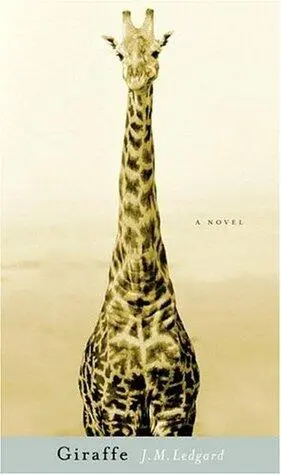
- Название:Giraffe
- Автор:
- Издательство:Penguin Group
- Жанр:
- Год:2007
- ISBN:нет данных
- Рейтинг книги:3 / 5. Голосов: 1
-
Избранное:Добавить в избранное
- Отзывы:
-
Ваша оценка:
Giraffe: краткое содержание, описание и аннотация
Предлагаем к чтению аннотацию, описание, краткое содержание или предисловие (зависит от того, что написал сам автор книги «Giraffe»). Если вы не нашли необходимую информацию о книге — напишите в комментариях, мы постараемся отыскать её.
In 1975, on the eve of May Day, secret police dressed in chemical warfare suits sealed off a zoo in a small Czechoslovakian town and ordered the destruction of the largest captive herd of giraffes in the world. This apparently senseless massacre lies at the heart of J. M. Ledgard's haunting first novel, which recounts the story of the giraffes from their capture in Africa to their deaths far away behind the Iron Curtain. At once vivid and unearthly, Giraffe is an unforgettable story about strangeness, about creatures that are alien and silent, about captivity, and finally about Czechoslovakia, a middling totalitarian state and its population of sleepwalkers.
It is also a story that might never have been told. Ledgard, a foreign correspondent for the
since 1995, unearthed the long-buried truth behind the deaths of these giraffes while researching his book, spending years following leads throughout the Czech Republic. In prose reminiscent of Italo Calvino and W. G. Sebald, he imbues the story with both a gripping sense of specificity and a profound resonance, limning the ways the giraffes enter the lives of the people around them, the secrecy and fear that permeate 1970s Czechoslovakia, and the quiet ways in which ordinary people become complicit in the crimes committed in their midst.
Giraffe — читать онлайн бесплатно полную книгу (весь текст) целиком
Ниже представлен текст книги, разбитый по страницам. Система сохранения места последней прочитанной страницы, позволяет с удобством читать онлайн бесплатно книгу «Giraffe», без необходимости каждый раз заново искать на чём Вы остановились. Поставьте закладку, и сможете в любой момент перейти на страницу, на которой закончили чтение.
Интервал:
Закладка:
“She’s not going to make it out,” he says to me, breaking his silence. “You’ll have to shoot her inside.”
I follow the keeper up the stairs in the giraffe house to the hayloft, where feed is set down at the height of giraffe heads. The cow runs back and forth below. She kicks out at the stalls. Her hooves are large and heavy. They leave jagged marks in the wood and circles in the metal.
“Her name is Sněhurka,” the keeper says blankly, “because of the snow-white of her belly and legs. She was a leader in the herd.”
The keeper slips away. I am without a witness. The girl is not here. Emil is not here. The StB officer is not aiming his telephoto lens and photographing me. I am alone in the barn, which is thick with contagion. I lie down on my belly in the loft, on hay and branches stripped clean by giraffes. I am tired. I swig the last of the rum. The stench of the yard is in here. May Day light slants in through the high windows.
It is harder to shoot across. The point of entry is different.
Giraffe, I say to myself.
I turn the safety catch to the left. I am at eye level with Sněhurka. She is running away from me on broken legs. I level the barrel at the aperture. I fire. I miss. The bullet is lodged in the flesh of her neck. She blinks, she swings on her broken legs, but she does not collapse. Blood springs from her neck. I slide back the bolt, I load. I level, I fire. The 57 mm bullet is gone from me. The sound of it reverberates.
Sněhurka buckles. She falls. She does not splash into blood, but crumples, enormous, to straw and dung. I stand. I look down. She is still alive. Her eyes level on me; they mark me. I fire once more. Her body tightens into that fragment of existence when you are no longer living and not yet dead. Her eyes close. Her legs kick out finally, as if a puppeteer is pulling her strings one last time. She is dead. Blood spouts from her, but Emil is not there with his grail. I get down on my knees.
“God grant her light soil,” I say aloud.
THE KEEPER IS NOWHERE to be found. The girl has been taken away. The butchers open the doors now. They stand glistening, knives and rope in hand. They look at Sněhurka and come forward. I force myself to watch them, as one should watch the gutting of a deer you have shot. They cut her tendons. They fold her up, as though she were going back to the womb, not to a truck.
Emil
ČARODĚJNICE
APRIL 30, 1975
NIGHT FALLS AND MORE birds are shot from the sky. We let out a Rothschild calf now with a plaster cast on a foreleg. It hobbles into the yard. Sobotka pushes back his spectacles with lenses so thick his pupils are magnified to cartoon proportions, like the professor overlooking the Ohře. He shoots the calf in the head. I run forward through blood that is deeper now, that is over my ankles. I brush aside a hornet. I fill the jar. I signal to a butcher to bring me meat scissors. I take the scissors, the kind they use to separate joints, and I cut up the length of the cast. I examine the leg. The bone has grown back together. I look at it for a long moment. Finally, I manage to frame it. If I can have one memory from this night, it should be this.
On a corridor at the back of the Národní Muzeum in Prague sits an artifact in a glass cabinet. It is a figurine of polished black stone, a depiction of a bald man metamorphosed into a beetle. The face is perfectly human, as are the arms, delicate fingers, and trimmed fingernails; he might be an Assyrian scribe. About the torso is a shell, from which grow insect legs staved with bristles and hooks, enclosing the yellow fluids and membrances of a beetle and wings, visible in gossamer through a scabby slit down the back. I stand here in blood. For a moment I do not see myself as a vodník waiting to catch a falling stewardess in a Venetian lagoon, but as a man metamorphosing into a beetle. I fly toward the light. I hit a window. I fall on my back. I cannot turn over again. I give myself out in lesser and lesser movements.
A STRANGE GIRL HAS APPEARED out of the witching night, unprotected and distraught. She has been detained for some hours in the trailer and is now brought for questioning. I instruct the StB officer not to send her away but instead to have her hold up the flashlight for Sobotka in place of a butcher. She is doing that now. She is shining a beam in the eyes of a reticulated bull. She blinds and stops the bull with that light. She trains the beam at the back of the head. Sobotka fires. The giraffe falls. The hunter is a miracle. He is drunk and cannot keep his rifle straight. It sinks in his hands. From revulsion also, he says. He sets it down. He crosses himself. He drinks some more. He breathes deeply. He levels the barrel again, for a split second.
“Giraffe!” he calls.
He lets off another shot. The rifle kicks into his shoulder. He is a sharpshooter. The bullets hit where they are supposed to. They fire up through the wonder net, through the brain, lodging most often in the frontoparietal cavity. He knows before anyone else when he misses. He climbs higher on the fence, the girl holds him by the ankles, he fires again.
The giraffes keep crumbling like minarets and like the towers of Palermo. I run forward with my jars, making calculations of the cosmic collapse of veins as I go. I mathematically transform the deformation of arterial walls and the viscosity of flow into measures of time. I collect the blood. One fountain here, another, then a third.
The keeper speaks now only to call out the names and years of birth, which I mark on the jars.
“Božena! 1975,” he calls. “Luděk! 1971.”
Others are named:
Eliška!
Šohaj!
Honza!
I try not to look at their horns or neck markings. I still wish to remember them on a barge passing under the castle at Meissen. It is foul to me to splash blood over their hides, staining the mazed lines, which contain the circulatory system I have come to know, of a red flow unidirectional to the heart; not Communist red, but crimson of stars that give no light, black-red of vaulted aorta and proximal arteries, blue-red about the veins of the wrists and ankles, and tidal colors of the wonder net’s channels, which absorb the flow, give out, and are then drawn back.
Tribal peoples made sandals of giraffe hide. It is sad to me that a piece of any creature pushed up in defiance of gravity should be fashioned into a shoe striking the dust on the ground. Giraffe hide is also burned in other tribal cultures and the smoke inhaled as a cure for hemophiliacs, as though breathing it would be enough to thicken thin skin into an antigravity suit.
MY CHEMICAL-WARFARE SUIT ITCHES. I cannot wear the hood up. I am blond still, like fictional Emil. I think of my namesake, of what became of him, of where his detectives are. I move slowly around the giraffes. I see how the legs are the length of the necks. This goes unnoticed when they are alive and upright. Even though they push the giraffe above all living things, the legs are forgotten. It must be that the memory of a giraffe begins with the neck and moves to the head, just as it does with people.
MAY DAY COMES, too late. At the end now, I have to ask a butcher to cut out a tongue. I order the burning of the giraffe keeper’s papers along with his clothes and I personally expose the rolls of film the StB officer shot with his PhotoSniper. I keep the jars of blood for myself and the tongue also.
I STRIP. THEY SPRAY ME with disinfectant. My eyes sting. I am led, momentarily blind, into a tent. I gather myself. The girl is in this tent also. Her head is in her hands. I want to see her face, I want her to look at me.
“My hair is clean now,” I say.
She says nothing. She does not look up. It is as if she were in a trance, or sleepwalking like a giraffe.
Читать дальшеИнтервал:
Закладка:
Похожие книги на «Giraffe»
Представляем Вашему вниманию похожие книги на «Giraffe» списком для выбора. Мы отобрали схожую по названию и смыслу литературу в надежде предоставить читателям больше вариантов отыскать новые, интересные, ещё непрочитанные произведения.



Обсуждение, отзывы о книге «Giraffe» и просто собственные мнения читателей. Оставьте ваши комментарии, напишите, что Вы думаете о произведении, его смысле или главных героях. Укажите что конкретно понравилось, а что нет, и почему Вы так считаете.