J. Ledgard - Giraffe
Здесь есть возможность читать онлайн «J. Ledgard - Giraffe» весь текст электронной книги совершенно бесплатно (целиком полную версию без сокращений). В некоторых случаях можно слушать аудио, скачать через торрент в формате fb2 и присутствует краткое содержание. Год выпуска: 2007, Издательство: Penguin Group, Жанр: Современная проза, на английском языке. Описание произведения, (предисловие) а так же отзывы посетителей доступны на портале библиотеки ЛибКат.
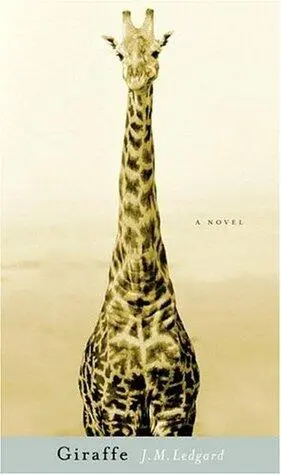
- Название:Giraffe
- Автор:
- Издательство:Penguin Group
- Жанр:
- Год:2007
- ISBN:нет данных
- Рейтинг книги:3 / 5. Голосов: 1
-
Избранное:Добавить в избранное
- Отзывы:
-
Ваша оценка:
Giraffe: краткое содержание, описание и аннотация
Предлагаем к чтению аннотацию, описание, краткое содержание или предисловие (зависит от того, что написал сам автор книги «Giraffe»). Если вы не нашли необходимую информацию о книге — напишите в комментариях, мы постараемся отыскать её.
In 1975, on the eve of May Day, secret police dressed in chemical warfare suits sealed off a zoo in a small Czechoslovakian town and ordered the destruction of the largest captive herd of giraffes in the world. This apparently senseless massacre lies at the heart of J. M. Ledgard's haunting first novel, which recounts the story of the giraffes from their capture in Africa to their deaths far away behind the Iron Curtain. At once vivid and unearthly, Giraffe is an unforgettable story about strangeness, about creatures that are alien and silent, about captivity, and finally about Czechoslovakia, a middling totalitarian state and its population of sleepwalkers.
It is also a story that might never have been told. Ledgard, a foreign correspondent for the
since 1995, unearthed the long-buried truth behind the deaths of these giraffes while researching his book, spending years following leads throughout the Czech Republic. In prose reminiscent of Italo Calvino and W. G. Sebald, he imbues the story with both a gripping sense of specificity and a profound resonance, limning the ways the giraffes enter the lives of the people around them, the secrecy and fear that permeate 1970s Czechoslovakia, and the quiet ways in which ordinary people become complicit in the crimes committed in their midst.
Giraffe — читать онлайн бесплатно полную книгу (весь текст) целиком
Ниже представлен текст книги, разбитый по страницам. Система сохранения места последней прочитанной страницы, позволяет с удобством читать онлайн бесплатно книгу «Giraffe», без необходимости каждый раз заново искать на чём Вы остановились. Поставьте закладку, и сможете в любой момент перейти на страницу, на которой закончили чтение.
Интервал:
Закладка:
I do move slowly in this trailer. I sip tea. I pick up the newspapers. I read again of the five-to-two defeat of ČSSR by the USSR in the ice-hockey world championships, quotas and achievements, the opening of the Máj department store on Národní Street in Prague, a new television drama in which an army major proves himself a hero every week, and also in the sports pages of the return to the Communist moment of an eighteen-year-old tennis prodigy called Navrátilová from a world tour that included a string of victories.
There are also veterinary papers. The giraffe keeper looks out of the window, as though expecting a visitor, while I read of placental retention in the giraffes of the Leningrad Zoo, of arterial studies on vivisected dogs, and of the tendency toward pelvic tendon rupture in male zoo giraffes.
I am sober. I understand pyres will be built across ČSSR if the contagion is not contained. They were described to me in Prague. A bed of timbers and railway sleepers, a layer of brown coal, oil, straw, the carcasses laid on top, like some funeral in the time of Libuše. I understand the smoke from these pyres, of chlorine-soaked carcasses, will be more poisonous than arsenic.
I can no longer stop the Communist moment. I find it hard to stop images with my eye in the way I used to, keeping them in my mind and turning them. I stood yesterday in a secret laboratory on the banks of the River Ohře and my eye was drawn to a weeping willow on the far bank, as if in broad daylight I might chance to see a vodník sitting in the branches. The professor running the facility was a small man, unfailingly polite, who offered resistance when called upon to do so, conceded gracefully, and had exceptionally thick spectacles from staring so long into microscopes and vials. He showed me the metal doors securing the animal plagues. The doors reminded him, he said, of hatches on a submarine. I was disoriented when he said that. I had a feeling of being upended, as if I were standing on the flat deck of a submarine, cold water rushing about me, and the only escape were into a chamber of pestilence.
WE GO INSIDE THE GIRAFFE house again: They are impossible. There is no such animal.
I still regard these beasts in that way. I have forgotten so much in the last two years, but I cannot forget the towers of the Qasr al-Qadim fortress, over which the gyrfalcon sailed and looked down on the only giraffe in Europe. My eyes are watering: There is a high level of ammonia here. It is too crowded. There have been births since I left here in the summer of 1973, just as Hus predicted. There are now forty-seven giraffes; two others have already been shot. I move among them. They have become fully zoo animals. Their eyes have changed in aspect. I do not look at them closely. I do not want to remember the necks I moved under on the barge. I try to regard them only as hemodynamic specimens, pressing blood to the tin roof. I walk away when I catch sight of Sněhurka’s belly in the crowd.
“They’re not sick,” the keeper says, following me. “It’s spring. They salivate with the change of feed. That’s all.”
He is in denial. The African number-two contagion is in their blood and lymph nodes. I see it here and here, in pox, in blisters, manifested in boils in the inner thigh that are black like the plagues spoken of in Athens, shiny, waiting to break open like rotten fruit.
THERE IS A STORY of a ferryman on the Labe who found himself untouched by a pestilence while his wife and children were struck down. There were the most sorrowful and wretched scenes along the riverbank. Each day the ferryman would leave a parcel of food on the shore and call out to his pox-ridden wife. She would come out of their dwelling with their children. He would, at her heartrending entreaty, row out into the river, within shouting distance only, and so they called to each other loving greetings and he asked after the health of those children not present. When the ferryman could no longer bear it, he rowed his oars hard toward his family, and they took up stones and pieces of wood, even the smallest child, raining them down on him, until he turned back and rowed away, sobbing.
The contagion in the giraffes is not like that. The parting is not man from man, but man from beast. I am vertical, but separate from the giraffes. The contagion is virulent to other hoofed animals but is not dangerous to humans or to animals that are close to humans, such as horses and dogs. I will not develop lumps in the pits of my arms. The contagion will strike down only these creatures tottering in ammonia behind me. It is as Aristotle said — we differ from animals in our ability to speak. We alone can speak of the Communist moment, of justice and injustice. It is our speech that passes judgment on animals, excommunicating eels and condemning giraffes.
“The orders are for complete destruction,” I say to the keeper. “Tonight.” It is as if I have ordered his destruction.
“They are healthy,” he says, but nothing more.
Jiří
ČARODĚJNICE
APRIL 30, 1975
IHAVE A MEMORY from 1941, the year I killed my first boar. I am a little boy, pushing a wheelbarrow from a damp hay barn after a summer rainstorm. I am wearing a raincoat, buttoned to the collar. I cycle across the crest of a meadow. I see a double rainbow and a maypole around which people are dancing on a field below.
Tomorrow is May Day. There will be speeches and parades in the town. They will go around and around the pine tree I have myself cut down and stripped.
I AM DRINKING in the sawmill. The windows are open now. There is the smell of cut wood. We’re having a party for Luboš, the forester responsible for the Christmas tree harvest. He’s moving to a mountainous part of the country, where there still are bears and wolves. Another bottle is uncorked. We cheer Luboš but do not yet break into song.
I go outside with Luboš. We lean against planking sliced from spruce we have grown together in the forest. We smoke Red Stars and drink.
“You’re a lucky man,” I say, “to be going to such a wild and mountainous place.”
“You could move also,” he says.
“I can never leave,” I say. “I’m too accustomed to seeing the Svět between the trees. I wish only for those heights here.”
The comrades have put on the music. We’re getting in the mood. I hear someone calling my name.
“Sobotka?”
“Yes,” I say.
A Communist official stands before me. I recognize him finally, but I cannot remember his name. He’s from one of the industrial towns. His shirt is sweated through.
“Comrade!” I say. “What brings you here?”
“You,” he says, unsmiling.
“Have a drink!”
I put an arm around him. He shakes it off.
“No drink,” he says. “Listen, we’ve got foreign guests here to shoot black grouse. We need you to guide them.”
“Grouse? This time of year?”
“We need you to accompany us now.”
He gestures to two Státní Bezpečnost, or secret policemen, standing by an official car.
“No fuss,” he says.
“I’d like to oblige,” I say, “but as you can see, I’m occupied.”
He puts up a shaking hand.
“Comrade Sobotka, you have no choice in the matter.”
WE DRIVE AWAY ON the road by the marsh. There is matter in the air from the chimneys in the industrial towns, a luminescence of dust that settles in the sunbeams and on the petals of the spring blossom.
“I need to go home to change and shave.”
He shakes his head and taps his wristwatch. It has a hammer-and-sickle dial.
“Just bring your biggest-caliber rifle and all the ammunition you can carry.”
“I thought we were going to shoot black grouse.”
“We are,” he says.
Читать дальшеИнтервал:
Закладка:
Похожие книги на «Giraffe»
Представляем Вашему вниманию похожие книги на «Giraffe» списком для выбора. Мы отобрали схожую по названию и смыслу литературу в надежде предоставить читателям больше вариантов отыскать новые, интересные, ещё непрочитанные произведения.



Обсуждение, отзывы о книге «Giraffe» и просто собственные мнения читателей. Оставьте ваши комментарии, напишите, что Вы думаете о произведении, его смысле или главных героях. Укажите что конкретно понравилось, а что нет, и почему Вы так считаете.