J. Ledgard - Giraffe
Здесь есть возможность читать онлайн «J. Ledgard - Giraffe» весь текст электронной книги совершенно бесплатно (целиком полную версию без сокращений). В некоторых случаях можно слушать аудио, скачать через торрент в формате fb2 и присутствует краткое содержание. Год выпуска: 2007, Издательство: Penguin Group, Жанр: Современная проза, на английском языке. Описание произведения, (предисловие) а так же отзывы посетителей доступны на портале библиотеки ЛибКат.
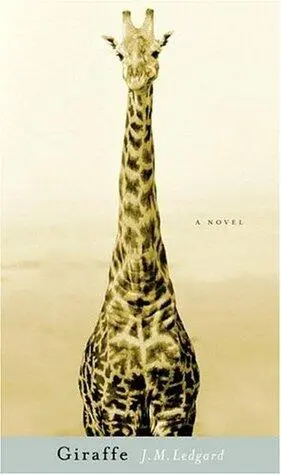
- Название:Giraffe
- Автор:
- Издательство:Penguin Group
- Жанр:
- Год:2007
- ISBN:нет данных
- Рейтинг книги:3 / 5. Голосов: 1
-
Избранное:Добавить в избранное
- Отзывы:
-
Ваша оценка:
Giraffe: краткое содержание, описание и аннотация
Предлагаем к чтению аннотацию, описание, краткое содержание или предисловие (зависит от того, что написал сам автор книги «Giraffe»). Если вы не нашли необходимую информацию о книге — напишите в комментариях, мы постараемся отыскать её.
In 1975, on the eve of May Day, secret police dressed in chemical warfare suits sealed off a zoo in a small Czechoslovakian town and ordered the destruction of the largest captive herd of giraffes in the world. This apparently senseless massacre lies at the heart of J. M. Ledgard's haunting first novel, which recounts the story of the giraffes from their capture in Africa to their deaths far away behind the Iron Curtain. At once vivid and unearthly, Giraffe is an unforgettable story about strangeness, about creatures that are alien and silent, about captivity, and finally about Czechoslovakia, a middling totalitarian state and its population of sleepwalkers.
It is also a story that might never have been told. Ledgard, a foreign correspondent for the
since 1995, unearthed the long-buried truth behind the deaths of these giraffes while researching his book, spending years following leads throughout the Czech Republic. In prose reminiscent of Italo Calvino and W. G. Sebald, he imbues the story with both a gripping sense of specificity and a profound resonance, limning the ways the giraffes enter the lives of the people around them, the secrecy and fear that permeate 1970s Czechoslovakia, and the quiet ways in which ordinary people become complicit in the crimes committed in their midst.
Giraffe — читать онлайн бесплатно полную книгу (весь текст) целиком
Ниже представлен текст книги, разбитый по страницам. Система сохранения места последней прочитанной страницы, позволяет с удобством читать онлайн бесплатно книгу «Giraffe», без необходимости каждый раз заново искать на чём Вы остановились. Поставьте закладку, и сможете в любой момент перейти на страницу, на которой закончили чтение.
Интервал:
Закладка:
Amina
ST. HUBERT’S DAY
NOVEMBER 3, 1974
IWALK FROM THE zoo now with the smell of giraffes and strip and step naked into the Svět. This is my last swim of the year. The waters are very cold now about my ankles. The reeds along the shore have all broken. The warblers are gone. A single mosquito bites the back of my knee. It falls swollen under the weight of my blood to the skin of the water and perishes there. I push off. I gasp. I swim quickly out to where rowers stroke a boat in eights.
Afterward, I dry myself onshore and wrap myself in a blanket. I light a cigarette. The first frost will be here soon; it is already thick in the forest. I walk along by the Svět. There is a dead fox here on the path. I turn it over with my foot. Maggots squirm curious out of neat round holes in the flesh. Ants and flies are inside also, carrying off the last jelly of the eyes. I see a seagull flying low over the Svět and settling on the tideless water. I saw in the film Memories of Paradise gulls flapping under the Charles Bridge, hovering in hope of bread or cake, hardly looking when the suicide or rusalka fell through their flock to the river. I look up at the gray sky now and see a white-tailed eagle and an osprey. I see a rapid shard of aquamarine, which may be a kingfisher. I walk on, toward the marsh at the end of the Svět where the otters live.
The desolation of the marsh affects me. I am drawn to it. There are otter tracks in the mud, the claws cut sharply in, the tail dragging. I go on. I wade through ferns and nettles, which rise to my shoulders and bloom in purple and white. I come to the forest. I do not like it. I feel enclosed there. I walk along the forest floor in the gloom, under woodpeckers. I break into a run now, as if through a thunderstorm. I run until I reach the clearing by the sawmill, where the wood carving of the archangel Raphael is nailed to the trunk of an old beech tree that stands sentinel at the crossing of three paths. Raphael leans forward from the beech, his face covered in the woody husks of beech fruit. His arms are stretched up, in flight above the forest. He is oak and cherrywood painted in white. He is chipped in places, revealing other layers of white. I want him to turn and look down toward me, as a giraffe sometimes does. I want him to see me. I stand under him. I put my hands up above my head; I seek to lift off, to that place of a never-imagined color. My fingers touch the lowest carved feather of his wings.
I walk on. I pick up a pinecone. I trace my finger around its spiral base. I am reminded of the Fibonacci sequence we recited in mathematics class:
one
two
three
five
eight
thirteen
twenty-one
thirty-four
fifty-five
eighty-nine
I see the sequence in the petals of the last surviving wild roses and in the coil of seeds in a flower head, and I hear it now in some piano concerto in my head that goes with an eight-tone white scale and a five-tone black to give an octave of thirteen notes. The relation between two and three or between thirty-four and fifty-five is the golden ratio. I go on. I keep to the shore, out of the forest. If I were a priest, humble enough, I would search for the golden ratio between the wings of the Raphael, and if I were a scientist I would look for it in the distance between the eyes of a giraffe and in the arrangement of its neck vertebrae.
Amina
CHRISTMAS EVE
DECEMBER 24, 1974
THERE IS A STORY of an orphan girl from my town who was under the care of an imperial gardener at a palace in Vienna. One of the girl’s responsibilities was to feed the lion kept in the dungeon of the palace. She had a way with the beast. It was familiar with her and allowed her to approach with food and to pet it. The girl would even open the door of the stone cell and allow it to come up the steps from the dungeon and pace the courtyard in the sunlight. In 1669, the gardener arranged for the girl to be married. She came to the lion on her wedding day one last time to bid it farewell. To avoid bloodying her bridal gown, she held out the meat she had brought at arm’s length. Startled by the way the girl held the meat across and not high over its head, as it was used to, and also by the whiteness of the orphan in that gloom, the lion grew jealous, leapt on her, and snapped her neck.
IT IS CHRISTMAS EVE, long before dawn. I awake, bruised, under a maple tree in the parkland. It is snowing soundlessly. The Svět is frozen over. Skate marks catch in the starlight; an ice-hockey net shimmers far out from the shore. I pause at the bend in the gravel road where my parents were struck down. I walk on, to the zoo. I pass the chapel of St. Michael, where all the countesses lie shrunken in coffins of double oak inside caskets of zinc. I turn and see my panelák, my room, and the pattern of my footsteps, where I tiptoed in sleepwalking, over the frozen Svět.
I climb up over the zoo gates, knocking icicles off the metal shapes of animals. I walk through the zoo. I am no longer sleepwalking, but I feel faint. My hands and feet are frozen numb. I tremble. I fall again and again into snowdrifts. The paths are hard as iron under the snow. I pass cages. Beasts clear their throats and pay me no heed. I see chamois run up to the summit of their rocky enclosure and down again. I see a shrewdness of apes asleep in one another’s arms. I linger before the otter-sized predator in the aviary, a fossa, which also trembles from the cold, and leaps from one Czechoslovakian branch to another, with no hope of ever catching a lemur. A tiger pads beside me, or I beside it. I come to the giraffe house, an inadequate barn. I have helped arrange the Christmas tree in front of it. I have dressed the tree with red spheres and with a rejected shape of Uncle Sam. The lights on the tree twinkle across the snow, lighting up the political banner hung over the giraffe house by the zoo director, which reads: WE ARE THE VANGUARD OF A NEW LIFE!
I make it inside. My head spins in the warmth. I see giraffe legs through slats, rising sheer. I see unfocused and unblinking eyes.
“Amina!”
The giraffe keeper, running out of his room, catches me falling.
“Jesus and Mary! You look half dead.”
“I fell asleep in the snow,” I say, looking up at him.
He lays me down on a bed in the corner of his room. He dries my hair. He wraps me in swaddling clothes. I sleep a little.
I wake to see him arranging a Nativity scene on a table.
“Merry Christmas,” I say.
He looks up. “Amina!”
His face is etched in the strip lighting. He is an intelligent man, not unlike my father, except in giraffe-stained overalls. I have never sleepwalked in his presence. I have never before stumbled and fallen into his arms. He holds the figure of a shepherd in his hand. He places it down among the animals near the manger. He is himself a sort of shepherd to the giraffes. He is the one who pulls them free from the fence, who lances their swellings, and sponges the afterbirth from them. I am happy to be with him now and to put on gloves and help him shovel out what he calls the socialist’s Augean stable.
The pattern of my footsteps extends as far as the giraffe house but no farther. I do not venture into the forest, nor do I often go anymore into the part of town where my lover lives. If I could travel, I would not know where to go. On a tram out from an industrial town, to jump clear into a field of beets? On a train to Prague, to lie on a bunk in a workers’ hostel, to sleepwalk the long corridors of our capital? Or on a bus to Bratislava, to pass from the wrong side the metal signs of giraffes placed along the road every so often as advertisement for the zoo?
Читать дальшеИнтервал:
Закладка:
Похожие книги на «Giraffe»
Представляем Вашему вниманию похожие книги на «Giraffe» списком для выбора. Мы отобрали схожую по названию и смыслу литературу в надежде предоставить читателям больше вариантов отыскать новые, интересные, ещё непрочитанные произведения.



Обсуждение, отзывы о книге «Giraffe» и просто собственные мнения читателей. Оставьте ваши комментарии, напишите, что Вы думаете о произведении, его смысле или главных героях. Укажите что конкретно понравилось, а что нет, и почему Вы так считаете.