J. Ledgard - Giraffe
Здесь есть возможность читать онлайн «J. Ledgard - Giraffe» весь текст электронной книги совершенно бесплатно (целиком полную версию без сокращений). В некоторых случаях можно слушать аудио, скачать через торрент в формате fb2 и присутствует краткое содержание. Год выпуска: 2007, Издательство: Penguin Group, Жанр: Современная проза, на английском языке. Описание произведения, (предисловие) а так же отзывы посетителей доступны на портале библиотеки ЛибКат.
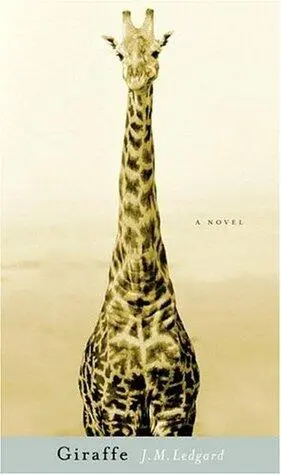
- Название:Giraffe
- Автор:
- Издательство:Penguin Group
- Жанр:
- Год:2007
- ISBN:нет данных
- Рейтинг книги:3 / 5. Голосов: 1
-
Избранное:Добавить в избранное
- Отзывы:
-
Ваша оценка:
Giraffe: краткое содержание, описание и аннотация
Предлагаем к чтению аннотацию, описание, краткое содержание или предисловие (зависит от того, что написал сам автор книги «Giraffe»). Если вы не нашли необходимую информацию о книге — напишите в комментариях, мы постараемся отыскать её.
In 1975, on the eve of May Day, secret police dressed in chemical warfare suits sealed off a zoo in a small Czechoslovakian town and ordered the destruction of the largest captive herd of giraffes in the world. This apparently senseless massacre lies at the heart of J. M. Ledgard's haunting first novel, which recounts the story of the giraffes from their capture in Africa to their deaths far away behind the Iron Curtain. At once vivid and unearthly, Giraffe is an unforgettable story about strangeness, about creatures that are alien and silent, about captivity, and finally about Czechoslovakia, a middling totalitarian state and its population of sleepwalkers.
It is also a story that might never have been told. Ledgard, a foreign correspondent for the
since 1995, unearthed the long-buried truth behind the deaths of these giraffes while researching his book, spending years following leads throughout the Czech Republic. In prose reminiscent of Italo Calvino and W. G. Sebald, he imbues the story with both a gripping sense of specificity and a profound resonance, limning the ways the giraffes enter the lives of the people around them, the secrecy and fear that permeate 1970s Czechoslovakia, and the quiet ways in which ordinary people become complicit in the crimes committed in their midst.
Giraffe — читать онлайн бесплатно полную книгу (весь текст) целиком
Ниже представлен текст книги, разбитый по страницам. Система сохранения места последней прочитанной страницы, позволяет с удобством читать онлайн бесплатно книгу «Giraffe», без необходимости каждый раз заново искать на чём Вы остановились. Поставьте закладку, и сможете в любой момент перейти на страницу, на которой закончили чтение.
Интервал:
Закладка:
Amina
NOVEMBER 1, 1974
AS FAR AS I can see, there are sixteen windows on my factory floor. The light that comes through them is copper-colored with autumn. In winter, the light in here is blue. This is where we dip Christmas decorations in colors. It has few features. There are loudspeakers at either end that give out announcements. There is paint on the floor and the walls and it is splashed thick over the machinery from seasons of Christmas decorations past. There is a pinup of a Czechoslovakian film star, the packaging from a box of English tea, and a red banner draped over one wall that declares in white letters: TRANSCEND FOR THE GLORY OF THE REVOLUTION!
This is where I work. Its fumes are rotting me from within. They break open my skin into sores and cause my organs to burn with a hundred small infections. I take another tray of clear spheres now. I set it on metal rollers. I push it into the mouth of the dipping machine. I open a vat of see-through polish with a base of nitroglycerin. I mix pigment into the polish until I come to the right shade of silver. I heave the vat to a funnel. I pour the resulting paint into the dipping machine. My hands shake. Some of the silver paint splashes on the floor. I press a button. I stand back, eyes streaming. The machine is loud: I can no longer hear what the other women are shouting to one another. It stops. I pull out the tray. The spheres are hot fuming silver. Christmas silver. I inspect the spheres for blemishes and see myself reflected and shortened in them. I see a young woman resembling a suicide or rusalka, an orphaned worker in an apron and head-scarf, waiting to get out into the autumn air, to walk beside the Svět.
My job is to take spheres and other shapes of glass and dip them in colors. Each piece has a stem, an umbilical cord; the paint flows down it, coloring the glass from the inside. When the piece has been further decorated on the factory floor above, or in the cooperatives in the villages around the town, the stem is snipped, set with a metal cap, and dressed with a ribbon or a wire on which it can be hung from a Christmas tree. It is not easy to mix the pigment into the polish. Consistency changes with the shape and quality of the glass. It is not possible to say, This is white, or This is cobalt. You have to be a chemist here, as well as a worker. The pieces we color correctly are exported; the pieces we get wrong make up the domestic quota. So it is that the Christmas trees of ČSSR shine off-color in shades of mustard. We make shapes of Santa Claus with a full sack, bells, pine trees, sailing ships, angels, bears, and reindeer. Some of the spheres we color are hand-painted with tropical scenes of Vietnam for the American market. We color shapes of Uncle Sam to be dressed with a cotton-wool beard. We dip shapes of American fighter jets. The orders are not openly mentioned by the factory committee of Communists demoted to this lowly enterprise on account of alcoholism or depression. The shapes of the American fighter jets serve also as planes for the Soviet market. The greatest demand in the domestic market is for red spheres. We dip them in Christmas red and send them to be hand-painted with a hammer and sickle so that they might better crown Communist trees in place of an angel. I have hardly any memory of the dipping, only of the redness itself, which is matte, not shiny like Christmas silver, and does not give out light, but rather sucks it in, offering no reflection, so that when I pull out a tray of red spheres and bend down to inspect them, I find myself invisible in them and feel the light around me diminished.
ONE OF THE WOMEN WAVES a packet of Red Star cigarettes. We all leave the machines. We go to stand by the open window at the end of the factory floor, where we can see the sky and the copper leaves falling from the trees. I take a piece of bread and hold it out in my hands. A blackbird comes now, a factory bird, and takes the bread with a single gentle peck. We drop the burning ends of our Red Stars into the undergrowth below. The conversation is distant, befitting those who sleepwalk by day. The women speak of the availability of certain foods and of the latest television serial. I do not have a television. It is enough for me to read the schedule of the state channel number one:
Let’s Speak Russian!
Hats off! Agricultural Success Stories of the Day
Quiz: How Well Do You Know Your CSSR?
I listen to my records and to Radio Vltava, the classical-music station. I will skip the stories of our Communist history and listen to Liszt’s “Fantasia Quasi Sonata” followed by Melodies of Our Dear Cuban Friends.
I AM YOUNGER than the other women. We do not have so much in common. I do not volunteer myself to them, except when they ask me of giraffes. I have told them of how the giraffe keeper approached me in the springtime and asked why I was so often there under the sycamore tree and I said it was because the giraffes awakened me. They know I sit for two or three afternoons each week before the giraffes. To them the zoo is a contrivance, a diversion they rarely bother with, while to me it is a place where I am fully aware, even in these autumn days, when there are few visitors, no wasps in the garbage cans, and no ice-cream vendor pushing his cart. I can say to the other women with certainty that giraffes are silent, mute as a penguin in a children’s story. I have related the story the keeper told me of the zoo’s vet in the 1950s who took it upon himself to eat a cutlet from every creature then in the zoo, if not from a dead animal then from the amputated limb of a living animal, such as a female chimpanzee whose arm was caught in the bars of her cage. When the women said I was making it up, I described to them how the vet cut off his cutlets with surgical precision, wrapped them in newspaper, and fried them up at home. I told them how he demanded the zookeepers exhume a black panther that had died while the vet was on vacation. He pretended to examine it, discreetly cut off a piece of meat, and made a marinated dish of it, which he served up to the young and unsuspecting zoo director. All of this, I told them, came to light when the vet died and his diary surfaced, along with a recipe book.
Andrea asks me about the giraffes and I take another Red Star and tell her of how one of the Rothschild cows stood on her hind legs and tried to eat from an overhanging branch of the sycamore tree.
“What else?” Hana says.
“The zoo director ordered an okapi be put in with the giraffes. It cowered in the corner and the giraffes treated it unpleasantly, as though there was some long-standing disagreement between them.”
“What’s an okapi?” Eva says, from the windowsill.
“A giraffe without neck or legs,” I say, “which lives in a jungle, where there is no need for it to stretch up for food.”
We go back to the machines. There is another order for white. Not polar bears, but snowmen. I mix the pigment into the nitroglycerin base in the copper-colored light. I see dimly. This kind of sleepwalking is deeper than a daydream, less than a nightmare. I set the tray of snowmen on rollers and push it into the machine. I pour in the paint. I sleepwalk inward from the factory floor to an evening in a beer garden in which fireflies surround the face of my girlfriend, lighting her up in the darkness. Outwardly, there is the din of whiteness injected into a hundred umbilical cords, of snowmen being born. Inwardly, butterflies are rising from a pool in the bog that circles the old town walls, more subtly colored than any pigment mixed into a polish of nitroglycerin, in apple, olive, Veronese green, lapis lazuli, and lemon marked softly on papery wings.
I pull out the snowmen. A siren sounds, marking the end of the working day. A voice comes over the loudspeakers: “Revered workers, gather please for an educational film in the cafeteria!”
Читать дальшеИнтервал:
Закладка:
Похожие книги на «Giraffe»
Представляем Вашему вниманию похожие книги на «Giraffe» списком для выбора. Мы отобрали схожую по названию и смыслу литературу в надежде предоставить читателям больше вариантов отыскать новые, интересные, ещё непрочитанные произведения.




Обсуждение, отзывы о книге «Giraffe» и просто собственные мнения читателей. Оставьте ваши комментарии, напишите, что Вы думаете о произведении, его смысле или главных героях. Укажите что конкретно понравилось, а что нет, и почему Вы так считаете.