J. Ledgard - Giraffe
Здесь есть возможность читать онлайн «J. Ledgard - Giraffe» весь текст электронной книги совершенно бесплатно (целиком полную версию без сокращений). В некоторых случаях можно слушать аудио, скачать через торрент в формате fb2 и присутствует краткое содержание. Год выпуска: 2007, Издательство: Penguin Group, Жанр: Современная проза, на английском языке. Описание произведения, (предисловие) а так же отзывы посетителей доступны на портале библиотеки ЛибКат.
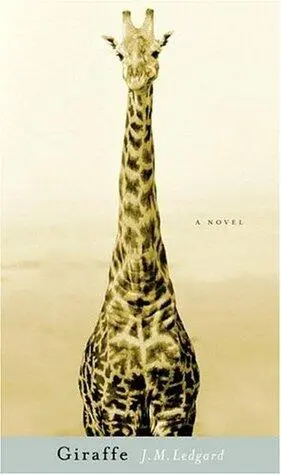
- Название:Giraffe
- Автор:
- Издательство:Penguin Group
- Жанр:
- Год:2007
- ISBN:нет данных
- Рейтинг книги:3 / 5. Голосов: 1
-
Избранное:Добавить в избранное
- Отзывы:
-
Ваша оценка:
Giraffe: краткое содержание, описание и аннотация
Предлагаем к чтению аннотацию, описание, краткое содержание или предисловие (зависит от того, что написал сам автор книги «Giraffe»). Если вы не нашли необходимую информацию о книге — напишите в комментариях, мы постараемся отыскать её.
In 1975, on the eve of May Day, secret police dressed in chemical warfare suits sealed off a zoo in a small Czechoslovakian town and ordered the destruction of the largest captive herd of giraffes in the world. This apparently senseless massacre lies at the heart of J. M. Ledgard's haunting first novel, which recounts the story of the giraffes from their capture in Africa to their deaths far away behind the Iron Curtain. At once vivid and unearthly, Giraffe is an unforgettable story about strangeness, about creatures that are alien and silent, about captivity, and finally about Czechoslovakia, a middling totalitarian state and its population of sleepwalkers.
It is also a story that might never have been told. Ledgard, a foreign correspondent for the
since 1995, unearthed the long-buried truth behind the deaths of these giraffes while researching his book, spending years following leads throughout the Czech Republic. In prose reminiscent of Italo Calvino and W. G. Sebald, he imbues the story with both a gripping sense of specificity and a profound resonance, limning the ways the giraffes enter the lives of the people around them, the secrecy and fear that permeate 1970s Czechoslovakia, and the quiet ways in which ordinary people become complicit in the crimes committed in their midst.
Giraffe — читать онлайн бесплатно полную книгу (весь текст) целиком
Ниже представлен текст книги, разбитый по страницам. Система сохранения места последней прочитанной страницы, позволяет с удобством читать онлайн бесплатно книгу «Giraffe», без необходимости каждый раз заново искать на чём Вы остановились. Поставьте закладку, и сможете в любой момент перейти на страницу, на которой закончили чтение.
Интервал:
Закладка:
I step over a stream of white effluent. I walk on. I come to a cage containing wolves. They also move in gray circles before me. They are large and bony; their lope is springy. And I think of a story told to me in the factory cafeteria of a zoo in the east of ČSSR, in a town that gives out onto wilderness. The zookeeper was walking home at the end of the day, the story went, when he heard his wolves howling as he had never heard them before. He went to investigate and there saw a pack of wild wolves sitting before the cage. The wolf pack had come out from the wilderness and was communicating with the captive wolves, and the emotion between them was deep.
I come next to an aviary. I expect to see an owl. I see nothing. Now comes a flash. And again, like a struck match, lighting the cage. Now I see it. A creature I have never seen before. There is no name on the cage. I have no idea what this creature is or where it is from. I look more closely. It becomes brighter and stranger. I think of the books I have read in the town library. All the sketches I have made. The animals I have dreamed of in my sleepwalking. Still I cannot make sense of it. This creature is the size of a large otter, with an otter’s whiskers. It has the coat of muskrat, like the one who swam in the Svět with me, but orange in color. It has the nose of a dog, the eyes of a fox, the teeth and claws of a leopard, the tail of a kangaroo. It leaps predatorily in the aviary, from one branch to another. A siren sounds, a voice comes over the loudspeakers: “Revered comrades. Please pay attention! The zoo is now closed. Revered comrades. Make your way to the exit.”
I walk to the gates past a group of sand gazelles. They appear slight enough, with delicate muscles and polished hooves, to one day lift off the face of the world with me. They bleat and cock their heads in such a way as to remind me of some classical civilization I have read of, in which water was poured into the ears of goats outside the temple so that they bleated and shook their heads vigorously when they were brought before the priests and this was taken as a sign they were willing to be sacrificed. I walk more quickly now by groaning beasts and apes with offset teeth, some spending themselves and others rising or bedding down. The gates are locked behind me. I stand again in the parking lot. The sky is a redder shade of pink now. I look up the slope and pick out a barn in the zoo that might hold the giraffes. I look beyond the zoo to the forest, which encloses the Svět.
Sněhurka
JULY 12, 1973
IENTERED THIS ZOO with three other giraffes under the violence of a thunderstorm. We leaned toward a Czechoslovakian woman stilled in the rain in the very last moments before the gates opened to us. We stood inside the zoo in an idling truck and glimpsed forms of other animals in the wet dark. I saw white teeth. I saw the cherry flash of baboon rumps. I saw all of the baboons, a legion, gnashing, careening forward at us, dashing themselves against the bars of their cage, falling back and beating their arms on the concrete floor.
NO LIONESS EVER CAME for me. I moved confidently down beetle-enameled riverbeds. I was darted and captured by Czechoslovakians. I was put on a train. I did not move on that train, but the world revolved under me. I was put on a ship. I did not move on that ship, but the ocean swelled under me. There is no movement now. I am stopped and the blade is stopped under me also. I stand in a metal-sided barn. I am near the doors: I am a leader and I wish to be the first into the light. It is crowded in here. I strike the chests of other giraffes in walking. Fear is contagious in this halt, where there are no barefoot boys to call up greetings, but only a keeper.
I feel the roof more keenly than the walls. I wish to see the sky, to set myself up, against gravity. I stand here by the door whispering to a bull my memories of Africa, of a certain light that struck there, which elongated my shadow across the red earth. I whisper to him of galloping on the ash-colored grassland, sundering termite mounds with my hooves, of being graceful in my immensity, like a whale in ether. I whisper to him of plantations that revolved under us on the train, where women moved along corridors planted in dark soil, picking fruit. The bull puts his neck against mine and whispers to me of the Cape of Good Hope, of sandy coves on which waves broke like clouds, of sea lions on those sands and barking in the waters about the ship. I whisper to him of albatrosses gliding at our heads, of dropping into a trough in the ocean and rising again, so that the many chambers of our stomachs lifted up our throats. He whispers of the English Channel, of a fog bank stretching from the low coastline of Belgium to the salt marshes on the English shore, of the ship becoming a barge, the ocean a river. And I remember now the river narrowing, so that some of us feared predators in the trees.
THE DOOR OPENS, to the sky. I am the first out. I push my head back. I stretch myself up, on tiptoe. I feel an updraft within me that is more than rising blood. I move around the small yard. There is no wind here. There are no oxpecker birds to pick the ticks from my back. I look around me. There are materials in the air: It smells of smoke. I see beyond the zoo to shapes of trees and Czechoslovakians laid out in the sunshine. I see a forest encircling a watering hole. I see spires and towers. I hear a lion. I rear back. I drop my head. I feel my blood roaring.
THE KEEPER PRESSES US back into the barn at the end of the day. I do not sleep. None of us sleeps. We are not bats, who hang down for so many hours and then sweep out on sonar to gorge themselves. We are sleepwalking beasts. Our eyelids flutter but remain open. Our teeth grind in fits of bruxism. We push up. We walk with unfocused eyes through the barn. We bump into one another, not waking but galloping inward across ash-colored grassland and stretching up to the highest branches.
~ ~ ~
Ah! Sweet innocent girl, lovelier for your suffering.
— FELICE ROMANIAmina
JULY 13, 1973
IAM NAMED AMINA for the heroine of Vincenzo Bellini’s opera La Sonnambula. They say it is a pastoral tale. Operatic Amina is the prettiest girl in her mountain village, which I picture to be the Swiss village of tiled rooftops on the poster above my bed. She rises at night and sleepwalks. The villagers mistake her for a ghost and think themselves haunted. During one fit of somnambulism, Amina enters the rooms of a count and, dark to the moment, lays herself out on his bed. The count discreetly flees the scene. Amina’s lover is less forgiving. He breaks off their engagement, thinking her unfaithful. The count then publicly defends Amina, in words that often repeat in my head:
There are some, who, though asleep, behave as though they were awake, speaking, answering when anyone speaks to them, and they are called “sleepwalkers” because they walk and sleep.
Amina steps from the window of a water mill in the climactic scene. She sleepwalks along a plank set precipitously over the mill wheel. The plank is rotten and gives way, threatening to cast her down into the blades of the wheel. There are gasps and screams from the villagers below, who now recognize her as a wronged girl, not a specter. They cry out:
God in Thy mercy guide her unsteady feet!
Their prayer is heard. Amina makes it to the grassy bank on the other side. She awakes there, agitated and bruised, in the arms of her unworthy lover. Her innocence is proven. She is wed at once. The villagers sing a joyful chorus and in the last line of the opera express their true feelings for her:
Ah! Sweet innocent girl, lovelier for your suffering.
Читать дальшеИнтервал:
Закладка:
Похожие книги на «Giraffe»
Представляем Вашему вниманию похожие книги на «Giraffe» списком для выбора. Мы отобрали схожую по названию и смыслу литературу в надежде предоставить читателям больше вариантов отыскать новые, интересные, ещё непрочитанные произведения.



Обсуждение, отзывы о книге «Giraffe» и просто собственные мнения читателей. Оставьте ваши комментарии, напишите, что Вы думаете о произведении, его смысле или главных героях. Укажите что конкретно понравилось, а что нет, и почему Вы так считаете.