J. Ledgard - Giraffe
Здесь есть возможность читать онлайн «J. Ledgard - Giraffe» весь текст электронной книги совершенно бесплатно (целиком полную версию без сокращений). В некоторых случаях можно слушать аудио, скачать через торрент в формате fb2 и присутствует краткое содержание. Год выпуска: 2007, Издательство: Penguin Group, Жанр: Современная проза, на английском языке. Описание произведения, (предисловие) а так же отзывы посетителей доступны на портале библиотеки ЛибКат.
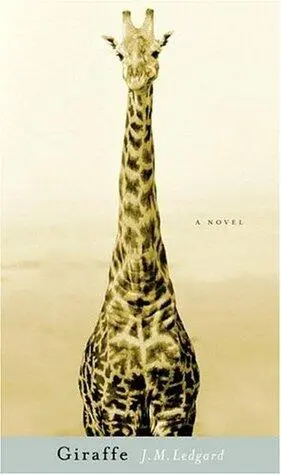
- Название:Giraffe
- Автор:
- Издательство:Penguin Group
- Жанр:
- Год:2007
- ISBN:нет данных
- Рейтинг книги:3 / 5. Голосов: 1
-
Избранное:Добавить в избранное
- Отзывы:
-
Ваша оценка:
Giraffe: краткое содержание, описание и аннотация
Предлагаем к чтению аннотацию, описание, краткое содержание или предисловие (зависит от того, что написал сам автор книги «Giraffe»). Если вы не нашли необходимую информацию о книге — напишите в комментариях, мы постараемся отыскать её.
In 1975, on the eve of May Day, secret police dressed in chemical warfare suits sealed off a zoo in a small Czechoslovakian town and ordered the destruction of the largest captive herd of giraffes in the world. This apparently senseless massacre lies at the heart of J. M. Ledgard's haunting first novel, which recounts the story of the giraffes from their capture in Africa to their deaths far away behind the Iron Curtain. At once vivid and unearthly, Giraffe is an unforgettable story about strangeness, about creatures that are alien and silent, about captivity, and finally about Czechoslovakia, a middling totalitarian state and its population of sleepwalkers.
It is also a story that might never have been told. Ledgard, a foreign correspondent for the
since 1995, unearthed the long-buried truth behind the deaths of these giraffes while researching his book, spending years following leads throughout the Czech Republic. In prose reminiscent of Italo Calvino and W. G. Sebald, he imbues the story with both a gripping sense of specificity and a profound resonance, limning the ways the giraffes enter the lives of the people around them, the secrecy and fear that permeate 1970s Czechoslovakia, and the quiet ways in which ordinary people become complicit in the crimes committed in their midst.
Giraffe — читать онлайн бесплатно полную книгу (весь текст) целиком
Ниже представлен текст книги, разбитый по страницам. Система сохранения места последней прочитанной страницы, позволяет с удобством читать онлайн бесплатно книгу «Giraffe», без необходимости каждый раз заново искать на чём Вы остановились. Поставьте закладку, и сможете в любой момент перейти на страницу, на которой закончили чтение.
Интервал:
Закладка:
Amina
APRIL 8, 1974
ISIT ON A bench under the sycamore tree by the giraffe house. I watch the Egyptian geese waddling with clipped wings through the legs of the largest herd of captive giraffes in the world. I am awake. I do not sleepwalk in the zoo. I see again how the giraffes ignore the geese, even though they may have stories to tell of nesting in the Nile among rusalkas swum up there from papyrus roots with trinkets of pharaohs, who never venture along the Nile because the thrum of the cities is too much for their watery forms.
A man approaches. He is as tall as the zoo director I have seen striding now and again between the cages.
“Why are you so often here under this sycamore tree?” he asks.
“The giraffes awaken me,” I say.
“What is your name?”
“Amina Dvořáková.”
“I am the giraffe keeper,” he says.
“I’ve seen you,” I say, embarrassed.
He sits down on the bench. We are quiet.
“This is a good angle to watch the giraffes,” he says after some time. “You can see better how vertical they are from here.”
He turns to me.
“I have to tell you,” he says, “we had our first birth last night.”
“Were you present?”
“I came in this morning and there she was. Would you like to see her?”
“Yes.”
It is warm and dark as a nest in the giraffe house. The keeper points to the newborn giraffe. I move quickly to the wooden railing. I look through the slats. She is still covered in patches of membranes. She totters on the smooth floor. She makes it to the belly of her mother and puts her mouth to a large teat.
“See how she runs!” he says. “More easily than she walks — she has such a low center of gravity in these first days.”
I point to bumps on her head, covered with velveteen skin. “Are they horns?”
He nods. “The skin will wear away and the horns will come in time — three or four ossified outgrowths. Look at the mother’s tail.”
It is oxblood-colored with afterbirth.
“Now look at those giraffes nuzzling over there by the door,” he says. “See anything unusual?”
“One is a Rothschild giraffe and the other a reticulated?”
“Not that,” he says. “They only have one ear.”
I see that now.
“This calf will only have one ear too. Too much love! See how her mother is licking. She’ll lick the ear until all the blood vessels are closed off and it shrivels.”
The reticulated cow with the white underbelly comes forward. She leans down over the fence. I put up my hand to her wet face.
“That’s Sněhurka,” he says. “She’s one of the leaders. She is always the first to step out when I open the doors in the morning. She stands quite still in the open with her head pushed back, like this, almost lifting up off the ground. Then she nods and the others venture out.”
He looks up at Sněhurka.
“Animals should be stripped of names,” he says, “but I cannot bring myself to do so in her case.”
The keeper invites me into his room at the back of the giraffe house. He tells me that female giraffes are sociable, except after giving birth, and that males keep to themselves, moving slowly along the fence in the yard to where the okapi live. He brushes aside flies and fruit flies and shows me the feed of apples, pears, carrots, turnips, and beets. He points out the bales of hay and the browse cut from the acacia trees overhanging the fountain of St. George. He speaks of how the lights in the giraffe house come on gradually in the morning to give the impression of the rising sun, of the giraffes who lick the branches painted on the walls, of the tabby cat who goes undisturbed about the bull giraffes in search of mice, and of how the herd ruminates through the night with unblinking and unfocused eyes.
“The single most important thing to understand about a giraffe,” he says, “is that they do not graze down to the ground, but are stretched up to the sky.”
“That is what so awakens me,” I say.
The keeper gives me a searching look. He must also understand Czechoslovakia to be a nation asleep, of workers normalized into sleepwalkers.
He asks me what I have observed of giraffes, coming to the zoo so often in these months and sitting under the sycamore tree. I tell him I have memorized the patterns on the necks of the giraffes so that I can say aloud to myself on the bench, That one is Jánošík and this one is Rudolf, named for the emperor. I tell how the females lower their heads in submission when a male comes sniffing at their root and how some of them raise their tails in fear at the sound of gunfire in the forest.
“Giraffes are not like white rhinos with their hooked and squared lips,” I say, gaining confidence. “When a giraffe is scared, it rears away. When a rhino is scared, it runs straight at the object of its fear, its ears flattened back like those of a cat.”
The keeper is listening. We are awake to each other.
“The giraffes do not seem sad to me,” I say, “like the polar bears in this zoo are.”
“Sadness is difficult to see in beasts,” he says. “I cannot say a giraffe is more depressed than a polar bear. I can only say that a giraffe does not frown or smile and is not easily transformed by the act of observation into something human, like animals with soft shapes and juvenilized faces, such as koalas, pandas, lemurs, and certain apes.”
“Giraffe expressions are unreadable to me,” I say. “They often appear to be looking straight through me, as if I am a ghost to them.”
He nods. “Early taxidermists,” he says, “exaggerated the ferocity of all animals that came to their table. In their hands, even a mole was poised to spring, its two teeth exposed. After the first specimen giraffe skins arrived from Namaqualand, the taxidermists sought to do the same for giraffes. But whatever they tried, they could not make the giraffe look menacing. It looked in death much as it did in life.”
“How is that?”
“Lofty, alien; above all blank. If a giraffe performs at all, it is only a tall-man routine.”
“I don’t follow.”
“In an anthropocentric world, the point of a lion is to roar at us. In such a world, the point of a giraffe is to tower over us. The giraffe is the tall man, just as the hippo is the fat man. If a giraffe appears in a children’s story at all, it is only on account of its height. A giraffe never converses in a children’s story, just as penguins and other vertical animals are also silent in those stories. And in this respect too the giraffe is nothing like the black bear in the London Zoo that became Winnie-the-Pooh.”
“Surely their blankness has a purpose,” I say. “A giraffe can be a point of reflection. It can bring out of yourself some feeling you did not know was there.”
“For you, perhaps, Amina,” he says, not unkindly.
“The zoo is a place where you can look deliberately at living things,” I say, “which doesn’t happen outside. No one out there examines the faces of cows sent for milking.”
“The zoo is nothing more than a contrivance,” he says, “to make workers forgetful of the monotony of their lives. They arrive here from industrial towns. They move from cage to cage. What do they want? Not to contemplate, as you seem to do, but to make strange animals see them. You’ve seen how they put their hands through the bars, how they throw in food or litter, and how they wave their arms until the pygmy hippo takes the smallest step in their direction.”
I HAVE SEEN VISITORS who do not look at the creatures in the zoo except through the lens of their camera and curse when they run out of film, as though they have been made blind. Even so, I have often been startled at the way other visitors seem to wake up when they step from under the sycamore tree and exclaim, as I did, “Giraffe!”
Читать дальшеИнтервал:
Закладка:
Похожие книги на «Giraffe»
Представляем Вашему вниманию похожие книги на «Giraffe» списком для выбора. Мы отобрали схожую по названию и смыслу литературу в надежде предоставить читателям больше вариантов отыскать новые, интересные, ещё непрочитанные произведения.



Обсуждение, отзывы о книге «Giraffe» и просто собственные мнения читателей. Оставьте ваши комментарии, напишите, что Вы думаете о произведении, его смысле или главных героях. Укажите что конкретно понравилось, а что нет, и почему Вы так считаете.