J. Ledgard - Giraffe
Здесь есть возможность читать онлайн «J. Ledgard - Giraffe» весь текст электронной книги совершенно бесплатно (целиком полную версию без сокращений). В некоторых случаях можно слушать аудио, скачать через торрент в формате fb2 и присутствует краткое содержание. Год выпуска: 2007, Издательство: Penguin Group, Жанр: Современная проза, на английском языке. Описание произведения, (предисловие) а так же отзывы посетителей доступны на портале библиотеки ЛибКат.
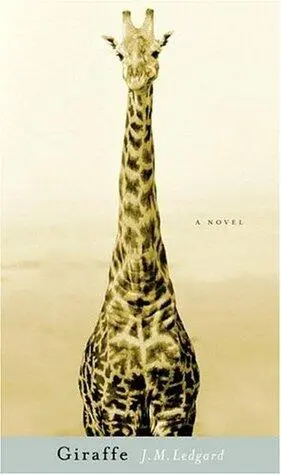
- Название:Giraffe
- Автор:
- Издательство:Penguin Group
- Жанр:
- Год:2007
- ISBN:нет данных
- Рейтинг книги:3 / 5. Голосов: 1
-
Избранное:Добавить в избранное
- Отзывы:
-
Ваша оценка:
Giraffe: краткое содержание, описание и аннотация
Предлагаем к чтению аннотацию, описание, краткое содержание или предисловие (зависит от того, что написал сам автор книги «Giraffe»). Если вы не нашли необходимую информацию о книге — напишите в комментариях, мы постараемся отыскать её.
In 1975, on the eve of May Day, secret police dressed in chemical warfare suits sealed off a zoo in a small Czechoslovakian town and ordered the destruction of the largest captive herd of giraffes in the world. This apparently senseless massacre lies at the heart of J. M. Ledgard's haunting first novel, which recounts the story of the giraffes from their capture in Africa to their deaths far away behind the Iron Curtain. At once vivid and unearthly, Giraffe is an unforgettable story about strangeness, about creatures that are alien and silent, about captivity, and finally about Czechoslovakia, a middling totalitarian state and its population of sleepwalkers.
It is also a story that might never have been told. Ledgard, a foreign correspondent for the
since 1995, unearthed the long-buried truth behind the deaths of these giraffes while researching his book, spending years following leads throughout the Czech Republic. In prose reminiscent of Italo Calvino and W. G. Sebald, he imbues the story with both a gripping sense of specificity and a profound resonance, limning the ways the giraffes enter the lives of the people around them, the secrecy and fear that permeate 1970s Czechoslovakia, and the quiet ways in which ordinary people become complicit in the crimes committed in their midst.
Giraffe — читать онлайн бесплатно полную книгу (весь текст) целиком
Ниже представлен текст книги, разбитый по страницам. Система сохранения места последней прочитанной страницы, позволяет с удобством читать онлайн бесплатно книгу «Giraffe», без необходимости каждый раз заново искать на чём Вы остановились. Поставьте закладку, и сможете в любой момент перейти на страницу, на которой закончили чтение.
Интервал:
Закладка:
This is what my father used to say to me when I misbehaved and he was forced to punish me. I have no such romance. It is strange to be named for an operatic orphan and then to be orphaned, and stranger still, in this age of cosmonauts, to have grown into a somnambulist in resemblance of her. I sleepwalk without wishing it. It is a condition. It comes from too little rest or too much, from being an orphan, and from paint fumes settling under my tongue in the factory or bubbling in a particular way in my chest. The root of all sleepwalking is surely with Adam, who stood with his eyes open and his arms stretched up out of the Garden of Eden, as God reached in and peeled out a rib, from which he fashioned Eve. It began for me as a child with pavor nocturnus, or night terrors. The chemicals meant to hold my body in paralysis were not released as they should be, so that my waking and sleeping states became mixed. I was caused to sit upright in bed. I was a little girl, jackknifed in fear. My eyes were wide and rolling. I let out the longest screams, until my parents came and shook me awake and comforted me. It was always impossible for me to explain to them what had so terrified me. It was something more than achluphobia. A charging rhino maybe, or the underside of the world seen slipping away from space, or a childlike understanding of how the finite drifts like the tiniest mustard seed on the winds of the infinite. After I was orphaned and there was no one to wake and comfort me, the night terrors gave way to sleepwalking. I rise at night with dilated pupils. I perform complex tasks in my sleep. I sponge myself at the sink. I cook. I listen to records. I sew. I have vivid recollections in sleepwalking of lifting off. Snatches of the dreams remain with me, as in looking down from a cloud to slicks of goose fat floating on the surface of the Svět, and to reeds being fed to a thresher on the deck of a paddle steamer grounded on a dried-up channel in a marsh. I sleepwalk out of my panelák. I walk with the eyes of the hypnotized; I am a ghost to the fishermen stumbling home drunk. I sleepwalk along the edge of roofs in the dead of night, naked, on tiptoe, my arms stretched up like John the Baptist’s, without chorus or lover to witness my foot reaching out into space. I do not fall but often wake bruised and agitated under linden trees or at the base of the helical plague column. I lower my eyes to the painful daylight and sing quietly to myself parts of La Sonnambula and lines my mind has added, such as:
Dear God!
Where am I?
Revered comrade, tell me from what height have I fallen!
What’s happening?
Ah, I beg you, comrade, don’t wake me up!
The birdsong has quieted outside. I place La Sonnambula on the turntable. I set down the needle. I turn the sound low, so as not to disturb my neighbors. I listen. There is scratched silence. The record revolves. Then a first line
Viva! viva! viva! viva! Amina!
My parents were struck and killed at a bend in the gravel road by the Svět. They were flattened by a military truck headed for a secret base in the forest. I sometimes imagine them to have died in other ways, for instance to have been blown from the clock tower or from a mountain above the industrial towns, for they were not large people. I have grown to love the music they left me. I am light and knitted strong with bird ribs. I will reach up. I will lift off the face of the world, just as the arias in La Sonnambula stretch up on tiptoe, swell in eights into bel canto, and lift from the stage. The villagers feared operatic Amina would drop into the mill wheel. They did not notice she was walking the plank on tiptoe, with her arms stretched up. They had no understanding that the intent of sleepwalkers is not to dive down like the suicide or rusalka from the Charles Bridge, but to lift off into another place, like John the Baptist, perhaps even beyond that part of the sky the religious speak of that is lined with the pure and holy.
I ENTER THE TOWN NOW from my panelák, through the oldest gate. I go under the portcullis and on by the brewery with its sign advertising REGENT BEER, SINCE 1379.
I come to the town square, where the plague column stands. A few high windows on the castle are thrown open at this hour to circling bats. Mosquitoes rise from the puddles. I continue by the courthouse of 1572 faced with a Latin inscription and under the all-seeing eye engraved on the lintel of the former Masonic hall. I go by the fountain of St. George spearing a dragon. I pass a socialist grocery, which sells no butter, only margarine. I line up there for oranges. I do not line up for sausages: They are filled with horse guts. I go under the Gothic stone carving of a winged cow. I pass by the shoe shop, which offers hardly any shoes, but only empty shelves lined with brown and yellow flowered wallpaper. I linger by the civic bulletin boards with their announcements, red and gold graphics, and portraits of the spectacled men who govern the Communist moment. I am hardly aware of the footsteps I take to reach here and to return. I remember them only because I repeat them. I am awake but I see dimly now, as a rhino must see through its lanced openings, because I am a sleepwalker by day as well as by night. I am not often awake to this ČSSR of 1973. That is why men are attracted to me. They like my lack of strategy, the way I fall into their arms at the end of an evening, when invariably they say, “God! You’re like a dancer to me, Amina.”
I feel nothing. If I am in their arms at all it is only because I stumble in sleepwalking when they speak again of carp. It is difficult for me to remember these men or what happens to me from one day to the next. I dry myself among irises on the shore of the Svět and sleepwalk off toward the factory. I am not so different. This is a country of sleepwalkers by day, who drink by night only as a lesser form of sleepwalking. This is a country where the officials say openly they can do whatever they like with it, if they keep the beer flowing. Hardly any of us are ever awake the way operatic Amina is awake, when she asks her friend to lay a hand upon her breast and feel her heart beating up blood within her, and to sing:
That is my heart, which cannot contain the happiness it feels!
The workers in the industrial towns are pulled from their beds with tidal force, but are not woken. They sit glassy-eyed on trams that pass out over fields of beets. The sparking of the wires scatters the geese feeding in the fields, but no one turns from the tram to look at the geese in flight. They hardly acknowledge one another. They stare without awareness at one another’s breasts. They go to work. They mine coal. They pour steel without thought into armored plates such as would dress a rhino. They automatically sluice carp from the Svět into concrete tanks.
The sand gazelles cocked their heads at me. They registered the shape I made and then lowered their heads to graze again. I was awake to the gazelles, as I am awake to the giraffes. I am wakeful when I walk the slopes below the forest that encloses the Svět, and harvest mice scatter before me down smooth ovular holes and make for the balks in the field where the yellowhammers and quail are nested. I wake to the hare breaking for cover, the springing deer, and the skylarks turning away from a merlin in the windless heights. I go attentively down narrowing brambles of blackthorn and blackberries, through creeping thistles and nettles, and emerge in a circle of aspen trees. I take an empty bottle from my bag. I fill it from a spring that rises there, percolating up from deep in the rock. I sit beside the shrine over the spring, dedicated to Mary. I am aware of the wild roses laid beside her blue likeness and the candles burned low. I am held rapt by the grains of sand and flakes of fool’s gold dancing in the clear waters. The Communist moment cannot dull such a place. Even if it cemented it over and punished all those who have laid flowers there, so that the act of worshiping was forgotten, the waters would only well up somewhere else. The officials show no interest in the bend on the gravel road where my parents were hit by a truck. Their interest is in the secret military base in the forest, in the electrification of its perimeter, so the animals will bounce off it, and in meaningful camouflage, so I will no longer see the tips of the missiles dug in there, glinting between the trees. The same officials paste political flyers onto the plague column, masking the pox-ridden faces spiraling up the column and the seraphim with wings as tiny as a sparrow’s supporting those with their heads rolled back. When I am awake and walking by the plague column and see slogans over these mournful sculpted panels, I understand the Communist moment cannot endure; it does not have the imagination. I know Czechoslovakia will awaken in the far future, agitated and bruised, under a spreading linden tree, to a religious revival, or even to a moment without lines in which the customer is always right.
Читать дальшеИнтервал:
Закладка:
Похожие книги на «Giraffe»
Представляем Вашему вниманию похожие книги на «Giraffe» списком для выбора. Мы отобрали схожую по названию и смыслу литературу в надежде предоставить читателям больше вариантов отыскать новые, интересные, ещё непрочитанные произведения.




Обсуждение, отзывы о книге «Giraffe» и просто собственные мнения читателей. Оставьте ваши комментарии, напишите, что Вы думаете о произведении, его смысле или главных героях. Укажите что конкретно понравилось, а что нет, и почему Вы так считаете.