J. Ledgard - Giraffe
Здесь есть возможность читать онлайн «J. Ledgard - Giraffe» весь текст электронной книги совершенно бесплатно (целиком полную версию без сокращений). В некоторых случаях можно слушать аудио, скачать через торрент в формате fb2 и присутствует краткое содержание. Год выпуска: 2007, Издательство: Penguin Group, Жанр: Современная проза, на английском языке. Описание произведения, (предисловие) а так же отзывы посетителей доступны на портале библиотеки ЛибКат.
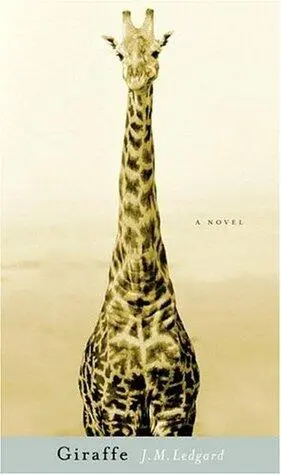
- Название:Giraffe
- Автор:
- Издательство:Penguin Group
- Жанр:
- Год:2007
- ISBN:нет данных
- Рейтинг книги:3 / 5. Голосов: 1
-
Избранное:Добавить в избранное
- Отзывы:
-
Ваша оценка:
Giraffe: краткое содержание, описание и аннотация
Предлагаем к чтению аннотацию, описание, краткое содержание или предисловие (зависит от того, что написал сам автор книги «Giraffe»). Если вы не нашли необходимую информацию о книге — напишите в комментариях, мы постараемся отыскать её.
In 1975, on the eve of May Day, secret police dressed in chemical warfare suits sealed off a zoo in a small Czechoslovakian town and ordered the destruction of the largest captive herd of giraffes in the world. This apparently senseless massacre lies at the heart of J. M. Ledgard's haunting first novel, which recounts the story of the giraffes from their capture in Africa to their deaths far away behind the Iron Curtain. At once vivid and unearthly, Giraffe is an unforgettable story about strangeness, about creatures that are alien and silent, about captivity, and finally about Czechoslovakia, a middling totalitarian state and its population of sleepwalkers.
It is also a story that might never have been told. Ledgard, a foreign correspondent for the
since 1995, unearthed the long-buried truth behind the deaths of these giraffes while researching his book, spending years following leads throughout the Czech Republic. In prose reminiscent of Italo Calvino and W. G. Sebald, he imbues the story with both a gripping sense of specificity and a profound resonance, limning the ways the giraffes enter the lives of the people around them, the secrecy and fear that permeate 1970s Czechoslovakia, and the quiet ways in which ordinary people become complicit in the crimes committed in their midst.
Giraffe — читать онлайн бесплатно полную книгу (весь текст) целиком
Ниже представлен текст книги, разбитый по страницам. Система сохранения места последней прочитанной страницы, позволяет с удобством читать онлайн бесплатно книгу «Giraffe», без необходимости каждый раз заново искать на чём Вы остановились. Поставьте закладку, и сможете в любой момент перейти на страницу, на которой закончили чтение.
Интервал:
Закладка:
IT IS A HEAT WAVE. I strip off my shirt. I pour a bucket of water over my head, my shoulders, my chest. A man in large mirrored sunglasses drives a cream-colored Mercedes along a country road by the river. I help tend the giraffes. I shovel out dung. I hold up bread to some of the giraffes.
“No!” Hus shouts. “Not bread! Grain, comrade.” He comes running up with a bucket of grain. He is also without shirt and shoes. He wears a safari hat and a necklace of African beads made of coral.
“These giraffes will live fifteen years in the wild at the most. They’ll manage thirty years in the zoo with my diet.”
“Grain?”
“Not just grain. Alfalfa, formulated pellets, fruit, plenty of beets, switches of elm and alder.”
“What about the breeding?” I see him now. I see his eyes glint.
“Breeding! That’s the thing. It all comes down to procreation in the end. We have a social group here. A perfect mix of healthy males and females. All we need to do is sort them correctly.”
“Just like the Komsomol,” I say.
He does not hear me.
“We’ll see our first pregnancies this winter,” he says.
“What makes you so sure?”
“That’s what I’m trying to tell you, Freymann. You’re a scientist. Look around you. We have a different philosophy. The purpose of a zoo is to breed animals and to entertain the worker. Breeding is the more important. The State recognizes that. And our socialist mind is good for breeding. It wants to know at what temperature, at what angle of entry, between which giraffe bull and which giraffe cow. And the better we breed, the more we entertain. We will build the safari park. Workers will be driven through an open landscape. And we will breed in ever larger groups. We will birth the animals, keeping the best ones, selling the rest, and so continue for generations until we get to our Camelopardalis bohemica. It will happen. The climate in our ČSSR is not so bad. The new giraffes will become accustomed to the winters. They’ll learn to move on ice.”
I throw bread I would have fed to the giraffes into the Labe. Fish come up for it, eels invisibly too, and gulls arriving inland from the sea drop down to it and slash noisomely on the river.
I SIT IN THE WHEELHOUSE with the zoo veterinarian. Hus is at the other end of the barge, filing down giraffe hooves.
“We haven’t been formally introduced,” he says. “I’m František Vokurka. Call me Franta.”
His name means “cucumber,” but he is a slight man with stained rodent teeth. He wears a stethoscope. There is an exceptionally long tongue depressor in his shirt pocket.
“Emil Freymann,” I say, holding out my hand.
“I know who you are,” he says. “No need to worry about the giraffes. No need to worry about any of it. One died on the voyage. The rest are in good shape.”
“I read your report.”
“I want you to know that what Hus said yesterday was nonsense.”
“The new subspecies? The assisted flight?”
He nods. “This idea of his that the giraffes are engaged in some sort of migration.”
“They’re captive.”
“Of course they are.”
“The safari park?”
“I’m all against it,” he says, turning over the beans on his plate. “The slopes are too steep. They’re grassy. The giraffes will fall and break themselves on the ground when it rains. They’ll be like girls in high heels coming home from a country dance.”
“They might get up again,” I say.
“They would be as good as dead,” he says. “Their legs would be fractured in many places and could never be put back together.”
“Did you tell Hus this?”
“Many times.”
“What did he say?”
“He’s a careerist. He said the committee has passed the safari park proposal. He said the giraffes had the right to walk free.”
“They were free.”
“He means they have the right to walk free in ČSSR. He said the giraffes should be allowed to discover where they have migrated to.” Vokurka pushes back his plate. He starts playing with his tongue depressor. “Let me tell you of migration,” he says.
“Please do.”
“Last year, after quite another voyage, I found myself disembarked at the Romanian port of Constanta. I had a day to myself before taking the evening train to Bucharest. I walked from the modern port to the old part of the town, which contained decaying mosques, villas, and a museum displaying Roman antiquities. I walked as far as the marina. Some men were setting up a fairground ride there; it had eight arms, and at the end of each was a carriage that circled, I suppose, at great speed, but would always start and stop at the same point, going nowhere, no matter how many revolutions it made. Turning back toward the port, I came upon a shutdown casino in which swallows were nesting. They were newly returned from Africa. I watched them fall from their wattled nests in the eaves, like cliff divers, and rise vertically again, all the while reflected in the long windows and shadowed on the white and gold rococo plasterwork. I was hardly aware of the sun setting into the land. The swallows gave me a sense of the true meaning of migration.”
“Which is?”
“Certitude. The certitude of returning home. Swallows fly with utmost joy, ever so lightly, from Africa to Constanta and on to our ČSSR, over grasslands, deserts, seas, marshes, forests, mountains, all of these. They are joyful because they are forever returning home. ČSSR is home, all places in between are home.”
“Unlike the giraffes.”
“Who have no home now, but only crates.”
“Could you tell me how the one giraffe died on the voyage?” I ask. I look at him blankly, as I have been instructed to by the shipping company, in order to produce uneasiness in the listener, so that they open up.
“Let me first state that giraffes are not meant to stand on the deck of a ship for weeks at a time.”
“Granted.”
“All went well for the first part of the voyage,” he says. “The engine gave out off Zanzibar, but those were pleasant days. We passed around the Cape of Good Hope in calm waters and saw no storm until we were off the coast of Mauritania. Even the storm petrels fell upon our ship that night seeking shelter. I fled to my bunk below the waterline and clung miserably to myself. There was a terrible creaking, as though the hull were being torn open. I was certain we would sink into the Atlantic. I wept. I hoped for nothing more than to be washed up onto a Mauritanian beach. Of course the ship did not come close to sinking. It was only my Czechoslovakian sensibility. The storm subsided. I remembered my duty. With some effort, I made it up to the bridge. The ship’s mate was at the wheel. “One of them is down,” he said. I realized he was talking about the giraffes. I went with a sailor onto the deck. Waves were still breaking on the tarpaulins. The giraffes were sliding and braking and swallowing salt water. We went to the crate. I pulled back the tarpaulin. There was a young male twisted, broken-necked, on the floor. We jumped in. A wave knocked us off our feet onto the dead giraffe. It looked so much smaller folded together like that in the water. Nothing more than a foal. I did an examination. It is all in the report.”
“There’s no name in the report.”
“That giraffe had no name. We hadn’t yet thought of one. It had no distinguishing features. It was not taller or shorter than the other young giraffes. It was not a leader or a loner. Its hide was forgettable.”
“What happened to the body?”
“We decided against an autopsy. We attended to the other giraffes through the day. When the waters calmed, Hus had the Slovak tractor man and a few of the sailors distract the other giraffes with feed. We winched up the carcass. It was heavier than we had supposed. The legs had already stiffened. It swung and cracked against a funnel and fell to the deck. Other giraffes panicked. They started forward in their crates. Some of them began kicking out at the sides of their crates. Captain Schmauch did not like that. He kept calling down for us to calm the animals. Hus came over and we quickly pushed the dead giraffe overboard. It was exceptionally hot and still. The ocean was flat and violet-colored. I remember how we could see the streak of the Mauritanian desert and sharks circling in the violet. The giraffe floated for a time. Its neck and head were the last to go under. Its eyes were closed in such a way as to give the quite wrong impression — of restful sleep.”
Читать дальшеИнтервал:
Закладка:
Похожие книги на «Giraffe»
Представляем Вашему вниманию похожие книги на «Giraffe» списком для выбора. Мы отобрали схожую по названию и смыслу литературу в надежде предоставить читателям больше вариантов отыскать новые, интересные, ещё непрочитанные произведения.



Обсуждение, отзывы о книге «Giraffe» и просто собственные мнения читателей. Оставьте ваши комментарии, напишите, что Вы думаете о произведении, его смысле или главных героях. Укажите что конкретно понравилось, а что нет, и почему Вы так считаете.