J. Ledgard - Giraffe
Здесь есть возможность читать онлайн «J. Ledgard - Giraffe» весь текст электронной книги совершенно бесплатно (целиком полную версию без сокращений). В некоторых случаях можно слушать аудио, скачать через торрент в формате fb2 и присутствует краткое содержание. Год выпуска: 2007, Издательство: Penguin Group, Жанр: Современная проза, на английском языке. Описание произведения, (предисловие) а так же отзывы посетителей доступны на портале библиотеки ЛибКат.
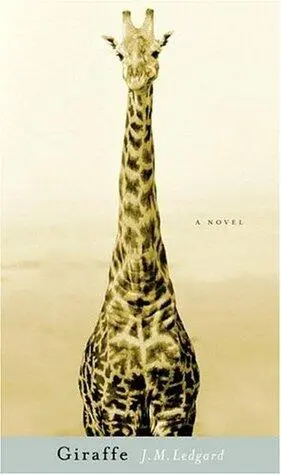
- Название:Giraffe
- Автор:
- Издательство:Penguin Group
- Жанр:
- Год:2007
- ISBN:нет данных
- Рейтинг книги:3 / 5. Голосов: 1
-
Избранное:Добавить в избранное
- Отзывы:
-
Ваша оценка:
Giraffe: краткое содержание, описание и аннотация
Предлагаем к чтению аннотацию, описание, краткое содержание или предисловие (зависит от того, что написал сам автор книги «Giraffe»). Если вы не нашли необходимую информацию о книге — напишите в комментариях, мы постараемся отыскать её.
In 1975, on the eve of May Day, secret police dressed in chemical warfare suits sealed off a zoo in a small Czechoslovakian town and ordered the destruction of the largest captive herd of giraffes in the world. This apparently senseless massacre lies at the heart of J. M. Ledgard's haunting first novel, which recounts the story of the giraffes from their capture in Africa to their deaths far away behind the Iron Curtain. At once vivid and unearthly, Giraffe is an unforgettable story about strangeness, about creatures that are alien and silent, about captivity, and finally about Czechoslovakia, a middling totalitarian state and its population of sleepwalkers.
It is also a story that might never have been told. Ledgard, a foreign correspondent for the
since 1995, unearthed the long-buried truth behind the deaths of these giraffes while researching his book, spending years following leads throughout the Czech Republic. In prose reminiscent of Italo Calvino and W. G. Sebald, he imbues the story with both a gripping sense of specificity and a profound resonance, limning the ways the giraffes enter the lives of the people around them, the secrecy and fear that permeate 1970s Czechoslovakia, and the quiet ways in which ordinary people become complicit in the crimes committed in their midst.
Giraffe — читать онлайн бесплатно полную книгу (весь текст) целиком
Ниже представлен текст книги, разбитый по страницам. Система сохранения места последней прочитанной страницы, позволяет с удобством читать онлайн бесплатно книгу «Giraffe», без необходимости каждый раз заново искать на чём Вы остановились. Поставьте закладку, и сможете в любой момент перейти на страницу, на которой закончили чтение.
Интервал:
Закладка:
There is no movement in Magdeburg save a giraffe-colored fox picking through rubbish on the embankment. This is the town where the astronomer Tycho Brahe alighted on his journey from Copenhagen to Prague. He had lost the tip of his nose in a duel and replaced it with a metal piece that must have shone as he leaned his head back to regard the heavens with his naked eye. Brahe discovered stars simply by stopping and staring more intently than anyone else. I think now of how many more stars Brahe would have discovered if he had worked with giraffes — had employed giraffe eyes. Perhaps even the modern constellation Camelopardalis, sunk deeply by Perseus and Cassiopeia.
Giraffes are not like insects, who feel the world before them with pubic antennae, or bats shining sonar through the dark, or other vertebrates who smell or hear the world. Giraffes see the world. The giraffe eye is the largest in the animal kingdom, several times larger than the human eye, larger still than the eye of a mermaid. It is almond-shaped, framed by long lashes that in Africa blink away flies and swarming gall-ants, but in Magdeburg now only flutter. The optic nerve of a giraffe is as thick as an index finger, and the celestial view that plays through the nerve on the brain of a giraffe — of stars invisible to the human eye and all the subtle colors denoting the age of the star, which twinkle prehistorically down on us — is more finely grained than any Brahe could have hoped for. The height of the giraffe makes a watchtower of it. With its vision and vantage point, a giraffe can see a man shifting on his haunches a kilometer away. It is not that a giraffe has a mystical power of prophecy or foreknowledge, as the Egyptian hieroglyph had it. It is only that a giraffe sees the present before any other animal: When it shifts on the grassland, all the impalas and gazelles raise their heads in alarm. And if by chance a hyena were to happen upon the riverbank here in Magdeburg, chasing away the fox licking now at the butcher’s waste, in this hour that turns back resolve, the giraffes about me, even proud Sněhurka, would see the hyena as demonic and try to take flight. The crates would stop them, and their eyes, if I should frame them, would open wide and whirl in terror about their sockets, so that they should feel the thickness of their own optic nerve.
HERE IS SOMETHING: a Trabant 601 trailing black smoke, rattling over a cobbled square in which Martin Luther preached and Lucas Cranach the Elder painted. I wonder now what these men would have made of the giraffes if they saw them now. I wonder if they’d run up to the riverbank and exclaim, “Giraffe!”
Would they cut and keep an image of these thirty-two beasts for a sermon or a painting? I look up from my calculations and coded notes, down the avenue of giraffe necks, and I see that of course they would exclaim. Of course they would preach and paint, for this is a biblical and painterly scene.
WE PASS THROUGH MEISSEN. The sky here is bone-white porcelain, detailed in purple, like the flanks of an okapi. I walk up and down the barge, under wonder nets. Vokurka is at my side. I do not speak anymore of compromises but instead light a Red Star and talk of giraffe physiology. For instance, the way the thoracic vertebrae slip triangularly from neck to tail. I explain to him some of my theories of cerebral hemodynamics.
“Look,” he says, pointing south. “There’s our ČSSR!”
He points to the limestone hills separating DDR from ČSSR, like a sailor sighting land. There is a fork of lightning over those hills and another. But I hear no thunder. I see no hyenas tracking us through Meissen.
DRESDEN APPEARS STRANGELY oriental on the southern sky in a silhouette of minarets and domes of the large Yenidze cigarette factory, built fantastically before the First War in the style of Baghdad, or some other city of the Arabian Nights. Whole parts of Dresden collapsed under a firestorm brought on by a British bombing raid one St. Valentine’s Day. It was said that all the oxygen was sucked up from this point of Saxony that night, so that those not already burned alive or killed by falling masonry were suffocated in heat so intense they experienced no cosmic collapse; their blood boiled away. The view from the Labe is gap-toothed. There is hardly any resemblance here to the paintings made by Canaletto, when the city was known as Florence of the Labe. Zwinger Palace is here, miraculously survived, along with its collection of paintings by Van Dyck, Titian, Vermeer, Rembrandt, and my Lucas Cranach the Elder, as well as Dürer’s Dresden altar-piece. But the Frauenkirche, the great Protestant church, is a pile of blackened rubble. I mark a point in the sky where the gold cross rose above the dome of the church. I look for the space in the air where the organ Johann Sebastian Bach once played was, as I mark the spot in the giraffe where its heart is suspended. I frame this emptiness and I frame other spaces around the rubble where streets and squares with common gardens once stood. Grooms led Arabian mares and stallions evacuated from Polish stud farms through the firestorm on those streets. The flames rose up and the Arabian horses rose up also on their hind legs in the orange light. Some survived, others galloped swift and white through the inferno until the j -shaped brands on their flanks caught flame. They collapsed without oxygen and boiled also. My grandfather spoke of those Polish Arabian horses. He was brought low by such exterminations. He could not forget and related often the fate of the hundred thousand horses brought to Flanders from Texas during the First World War. They were glossy black and chestnut quarter horses, he said, some broken in by cowboys of Czechoslovakian descent, for there were many in the Texas desert who addressed my grandfather in Czech on his travels there — a Novotny and a Švabinsky in the saddle, perhaps, alongside a Gonzalez and a McAllister. The quarter horses were placed on trains at the towns of Marfa and Alpine and sold by auction in San Antonio to British and French government agents, who shipped them on through the port of Corpus Christi to Flanders, there to be drowned in mud, or broken under the weight of guns or injured, or driven to madness and shot by an exasperated officer. That war killed so many horses that the automobile took over and relieved the horse of its burden, and many horses came to be unborn. All suffering is connected. That is the feeling I have now on this barge of giraffes passing through Dresden: One suffering connects to another and binds us, as joy binds us.
We tie up beyond Dresden. I look back through fields of turnip to the skyline of the city. The night is tropical, African. Crickets click and chirrup in long grass. I leap from the barge to the riverbank and sit with the East German anglers, who set their lines at protractor angles into waters where there are no sardines, no salmon, but only eels searching upward and Czech-speaking vodníks drifting from one soul jar to another, free of the Communist mediocrity above, which is everywhere, even in the fishing rods about me, poorly made by some East German state monopoly, that threaten to break under the tug of the most inconsequential fish. There is no end in sight to the mediocrity: The socialist epoch would have itself extend, red-starred, into a distant future of centrally planned space colonies, and its desire to understand blood flow in vertical creatures on the moon explains the State’s passing interest in my hemodynamics.
Emil
ST. JOHN’S EVE
JUNE 23, 1973
WE PASS INTO the shadow of limestone gorges, shoveling giraffe dung into the waters of the Labe.
“What plans do you have after this, Freymann?” Hus asks, looking down.
“To go to my family country house,” I say.
Читать дальшеИнтервал:
Закладка:
Похожие книги на «Giraffe»
Представляем Вашему вниманию похожие книги на «Giraffe» списком для выбора. Мы отобрали схожую по названию и смыслу литературу в надежде предоставить читателям больше вариантов отыскать новые, интересные, ещё непрочитанные произведения.



Обсуждение, отзывы о книге «Giraffe» и просто собственные мнения читателей. Оставьте ваши комментарии, напишите, что Вы думаете о произведении, его смысле или главных героях. Укажите что конкретно понравилось, а что нет, и почему Вы так считаете.