J. Ledgard - Giraffe
Здесь есть возможность читать онлайн «J. Ledgard - Giraffe» весь текст электронной книги совершенно бесплатно (целиком полную версию без сокращений). В некоторых случаях можно слушать аудио, скачать через торрент в формате fb2 и присутствует краткое содержание. Год выпуска: 2007, Издательство: Penguin Group, Жанр: Современная проза, на английском языке. Описание произведения, (предисловие) а так же отзывы посетителей доступны на портале библиотеки ЛибКат.
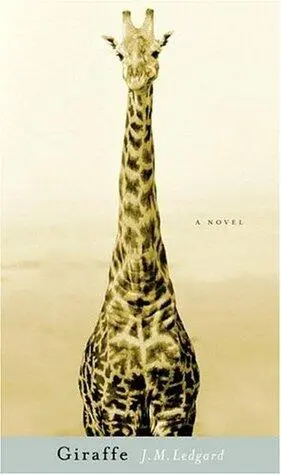
- Название:Giraffe
- Автор:
- Издательство:Penguin Group
- Жанр:
- Год:2007
- ISBN:нет данных
- Рейтинг книги:3 / 5. Голосов: 1
-
Избранное:Добавить в избранное
- Отзывы:
-
Ваша оценка:
Giraffe: краткое содержание, описание и аннотация
Предлагаем к чтению аннотацию, описание, краткое содержание или предисловие (зависит от того, что написал сам автор книги «Giraffe»). Если вы не нашли необходимую информацию о книге — напишите в комментариях, мы постараемся отыскать её.
In 1975, on the eve of May Day, secret police dressed in chemical warfare suits sealed off a zoo in a small Czechoslovakian town and ordered the destruction of the largest captive herd of giraffes in the world. This apparently senseless massacre lies at the heart of J. M. Ledgard's haunting first novel, which recounts the story of the giraffes from their capture in Africa to their deaths far away behind the Iron Curtain. At once vivid and unearthly, Giraffe is an unforgettable story about strangeness, about creatures that are alien and silent, about captivity, and finally about Czechoslovakia, a middling totalitarian state and its population of sleepwalkers.
It is also a story that might never have been told. Ledgard, a foreign correspondent for the
since 1995, unearthed the long-buried truth behind the deaths of these giraffes while researching his book, spending years following leads throughout the Czech Republic. In prose reminiscent of Italo Calvino and W. G. Sebald, he imbues the story with both a gripping sense of specificity and a profound resonance, limning the ways the giraffes enter the lives of the people around them, the secrecy and fear that permeate 1970s Czechoslovakia, and the quiet ways in which ordinary people become complicit in the crimes committed in their midst.
Giraffe — читать онлайн бесплатно полную книгу (весь текст) целиком
Ниже представлен текст книги, разбитый по страницам. Система сохранения места последней прочитанной страницы, позволяет с удобством читать онлайн бесплатно книгу «Giraffe», без необходимости каждый раз заново искать на чём Вы остановились. Поставьте закладку, и сможете в любой момент перейти на страницу, на которой закончили чтение.
Интервал:
Закладка:
We tie up the barge finally in the center of Ústí nad Labem, the town where the opera singer alighted from the train to sing the part of a water nymph. We take our bags and check into a new riverside hotel. Inside the lobby, it is all lacquered plywood and factory-produced tile mosaics describing nothing. I go up and shower and shave. I pack away my giraffe-smelling tracksuit. I dress in a clean white shirt and tie and file with the others into the hotel dining room. A window runs the length of the room, through which we can see the giraffes on the barge in this oily summer light as in a painting by Cranach. Some of the giraffes drop their heads and lift them again, as horses do when trying to loosen their bit. Others remain still and marked above the river in f shapes, just as in that photograph in an East German magazine I have seen, supposedly of the Loch Ness monster in Scotland.
There are ten or twelve of us at the dining table. Hus sits at the center. I am at one end. I pick at my meal of pork and cabbage. We all drink. Hus stands now, before the dessert comes. He supports himself with one hand on the back of a chair.
“Another toast!” he says. “To the tallest of beasts.”
We all stand once more.
“Giraffes!” we say.
This is a toast that will not often be repeated. Hus taps his glass with a knife. We grow quiet.
“Not long ago,” he says, “a British animal trader was commissioned to bring back a collection of penguins from the South Atlantic. He departed the Falkland Islands with eighty-four penguins. He reached Montevideo with seventy. He arrived in London with eight. Half of the giraffes shipped last year to France and America died in the passage. Capitalists lose most of the animals they capture because they’re driven by greed. Greed. They gather indiscriminately. They don’t look to sex or character. While we socialists gathered our giraffes carefully, before assisting their passage.”
Vokurka interrupts with clapping. He is not drunk. He is one of those who claps like a marionette at Party meetings.
“We watered and fed the giraffes on trucks, trains, on ship and barge,” Hus says. “A hundred and fifty buckets of grain each day for forty-four days. Tomorrow we will unload thirty-two of our thirty-three giraffes. We release them onto our ČSSR. They have migrated. They will find a new home in our zoo. They will be happy here.”
He pauses. He comes to his Czechoslovakian subspecies.
“Their offspring,” he says, unable to help himself, “will come to enjoy our winters.”
THE MEAL IS DONE. I am too drunk now to seek out my water nymph at the back door of the opera house. I go instead with the others into the hotel garden. It is windless, but I see no quicklime outlines of the dead; they cannot last in this heat. A bargeman corners me and speaks at me of Hamburg.
“I visited a strange brothel there,” he says. “You couldn’t imagine. Fancy house on a fancy street — across from a park. I opened the gate. I walked down the path. I thought it must be the wrong place. Still I went on. The house had a square tower covered in ivy. Roses grew alongside the gravel path. I pulled the bell. An old lady opened the door. Refined, you know. I blushed. I held my cap in my hands. ‘Please, sorry,’ I said. ‘Not right,’ I said. Well, that was all the German I had. The old lady slowly looked me up and down. She smiled. ‘Right,’ she said, and waved me in.”
The bargeman is going on, up the stairs of the house. I light a Red Star. I smoke and try to pay attention to what he is saying to me. I cannot. I am quite drunk now and swaying also.
I WAKE. IT IS EARLY. I am no longer under a tarpaulin lit snowy by Sněhurka’s underbelly. I am on a hotel bed. The sheets under me are soaked in sweat. I step out into the hotel corridor. It extends unlit to a single window far away. I walk down to that window. I stand here. I look down. I teeter. I see swallows diving and rising. I trace them blue and cream through the air. I see their articulated wings. They sail out over Ústí nad Labem, over the opera house they go, through the foundries, to groves of English oak at the base of the ski slopes. I do not frame the swallows. They are almost like ice-hockey players to me: I could never turn them in such beautiful ways as they turn now. I fancy the swallows speak to one another in patterns of flight about the thirty-two giraffes on the barge below, around whose necks they might also have circled in Africa.
I go back to my room. I sleep and wake again. I fall back now, remembering my dream, not of Schmauch’s island home in a frozen sea, or my certain home, but the longest dream of a young giraffe with a broken neck falling from a great height, from space even, falling and falling in a smudge of liver red, coming alive as it falls, being somehow oxygenated, mended in the neck, then being metamorphosed in the magic of highest cirrus clouds from a giraffe into a young woman, an air stewardess tumbling head over heels from a broken plane, yes, a Czechoslovakian Airlines stewardess, in a dull uniform, screaming in Czech or perhaps in Slovak, black hair streaming, falling out of summer into a winter’s day, to a river, no, not a river now, a marsh. It is not the salt marsh on the English coast where Pip saved Magwitch that comes up to meet her. It is a lagoon not far from Venice, covered in thin ice. I am aware in my dream that I have never been to Venice, that the city floating on eggshell waters is made of paper cut from the books and magazines I have read. I am in the lagoon. It is me looking up at the flailing stewardess. I hear her screaming now. She falls swan-necked and long-legged through freezing fog: She must see the vaporetto setting out from the distant islands toward the planar façade of the Doge’s Palace. She is growing larger and larger. I hold my arms out to her. I catch her! I speak to her in Czech. I take her fast under the icy water, deep into the lagoon. I am a vodník in my dream, not of the Communist-lit hospoda but fresh as the vodník who appears over the shoulders of Justinian and Theodora in Byzantine mosaics.
I fall back into bed. There is so much falling in life. Falling of the shutter on a camera, or of my eyelid to form an image I may keep and turn. Falling of raindrops to the earth, falling of dead, of newborns, and of the unborn in dreams. Sněhurka might have seen the nameless young giraffe thrown overboard off the coast of Mauritania. She might have been among those giraffes who panicked in their crates, who would have run out onto the violet ocean without understanding that only saints and storm petrels and Soviet fishermen can walk on water, or that even if by some miracle giraffes were added to that number, the dead giraffe would sink before them and their gallop away from the Eisfeld would have taken them only onto the shore of Mauritania, to a desert where there are no trees a giraffe might feed on. I have fallen into hands at my birth, just as I will fall again at my death, felled by disease or upended by accident. I will also fall to the earth. My veins will collapse too and all the celestial bodies will fall into a soup of dioxides.
It is raining now outside the hotel. The raindrops are soft on swallow wings and on the seats of the chairlifts rocking on the mountainside. I close my eyes. It is inexplicable how the mind sparks in this state. Inexplicable why the comets in the weightless deep of my brain should light, softly as a beer advertisement over the Hamburg skyline, some lines of Goethe, which once in a summer love meant something to me:
Man’s soul
Resembles water:
It comes from Heaven
And must again
Fall to earth
For ever changing.
~ ~ ~
Интервал:
Закладка:
Похожие книги на «Giraffe»
Представляем Вашему вниманию похожие книги на «Giraffe» списком для выбора. Мы отобрали схожую по названию и смыслу литературу в надежде предоставить читателям больше вариантов отыскать новые, интересные, ещё непрочитанные произведения.



Обсуждение, отзывы о книге «Giraffe» и просто собственные мнения читателей. Оставьте ваши комментарии, напишите, что Вы думаете о произведении, его смысле или главных героях. Укажите что конкретно понравилось, а что нет, и почему Вы так считаете.