J. Ledgard - Giraffe
Здесь есть возможность читать онлайн «J. Ledgard - Giraffe» весь текст электронной книги совершенно бесплатно (целиком полную версию без сокращений). В некоторых случаях можно слушать аудио, скачать через торрент в формате fb2 и присутствует краткое содержание. Год выпуска: 2007, Издательство: Penguin Group, Жанр: Современная проза, на английском языке. Описание произведения, (предисловие) а так же отзывы посетителей доступны на портале библиотеки ЛибКат.
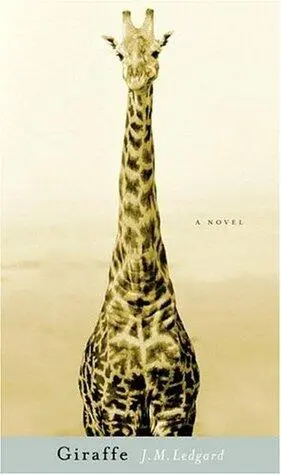
- Название:Giraffe
- Автор:
- Издательство:Penguin Group
- Жанр:
- Год:2007
- ISBN:нет данных
- Рейтинг книги:3 / 5. Голосов: 1
-
Избранное:Добавить в избранное
- Отзывы:
-
Ваша оценка:
Giraffe: краткое содержание, описание и аннотация
Предлагаем к чтению аннотацию, описание, краткое содержание или предисловие (зависит от того, что написал сам автор книги «Giraffe»). Если вы не нашли необходимую информацию о книге — напишите в комментариях, мы постараемся отыскать её.
In 1975, on the eve of May Day, secret police dressed in chemical warfare suits sealed off a zoo in a small Czechoslovakian town and ordered the destruction of the largest captive herd of giraffes in the world. This apparently senseless massacre lies at the heart of J. M. Ledgard's haunting first novel, which recounts the story of the giraffes from their capture in Africa to their deaths far away behind the Iron Curtain. At once vivid and unearthly, Giraffe is an unforgettable story about strangeness, about creatures that are alien and silent, about captivity, and finally about Czechoslovakia, a middling totalitarian state and its population of sleepwalkers.
It is also a story that might never have been told. Ledgard, a foreign correspondent for the
since 1995, unearthed the long-buried truth behind the deaths of these giraffes while researching his book, spending years following leads throughout the Czech Republic. In prose reminiscent of Italo Calvino and W. G. Sebald, he imbues the story with both a gripping sense of specificity and a profound resonance, limning the ways the giraffes enter the lives of the people around them, the secrecy and fear that permeate 1970s Czechoslovakia, and the quiet ways in which ordinary people become complicit in the crimes committed in their midst.
Giraffe — читать онлайн бесплатно полную книгу (весь текст) целиком
Ниже представлен текст книги, разбитый по страницам. Система сохранения места последней прочитанной страницы, позволяет с удобством читать онлайн бесплатно книгу «Giraffe», без необходимости каждый раз заново искать на чём Вы остановились. Поставьте закладку, и сможете в любой момент перейти на страницу, на которой закончили чтение.
Интервал:
Закладка:
If we had a keen vision and feeling of all ordinary human life, it would be like hearing the grass grow and the squirrel’s heart beat, and we should die of that roar which lies on the other side of silence.
— GEORGE ELIOTAmina — A Somnambulist
ST. JOHN’S EVE
JUNE 23, 1973
THIS IS THE MARSH that lies at the end of the Svět, or world. It is larger and wilder and more real to me now in its winter coat. Reeds stand stiff upon it, silvered with frost. The water is thin transparent ice in which filaments of weed have been frozen, fair and glinting, like the hair of a rusalka rising from the boggy bottom. The willows stand golden on the island in the marsh, still with their slender leaves, still with their red ribbons. I pass under these willows now in my unlikely canoe, which is not Czechoslovakian but a type I have seen in picture books about American Indians: stretched like a drum skin and curved at both ends. I break the ice and set a paddle to the water and move past banks of soft earth on the island that are deep in snow, just as in summer they are hidden under thorns and poisonous weeds and darkened by clouds of mosquitoes, which swarm over the dogs set down each spring by men who cannot bring themselves to drown the dogs at birth, and instead let them out onto the island to starve or grow mad on a diet of water vermin.
Some of these dogs appear before me now. They bound along, not venturing out onto the thin ice, but kicking up snow at its edge, barking dementedly, stopping, starting, keeping pace, all the while looking at me. I paddle away from them at a steady pace until I can no longer hear their barking. I am overcome with silence. There is no sound but that of an adder slivering across the ice. I love this marsh, I love it knowing there are places that are not so still and quiet. I stand up in my canoe and stretch my arms up for exclamation, as well as for balance. I am alone in my place at the end of the Svět, or world, the open waters of which I can make out beyond the marsh, polished black like a sacramental stone. I sense in this moment I am more than I expected myself to be, that I am a character in a fairy tale, a prickless hero, one of those noble and true characters who find themselves rescued from a hard life by the intervention of magic, but the magic has not happened to me yet, or upon me. I am sensible to my condition: I am a worker in a workers’ state.
I stand with my arms stretched up in my unlikely canoe, balanced in my hard life. The hands I open to the air are callused and shredded from days of wading out with other workers into deeper water, to my chest, and harvesting reeds with a rough blade. It is not the season for cutting reeds. I am alone in this marsh at the end of the Svět, or world, except for the mad dogs and the skein of red-breasted geese, which flies now under the clouds toward me. The geese are newly arrived from the northern tundra, although this too is impossible; this is the wrong season for geese. They drop lower. Their honking intrudes on the silence. It is distant and intermittent at first and now clearer. They are fat and rubychested; they shift in space, taking turns to fly at the point; they pass over me toward the open water of the Svět, beating music from the air, so close I reach up now and brush their webbed feet, which are charcoal-colored in the winter light.
It is not the season for cutting reeds. It is not the season for red-breasted geese. It is the moment for magic. I reach in my pocket and take out a handful of bright-colored beans. I examine them and throw them one at a time into the water. They are large and heavy. They shine as they sink. I watch them disappear yellow blue green into blackness. I breathe in, I breathe out. It is enough. There is a bubbling from below, a stench of disturbed bottom mud, then a green shooting beanstalk, as fast as a jack-in-the-box, thick as a tree, high as a tree, two, three, five, eight, thirteen, and up, eighty-nine trees, one hundred and forty-four, two hundred and thirty-three, and up, six hundred and ten trees high, yet remaining a beanstalk with the elastic ladder stems of a beanstalk.
The air and water are quieted. I paddle over and leap from my unlikely canoe. There is an instant now in my flight when I look down and see my reflection and understand myself to be no longer a girl, but a woman. I take hold of the beanstalk and settle myself upon it. I run my fingers across its skin of gooseberry down and bumblebee hair. I set a foot on a stem, pull myself up, and so begin climbing. The magic has happened to me and I climb without fear toward the vaulted heavens, as though in a fairy tale. Far, far up, at the height of two hundred and thirty-three trees, my canvas tennis shoes slip from my feet to the Svět. I climb for many more hours, for a day, even, until the red-breasted geese are no more than motes of dust below me, the town and the castle at the end of the Svět no more than the slightest ’, the forest and the patchwork fields small as a;, and the Svět itself a black (). I pass at last from clear sky into snow clouds. My breathing becomes shallow and rapid in the thin air. I lose my footing many times. I am buffeted by fierce winds, which ride here, but never down on the Czechoslovakian marsh.
I break through into another world, without birds, without clouds, above all precipitation except meteor showers. It is a quite different country, squeezed in between marsh and cosmos, a rolling gray land, not Czechoslovakian gray, not normalized in that way, but a gray that comes with lunar proximity. I step off the beanstalk onto the land, which is made of clouds — is a cloudscape, not a landscape. These clouds have substance; they are to air as ice is to water. My feet make no sound in them. When I twirl like a ballerina, I feel myself to be twirling in powdery snow. I walk across this land. I fall down between clouds. It is a struggle to climb up again. Over and over, I slip back into this crevasse until I find purchase, just here, on a lightning bolt. I walk more carefully, watching my step. I lie down and nap at intervals and when I wake, I look up at the stars, which are so close, and think to find new ones with my naked eye, and I hold out my hands to passing cosmonauts, wishing only to stop one of them and practice my Russian.
I do not ever stray out of sight of the beanstalk: I have no great expectations of the magic. I think I see my parents walking over down a cumular slope toward me, from another plane, but when I approach I see they are only shapes of my mother and father, formed from a collage of remembered photos. My parents have not magically appeared to me; neither have deities, angels, or giants with castles in the sky. There are no oracles or sudden riches of golden eggs. I do not mind: It is enough for me to be suspended on this cloudscape.
I circumambulate the beanstalk until the day is ended and the sun sets. The clouds melt under me a little, just as during the day they gathered moisture from the marsh and thickened. I sink in up to my knees. I wade the last steps to the beanstalk. I take hold of its gooseberry and bumblebee skin. I take one last look at the meteor showers, and my parents blowing flat and tattered in the astral wind. I begin climbing down. I slide from one stem to another. A lightning bolt gashes me. I howl. I slide down through the snow clouds and come again into the enormous sleet-washed space, which is carpeted, I see now, with ČSSR. It is still winter in this space. I see white forests stretching all the way to Prague. I slide down for many hours. I rest on bigger leaves. I continue, until my thighs are rubbed raw, and I reach the thick air where the red-breasted geese fly. They fly beside me, beating off moonbeams. I take a deep breath. Down I go until I am thirteen trees high over the Svět and now three and here, on this broken stem, I slide from the beanstalk to a gravel road outside the front gates of the zoo, which stands near the town at the other end of the Svět.
Читать дальшеИнтервал:
Закладка:
Похожие книги на «Giraffe»
Представляем Вашему вниманию похожие книги на «Giraffe» списком для выбора. Мы отобрали схожую по названию и смыслу литературу в надежде предоставить читателям больше вариантов отыскать новые, интересные, ещё непрочитанные произведения.


Обсуждение, отзывы о книге «Giraffe» и просто собственные мнения читателей. Оставьте ваши комментарии, напишите, что Вы думаете о произведении, его смысле или главных героях. Укажите что конкретно понравилось, а что нет, и почему Вы так считаете.