J. Ledgard - Giraffe
Здесь есть возможность читать онлайн «J. Ledgard - Giraffe» весь текст электронной книги совершенно бесплатно (целиком полную версию без сокращений). В некоторых случаях можно слушать аудио, скачать через торрент в формате fb2 и присутствует краткое содержание. Год выпуска: 2007, Издательство: Penguin Group, Жанр: Современная проза, на английском языке. Описание произведения, (предисловие) а так же отзывы посетителей доступны на портале библиотеки ЛибКат.
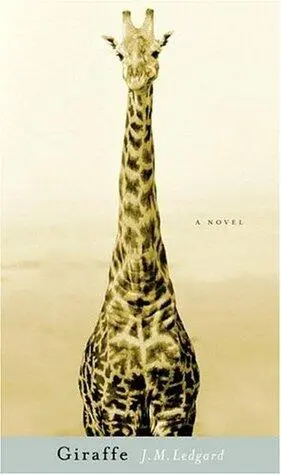
- Название:Giraffe
- Автор:
- Издательство:Penguin Group
- Жанр:
- Год:2007
- ISBN:нет данных
- Рейтинг книги:3 / 5. Голосов: 1
-
Избранное:Добавить в избранное
- Отзывы:
-
Ваша оценка:
Giraffe: краткое содержание, описание и аннотация
Предлагаем к чтению аннотацию, описание, краткое содержание или предисловие (зависит от того, что написал сам автор книги «Giraffe»). Если вы не нашли необходимую информацию о книге — напишите в комментариях, мы постараемся отыскать её.
In 1975, on the eve of May Day, secret police dressed in chemical warfare suits sealed off a zoo in a small Czechoslovakian town and ordered the destruction of the largest captive herd of giraffes in the world. This apparently senseless massacre lies at the heart of J. M. Ledgard's haunting first novel, which recounts the story of the giraffes from their capture in Africa to their deaths far away behind the Iron Curtain. At once vivid and unearthly, Giraffe is an unforgettable story about strangeness, about creatures that are alien and silent, about captivity, and finally about Czechoslovakia, a middling totalitarian state and its population of sleepwalkers.
It is also a story that might never have been told. Ledgard, a foreign correspondent for the
since 1995, unearthed the long-buried truth behind the deaths of these giraffes while researching his book, spending years following leads throughout the Czech Republic. In prose reminiscent of Italo Calvino and W. G. Sebald, he imbues the story with both a gripping sense of specificity and a profound resonance, limning the ways the giraffes enter the lives of the people around them, the secrecy and fear that permeate 1970s Czechoslovakia, and the quiet ways in which ordinary people become complicit in the crimes committed in their midst.
Giraffe — читать онлайн бесплатно полную книгу (весь текст) целиком
Ниже представлен текст книги, разбитый по страницам. Система сохранения места последней прочитанной страницы, позволяет с удобством читать онлайн бесплатно книгу «Giraffe», без необходимости каждый раз заново искать на чём Вы остановились. Поставьте закладку, и сможете в любой момент перейти на страницу, на которой закончили чтение.
Интервал:
Закладка:
The names come easily.
“Then we had Maleček, Zábrodsky, Drobny,” I say.
“While now we have Nedomansky, Suchy,” Hus says. “Not forgetting Černy, Holík, Št’astny, and of course Hlinka.”
“Especially Hlinka,” I say. “The last victory over the Russians!” I exclaim, forgetting myself.
“That was something,” Hus says. “We’ll remember that even if the world falls apart and comes back together in a better way.”
I am given over to puncturing time and to hemodynamics and doubling, but only in ice hockey do I find myself quickened by the present. I am a fan. I jump on trams throughout Prague with my friends, going from one arena to another. We sit close to the ice in those places, among the factory workers from Kladno. We revel in the Rolbar ice machine polishing the surface before face-off, the players lacing plastic helmets under their chins in a tight bow, the leap from bench to ice. We mark the arc of bodies on blades and the quality of the stick handling — all of it too fast for me to frame. We drink cheap beer and smoke and duck when pucks fly up. We heckle players and whistle at the Soviet troops watching up in the rafters in their soft boots of the steppe. Playing ice hockey is even more pleasurable. I skated through childhood and skate still on winter weekends when the village ponds are frozen. I stand tall on the ice. I push out with my legs. I feel myself falling forward. It is not vertigo-inducing; it can be halted with a square turn of my skates. It is a swordfish moment, a loop on crystal, with no past or future save for a wrist-shot slapped into the goal from a narrow angle.
THESE HOURS ARE DAYS. I sweat here under the tarpaulin. I frame a flying fish breaking up through the skin of the river. I drift to sleep in time with the barge engines. I wake to the smell of giraffes, which is already familiar to me. I sit up against the crate containing Sněhurka. Time is stretched here as it must have been on the Eisfeld broken down off Zanzibar. It will snap back when the journey ends and I will no longer be able to remember the details, such as the shape and color of giraffe hooves, just as I can no longer properly remember the details of my army service. I feel Sněhurka’s legs behind me, through which veins run like vines, and I perform equations to represent the journey of blood through those veins to the ventricles of her heart, powerful as an elephant’s heart, on into thick-walled arteries, up the neck against the hydrostatic pull of gravity to her head, pushed impossibly high on an f -shaped stick. I feel her pulse. She cannot wish her heart to stop beating, any more than I can. So much of this life is without choice. I am grateful for that. I know that, were it possible, I might wish my heart would stop for a few seconds on a long afternoon in ČSSR, and I cannot be certain that if I felt that stoppage within me, if I felt crimson stars falling and the coming cosmic collapse, I would have the courage to strike up my heart once more.
IT IS TOO HOT NOW for talk of ice hockey. It seems natural that Vokurka is combing back his thin hair from his sweaty scalp and talking of Cuba.
“I spent a year on the island,” he says. “This was not long after their revolution. I was sent to assist with the defense of Cuba against American biological and chemical weapons. My job was to examine the ballast of American weather balloons, which had drifted from Florida and fallen to earth among the cows in the Cuban hills, some shot from the sky by the Cuban military and others struck down by lightning, in all cases, as I saw once or twice myself, descending like a long mirrored ribbon. The Cubans had an idea that the sand in the weather balloons, which sifted out over the farmland as it lost altitude, might have been infected. The leadership in Havana believed the Americans had impregnated the sand with one contagion or another, designed to lower the fertility of the chickens, weaken the pigs, or damage the cows. I drove around the island testing sand samples and drawing blood from animals in the affected districts. There were a number of veterinarians looking at different biological and chemical threats to Cuban livestock. We were Soviets, East Germans, Hungarians, Bulgarians, and Czechoslovakians. The leadership in Havana took an immediate liking to us.”
“You met the leaders?”
“Several times. We were summoned to a beach villa every few weeks. We announced our findings and the leaders leaned forward in their deck chairs and listened. It was quite different from what I expected. There were cigars, but no oratory. They hardly said anything at all.”
“Were the Americans doing that? Did you find any evidence?”
He shrugs. “Americans are capable of many things. We were careful to make up our own confidential reports in such a way as to leave open the possibility of contamination. I can only say that all the sand samples I and others gathered were sterile. The Cubans had no interest in sending us home immediately. That would have been to admit paranoia, or that the intelligence service had given credence to wild rumors. I was occasionally sent from Havana to the east of the country to draw blood from animals there. The rest of the time I was free to do as I pleased. The Cubans asked me if there was anything I wanted to learn. I told them that I had always wanted to be a frogman. So they placed me in their military frogman course.”
“You became a merman?” I ask.
“A merman? If you like. I spent all my days in the sea. I swam with stingrays in the tidal gaps and sometimes with bottle-nosed dolphins in the reefs. I took up pieces of coral, shark teeth, and small artifacts from among the timbers of shipwrecks. I was also taken fishing in the mangrove swamps. There is a time of year there when the tarpon come inland and feed on the smaller fish. They are as large as salmon and colored similarly to precious metals. They are fast, blood-thirsty, and survive in that stagnant water by coming up to breathe, like mammals.”
“Do you go diving still?” I ask.
“Of course. In the rivers and lakes of our ČSSR.”
“In the Labe?”
“Yes.”
“Surely you can’t see anything.”
“Not much,” he says. “The water is peat-colored. You can make out the shapes of broken plows and cartwheels in it. It is beautiful only on days like this, when the sun reaches into the water. On these days it is like diving into a glass of beer. You can see trout and pike and the hollows in the riverbank and all the cuts in the bed.”
“Are you married, František?” I ask. “Do you have children?”
“Take a look,” he says.
He pulls out a photograph from his wallet and hands it to me. He is standing in snorkeling suit, flippers still on his feet, between a girl and a young boy whose hair is bleached by the sun. There is a stone harbor wall behind them.
“That’s Daniela and that’s little Mirek. She’s eight. He’s six.”
“Where was this?”
“Yugoslavia last summer. My wife took it.”
His daughter leans close into him, her hand in his, her head on his elbow. His son stands with arms folded to the right of Vokurka. He has consciously made himself distinct from him. Vokurka looks satisfied.
“Has it been worth it?” I ask.
“Has what?”
“The compromises. Joining in with the Party. Playing along.”
“I can’t think what you mean.”
He is embarrassed, a little frightened. I have crossed a line. My heart beats faster for saying it. My blood roars through narrows of ligament. It is the opposite of being a boy and saying to a girl for the first time, “I want to be with you.”
Emil
JUNE 22, 1973
IT IS THE SECOND night on the barge. We do not tie up but continue, our ascent sleepless through DDR. We have passed the town of Tangermünde and are thumping slowly now through Magdeburg in this early hour, the hour, as Dante has it, “that turneth back desire in those who sail the sea,” the hour of lowest blood pressure, when people most often die. I have insomnia. I sit here under this tarpaulin listening to Sněhurka and the other giraffes shifting in their crates and banging their legs against the planking.
Читать дальшеИнтервал:
Закладка:
Похожие книги на «Giraffe»
Представляем Вашему вниманию похожие книги на «Giraffe» списком для выбора. Мы отобрали схожую по названию и смыслу литературу в надежде предоставить читателям больше вариантов отыскать новые, интересные, ещё непрочитанные произведения.




Обсуждение, отзывы о книге «Giraffe» и просто собственные мнения читателей. Оставьте ваши комментарии, напишите, что Вы думаете о произведении, его смысле или главных героях. Укажите что конкретно понравилось, а что нет, и почему Вы так считаете.