J. Ledgard - Giraffe
Здесь есть возможность читать онлайн «J. Ledgard - Giraffe» весь текст электронной книги совершенно бесплатно (целиком полную версию без сокращений). В некоторых случаях можно слушать аудио, скачать через торрент в формате fb2 и присутствует краткое содержание. Год выпуска: 2007, Издательство: Penguin Group, Жанр: Современная проза, на английском языке. Описание произведения, (предисловие) а так же отзывы посетителей доступны на портале библиотеки ЛибКат.
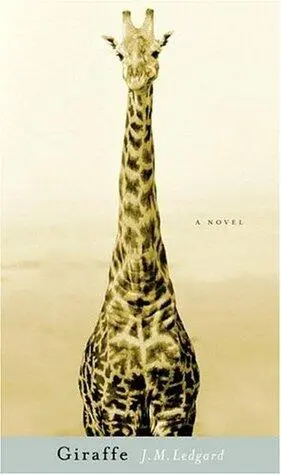
- Название:Giraffe
- Автор:
- Издательство:Penguin Group
- Жанр:
- Год:2007
- ISBN:нет данных
- Рейтинг книги:3 / 5. Голосов: 1
-
Избранное:Добавить в избранное
- Отзывы:
-
Ваша оценка:
Giraffe: краткое содержание, описание и аннотация
Предлагаем к чтению аннотацию, описание, краткое содержание или предисловие (зависит от того, что написал сам автор книги «Giraffe»). Если вы не нашли необходимую информацию о книге — напишите в комментариях, мы постараемся отыскать её.
In 1975, on the eve of May Day, secret police dressed in chemical warfare suits sealed off a zoo in a small Czechoslovakian town and ordered the destruction of the largest captive herd of giraffes in the world. This apparently senseless massacre lies at the heart of J. M. Ledgard's haunting first novel, which recounts the story of the giraffes from their capture in Africa to their deaths far away behind the Iron Curtain. At once vivid and unearthly, Giraffe is an unforgettable story about strangeness, about creatures that are alien and silent, about captivity, and finally about Czechoslovakia, a middling totalitarian state and its population of sleepwalkers.
It is also a story that might never have been told. Ledgard, a foreign correspondent for the
since 1995, unearthed the long-buried truth behind the deaths of these giraffes while researching his book, spending years following leads throughout the Czech Republic. In prose reminiscent of Italo Calvino and W. G. Sebald, he imbues the story with both a gripping sense of specificity and a profound resonance, limning the ways the giraffes enter the lives of the people around them, the secrecy and fear that permeate 1970s Czechoslovakia, and the quiet ways in which ordinary people become complicit in the crimes committed in their midst.
Giraffe — читать онлайн бесплатно полную книгу (весь текст) целиком
Ниже представлен текст книги, разбитый по страницам. Система сохранения места последней прочитанной страницы, позволяет с удобством читать онлайн бесплатно книгу «Giraffe», без необходимости каждый раз заново искать на чём Вы остановились. Поставьте закладку, и сможете в любой момент перейти на страницу, на которой закончили чтение.
Интервал:
Закладка:
DRAGONFLIES AND WASPS hover about Sněhurka and are dispersed now by smoke from bonfires West German farmers have lit at the edge of their fields. The smoke causes Sněhurka to shift in her crate. I lean back against her. Her legs push against my back through the slats. We round a bend in the Labe and come upon a nudist beach. Forms and genitals of West Germans sag on the sandy bank like so many walrus runts and milky curds. I do not frame any of them, but wonder at the ease with which I might defect now, as my father feared when our fingers brushed in parting. Hus and Vokurka are playing cards. The bargemen are occupied with the bend. Only the giraffes will see me go, and they are silent. I could do this; I could slip into these sweet-poisoned waters like a merman and swim perpendicularly to the riverbank and reveal myself there, clothed, before the West German nudists. Yet I do not move. I cannot. If I slip into the water now, my home will become something dreamed, and I cannot dream as Schmauch dreams; I am not a sailor — I have no idea of an island in an icebound sea. There is something else. I am weighed down. I can hardly haul myself over to teeter at the edge of the barge. It is as if I have grown a shell on my back to protect myself from the Communist moment and cannot now shed it.
WE PASS THE LAST West German village. We brush against the bulrushes on the bank to make way for oncoming barges and so uncover a young couple lovemaking there. They pull back from each other and give out a little gasp on seeing the giraffes. They stand. They stare after the barge. An old man pedaling a bicycle stops also. He places his feet on the tow-path. He leans over the handlebars and stares after the giraffes. This is how it will be for the giraffes. People will stand and stare after them, frame them, and keep them. They will become zoo animals and their form will forever be the cause of exclamation among people and sometimes of reflection.
The Iron Curtain comes suddenly, as a threading between fallow fields. Floodlights rock across the Labe. American boots strike paths and Soviet jackboots also. There are mine-fields and trenches dug into the root systems of ash trees, such that badgers can make no progress. Beyond the mine-fields is a wall of concrete panels, supple, holding to the contours of the land like segments of snake cartilage. An East German flag flutters over a border post in red, orange, and black, struck with a hammer and sickle. I button up a shirt and put on shoes. I speak in Russian to military officials who come to stand and stare after the giraffes. These officials take off their caps and relax their arms and grow visibly more gentle, as though in looking up at the beasts they have recovered a part of their childhood.
We continue a little way up the Labe and tie up for the night by an army barracks. There are no Mercedes here. The air is more sulfurous. Our mood has changed: We walk quietly up and down the barge, and the words we use, and the way we use them, are different from in West Germany. It is as if the world is divided into spheres of thought and we have passed from one sphere into another of lesser possibilities, as through a weather front from clear sky to rain.
I step off the barge into a meadow behind the barracks and stumble through a thicket of yew trees. It is quite dark. It is only now, out in the starlight, that I realize I have passed through the graveyard of a village erased by the Communist moment.
Emil
JUNE 21, 1973
IAM WOKEN NOW by a breeze billowing under the tarpaulin. I look up. It is the middle of the night. Sněhurka is awake in her crate. She is looking out at a red sack caught in the branches of a weeping willow on the far bank. The sack is torn into strips like the red ribbons that vodníks, or watermen, are supposed to hang from willow branches to attract young women. I stare across at the willow. There is always a hope I will see a vodník sitting in the branches, playing a violin sadly to himself.
The vodník looks after a stretch of a river or stream. He lives among eels in pools where trout circle. It is the vodník who causes a river to burst its banks in spring, carrying off a Persian leopard, and to sink low in summer. It is he who pulls under the unsuspecting fisherman and the drunk ferryman; he is the one who catches and cradles the mortally stricken child who has broken through thin ice. It is so striking, so very Czechoslovakian, that the vodník belongs to a single stretch of river, between a linden tree and a bend, or between a weir and a certain copse of crab-apple trees. He is not like the mermaids the East German sailors spoke of, who sink freely down from a cove and sing, with plucking of throat hairs, to whales in the faraway deep. There were vodníks before there were Czechoslovakians. In certain Byzantine mosaics you can see over the shoulders of Justinian and Theodora to a vodník half risen from a warm lagoon. The vodník has been too long exiled in our landlocked Czechoslovakia to move anymore in the sober and athletic way of those mosaics. He has grown thin and is seen most often in the local hospoda, or pub, where he fancies his green skin is disguised in the weak electric light of the Communist moment. He keeps his webbed hands deep in his pockets, except when buying rounds, but is nevertheless easily recognized by his ridiculous top hat, which has no place in ČSSR, or even in Tonakia, by the water dripping from the pockets of his jacket, the rank smell of his breath, and the weeds gathered about his ears. He is not a bad creature, not a frightening animal. He is not a potential candidate for any zoo. On the contrary, the vodník is a spiritual creature, a caretaker of souls. It is he who preserves all those who come to him. He snatches their descending forms but wants none of them. Those he takes, he takes on higher command. He puts their souls in ceramic jars, which he sets in orderly fashion on the shelves of his home, like the jars of pickled dolphin fetuses neatly arranged in the library of the Strahov Monastery in Prague. There the souls await the final judgment priests used to speak of, in which the drowned will rise from the rivers and the seas, even from the deep of the Baltic, rising straight up through the clouds, shedding lily pads and barnacles, but not before, as scripture has it, the second and third angels have poured vials into the rivers, turning them to blood, and killing all other living things within them, including the vodník. If this is so, if this comes to be, then the vodník is truly good, and his mournful violin playing from weeping willows hung with red ribbons is not just a declaration of his loneliness, but also of the dreadful end that awaits him and his river.
The red sack beats against the willow and lifts from the tree and is carried away on a wind that will give out long before it reaches ČSSR. I look again and can see no vodník in the branches. I look again at Sněhurka. Her eyes remain open, unblinking, and I cannot say whether she is awake now or sleepwalking. I lie back again on my sleeping bag. I close my eyes. I remember at once what my father shouted to me as the train pulled out of the station in Prague: “Remember, Emil, that all the vodníks on the Labe, even as far as Hamburg, are Czech-speaking!”
I am woken at first light by the shouting of the bargemen and by ropes being thrown from the riverbank to the barge and by the racing of the barge engines. We continue up, deeper into this sphere of lesser possibility. I go to the wheelhouse and drink coffee and smoke Red Stars with Hus. We find common cause in ice hockey. We talk of ČSSR’s star players. We share victories. We do not bond; we are too far apart for that, I searching for beauty, he for subspecies, but we come within speaking distance.
Читать дальшеИнтервал:
Закладка:
Похожие книги на «Giraffe»
Представляем Вашему вниманию похожие книги на «Giraffe» списком для выбора. Мы отобрали схожую по названию и смыслу литературу в надежде предоставить читателям больше вариантов отыскать новые, интересные, ещё непрочитанные произведения.



Обсуждение, отзывы о книге «Giraffe» и просто собственные мнения читателей. Оставьте ваши комментарии, напишите, что Вы думаете о произведении, его смысле или главных героях. Укажите что конкретно понравилось, а что нет, и почему Вы так считаете.