J. Ledgard - Giraffe
Здесь есть возможность читать онлайн «J. Ledgard - Giraffe» весь текст электронной книги совершенно бесплатно (целиком полную версию без сокращений). В некоторых случаях можно слушать аудио, скачать через торрент в формате fb2 и присутствует краткое содержание. Год выпуска: 2007, Издательство: Penguin Group, Жанр: Современная проза, на английском языке. Описание произведения, (предисловие) а так же отзывы посетителей доступны на портале библиотеки ЛибКат.
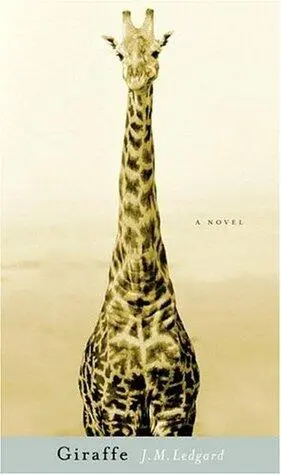
- Название:Giraffe
- Автор:
- Издательство:Penguin Group
- Жанр:
- Год:2007
- ISBN:нет данных
- Рейтинг книги:3 / 5. Голосов: 1
-
Избранное:Добавить в избранное
- Отзывы:
-
Ваша оценка:
Giraffe: краткое содержание, описание и аннотация
Предлагаем к чтению аннотацию, описание, краткое содержание или предисловие (зависит от того, что написал сам автор книги «Giraffe»). Если вы не нашли необходимую информацию о книге — напишите в комментариях, мы постараемся отыскать её.
In 1975, on the eve of May Day, secret police dressed in chemical warfare suits sealed off a zoo in a small Czechoslovakian town and ordered the destruction of the largest captive herd of giraffes in the world. This apparently senseless massacre lies at the heart of J. M. Ledgard's haunting first novel, which recounts the story of the giraffes from their capture in Africa to their deaths far away behind the Iron Curtain. At once vivid and unearthly, Giraffe is an unforgettable story about strangeness, about creatures that are alien and silent, about captivity, and finally about Czechoslovakia, a middling totalitarian state and its population of sleepwalkers.
It is also a story that might never have been told. Ledgard, a foreign correspondent for the
since 1995, unearthed the long-buried truth behind the deaths of these giraffes while researching his book, spending years following leads throughout the Czech Republic. In prose reminiscent of Italo Calvino and W. G. Sebald, he imbues the story with both a gripping sense of specificity and a profound resonance, limning the ways the giraffes enter the lives of the people around them, the secrecy and fear that permeate 1970s Czechoslovakia, and the quiet ways in which ordinary people become complicit in the crimes committed in their midst.
Giraffe — читать онлайн бесплатно полную книгу (весь текст) целиком
Ниже представлен текст книги, разбитый по страницам. Система сохранения места последней прочитанной страницы, позволяет с удобством читать онлайн бесплатно книгу «Giraffe», без необходимости каждый раз заново искать на чём Вы остановились. Поставьте закладку, и сможете в любой момент перейти на страницу, на которой закончили чтение.
Интервал:
Закладка:
EVENING LIGHT COMES through the saloon portholes, settling in soft rings on the chests of sailors. I am taking supper. I sit next to a Czechoslovakian tractor salesman, a Slovak, who has returned from Mombasa with crates of machinery in need of repair. He speaks to me of Africa.
“I was summoned to the Czechoslovakian embassy in Nairobi,” he says. “An embassy car was waiting for me outside the tractor factory near the coast. I hardly spoke during that long drive to Nairobi. I had only recently arrived in Kenya and I was still greatly affected by its sounds and colors, the way women bang on the roof of your car and try to sell you fruit from baskets, and then the baskets themselves, which they have woven from grass that grows high after the rains. There was not much to do in Nairobi: The officials were happy with the way the tractor enterprise was proceeding. I left for the coast the following afternoon with letters of credit. I took the same road, with the same embassy driver, but the land appeared different to me. Perhaps it was because we set off in the afternoon and were driving into night, or simply that we were heading from the mountains to the coast, and not from the coast to the mountains. There were no crowds of women at the edges of the villages we passed through at that late hour, but instead there were small fires burning outside the huts, and infants being carried inside in the arms of their parents. In one village I saw an elderly man performing a dance around such a fire, holding up a knife in a sheath of monkey leather and a spear tipped with a sharpened hippo tooth. I caught sight of a beautiful young woman in another village, sleepwalking between one grass hut and another. I had the driver stop the car. We got out and watched. Her arms were stretched up, like this, as if she were about to dive upward from a board. She walked and tripped in the dust and rose again, not awake but still sleepwalking. None of the villagers tried to stop her. They ran back from her when she passed them, as though sleepwalking were a kind of contagion.
“We drove on, into the night. It began to rain. The rain became torrential, more violent than any storm I have seen in the hills of my Slovak paradise. The thunder shook the windows of the car, and the lightning came in sheets that lit up the earth, even up to the snow fields of Kilimanjaro, like a camera flash. I could see in those lightning strikes how the soil beside the road was shot up in bolts of mud by force of the rain. It was by that strange light that we saw the giraffes. An entire herd crossed the road in front of us. We saw them in one flash, then darkness, then again in another flash, their heads turned now toward us, then they disappeared into darkness once more. It was only a second, or two. They were moving with the speed of horses, although they seemed to me like creatures from another world, of lesser gravity. We had hardly gone any farther when there was an explosion at the front of the car, a bang, like one of those training grenades they set off in the army to get you used to noise. The driver braked. There was a grinding. He stepped out into the rain. I followed him. The front of the car was smashed in and flowing red with blood and rainwater. A hyena lay on the ground. It was a massive animal. Heavier than me. A rib stuck out from its body. We thought it was dead. It stirred. The driver shouted for me to get back into the car. He jumped in after me. We reversed. Some part of the hyena was still caught in the bumper. It was dragged some distance before twisting free. The driver said it must have belonged to a pack of hyenas tracking the giraffes through the thunderstorm. He said hyenas pick off weak or young giraffes during the rains, just as wolves move after sheep under the cover of summer drizzle in my Slovak paradise. We waited there. We watched the hyena rise from the road. Its shoulders were opened to the bone. One of its forelegs was smashed and dangling. It hopped forward into our headlights. It was lit in the beams. It appeared to be staring at us. It was demonic, like a creature you see at the base of those religious statues on the Charles Bridge, freshly emerged from hell.”
I STAND AT THE STERN of the ship. Pennants, neckerchiefs, and other charms have been exchanged. The Czechoslovakians have thanked the East Germans. The East Germans have spoken of giraffes. It is a leaving party now. I am drinking with some of the sailors. I see no lighthouse. I see only silhouettes of the rich buildings of Hamburg lit by neon signs advertising cigarettes, beer, and magazines. The sailors are swapping stories.
“I once glimpsed a mermaid,” the ship’s mate says. “She was laid out on a floating piece of wood, flotsam, between the ship and the cove of a northern island we were steaming by.”
Someone laughs, but uneasily.
“What kind of wood?” someone else asks.
“Oh, I don’t know,” the ship’s mate says. “Planking. A door. A fish box, perhaps. Anyway, she was sunning herself on the wood. It was a hot day. The cove was bright with fish. How to describe her? She had the tail of a harbor porpoise, but speckled orange and black like a mackerel. She was a woman from the waist up, with a navel and breasts, with a green hue to her skin, which appeared from my distance rough to the touch, not scabrous, but prickled, like any skin emerging from cold water. She was small, the size of a child. I could see no gills about her throat, but her nostrils were flattened and appeared to open and close like those of a seal. She had long kelp-colored hair and unnaturally large eyes. She seemed to be singing, or perhaps crying. The sound was anyway closer to a harp than to a human voice. It was the plucking of hairs within the throat. I opened my mouth to call out to the mermaid. I felt a great need for her to look at me, as we all have felt the need for the giraffes to turn to meet our gaze. But the moment my lips parted, even before I made any sound, she slipped from her float and dived down into the cove. The water was clear. I could see her. She dropped right down, faster than any seal. She shimmered between deep rocks, then was gone.”
The sailors are quiet.
“Did you report this?” one of them asks.
“To whom would I report it? To our East German navy? To the Party? In what fashion? They would not believe me. If by chance they did, what would happen then? Some expedition out of Leningrad would catch her. There would be a harvest of mermaids. They would be put to production. No. She was wild as the giraffes there were once wild. Let her swim free.”
I see now it was the ship’s mate who had spoken of the giraffes swinging in the sky—“Let them walk on air,” he had said. The sailors around me believe in his mermaid. I am captivated also, but especially by the hemodynamic possibilities of blood flow in mermaids. Might a mermaid have a single circulatory system, beyond the comprehension of Galen? Or does blood pulse through them in a dual system, with womanly veins above and the wonder net of a harbor porpoise cross-hatched in flukes below?
The ship’s engineer pours himself more vodka and speaks now in a German coastal dialect.
“Maybe you’re right, comrade,” he says to the ship’s mate. “Maybe you did see this. There is a story of a mermaid from my island of Hiddensee. Just before the Second World War, a local man named Brauhard sailed to the deepest part of our Baltic Sea and there fell in love with a mermaid. He married her and brought her back to Hiddensee in a hold full of water drawn from that deep place, which I suppose to be off the coast of Gotland. The mermaid lived in a tank of that water in the bedroom; on occasion they warmed it and Brauhard stripped off and slept in her arms, her tail wrapped around his legs. The local community was unhappy with the arrangement. Some of them railed against the intermingling of Aryans with mermaids. After some months, when Brauhard was away at sea, bringing back fresh water from the Gotland trench, a mob of Brownshirts broke into his house, led by the postmaster, and dragged his wife by her tail to the strand near Neuendorf. There are photographs of this. It was summer. The sand was hot. They threw her on it and drowned her in air and sunshine within sight of the sea. When Brauhard sailed into the harbor and was told the news, he broke down and wept. He begged his neighbors to tell him why they had done so cruel a thing. They shrugged. The officials sent him a letter stating that relations between a German and a mermaid were illegal.”
Читать дальшеИнтервал:
Закладка:
Похожие книги на «Giraffe»
Представляем Вашему вниманию похожие книги на «Giraffe» списком для выбора. Мы отобрали схожую по названию и смыслу литературу в надежде предоставить читателям больше вариантов отыскать новые, интересные, ещё непрочитанные произведения.




Обсуждение, отзывы о книге «Giraffe» и просто собственные мнения читателей. Оставьте ваши комментарии, напишите, что Вы думаете о произведении, его смысле или главных героях. Укажите что конкретно понравилось, а что нет, и почему Вы так считаете.