J. Ledgard - Giraffe
Здесь есть возможность читать онлайн «J. Ledgard - Giraffe» весь текст электронной книги совершенно бесплатно (целиком полную версию без сокращений). В некоторых случаях можно слушать аудио, скачать через торрент в формате fb2 и присутствует краткое содержание. Год выпуска: 2007, Издательство: Penguin Group, Жанр: Современная проза, на английском языке. Описание произведения, (предисловие) а так же отзывы посетителей доступны на портале библиотеки ЛибКат.
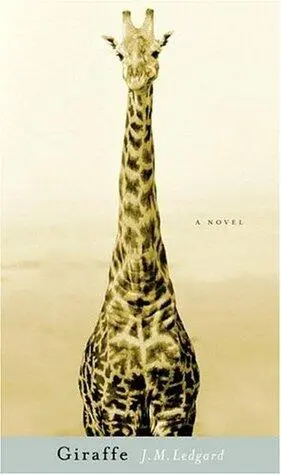
- Название:Giraffe
- Автор:
- Издательство:Penguin Group
- Жанр:
- Год:2007
- ISBN:нет данных
- Рейтинг книги:3 / 5. Голосов: 1
-
Избранное:Добавить в избранное
- Отзывы:
-
Ваша оценка:
Giraffe: краткое содержание, описание и аннотация
Предлагаем к чтению аннотацию, описание, краткое содержание или предисловие (зависит от того, что написал сам автор книги «Giraffe»). Если вы не нашли необходимую информацию о книге — напишите в комментариях, мы постараемся отыскать её.
In 1975, on the eve of May Day, secret police dressed in chemical warfare suits sealed off a zoo in a small Czechoslovakian town and ordered the destruction of the largest captive herd of giraffes in the world. This apparently senseless massacre lies at the heart of J. M. Ledgard's haunting first novel, which recounts the story of the giraffes from their capture in Africa to their deaths far away behind the Iron Curtain. At once vivid and unearthly, Giraffe is an unforgettable story about strangeness, about creatures that are alien and silent, about captivity, and finally about Czechoslovakia, a middling totalitarian state and its population of sleepwalkers.
It is also a story that might never have been told. Ledgard, a foreign correspondent for the
since 1995, unearthed the long-buried truth behind the deaths of these giraffes while researching his book, spending years following leads throughout the Czech Republic. In prose reminiscent of Italo Calvino and W. G. Sebald, he imbues the story with both a gripping sense of specificity and a profound resonance, limning the ways the giraffes enter the lives of the people around them, the secrecy and fear that permeate 1970s Czechoslovakia, and the quiet ways in which ordinary people become complicit in the crimes committed in their midst.
Giraffe — читать онлайн бесплатно полную книгу (весь текст) целиком
Ниже представлен текст книги, разбитый по страницам. Система сохранения места последней прочитанной страницы, позволяет с удобством читать онлайн бесплатно книгу «Giraffe», без необходимости каждый раз заново искать на чём Вы остановились. Поставьте закладку, и сможете в любой момент перейти на страницу, на которой закончили чтение.
Интервал:
Закладка:
“Well, sit down then, comrade!”
I sit.
His name is Hans Schmauch. He looks as I have hoped a sea captain would look: elderly, with cropped silver hair and beard, craggy, weathered, with a red nose.
“My father was a sea captain also,” he says suddenly. “He plied the Baltic Sea. He brought back iron ore from Sweden and timber from Finland. And here I am bringing back giraffes from Africa.”
He tells me of the plans for unloading the giraffes. Each animal will be hoisted up by crane and set down on a Czechoslovakian barge that will draw alongside this morning. I will go with the barge when it departs up the River Labe, tomorrow. The Eisfeld will sail home to Rostock.
Over coffee, I make my authority known to Schmauch.
He frowns. He waves me off.
“You have your business and I have mine,” he says.
His voice is quieter now, seemingly worn away by typhoons.
“You must understand that the ocean is my only ideology,” he says. “Since my passage is across the surface, I am not much interested in the interior of things. Monsters may cruise beneath, but I choose not to speak of them. Where the giraffes are heading and the rest of what you mention is of little interest to me. I am happy to have delivered them. The truth is that the giraffes unsettle me. It is best for me to regard them as not quite alive, like pictures on a postcard.”
“That is a strange thing to say.”
“I suppose it is. It might be because the giraffes are creatures of the interior, far from any sea. Certainly it upset me when they became agitated in heavy seas and kicked out at their crates, for days, so that all their legs were bleeding and done in with splinters. Or perhaps it is only that they have passed around the Cape of Good Hope on my ship and no longer have a home, but are instead delivered into captivity. We all yearn for a home, don’t we, comrade?”
“Yes, comrade captain,” I say.
“In dreams I see the parts of the Baltic Sea I sailed as a young man. I dream of approaching a tiny island on my own ship, which is not unlike this ship. There is a little turf on the island and a single birch tree. There is a wooden fisherman’s hut fastened to the rock with cables. It is always winter in my dream. The sea is iced over. The rising bow of my ship splits the ice, opening up a channel of black water to usher me home. Even from a distance I see herring drying on a line, candles burning in the windows, and a lit stove.”
“Is that dream a comfort to you, comrade?”
We stand.
“Such dreams are the anchor of every sailor,” he says.
“The giraffes might dream of a home as you do,” I say.
Schmauch looks thoughtful.
“They might, comrade. I’ll allow,” he says.
He walks away through his saloon. I envy him that his home is a dream, while mine is a certain place, on a hilltop, which cannot be approached by any ship, but only a propeller plane dipping low.
ALOIS HUS IS on the deck, among the giraffes. He is tanned and clean-shaven. He moves clumsily for an ambitious man — for a zoo director. He trips over a bucket of water he himself has set down. He swears. He is extraordinarily tall. I introduce myself now. I look up at him, as I might look up at a giraffe. We speak formally, in precise Czech. I tell him certain things and hold back others.
“Tell me about the shipment,” I say.
“You say shipment, while I prefer the word migration, ” he says.
“Forgive me.”
“There are thirty-two giraffes here, the largest group ever transported across the world. This is not a shipment — it is an assisted flight into a new land. For who can say what might happen in the future? The Earth might shift on its axis, so that our ČSSR will become parched and what are now river meadows will become savannah and thorn trees might displace holly trees. If that were to happen, then the descendants of these giraffes might form the basis of a new subspecies.”
He swings his arms in embrace of the giraffes. I look up at him in this daylight, which is clearer than the light of our ČSSR. His expression is perfectly serious.
“Our own Czechoslovakian subspecies?” I say. “ Camelopardalis bohemica ?”
He lights up. “Very good, Freymann! I like that. Camelopardalis bohemica. ”
“What plans do you have for them in the zoo?”
“It will be a family,” Hus says. “We will build a safari park. The giraffes will walk freely through the parkland.”
“To begin with, comrade?” I ask.
I realize we are distant from each other. He looks to the future, to his red-starred giraffes, while I am haunted by the past and engaged in a search for such beauty as will puncture time.
“To begin with,” he says, after a long pause, “they will be put in next to the okapi.”
The okapi is the closest relative of the giraffe — anti-vertical, of limited hemodynamic interest — which evolved away in the middle Pliocene to live squat and unseen in the depths of the Upper Congo River basin, so well camouflaged that its existence was only confirmed by an expedition in 1900.
“Will the giraffes not be perplexed to see how they are giants next to the okapi?”
“Not at all. They will see only that the okapi is more chocolate and purple in parts than they are,” Hus says.
Hus slips and slides away across the wet deck and I stand here among his giraffes and think now of how okapi have been compacted down in the gloom, just as pygmies have been.
CRATES ARE TAKEN UP from the forward hold. Water is given to the ship, and diesel also. West German dockworkers listlessly tie and untie lines. Some of the East German sailors depart for Hamburg. They feed the giraffes before disembarking. They hold apples and pears up to the northern sky. The giraffes take the fruit. I watch the sailors stand for a moment on the quay, looking about them, adjusting the lapels on their jackets, as though they have been made foreign by the sea and no longer know what to expect of the land.
The Czechoslovakian barge ties up alongside. The unloading of the giraffes begins. Each crate is harnessed and lowered to the barge. Some of the giraffes panic at the sensation of flying and dropping down toward water. They kick out at their crates. It is disturbing to watch, as Schmauch said. The crates swing like a pendulum. The giraffes look desperately across the harbor as they swing, across and back, from one granary tower to another, searching for certain trees and animals, but finding no acacias and no hippos moving along the poisonous mud banks. Gulls hover above the crates and squawk, yellow-beaked, at the heads of the giraffes as they descend. A sailor stands beside me and also looks up at the swinging crates.
“Let them walk on air,” he says sadly, “for they will never again walk on Africa.”
IT IS AFTERNOON. I sit alone now in the ship’s library, glancing over documents concerning the estimated value of giraffes, shipping costs, and the waiving of customs duties. In a separate stack are the veterinary reports assembled by the zoo veterinarian on thirty-two giraffes and documentation on the death of one giraffe. I study these more carefully and make notes on the blood pressure recorded in certain giraffes before, during, and after the voyage.
Light sits in porthole circles on the plaster busts of revolutionaries and on the glass cabinet containing the political texts. It is confusing. I am in West Germany, but in the Communist moment also. I am in a port where there is no salt, no waves breaking polyphonically. I set aside my hemodynamic notes. I stand. I browse through the other, open bookshelves and come now across a short history of England, published in Dresden. I flick through it and come, by chance, on this page here, upon a curious detail such as the zoo historian would keep, in place of his own memories. On the orders of Oliver Cromwell, I read, all the dancing and fighting bears in London were shot. The only bear spared was a polar bear that in its white apartness, Cromwell said, would better remind Puritan Englishmen of the majesty and unknowability of God’s creation. I close the book and slide it back onto the shelf, and I think now of how that polar bear might have been the descendant of Henry III’s polar bear, which was kept in the Tower of London, and in another turning of comets, I come to a flea-bitten black bear I once saw languishing in the dry moat of Konopiště Castle. I stumbled on that animal on an autumn afternoon with wet leaves spiraling downward. It had small eyes and a white streak on its chest below the throat. It did not meet my gaze, but mewed through its narrow snout and opened up its sores with long yellow claws. It was quite willing to stand vertically on its stinking bed, so its blood flowed not along but upward in expectancy of a wonder net, and dance upright for the meanest piece of bread proffered by children, who leaned far out over the spiked railing beside me. When sunshine finally broke on the back of that bear, it also broke through the patterned windows of Konopiště Castle. I walked in the chambers of that place with a sense of incredulity. The walls were nailed floor to ceiling with the heads of deer, bears, wolves — of every living creature that moved in the wilds, down to the tamest otter, all of them bagged by the archduke Franz Ferdinand, the owner of Konopiště, who was himself shot dead in Sarajevo and made into a trophy of a quite different sort.
Читать дальшеИнтервал:
Закладка:
Похожие книги на «Giraffe»
Представляем Вашему вниманию похожие книги на «Giraffe» списком для выбора. Мы отобрали схожую по названию и смыслу литературу в надежде предоставить читателям больше вариантов отыскать новые, интересные, ещё непрочитанные произведения.



Обсуждение, отзывы о книге «Giraffe» и просто собственные мнения читателей. Оставьте ваши комментарии, напишите, что Вы думаете о произведении, его смысле или главных героях. Укажите что конкретно понравилось, а что нет, и почему Вы так считаете.