J. Ledgard - Giraffe
Здесь есть возможность читать онлайн «J. Ledgard - Giraffe» весь текст электронной книги совершенно бесплатно (целиком полную версию без сокращений). В некоторых случаях можно слушать аудио, скачать через торрент в формате fb2 и присутствует краткое содержание. Год выпуска: 2007, Издательство: Penguin Group, Жанр: Современная проза, на английском языке. Описание произведения, (предисловие) а так же отзывы посетителей доступны на портале библиотеки ЛибКат.
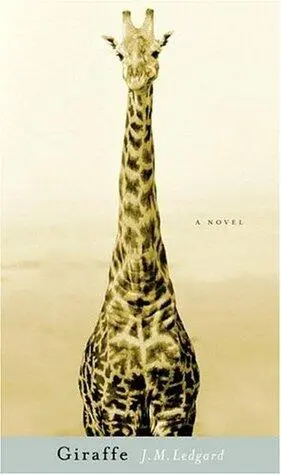
- Название:Giraffe
- Автор:
- Издательство:Penguin Group
- Жанр:
- Год:2007
- ISBN:нет данных
- Рейтинг книги:3 / 5. Голосов: 1
-
Избранное:Добавить в избранное
- Отзывы:
-
Ваша оценка:
Giraffe: краткое содержание, описание и аннотация
Предлагаем к чтению аннотацию, описание, краткое содержание или предисловие (зависит от того, что написал сам автор книги «Giraffe»). Если вы не нашли необходимую информацию о книге — напишите в комментариях, мы постараемся отыскать её.
In 1975, on the eve of May Day, secret police dressed in chemical warfare suits sealed off a zoo in a small Czechoslovakian town and ordered the destruction of the largest captive herd of giraffes in the world. This apparently senseless massacre lies at the heart of J. M. Ledgard's haunting first novel, which recounts the story of the giraffes from their capture in Africa to their deaths far away behind the Iron Curtain. At once vivid and unearthly, Giraffe is an unforgettable story about strangeness, about creatures that are alien and silent, about captivity, and finally about Czechoslovakia, a middling totalitarian state and its population of sleepwalkers.
It is also a story that might never have been told. Ledgard, a foreign correspondent for the
since 1995, unearthed the long-buried truth behind the deaths of these giraffes while researching his book, spending years following leads throughout the Czech Republic. In prose reminiscent of Italo Calvino and W. G. Sebald, he imbues the story with both a gripping sense of specificity and a profound resonance, limning the ways the giraffes enter the lives of the people around them, the secrecy and fear that permeate 1970s Czechoslovakia, and the quiet ways in which ordinary people become complicit in the crimes committed in their midst.
Giraffe — читать онлайн бесплатно полную книгу (весь текст) целиком
Ниже представлен текст книги, разбитый по страницам. Система сохранения места последней прочитанной страницы, позволяет с удобством читать онлайн бесплатно книгу «Giraffe», без необходимости каждый раз заново искать на чём Вы остановились. Поставьте закладку, и сможете в любой момент перейти на страницу, на которой закончили чтение.
Интервал:
Закладка:
I MOVE BACK from the railing and step dizzily to the study at the far end of the roof terrace. I switch on a lamp. I arrange my giraffe papers and the ring binder from the shipping company on the desk and lay out the diagrams of blood flow on the floor: all the capillaries and shunts I have so far traced through the mesh of the giraffe’s wonder net.
The study is three walls of glass and one of brick. There are two black-and-white photographs on the brick wall that have never changed position. I know them as openings, other types of windows into past and future moments. The first is of Prague Castle in 1932. It was taken from high up on a south-facing flying buttress of St. Vitus’s Cathedral, our national church, looking down into the third courtyard of the castle. The view is vertiginous — a suicidal plunge. My eye is not drawn now to the baroque palaces lining the edge of the courtyard or to the needle obelisk in the center, but to the flagstones of the courtyard arranged in a diagonal grid of black-and-white squares. It is an optical illusion, I know, perhaps induced by blood flow, but I do not see a commonplace pattern. I see something more sinister: The flagstones appear to me as a grid of cages, a captivity into which one might fall.
The second photograph was taken in India. A man falls face-first into the River Ganges, his arms stretched up. He wears a cloth around his waist, but is otherwise naked. His face is touching the sacred waters: The bridge of his nose has not yet broken the skin of the river, while his mouth, chin, chest, and palms are already submerged. Streamers of bandage float about the pilgrim, and flowers and spent pieces of charcoal from funeral pyres. The surface teems with reflections of the quick and the dead, but the crop is such that none of them are in view. It is a lustrous print, black as boot polish. In my mind’s eye I place colors of lapis, caramel, and henna in it. I make a comet of it in the deep of my brain. On it is written, by the author, “ Reka života a smrti, ” or River of life and death. It is dated 1937. That means nothing. This photograph punctures time, as Dürer punctures time. It could be a thousand years in the past, or so far in the future as to make of our ČSSR a forgotten dream.
Emil
MAY 8, 1973
THE RED-STAR RED FIGHTER JETS have all flown away to their bases in the mountains. The “zoo historian” leans forward on a hard chair and speaks to me of the flood that swept the Persian leopard from its cage, of waters that rose over the Prague Zoo and the gardens of the Troja Chateau by the zoo, where we sit now in his shabby office in inexplicable gloom, so that we are no more than shadows to each other. He tells me of seals swimming up to the steps of the chateau in floodwaters I imagine to be the color of the Ganges, and similarly full of new dead.
“They looked to me like giant newts, coming at the end of the world,” he says. “They swam around the baroque statues depicting virtues and vices, of which only charity remained eerily above water.”
We come to the question of captivity.
“I am a historian of captivity,” he says.
“The captivity of people also?” I ask.
“A passing knowledge,” he says.
“Giraffes?”
He smiles.
“I recently instructed a zookeeper in the history of giraffes,” he says. “I will speak to you of gyrfalcons, polar bears, and giraffes.”
“Go on,” I say unsteadily.
I prepare my pen. I am the giraffe man now and I must know more of these vertical beasts than the viscoelasticity of their arteries.
I smell the soil of the vineyard coming through the open window. I hear the animals in the zoo, beyond the walls of the chateau. He coughs phlegm into a cloth. His office is damp, littered in the corners with mice droppings. I look away, out through the open window, and see candlelight flickering in the chapel above the vineyard.
“The Romans were dazzled by the proportions and colors of the giraffe,” he says, quelling his cough, “which they took to be the offspring of a camel and a leopard, so camelopardalis or camelopard; others thought better camel-hyena, that a hyena had taken a camel mare and the offspring, the giraffe, was mute on account of the violence of the hyena’s entry. In any case, the giraffe was of limited entertainment value to the Romans. It could not easily kill or defend itself from being killed. It could not roar or trumpet. If it appeared in a ring at all, it was only as a curtain-raiser at the beginning of the games. Five thousand wild animals were slaughtered for the inaugural games of the Colosseum. Eleven thousand were put to the sword during the four months of games marking the victory of Trajan over the Dacians.”
I consider the cosmic collapse of so many veins. “Rivers of blood,” I say.
“Indeed. Rivers such as would further your studies,” he says.
Is he looking at me in this gloom? I see his hand movements, but not his expression.
“These beasts arrived in Rome from the corners of the known world in stinking wooden crates, some dead, others sick in the head or in the body.”
“What animals,” I ask. “From where?”
He is silent, drawing a map in his head.
“Lynxes, brown and black bears, boars, wolves, and wolverines from the north,” he says. “Tigers from Armenia. Cheetahs from Judaea. Lions, leopards, hyenas, hippos, elephants, and giraffes from Nubia and the lands beyond the Sahara. Many of these beasts were dispatched by specialized gladiators: venatores. Others were set one against another. Still others were released, starving, into an arena that contained nothing but men lashed to metal rings in the sand, as though bound to the earth itself. This was not just in Rome. Other wild animals were killed in smaller games across the empire. Their forms and those of the gladiators and the prisoners were tipped together into pits dug after the games, close to the arena. In some places it must have been that the corpse of a fair-haired barbarian from Czechoslovakia, before there was a Czechoslovakia, fell upon the carcass of a freshly speared giraffe, and the two became entwined and rotted as one.”
He catches his breath. I look out and regard a soldier, walking now through the vineyard to the candlelit chapel, a machine gun in his hand.
“When Rome collapsed,” he continues, “the pits binding men and giraffes together were filled in and no more giraffes came to Europe.”
“The Dark Ages were not illuminated by any giraffe?”
“None: the Roman skills of capturing and transporting wild animals were forgotten. No one knew anymore how to drive a jackal demented with the flashing of metal shields or how to use drums to lure a bear through an oak grove to a clearing in which a lamb runs unhappy circles around a stake.”
“Cigarette?” I ask.
He shakes his head.
“In the medieval period, gyrfalcons and other creatures of the north came to be more sought after in Europe than giraffes,” he says. “You’ve heard of these birds?”
“Yes,” I say, and inwardly see an Estonian walking on water, looking up.
“Marco Polo believed the gyrfalcon hatched on an island so far north the Pole Star appears behind you. Kublai Khan favored them in his personal caravan while, in a dust cloud trailing to the horizon, several thousand falconers handled lesser birds. Gyrfalcons were valued for their beauty and for the way they had learned to hover in the ceaseless winds of Iceland and Greenland, on Novaya Zemlya and other islands in the Kara Sea and the White Sea. When gyrfalcons swept back their wings and dived in those places, it was impossible to hear the sound of their fall for the splintering of the ice field. Yet they accommodated the wind, they were not distracted, they kept a straight line, they made their target.”
Читать дальшеИнтервал:
Закладка:
Похожие книги на «Giraffe»
Представляем Вашему вниманию похожие книги на «Giraffe» списком для выбора. Мы отобрали схожую по названию и смыслу литературу в надежде предоставить читателям больше вариантов отыскать новые, интересные, ещё непрочитанные произведения.



Обсуждение, отзывы о книге «Giraffe» и просто собственные мнения читателей. Оставьте ваши комментарии, напишите, что Вы думаете о произведении, его смысле или главных героях. Укажите что конкретно понравилось, а что нет, и почему Вы так считаете.