J. Ledgard - Giraffe
Здесь есть возможность читать онлайн «J. Ledgard - Giraffe» весь текст электронной книги совершенно бесплатно (целиком полную версию без сокращений). В некоторых случаях можно слушать аудио, скачать через торрент в формате fb2 и присутствует краткое содержание. Год выпуска: 2007, Издательство: Penguin Group, Жанр: Современная проза, на английском языке. Описание произведения, (предисловие) а так же отзывы посетителей доступны на портале библиотеки ЛибКат.
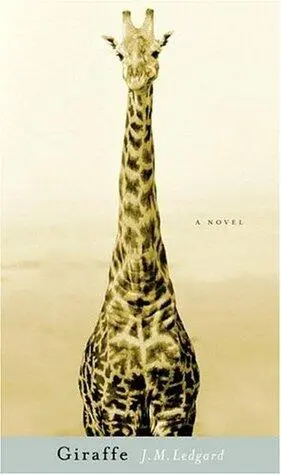
- Название:Giraffe
- Автор:
- Издательство:Penguin Group
- Жанр:
- Год:2007
- ISBN:нет данных
- Рейтинг книги:3 / 5. Голосов: 1
-
Избранное:Добавить в избранное
- Отзывы:
-
Ваша оценка:
Giraffe: краткое содержание, описание и аннотация
Предлагаем к чтению аннотацию, описание, краткое содержание или предисловие (зависит от того, что написал сам автор книги «Giraffe»). Если вы не нашли необходимую информацию о книге — напишите в комментариях, мы постараемся отыскать её.
In 1975, on the eve of May Day, secret police dressed in chemical warfare suits sealed off a zoo in a small Czechoslovakian town and ordered the destruction of the largest captive herd of giraffes in the world. This apparently senseless massacre lies at the heart of J. M. Ledgard's haunting first novel, which recounts the story of the giraffes from their capture in Africa to their deaths far away behind the Iron Curtain. At once vivid and unearthly, Giraffe is an unforgettable story about strangeness, about creatures that are alien and silent, about captivity, and finally about Czechoslovakia, a middling totalitarian state and its population of sleepwalkers.
It is also a story that might never have been told. Ledgard, a foreign correspondent for the
since 1995, unearthed the long-buried truth behind the deaths of these giraffes while researching his book, spending years following leads throughout the Czech Republic. In prose reminiscent of Italo Calvino and W. G. Sebald, he imbues the story with both a gripping sense of specificity and a profound resonance, limning the ways the giraffes enter the lives of the people around them, the secrecy and fear that permeate 1970s Czechoslovakia, and the quiet ways in which ordinary people become complicit in the crimes committed in their midst.
Giraffe — читать онлайн бесплатно полную книгу (весь текст) целиком
Ниже представлен текст книги, разбитый по страницам. Система сохранения места последней прочитанной страницы, позволяет с удобством читать онлайн бесплатно книгу «Giraffe», без необходимости каждый раз заново искать на чём Вы остановились. Поставьте закладку, и сможете в любой момент перейти на страницу, на которой закончили чтение.
Интервал:
Закладка:
He offers more tea.
“Now we come to polar bears and giraffes,” he says. “In 1235, the Holy Roman Emperor Frederick the Second arranged for a line of beasts to parade behind him to Worms in celebration of his marriage to Isabella, the sister of Henry the Third of England. Most of these beasts came from his court in Palermo. They included a column of lynxes and apes of many kinds chained to Muslim slaves, who were themselves chained to one another by metal collars. There is no record of a giraffe having made that wedding journey to Worms, as surely there would have been if one had walked across the Alps at that time. Nor is it possible that the polar bear presented to Frederick by Haakon the Fourth of Norway was among the animals: it had been shipped to Damascus in 1233 as a gift to al-Kāmil, the sultan of Egypt.” He pauses.
“I’m following,” I say.
“In 1229, al-Kāmil ceded Jerusalem to Frederick in the bloodless Sixth Crusade. Ten years before that, the sultan had stood and listened respectfully as Saint Francis of Assisi preached to him of the rights of animals and on the question of the soul’s captivity.”
“What of the polar bear?”
“It was likely captured as a cub in Spitsbergen,” he says. “No such animal had ever been seen in the Muslim world. It was led out in the cool of early mornings on a long rope to the banks of the River Barada and there encouraged to fish. So also was the polar bear Henry kept in the Tower of London, which was led down to the Thames each day so that it might catch a portion of its daily meat ration in salmon. Henry’s polar bear was probably also a gift from Haakon. It was Haakon who had done most to introduce gyrfalcons to the courts of Europe and to the Muslim world. He sent a shipment of gyrfalcons to Henry, and his gyrfalcons flew over Frederick’s Palermo. The Frankish city,” he says, lost in the damp room, littered with droppings and without illumination, “which the Arabs called Al-Madīnah, had broad avenues, with a turquoise sea before it and yellow wheat plains behind it, through which jackals ran untroubled. Four springs rose in its suburbs, in which Muslims came to mosques at the call of the muezzin. Gardens and fruit trees were abundant. In the churches there were finely worked windows, which shone on altars of colored marble. Christian women of Palermo came to those churches on holy days dressed as Muslim women.”
“Which is how?” I ask.
“Veiled,” he says. “Garlanded in jewels and perfumed. Painted on the forearms and about the face, here and here, in the patterns of henna, so that, as one Muslim poet had it, ‘going to church in Palermo, I came upon antelope and gazelles.’ The palaces of Palermo were similarly set above the city as ‘pearls encircling a woman’s full throat.’ Towers rose out of sight from the Qasr al-Qadim fortress. When Frederick’s gyrfalcon flew over those towers in 1233 and looked down upon the menagerie arranged on the lawns below, it would no longer have seen a polar bear, but it must have spied a giraffe. For a giraffe had come to Palermo from Egypt in 1215, a gift from al-Kāmil to Frederick, the only giraffe in Europe, the specimen from which comes our word for the animal: zarâfa, from the Arabic meaning ‘swift-moving.’ ”
HE CONTINUES ON, in the darkness.
“Around the time the cardinal Hippolyte was creating in Europe his menagerie of exotic human beings,” he says, “which included Berbers, Welshmen, and Tartars, Montezuma was further expanding the immense zoo in the grounds of his palace in Tenochtitlán, which is now Mexico City. There were black and golden pumas caged there, together with ocelots, anteaters, and a bison from the North American prairies, a realm the Aztecs called the ‘Land Beyond Night.’ The Spanish tell us these animals were better cared for than the deformed men and women who made up the rest of the menagerie. Those poor souls were wards of the state. Their tongues were cut out. They limped or crawled about their cages. They were forced to drink pulque, or fermented cactus juice. They were a spectacle. At the solar eclipse, they were the first to be sacrificed to the jaguar, to water, to movement, to the sun and stars, or to the god Quetzalcoatl, with beaked brow, who blew storm clouds in over fields of maize. These men and women, sometimes limbless, or else blind, hydrocephalic, hunchbacked, were dragged up steep-sided pyramids by priests wearing masks of jade and obsidian, so that in their last swirling moments, they saw teeth of coral, eyes of red seashell, and chunks of alabaster, along with ingots of gold, eagles, snakes, and grasshoppers. Their opened bodies were thrown from the pyramids, so the sun shone through where their hearts had been. Their remains were cut into pieces and fed to the pumas. It was long before that, in 1405, that the Ming emperor of China, Cheng Zu, sent out a fleet under the command of Admiral Zheng He to open up new trade routes. Zheng He’s sailors saw a giraffe in Bengal that had been sent from Malindi, and mistook it for a qilin, or unicorn — spoken of in Chinese prophecy, which was supposed to be the centerpiece of the Sacred Animal Garden of Intelligence laid out between Beijing and Nanjing several thousand years earlier by Wan, an emperor in the Zhou dynasty — because in China the unicorn was still represented with the horns of a giraffe, while in Europe, thanks to the trade in gyrfalcons and polar bears, the horn of the unicorn had come to be represented with the ivory tusk of the Arctic narwhal.”
I WALK SWIFTLY HOME NOW, by the statue of charity in the chateau garden, and think of the two keen-eyed creatures brought to Palermo. If the giraffe had looked up, it would have seen the gyrfalcon. It would have been silent, but it would have seen. I try to see the palaces of Palermo as pearls encircling a woman’s full throat and I come, in a turning of comets, to how Shakespeare brought Bohemia together with Sicily in The Winter’s Tale and mistakenly gifted Bohemia a gravel shore on which the Sicilians landed their ships. I walk on, through the smoke-filled night of ČSSR, with the sound of passing trains, and speak the opening line aloud:
If you shall chance, Camillo, to visit Bohemia.
you shall see, as I have said, great difference betwixt
our Bohemia and your Sicilia.
Emil
JUNE 18, 1973
SNOW PEARS AND SILVER LIMES and white elms flick by outside. It is summer now in Czechoslovakia. Wheat has risen in the fields. Mosquitoes dance over the hidden marshes in the forests. It is bright, sunlit, in here, at the window of my compartment. The train speeds toward East Berlin. My father stood, a little while ago, on the platform of the Hlavní Nádraží, or central station, in Prague. He waved me off. He ran alongside the train as it left. I pushed down my window and reached out my hand to his. Our fingertips brushed, as the wings of birds brush in flight. There was a fear in his eyes, that I might break Pip’s long chain of iron and never return.
There is a young opera singer in the compartment with me. She has never seen the breast-shaped hills of northern Czechoslovakia before, from which our first kings are said to have emerged, caked in peat. She is moved to tears when I point them out, and name them for her.
“Milešovka and Kletečná are the highest,” I say. “Then Lovoš, Oblík, Milá, Deblík, Boreč, and Hazmburk, with its old church.”
She looks sickly. Her skin is thin, pale, as translucent to me as the neck of the unmoving giraffe I pictured in the corridor of the shipping company. I am diverted now by her operatic blood. I see it, coursing up. I make my hemodynamic calculations.
“Are you all right?” I ask.
“I’m fine, really I am,” she says. “Are they very old? The hills, I mean.”
Читать дальшеИнтервал:
Закладка:
Похожие книги на «Giraffe»
Представляем Вашему вниманию похожие книги на «Giraffe» списком для выбора. Мы отобрали схожую по названию и смыслу литературу в надежде предоставить читателям больше вариантов отыскать новые, интересные, ещё непрочитанные произведения.


Обсуждение, отзывы о книге «Giraffe» и просто собственные мнения читателей. Оставьте ваши комментарии, напишите, что Вы думаете о произведении, его смысле или главных героях. Укажите что конкретно понравилось, а что нет, и почему Вы так считаете.