Leopoldo Marechal - Adam Buenosayres
Здесь есть возможность читать онлайн «Leopoldo Marechal - Adam Buenosayres» весь текст электронной книги совершенно бесплатно (целиком полную версию без сокращений). В некоторых случаях можно слушать аудио, скачать через торрент в формате fb2 и присутствует краткое содержание. Год выпуска: 2015, Издательство: McGill-Queen's University Press, Жанр: Классическая проза, на английском языке. Описание произведения, (предисловие) а так же отзывы посетителей доступны на портале библиотеки ЛибКат.
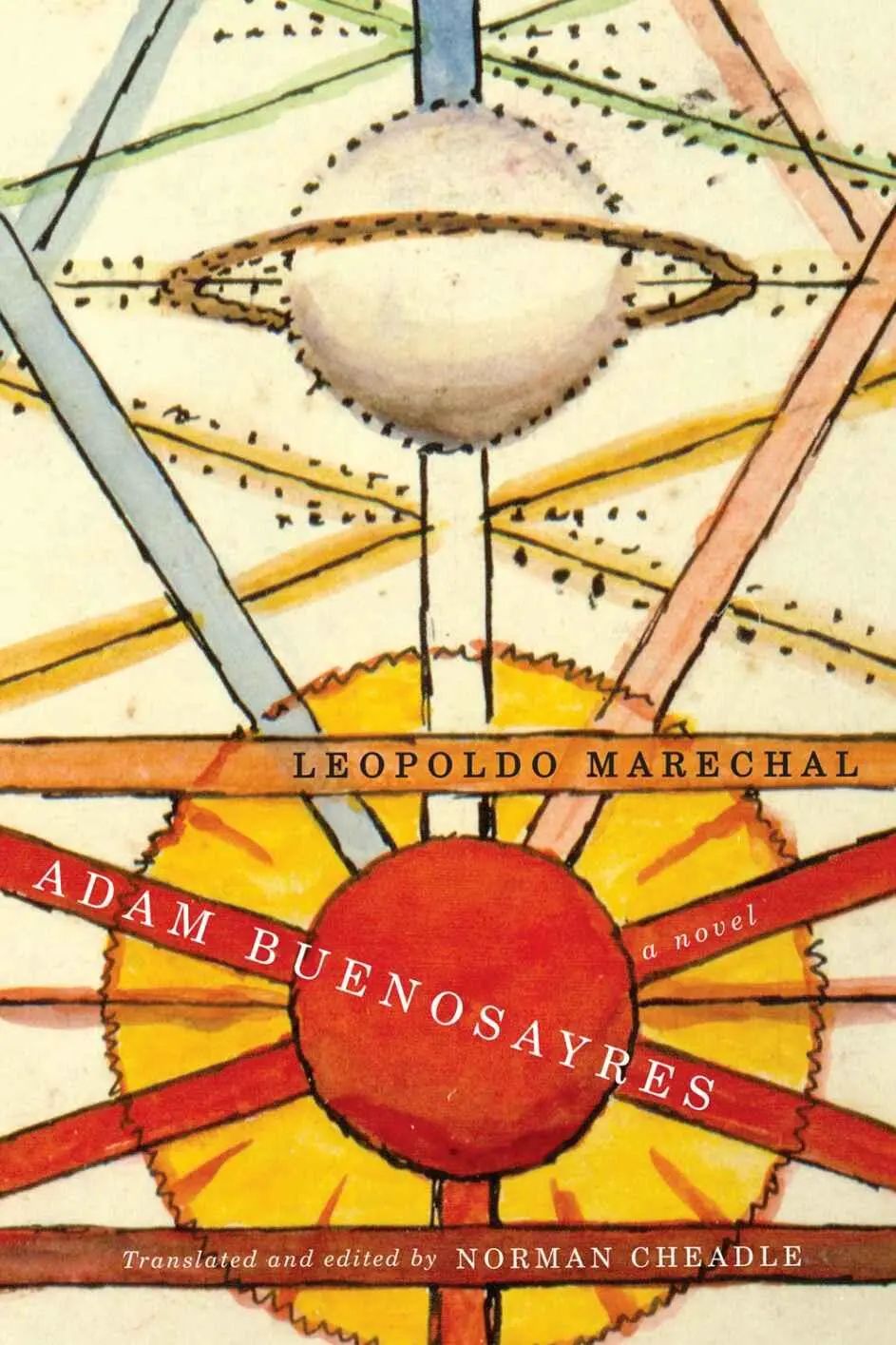
- Название:Adam Buenosayres
- Автор:
- Издательство:McGill-Queen's University Press
- Жанр:
- Год:2015
- ISBN:нет данных
- Рейтинг книги:5 / 5. Голосов: 1
-
Избранное:Добавить в избранное
- Отзывы:
-
Ваша оценка:
Adam Buenosayres: краткое содержание, описание и аннотация
Предлагаем к чтению аннотацию, описание, краткое содержание или предисловие (зависит от того, что написал сам автор книги «Adam Buenosayres»). Если вы не нашли необходимую информацию о книге — напишите в комментариях, мы постараемся отыскать её.
Adam Buenosayres — читать онлайн бесплатно полную книгу (весь текст) целиком
Ниже представлен текст книги, разбитый по страницам. Система сохранения места последней прочитанной страницы, позволяет с удобством читать онлайн бесплатно книгу «Adam Buenosayres», без необходимости каждый раз заново искать на чём Вы остановились. Поставьте закладку, и сможете в любой момент перейти на страницу, на которой закончили чтение.
Интервал:
Закладка:
At last you are on the island of Madeira, an ancient cone of mountain rising above the waves. You’re on your way back down and have stopped halfway for a rest. Sitting in the shade of a laurel tree, you chew on an enormous loquat that bleeds rivulets of juice. All around you, flowers and fruit display an Eden-like enthusiasm. Green lizards are toasting on the hot rock. The sun beats down on both the island and the sea encircling it in a double embrace of surf. Then you contemplate your boat anchored in the roadstead; around it swarm the canoes of islanders, who dive into the sea after tossed coins. You’ve been reading in Plato’s Critias about the loves of Poseidon and the glory of Atlantis, the submerged continent — perhaps you are now perched on one of its remaining islets. You recall again that phrase: “From the central island they quarried the stone they needed; one kind was white, another black, and a third red.” And when finally you go down to the jetty, you notice that the lumps of rock on the surf-washed shoreline are black, red, and white. 16
Home again, you enacted once again the confrontation of two worlds. You came back to your country with a painful exultation, a passionate urge for action, and a desire to make the free strings of your world vibrate in the ambitious style you’d seen overseas. But your message of greatness left your world cold; and in that coldness you did not read, certainly, any lack of vocation for grandeur, but only that the hour had not yet arrived. Then night truly fell upon you.
Adam Buenosayres refills his pipe. It’s raining hard again outside his window. He wants to cling yet to the images he has warmed up and relived in memory. But the images flee, disappear in the distance, return to their murky cemeteries. The past is now a dry branch, the present announces nothing to him, and the future is colourless before his eyes. Adam remains empty before a deserted window.
“Which was leading him to so sorry a pass…”
Chapter 2
— You, Mother! Are you aware of the responsibility you bear for your Son, who is soon to enter the stormy fray of life, with no other spiritual or moral arms than the ones forged in the home? Home, I said. Sacred word! Mother, have you reflected upon the dangers lying in wait for your child if he’s left exposed to the temptations of the street, which looks to be the case?
The Principal waits for an answer, his little eyes radiating severity and reproach. His voice is mellifluous, even though his earthen complexion, his sharply defined features, his rustic torso, and a viscous melancholy oozing from him like resin from a tree all reveal him to be an authentic son of Saturn. He wears — and swears by — a greenish-skyblue-grey suit, with spongy tones and rare glints of indigo, astonishing colours which, according to the scholar Di Fiore, could be produced only in the workshop of the great outdoors, or in one governed by the most niggardly economy. Nonetheless, his outfit is brightened by three vehement notes: a shirt the colour of magpie vomit (Adam Buenosayres’s definition), a frenetically green bow tie, and boots of hallucinatory yellow.
— Answer, Mother! insists the Principal, getting pedagogically vexed.
But the woman takes refuge in a seamless, humble, vegetable silence. She stands with her arms curved round her belly and her eyes in thrall to those magic, hypnotic boots. To be sure, her mind floats intact on the surface of the Principal’s speech, which she doesn’t understand and never will.
— She won’t cry, whispers Quiroga, the teacher from San Luis de la Punta de los Venados. 1He’s standing beside the large window in the Principal’s office with some fellow teachers — Adam Buenosayres, Fats Henríquez, and Di Fiore. Outside the window the sky is grey and pregnant with rain.
Fats Henríquez, embalmer of birds, fixes his cold, Anubis-like gaze on the Mother.
— Hard as a rock, he says at last, turning to look at a dead swallow lying in the palm of his hand.
— She’d be better off crying and getting it over with! Adam Buenosayres mutters between his teeth. The poor thing would spare herself the rest of the damn speech and give Pestalozzi 2his first-degree satisfaction. Second-degree satisfaction is when the kid starts crying because his mother is crying. The third degree is the crowning touch, when Pestalozzi in turn weeps along with mother and son. That’s what he likes to call “a positive reaction”!
Peering at the sky through the window, the scholar Di Fiore approves with a nod of his big, brainy head.
— All told, he grunts, three dehydrated bodies. As if the atmosphere isn’t wet enough already!
Sunny and fresh, Quiroga’s laughter washes over the group at the window. Meanwhile, the Mother has settled firmly into her abstract attitude. The Principal, nonplussed at how long her conscience is taking to respond, raises his eyes to the bust of Sarmiento snoozing atop the Principal’s bookshelf between a criollo duck and a turtle, both stuffed. In the national hero’s dour countenance he undoubtedly finds the impetus he needs, because right away he forgets about the Mother and sets upon the boy, who at that moment is busy exchanging smiles and gestures with a small group of pupils outside, who reciprocate in vibrant solidarity.
— You, Child! declaims the Principal. Listen to me, Child! Look me in the eyes, Child! Because of your misbehaviour I’ve had to summon your mother, taking her away from the home that needs her so much. Answer me, Child! Is that any way to repay the thousand-and-one sacrifices your mother has made to raise you, protect you, and educate you? Mother, I said. Sacred word! Let’s add up the material costs alone. How old are you, Child?
— Ten, the boy answers without much concern.
— A real little man. Let’s say it costs a peso a day (and I’m underestimating) to keep you in food, clothing, and school expenses. Tell me, Child. How many days are there in a commercial year?
— A hundred and sixty, the boy hazards adventurously.
In the Principal’s face, the dun accents of Saturn are accentuated.
— Three hundred and sixty! he shouts. Three hundred and sixty times ten makes three thousand six hundred Argentine pesos.
The boy goes wide-eyed at this mathematical revelation.
— And that’s not all! the Principal adds triumphantly. Let’s suppose your mother were in possession of that much capital and calculate how much interest she’d have earned on it in ten years. Child, do you understand how interest rates work?
— No, sir.
— I suspected as much. Let’s take, for example, an interest rate of five percent, which is what Mortgage Bonds are paying. Let’s see, here. Just a minute.
Seizing a pencil, he does a feverish calculation on a notepad. At the same time Adam Buenosayres growls beside the window:
— God! What crime has this poor kid committed to deserve such punishment?
— A fist-fight with another kid in the hollow of Neuquén Street, responds Quiroga.
— Is that all? At his age, I was in a fight every day.
The scholar Di Fiore raises an index finger to his temple.
— See this scar? he says. Got hit by a rock when us guys in the Gaona gang challenged the guys from Billinghurst.
The four of them smile alongside the window. Sarmiento himself, on the bookshelf, seems less dour, as though he too were recalling the heroes Barrilito and Chuña. 3But the Principal is waving a sheet of paper in the boy’s face.
— One thousand eight hundred pesos in interest! he exclaims. Three thousand seven hundred in capital! Sum total: five thousand four hundred pesos!
Turning to the woman, he adds:
— Mother, after so much sacrifice for the sake of your child, are you going to let him be ruined by the influence of the street? Do you know where that influence could lead? To delinquency, the hospital, jail!
Читать дальшеИнтервал:
Закладка:
Похожие книги на «Adam Buenosayres»
Представляем Вашему вниманию похожие книги на «Adam Buenosayres» списком для выбора. Мы отобрали схожую по названию и смыслу литературу в надежде предоставить читателям больше вариантов отыскать новые, интересные, ещё непрочитанные произведения.





Обсуждение, отзывы о книге «Adam Buenosayres» и просто собственные мнения читателей. Оставьте ваши комментарии, напишите, что Вы думаете о произведении, его смысле или главных героях. Укажите что конкретно понравилось, а что нет, и почему Вы так считаете.