Leopoldo Marechal - Adam Buenosayres
Здесь есть возможность читать онлайн «Leopoldo Marechal - Adam Buenosayres» весь текст электронной книги совершенно бесплатно (целиком полную версию без сокращений). В некоторых случаях можно слушать аудио, скачать через торрент в формате fb2 и присутствует краткое содержание. Год выпуска: 2015, Издательство: McGill-Queen's University Press, Жанр: Классическая проза, на английском языке. Описание произведения, (предисловие) а так же отзывы посетителей доступны на портале библиотеки ЛибКат.
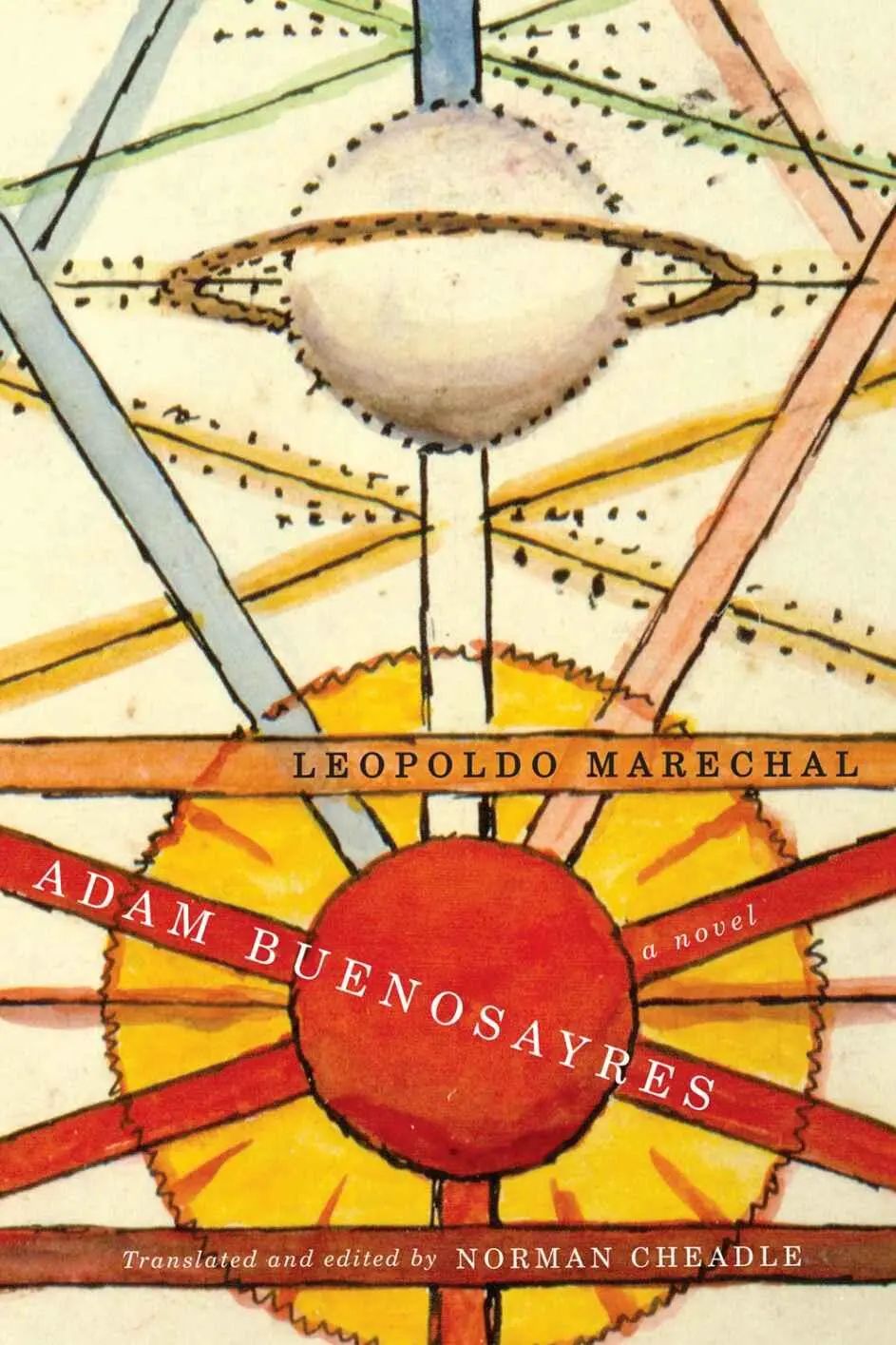
- Название:Adam Buenosayres
- Автор:
- Издательство:McGill-Queen's University Press
- Жанр:
- Год:2015
- ISBN:нет данных
- Рейтинг книги:5 / 5. Голосов: 1
-
Избранное:Добавить в избранное
- Отзывы:
-
Ваша оценка:
Adam Buenosayres: краткое содержание, описание и аннотация
Предлагаем к чтению аннотацию, описание, краткое содержание или предисловие (зависит от того, что написал сам автор книги «Adam Buenosayres»). Если вы не нашли необходимую информацию о книге — напишите в комментариях, мы постараемся отыскать её.
Adam Buenosayres — читать онлайн бесплатно полную книгу (весь текст) целиком
Ниже представлен текст книги, разбитый по страницам. Система сохранения места последней прочитанной страницы, позволяет с удобством читать онлайн бесплатно книгу «Adam Buenosayres», без необходимости каждый раз заново искать на чём Вы остановились. Поставьте закладку, и сможете в любой момент перейти на страницу, на которой закончили чтение.
Интервал:
Закладка:
After that period of joyous dissipation in Sanary, when your being answered the thousand calls of beauty, you were now beginning to turn inward, to fold back into yourself. You already knew well the four seasons of your spirit. And its two ineluctable movements: one of mad expansion and the other of reflexive concentration; and this time, you knew well, the coming autumn of your soul would correspond to the already visible autumn of the earth. You were in Rome, alone and in soliloquy: you were walking one morning along the Via Appia, among despondent monuments. You had just left the Catacombs of San Callisto, where dried blood and tears, terrestrial stench and celestial aromas, canticles and sobs eternalized their invisible presence. And your heart had set out on the road of anguish that you still walk and whose end is perhaps not of this world. Outside, the sun was shining high over the countryside. In the distance loomed the austere stonework of the aqueduct. From a nearby aerodrome came a sudden purr of motors, so you no longer heard that other hum of Virgil’s thrifty bees among the flowers. Before continuing on your way, you had inhaled the bitter aroma of cypresses and stroked the tombstones, at that hour as warm to the touch as a sleeping animal. Then you went back up the way of the Caesars, in whose solitude and ruin your imagination evoked much military finery, with so much music in the air, so many bronze carriages and proud-necked steeds. Over and above that world’s dissolution, your soul, as on so many other occasions since childhood, heard time’s lesson and retorted with its old cry of rebellion, issuing — you now know — from your soul’s immortal essence. Afterward, you were on your way back to your Roman lodgings, amid the suburban demolition where archaeological workers were digging and examining the earth. And suddenly excited voices led you to a poor ruined bedroom: the light coming in through the demolished roof cruelly exposed the wallpaper’s vulgar colours, the grease stains, and the human traces in the squalid little room, rented many times over. But in the centre of the room they had excavated and laid bare a column. The workers had already cleared away its shroud of clay, and once again the column revealed its grace beneath the sun, immutable as the truth, whether it be manifest or hidden, depending on time and place, but which in any case, be it buried or exposed to the light of day, is unique, eternal, and always faithful to itself.
Along mountain paths and goat trails, you have climbed up to the old monastery built in the midst of solitude. An interest in art, not piety, has guided you in that morning ascent. Upon entering the deserted chapel, your eyes are dazzled: frescos and panels in the colours of paradise, charming bas-reliefs, wooden carvings, bronzes, and crystal-work enjoy the undying springtime of beauty. And just as you are wondering who has gathered, and for whom, so much beauty in that deserted spot on the mountain, a row of black monks appears beside the altar, silently sitting down on carved wooden seats in the choir stall. And you are startled, for you have come here only for artistic reasons. As soon as the Celebrant begins to sprinkle the holy water, those in the choir begin to intone the Asperges. The red chasuble, with its cross embroidered in gold, is resplendent against the alb of purest white worn by the mute sacrificer. From his left forearm now hangs the maniple, blood red like the chasuble. And when the Celebrant goes up the steps of the altar bedecked in little red flowers, the monks, standing, chant the Introit. Next, the sorrowful Kyrie, the triumphant Gloria, the severe Epistle, the Gospel of love, and the ardent Credo all resonate in the solitary nave. And you listen from your hiding place, like a thief caught in the act, because you have come here only for aesthetic reasons. The wine and bread have been offered. Now smoke curls up from the silver censer. The Celebrant incenses the offerings, the Crucifix, the two wings of the altar. Returning the censer to the acolyte, the Celebrant in turn receives its incense and inclines his body in thanks. Then the acolyte goes to the monks and incenses them, one by one. And you attentively follow those multiple studied gestures whose meaning is beyond you. Not without anxiety, you think now that such a solemn liturgy is being carried out with no spectator whatsoever, in a deserted spot on the mountain — a sublime comedy performed by mad actors in an empty theatre. But all of a sudden, when the white Form arises above the Celebrant’s head, you seem to divine an invisible presence that fills the space and silently receives the tribute of adoration; you sense the presence of an immutable Spectator, without beginning or end, much more real than these transient actors and this perishable theatre. And a divine terror dampens your skin, and you tremble in your thief’s hiding place, for you have been guided here only by artistic concerns.
Winter had caught up you with in Amsterdam: days and nights came and faded away under skies of slate or coal. Your solitude had become a perfect thing, among men and women who were closed off from you like so many other worlds. And you fell back into yourself, until you became a creature of strange ways who during a whole winter burned his bridges and hunkered down in the redoubt of a Flemish room. Your pattern of sleeping and waking followed no order at all, only the rhythm imposed by those painful readings: they were books of forgotten sciences, hermetic and tempting as forbidden gardens. They had already revealed the notion of a universe whose limits expanded vertiginously in a succession of worlds organized like the turns of an infinite spiral. But your reason stumbled in that grove of symbols that hadn’t been designed for her; and your being diminished in a progressive annihilation, as the notion of a gigantic macrocosm dilated before your eyes. True, a route of liberation was offered you, a means of abandoning the circle of forms; but the ways were so dark and the intineraries so indecipherable that your reason fell faint over the books. At times an unexpected insight flashed up in the vortex of your mind, and it was the delicious pleasure of those intuitions which sustained and encouraged you along the harsh road of your reading. Other times, your eyes fell in defeat before letters hopping about like little demons. Then, deserting your room, you went out to wander the frigid wharves, past the barges dozing in the canals under a sky of slate or coal. You returned to your room at nightfall, only to fall into the same fever, which was later prolonged in sleep in the guise of disturbing dreams: you dreamed that an infinite chain of deaths and births led your steps through worlds where your being took on a thousand absurd forms. Or you found yourself in the Alchemical City, crossing the thresholds of the twenty doors of error and milling about its inaccessible ramparts, without finding the single door that leads to the secret of Gold. Thus were your body and soul consumed in that abstract universe. You were walking one evening through the gardens of Wundel, when the cries of pleasure from passers-by caught your attention: men, women, and children were shouting and pointing skyward where thousands of swallows, north-bound on their return journey, were condensing into a dense cloud of ink up above; thousands of aching wings, little hearts beating, tail feathers polished by many gales, and tiny eyes still reflecting the sun of other latitudes, pressed together at the zenith, hesitating before the decision to plummet earthward. The throng of people, under the influence of the sign of spring, let the ice within them melt, knocked down their walls, rebuilt the broken bridges of language and smiles. Abruptly, something like the neck of a whirlwind stretched down from the cloud, and a column of swallows descended slowly into the bare trees, clothing them in wings and whispers. You did not return to your torture chamber. The next day found you in Leyden, in fields teeming with red, white, and yellow tulips.
Читать дальшеИнтервал:
Закладка:
Похожие книги на «Adam Buenosayres»
Представляем Вашему вниманию похожие книги на «Adam Buenosayres» списком для выбора. Мы отобрали схожую по названию и смыслу литературу в надежде предоставить читателям больше вариантов отыскать новые, интересные, ещё непрочитанные произведения.







Обсуждение, отзывы о книге «Adam Buenosayres» и просто собственные мнения читателей. Оставьте ваши комментарии, напишите, что Вы думаете о произведении, его смысле или главных героях. Укажите что конкретно понравилось, а что нет, и почему Вы так считаете.