Leopoldo Marechal - Adam Buenosayres
Здесь есть возможность читать онлайн «Leopoldo Marechal - Adam Buenosayres» весь текст электронной книги совершенно бесплатно (целиком полную версию без сокращений). В некоторых случаях можно слушать аудио, скачать через торрент в формате fb2 и присутствует краткое содержание. Год выпуска: 2015, Издательство: McGill-Queen's University Press, Жанр: Классическая проза, на английском языке. Описание произведения, (предисловие) а так же отзывы посетителей доступны на портале библиотеки ЛибКат.
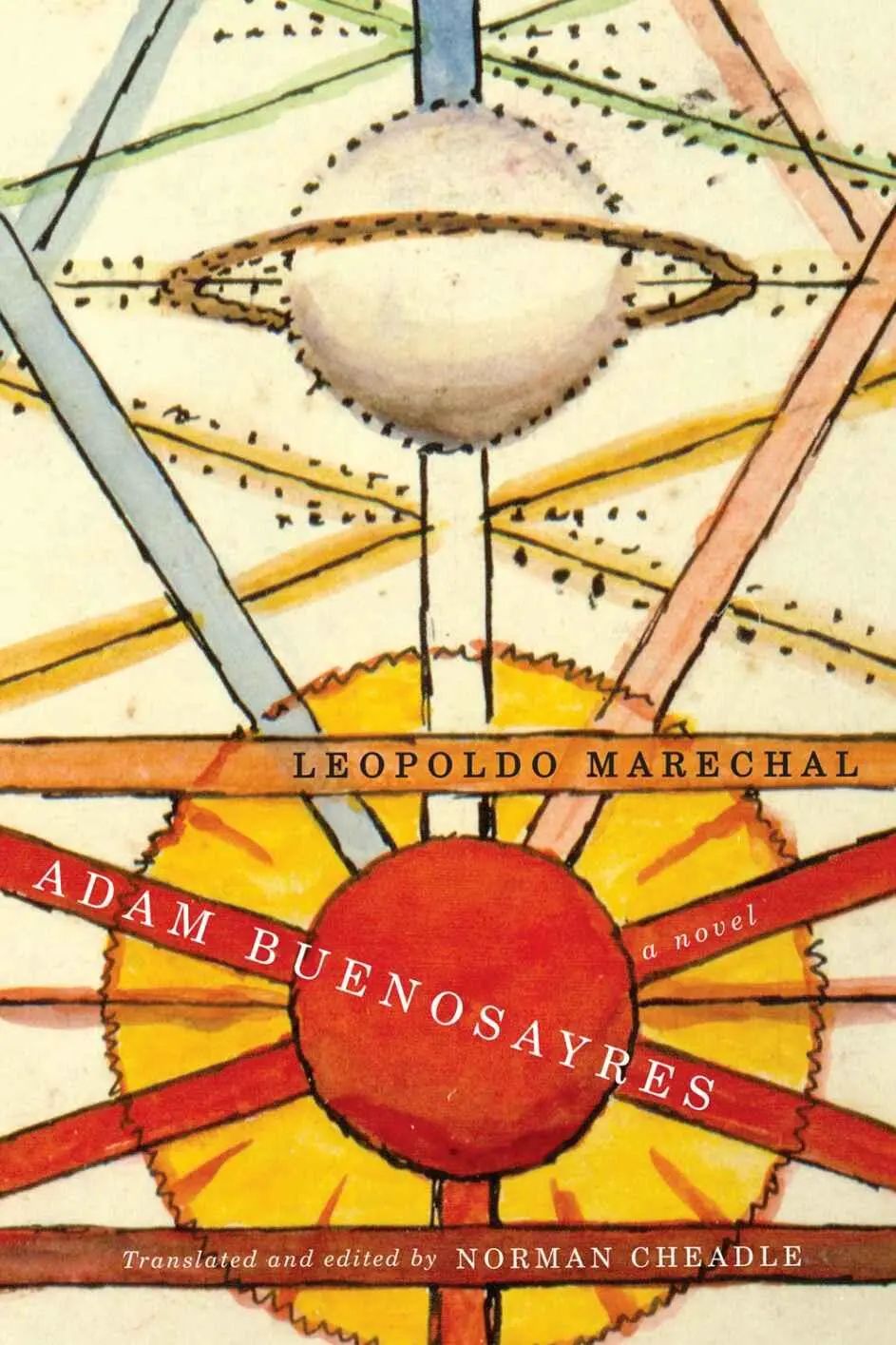
- Название:Adam Buenosayres
- Автор:
- Издательство:McGill-Queen's University Press
- Жанр:
- Год:2015
- ISBN:нет данных
- Рейтинг книги:5 / 5. Голосов: 1
-
Избранное:Добавить в избранное
- Отзывы:
-
Ваша оценка:
Adam Buenosayres: краткое содержание, описание и аннотация
Предлагаем к чтению аннотацию, описание, краткое содержание или предисловие (зависит от того, что написал сам автор книги «Adam Buenosayres»). Если вы не нашли необходимую информацию о книге — напишите в комментариях, мы постараемся отыскать её.
Adam Buenosayres — читать онлайн бесплатно полную книгу (весь текст) целиком
Ниже представлен текст книги, разбитый по страницам. Система сохранения места последней прочитанной страницы, позволяет с удобством читать онлайн бесплатно книгу «Adam Buenosayres», без необходимости каждый раз заново искать на чём Вы остановились. Поставьте закладку, и сможете в любой момент перейти на страницу, на которой закончили чтение.
Интервал:
Закладка:
But as I was saying, Samuel Tesler had just stood up. He put out his cigarette in an ashtray, crushing it with his thumbnail, then went to the blackboard and carefully wiped it clean of the notes for the twenty-seventh. Finally he went to the window. His eyes looked out over the city as it laughed naked under the sun’s harpoon. As though in the grip of an idée fixe , he raised an eloquent arm, taking in zinc rooftops, brick terraces, distant bell-towers, and the tall stacks smoking in the wind:
— There you have Buenos Aires! The bitch that devours her pups in order to grow.
Shouts and laughter from outside cut his speech short.
— Who’s shouting out there? asked the philosopher with knitted brow.
Adam pointed to a building under construction, opposite them:
— The Italian construction workers.
— And what’s the Italic beast laughing about?
— Your kimono.
And so they were. Up there on their scaffolding in the sky, the workmen had left off munching their lunch of raw onions and were excitedly gesticulating in celebration of the kimono and its bizarre designs. Samuel Tesler, enigmatic, stared at them and made the following Masonic sign: placing his left forearm inside the elbow joint of his right arm and jolting it upright, he then emphatically shook the vertical appendage two or three times and anxiously waited for a reaction. The Italians immediately responded in kind, and the philosopher, satisfied, burst out laughing: they had understood one another. Then, addressing his guest, the construction workers, the city and the world, Samuel Tesler spoke thus:
— There lies Buenos Aires, the city whose symbol is the chicken, not so much for its ineffable grease as for the elevation of its spiritual flight, comparable only to that of the ample bird. I wonder now, and I put the question to you, my happy fellow citizens: What can a philosopher do in the city of the early-rising hen?
Samuel Tesler paused a moment, and the construction workers applauded, though their adulation came ominously supplemented by a chorus of raspberries. Samuel Tesler nevertheless gestured his profound gratitude. Then, raising his hand to his face as if to adjust an actor’s mask, he continued in a tone of darkest melancholy:
— It is twelve noon, and at this solemn hour two million greedy stomachs are receiving the chewed foodstuffs sent them by their fortunate owners. Food which, as you know, will be transformed into blood and faecal material. The latter will in turn pass through an ingenious plumbing system and go on to enrich the waters of the “eponymous river,” as Ricardo Rojas 18would say; while the blood, conveniently oxygenated in the lungs, will run through the generous arteries of my fellow citizens. And two million brains will think that life is just amazingly hunky-dory. And so, what will the philosopher do in the city of the hen?
Samuel Tesler paused again, and the workers filled the silence with another ovation. But the philosopher no longer deigned to notice them. He cupped his right ear with his hand and, breath held, mimed that he was listening long and hard.
— The clock has struck twelve! he exclaimed at last. Ah, what strange music comes to my ears this noonday! It’s the maxillary music of four million jaws joining and separating in accord with the harmonious laws of mastication. An hour from now, four million arms will return to their labour. They’ll raise the facade of the city higher and ever higher, and sink the roots of the city ever deeper. They’ll strengthen the city’s kidneys, adorn her face, place shoes on her feet. They’ll stuff her pockets using the clawed hand of commerce and the calloused hand of industry. They’ll build outward — out from the skin, out from the eyes, outwardly paying lip service — all that can be touched, tasted, heard, and smelled. Then night will fall, and two million exhausted bodies will fall to earth. Two million horizontal bodies, beneath the sleepless gaze of God, will sleep noisily, rending the conjugal sheets with their farts. And who will watch over the city of the hen? A handful of select minds who, wakeful alongside their sleeping brothers, are meditating on the City of the Owl, the city within that cannot be seen or smelled or touched. 19
Samuel Tesler fell silent, his facial muscles suddenly relaxing. Through his cracked mask, however, could be glimpsed a shadow of real pity.
— How you exaggerate! said Adam, chortling.
— It’s the pure, unalloyed truth, Samuel assured him. I don’t know about your encounters with the city of the hen, but mine are absolutely hilarious.
The philosopher began to mimic the voice, the look, the gestures, and even the clothes of various individuals as he named them:
— For example, here I am, studying Hegel, and my father comes in: ABRAHAM TESLER: (Moses-like beard, furtive eyes, nose like the leap of a lion, nickel spectacles. He wears his ancient heavy frock-coat from Odessa and matching coachman’s top-hat.) My son, you vaste your time and my money on philosophies! Vy philosophies and not commerce, my dear Samoyel? You put up little stand for selling hats in Triunvirato Street. Three months later you rent a nice place with windows for display. Two years later you buy own house; five years later…
SAMUEL TESLER: (Forehead bulging with genius, dignity in his eyes, greatness in his bearing. Interrupts his father with an Olympian gesture.) That’s enough, old man! My mind is made up. (Exit Abraham Tesler, rending the lapel of his frock-coat with one sweep of his hand.)
— Other times, continued Samuel, I’m eating supper at home, and my mother…
REBECCA TESLER: (Meek, lachrymose eyes, a blond wig that’s seen better days, work-roughened hands. She bends over the sewing machine under a small electric lamp.) Samoyel, your mother vork night and day so that you should study in Faculty of Medicine. These eyes hurt me because I look so much at sewing vork . But I see great doctor in my Samoyel and your mother’s eyes don’t hurt no more. Study, Samoyel! Doctor of Medicine, great career! Later you marry rich girl, big dowry for clinic and X-rays. Then big automobile, many clients in waiting-room…
SAMUEL TESLER: (Head sinking into his soup bowl.) No, Mother! Never! 20
A fit of laughter shook the philosopher right down to his feet:
— Do you get the picture? It’s two different worlds, putting the boots to each other!
His laughter, following upon the sorrow of the characters just parodied by Samuel, was so dehumanized and outrageous that the visitor would have been aghast had he not intuited all the mortification implicit in Samuel’s raillery. So Adam Buenosayres said nothing, though his silence resonated with sadness. (“Remember! Remember your first verses, hidden in the desk drawer, like a delicious sin. And your father, the blacksmith, came upon them: he leafed through them in silence, put them back in your schoolboy’s folder, and said nothing as you trembled before him. And one day, Don Aquiles read your composition and pronounced: ‘Adam Buenosayres will be a poet,’ and all eyes turned to look at you, spellbound, the way they looked at pictures in the Natural History textbook. And as an adolescent you kept your secret, feeling shame before the men who weep or laugh under the sun, and timidity before the daughters of men who beneath the sun laugh or weep.”)
But Samuel, fearing that an importunate meditation might rob him of the ideal spectator he had in his visitor, resumed his discourse:
— As you can see, my situation is awkward in the city of the hen. That’s one problem. But there’s another problem: it’s a city full of temptations.
— Hey, hey! cried Adam, his interest piqued.
Читать дальшеИнтервал:
Закладка:
Похожие книги на «Adam Buenosayres»
Представляем Вашему вниманию похожие книги на «Adam Buenosayres» списком для выбора. Мы отобрали схожую по названию и смыслу литературу в надежде предоставить читателям больше вариантов отыскать новые, интересные, ещё непрочитанные произведения.







Обсуждение, отзывы о книге «Adam Buenosayres» и просто собственные мнения читателей. Оставьте ваши комментарии, напишите, что Вы думаете о произведении, его смысле или главных героях. Укажите что конкретно понравилось, а что нет, и почему Вы так считаете.