Uwe Tellkamp - The Tower
Здесь есть возможность читать онлайн «Uwe Tellkamp - The Tower» весь текст электронной книги совершенно бесплатно (целиком полную версию без сокращений). В некоторых случаях можно слушать аудио, скачать через торрент в формате fb2 и присутствует краткое содержание. Год выпуска: 2014, Издательство: Penguin, Жанр: Современная проза, на английском языке. Описание произведения, (предисловие) а так же отзывы посетителей доступны на портале библиотеки ЛибКат.
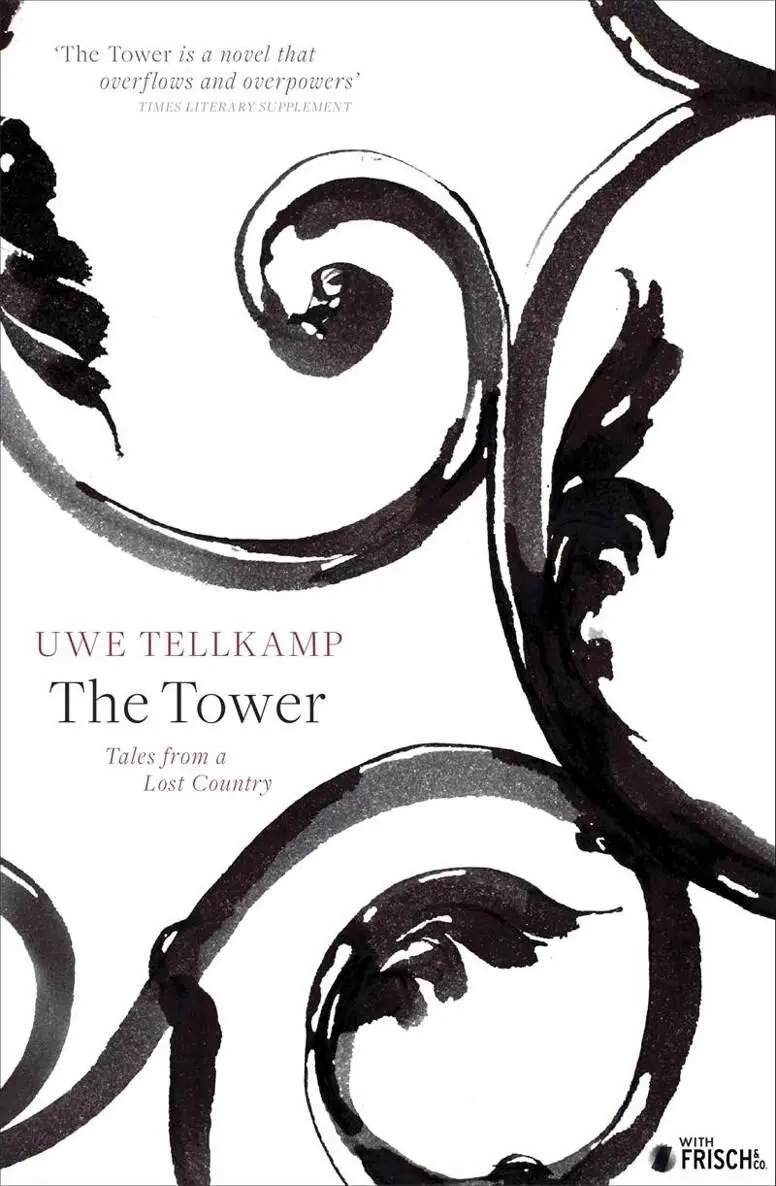
- Название:The Tower
- Автор:
- Издательство:Penguin
- Жанр:
- Год:2014
- ISBN:нет данных
- Рейтинг книги:5 / 5. Голосов: 1
-
Избранное:Добавить в избранное
- Отзывы:
-
Ваша оценка:
The Tower: краткое содержание, описание и аннотация
Предлагаем к чтению аннотацию, описание, краткое содержание или предисловие (зависит от того, что написал сам автор книги «The Tower»). Если вы не нашли необходимую информацию о книге — напишите в комментариях, мы постараемся отыскать её.
The Tower — читать онлайн бесплатно полную книгу (весь текст) целиком
Ниже представлен текст книги, разбитый по страницам. Система сохранения места последней прочитанной страницы, позволяет с удобством читать онлайн бесплатно книгу «The Tower», без необходимости каждый раз заново искать на чём Вы остановились. Поставьте закладку, и сможете в любой момент перейти на страницу, на которой закончили чтение.
Интервал:
Закладка:
‘Aha, people know each other in the gold-dust district.’
‘What did you call it?’
‘It was my grandmother’s name for it. Sometimes she would take me by the hand, we’d come over here and she’d say: When you grow up, girl, you must marry someone from here. From the gold-dust district. Where the professors, doctors, musicians all live. But today I’ve just come for a walk. I take the 11 up here, breathe a few lungfuls of the bigwigs’ precious air then buzz off back home. — I bring greetings for you.’
‘From Herr Kittwitz?’
‘Your tongue’s shedding its needles, be careful when you swallow. Herr Kittwitz lives in Gruna. — No, from Herr Malthakus.’
‘You’ve been to see him. He’s married, as far as I know,’ Meno said with a smile.
‘Now you’ve got that I-don’t-think-that-would-interest-you expression.’
‘And you the men-are-all-the-same look.’
‘Malthakus and I are just in the process of making friends with each other. A nice old bird. He’s very precise, but his clocks have a heart, if I can put it like that.’ She took out a packet of cigarettes, offered Meno one. He declined, gave her a light. ‘May I accompany you to the tram stop?’
‘Thanks but I’d prefer to walk with you a while, if you’ve no objection.’
He accepted that Judith would now be walking beside him without a flicker of emotion and didn’t look back when she went on ahead to the junction, stopped and listened, her face turned towards him, though he would have liked to look round to see where she had so suddenly appeared from; in his mind he went through the building entrances he had passed, but at this hour they were usually closed and he would surely have heard a door creaking; of course, he had been deep in thought, and perhaps she had come silently from farther away. The outlines of the buildings had now been erased, the few lighted windows were patches of yellow hanging in the darkness. Meno crossed the road, the hats in Lamprecht’s shop window, on which the greasy light from the lamp at the junction cast a faint glow, looked like the visible part of beings that had a rendezvous with the wigs in the Salon Wiener but it wasn’t quite time yet. Schevola held her nose: ‘Rotten eggs, yeuch!’
Past Lukas, the tailor’s, past the Roeckler School of Dancing and the drizzle of tremolos from a piano worn to a state of thin-skinned irritability.
It must have had a toothache , Meno wrote, that piano in the dance hall on the first floor, it sounded so out of tune and out of humour, and beside it the Nosferatu fingers of a cellist, carved in stucco from feet to elbows, were twined round the fingerboard of his snuffling cello, the pianist’s bald head glinted in rhythmical harmony with the palm-court-soft upanddown of the violinist’s bow; he was standing apart from the cello and piano, in bib and tucker, in the metallic shimmer of formality, beside a Monstera with mustard-yellow leaves, sending tangos slithering across the chessboard dance floor to the sandpapering steps of the beginner’s course, his left hand churning out vibratos, which elicited from the pianist, with a paper flower in his dinner jacket, blank looks at the ceiling where putti and winged hippopotamuses, which only admitted to being angels at a second glance, were playfully teasing each other amid rosy clouds; the music from Tannhäuser sprouts over the decor and I could touch Niklas now, only his body is present, it’s frozen and would perhaps not feel anything, the spell is upon him and the second Niklas, the one only he knows, that inhabits his body, has gone .
This tremolo at the peak of tunes that had become dull from repetition aroused in Meno memories of his schooldays and of dancing classes he had attended in vain. The fog that had come up from Grünleite, a blind alley off the Lindwurmring beyond the junction and where Arbogast’s chemical laboratory was situated, was now creeping past Guenon House and down Mondleite in the direction of Bautzner Strasse.
‘Shall we go on?’ Meno indicated the fog.
‘Why shouldn’t you smell of rotten eggs when you get home?’ Schevola replied. ‘What do they actually produce there?’
‘No one knows that apart from the Baron and his colleagues. As far as I’m aware it’s being kept secret. There are all sorts of rumours.’
‘Well let's walk on. — Tell me about yourself.’
‘There isn’t much to tell.’
‘You’re very reserved. You don’t say much and observe a lot. People like that often have a lot to say.’
‘That’s your opinion.’
‘You don’t seem to be particularly adventurous,’ she commented when he stopped as they approached Grünleite. Now it was stinking like a rubbish tip.
‘It all depends where you’d look for adventure.’
‘I bet you won’t seek one here and now.’
‘Don’t bet too much on it.’
‘How about there?’ She pointed down Grünleite, to the steaming building of the chemical laboratory.
‘And if there are guards?’
‘Then I could have bet quite a lot on it.’
‘We have to be cautious, I don’t know what’ll happen if we get caught.’ He had a quick look at what they were wearing. ‘You’re too well dressed for what we’re about to do. And your coat’s too light-coloured, people will see you.’
‘No they won’t. This is a reversible coat. Just a mo.’ She took it off and turned it inside out so that the dark lining was showing. ‘Do you know your way round here?’ She put on a provocative smile.
‘We’ll soon see.’
Grünleite was lit by the faint light from a few houses that belonged to the military hospital, Soviet officers and doctors lived in them. One of the windows was open, radio music spilling out of it. Schevola crossed over to the other side of the road that was in the shadow of a high wall. The masonry was badly affected. Meno took out his penknife and stuck it in the mortar to see what it was like. The blade went in right up to the handle without him having to exert much pressure. There was barbed wire running along the top of the wall, but in some places trees stretched out over it. They must be part of the woodland the Kuckuckssteig passed through from Arbogast’s chemical laboratory down to Bautzner Strasse and Mordgrund. Fabian Hoffmann, the son of the toxicologist from Wolfsleite, had explored it together with his gang, to which Ina Rohde and Fabian’s sister, Muriel, belonged, he’d told Meno about weathered statues and an impenetrable wall of overgrown wild roses separating Kuckuckssteig from the wood of the Chemical Institute. Schevola turned to the wall and stifled a cough. The fog was like damp cotton wool pouring out of the laboratory entrance, which, like that to Arbogast’s house, consisted of an elaborately wrought gryphon, here surmounted by a steel arch with black and yellow bands. With that stench Meno wondered how anyone living here could leave their window open, they couldn’t have very sensitive noses or were used to much worse. Schevola peered through the gate. ‘No one to be seen. Best down there,’ she said, pointing to the end of the blind alley where there were a few garages with dustbins beside them, ‘if we roll them up to the wall we ought to be able to manage it.’ The yellowish fog, which now stank of fish soup, came up to her knees; the expression on her face was both alert and eager, and she seemed to see it reflected in Meno’s look: immediately the expression vanished, as if she had let it drop and run a fine, swift eraser over it. ‘Just look at this.’ She held up her forefinger, showing Meno a black blob on the tip. ‘What do you think that is? Tar?’
He rolled the shiny black blob between his thumb and forefinger, it was pliable, like the plasticine from which he’d made models at school: cosmonauts or Young Pioneers, Laika, the dog in the space capsule, the cruiser Aurora after a model in Komsomolskaja Pravda . When Meno wiped the blob off on the wall, it left a black streak. ‘Pitch,’ he said, trying to rub out the streak with his shoe. ‘Be careful, there seems to be more of it.’ He drew Schevola away from the steel arch. The pitch was running over the projecting wrought-iron feathers of the gryphon, dripping in viscous threads down from its beak, which looked like an oozing, upside-down gondola, onto its lion’s claws, filling the gaps in its wings, joining up in braids that in the thinning mist spread out on the ground in puddles that made contact, paused briefly, as if they had to communicate with each other, then merged, seeming to be in constant, searching motion, supplemented from the gate-arch where the black substance was now pouring down in long stretching sheets that tore off with a soft ‘plop’. Schevola regarded her shoes, frowning, gave Meno a disgruntled look.
Читать дальшеИнтервал:
Закладка:
Похожие книги на «The Tower»
Представляем Вашему вниманию похожие книги на «The Tower» списком для выбора. Мы отобрали схожую по названию и смыслу литературу в надежде предоставить читателям больше вариантов отыскать новые, интересные, ещё непрочитанные произведения.


Обсуждение, отзывы о книге «The Tower» и просто собственные мнения читателей. Оставьте ваши комментарии, напишите, что Вы думаете о произведении, его смысле или главных героях. Укажите что конкретно понравилось, а что нет, и почему Вы так считаете.