Uwe Tellkamp - The Tower
Здесь есть возможность читать онлайн «Uwe Tellkamp - The Tower» весь текст электронной книги совершенно бесплатно (целиком полную версию без сокращений). В некоторых случаях можно слушать аудио, скачать через торрент в формате fb2 и присутствует краткое содержание. Год выпуска: 2014, Издательство: Penguin, Жанр: Современная проза, на английском языке. Описание произведения, (предисловие) а так же отзывы посетителей доступны на портале библиотеки ЛибКат.
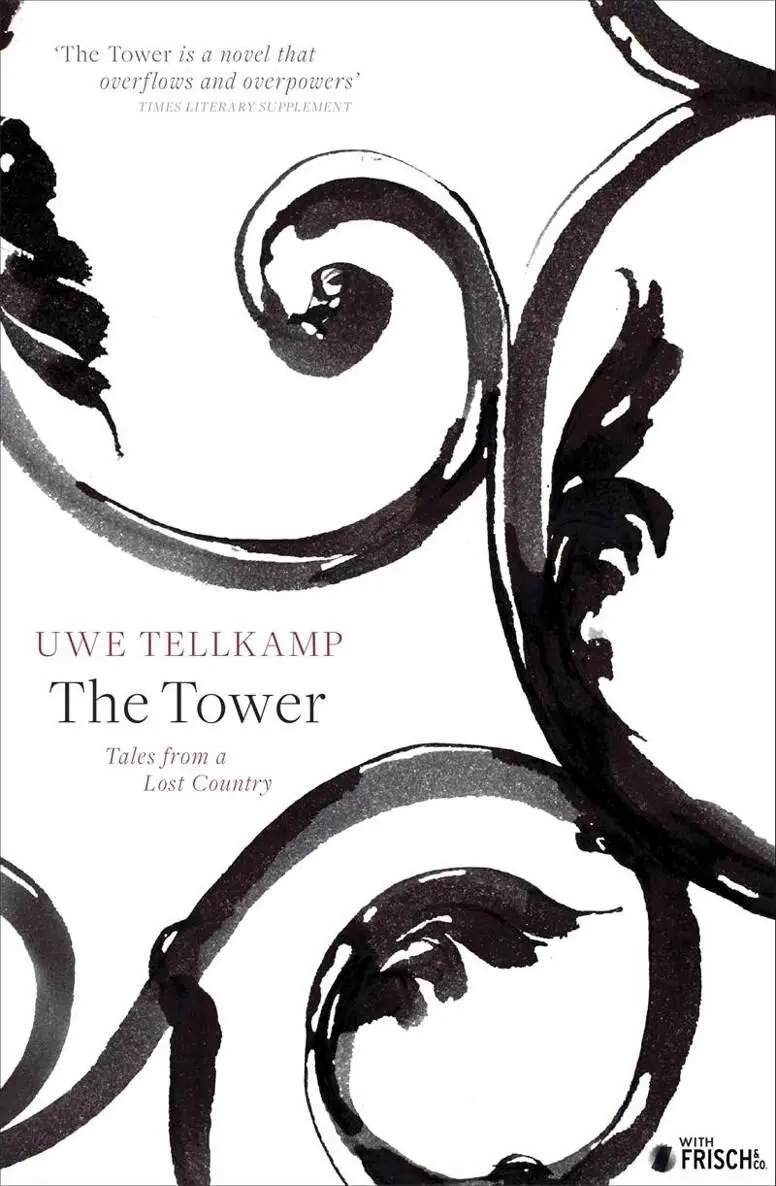
- Название:The Tower
- Автор:
- Издательство:Penguin
- Жанр:
- Год:2014
- ISBN:нет данных
- Рейтинг книги:5 / 5. Голосов: 1
-
Избранное:Добавить в избранное
- Отзывы:
-
Ваша оценка:
The Tower: краткое содержание, описание и аннотация
Предлагаем к чтению аннотацию, описание, краткое содержание или предисловие (зависит от того, что написал сам автор книги «The Tower»). Если вы не нашли необходимую информацию о книге — напишите в комментариях, мы постараемся отыскать её.
The Tower — читать онлайн бесплатно полную книгу (весь текст) целиком
Ниже представлен текст книги, разбитый по страницам. Система сохранения места последней прочитанной страницы, позволяет с удобством читать онлайн бесплатно книгу «The Tower», без необходимости каждый раз заново искать на чём Вы остановились. Поставьте закладку, и сможете в любой момент перейти на страницу, на которой закончили чтение.
Интервал:
Закладка:
‘For later.’ After that Meno would sometimes go home depressed, hurt, telling himself that his gifts of books were basically unwelcome to Niklas, at least that was the impression Meno had; Niklas seemed never to read them and they didn’t talk about them the next time they met. He’s not a book person, Meno thought as he made his way home in the dark, he’s only interested in books as beautiful objects, things to fill up his bookcase, in precise rows and nice to look at behind glass, and what is important is that they must have a good binding and fine paper — not the content. Goethe is the most important author for him, but only because he’s the most important one for everyone up here and he’s the most important one for them not because they’ve grappled with him, studied and examined him, measured his sometimes hackneyed aphorisms against their own reality and experience, but because he’s recognized and sanctioned, because he’s the favourite yes-man of the bourgeois, which, deep down inside, is what everyone up here is, their chief councillor, generalissimo of opinion and prince of sentiment; because he’s king of their hoard of quotations. Basically, Meno thought, Niklas is only interested in music and in historical recordings of that music. The deader the better! And that’s what they’re all like up here, most of all they’d like to live in old Dresden, that delicate baroque doll’s house and pseudo-Italian wedding cake. They sigh, ‘The Frauenkirche!’ and ‘The Taschenberg Palace!’ and ‘Oh, the Semper Opera House!’ but never ‘Outside toilets! Those magnificent, cholera-friendly sanitary conditions!’ or ‘The Synagogue!’ or ‘What liberating living conditions they used to have, ten people in a tenement apartment!’ They never say ‘the Nazis’ but ‘the low-flying bombers’ and they love to quote Gerhart Hauptmann telling them it was a ‘morning star of youth shining on the world’ and that ‘anyone who has forgotten how to cry will remember at the destruction of Dresden’ and then Meno would thump a tree with his fist in exasperation. It was true and yet he was being unjust. How terribly vain you are, he thought. Just because he didn’t sufficiently appreciate the book you gave him. How very seriously you take yourself … Not good at all, vanity impedes observation and doesn’t serve truth, Otto Haube used to say when we were using microscopes. When Meno encountered the Kaminski brothers he bade them an exaggeratedly cheerful ‘Good day’ and ignored their nods and smiles. He extended his return to his book- and silence-filled living room, made long detours in order to call up his hours with Niklas — Gudrun was seldom there, nor Reglinde or Ezzo — again.
And in writings about the depths of the ocean , Meno wrote, strange creatures appear outside the windows of the houses, Gempylus, the snake mackerel with eyes that look like metal discs staring in at the window; creatures with blind, milky spheres instead of eyeballs and long beards dangling like dead men’s bootlaces; the shadow of the thousand-armed creature, which writes the depths grey, Architeuthis, the giant that Poseidon chained and whose sucker-armed tentacles wrap themselves round the houses like tamarisks, penetrate the plaster and masonry like ivy, embrace them in order to suck, tie themselves on tighter with each year’s growth ring, edge forward with the same intensity that builds up the silence, scale by scale, into something else and with which the needle comes down after Niklas has wiped the yellow cloth over the disc one last time then turned the lever beside the counterbalance, and I had the feeling I saw a counter-movement at the same time, as if the needle over the revolving record were aspirating the air, which looked like a surface, deepening it to a navel, to a funnel the sides of which continued to grow the deeper the needle went, that had perhaps already stopped but, since the sides of the funnel were curving up and the gyrating current had already reached the part of the room beyond the little Moorish table, on which the record player stood, was touched by the counter-revolution of the disc, an electric fluid out of which single sparks flew; trickling neurotransmitters, as if there were a dam between two bodies which, if they approach within a certain distance of it, comes under immense pressure, cracks and begins to sweat out what it contains; the surface tension of the water bending towards the approaching foreign body, an anticipated contact, the needle was swept away by the disc as it grew into a wave, a moment that Niklas awaited with bated breath, his hand still over the tone arm in a beseeching gesture, ready to intervene swiftly, while my eye was drawn by the intensifying hiss into the room, this beautifully cut room with the green wallpaper that went back to the woman who had built the house, a singer at the Dresden Opera; the wallpaper could well be as old as the century, the submarine fauna worked into the pattern showed glints of copper in the cloudy light that was feeling its way from the record player, Niklas never asked me about the animals I was familiar with from Ernst Haeckel’s Art Forms in Nature , how often as a student had I stood in the Jena Zoological Institute looking at the paintings, done with academic precision, delighting in the colours, the shapes of all the siphonophores, Portuguese men-of-war, of the Desmonema annasethe , which looked like a Belle Époque headdress floating behind the glass-fronted bookcases with bound volumes of specialist journals; the sapphire slipped into the track and, in the spark-spinning of the disc, in the travelling ripples of the light, all the Radiolarians and Amphoridea on the walls began to move, the crystalline floating monstrances and spiky little Gothic chapels deepened, as I was familiar with from Malthakus’s postcards, when the bell over the door had fallen silent and Malthakus, whom it had summoned, had returned to the back of the shop to bend over a catalogue and a stamp collection, his special magnifying glass, sometimes a watchmaker’s lens, over his eye, to estimate its value, London and Prague again, Herr Rohde? he asked when he greeted me, or would Rapallo do? I’ve recently acquired some decent stuff — and he would leave me by myself with half a dozen sepia picture postcards, a bay, Mediterranean vegetation, at the side a house with an oriel window on pillars with an ancient-Greek look, a statue in the garden, I still had snow on my hat and coat, felt I could still hear the street noises, the snow melted and as it liquefied the lines of the house, of the statue, melted too, the sails of the schooner in the bay began to flap, the waves, which looked as if carved out of marble, broke and rolled foaming onto the beach — waves that swell with the orchestra’s first note ringing out from the nightshades of the music room –
Meno crossed Turmstrasse at Lindwurmstrasse, which, running parallel to Bautzner Strasse, bounded the district on that side and bordered the wood on the slope going down to the bridge over the Mordgrund, on which the tram set off for the climb up to the district. On the right, in a dilapidated corner building, was the Steiner Guest House; as with most houses, its plaster was cracked and large patches had fallen off; the red bricks that were exposed looked inflamed, all that was left of the mortar between them was individual lumps, you could pick it out from under the bricks with your finger. The bricks themselves were riddled with holes, as if tiny insects had been eating their way through them, porous as rusks, some gave off gas escaping from leaking pipes, making the plaster that was left bulge and blister, and where dampness seeped through, mould spread like leprosy. There was scaffolding on the Turmstrasse side of the building, it had been there for months, no workmen had ever been seen on it. There was a lot of scaffolding like that round the city and the rumour was that this was a cheap way of supporting the buildings. In the summer the windows of the Steiner Guest House were open, you could hear the clatter of typewriters on the first floor, where there was an office dealing with commercial correspondence, a branch of the Council for Mutual Economic Aid. On the fourth floor, above the rooms of the guest house, Frau Zwirnevaden had two rooms, in one of which she ran a silhouette atelier where she made little figures for the Dresden Cartoon Film Studio. There were rumours about the old woman going round the district, the children were afraid of her and she was rarely seen. She wore black clothes and slipper-like shoes that turned up at the toes, went rat-tat-tat on the road with her boxwood stick with a lion’s head, stopped at the shop windows and now and then would crook her finger enticingly. One of the rumours, put into circulation by the two clockmakers in the district, was that all the clocks would start to chime when Frau Zwirnevaden went past and everyone agreed there must be something to it, for the two clockmakers, Pieper and Simmchen, known as ‘Ticktock Simmchen’ because of his delicate health, were deadly enemies and had no time for each other. But Simmchen, whose cousin of the same name had a jeweller’s on Schillerplatz, had raised his hands in fervent protestation as he said to Barbara, ‘I swear to you, Frau Rohde! All the clocks at once and it was only five to twelve!’ When she passed this on at the furrier’s, Barbara did point out that Simmchen’s nose had been as red as a live coal, but added that during their conversation Simmchen had had to blow his nose several times. Another rumour came from Frau Zschunke, who ran the greengrocer’s, popularly known as the ‘dump’, on the corner of Rissleite and Bautzner Strasse, a woman of around forty, pink and chubby, single and entirely devoted to the extraterrestrial theories of Erich von Däniken, and who was always dropping things because, with an ‘Ooh!’ and ‘Aah!’, she would be terribly alarmed by something and, gasping for breath, clutch her imposing bosom. The young folk of the district took full advantage of Frau Zschunke’s nervousness with plastic jumping spiders, which could be bought for ten pfennigs in König’s toyshop on Lübecker Strasse, preferably when Frau Zschunke was taking fruit out of a basket to put it in a metal pan to weigh it with weights that were kept in rows in a wooden box. One day Frau Zschunke had come running into Binneberg’s cake shop across the road, where, evidently distraught, she had kicked up a great fuss among the customers queuing up for their cake and coffee: ‘that Zwirnvaden’ had ‘prodded’ all her cabbages with her spider’s fingers, muttering angrily about their poor quality (at which some of the more cold-hearted ones waiting by Binneberg’s collection of Dresden custard pies nodded), then handed her two cabbages, one white, one red, at which she, Frau Zschunke, had first gone to the white-cabbage till, then to the one for red cabbages — but suddenly saw faces in the cabbages! One of them looked like the son of Herr Hoffmann, the toxicologist from Wolfsleite! — Dr Fernau recommended she didn't restrict her diet to Golden Delicious since that kind of apple only contained certain vitamins.
Читать дальшеИнтервал:
Закладка:
Похожие книги на «The Tower»
Представляем Вашему вниманию похожие книги на «The Tower» списком для выбора. Мы отобрали схожую по названию и смыслу литературу в надежде предоставить читателям больше вариантов отыскать новые, интересные, ещё непрочитанные произведения.




Обсуждение, отзывы о книге «The Tower» и просто собственные мнения читателей. Оставьте ваши комментарии, напишите, что Вы думаете о произведении, его смысле или главных героях. Укажите что конкретно понравилось, а что нет, и почему Вы так считаете.