Uwe Tellkamp - The Tower
Здесь есть возможность читать онлайн «Uwe Tellkamp - The Tower» весь текст электронной книги совершенно бесплатно (целиком полную версию без сокращений). В некоторых случаях можно слушать аудио, скачать через торрент в формате fb2 и присутствует краткое содержание. Год выпуска: 2014, Издательство: Penguin, Жанр: Современная проза, на английском языке. Описание произведения, (предисловие) а так же отзывы посетителей доступны на портале библиотеки ЛибКат.
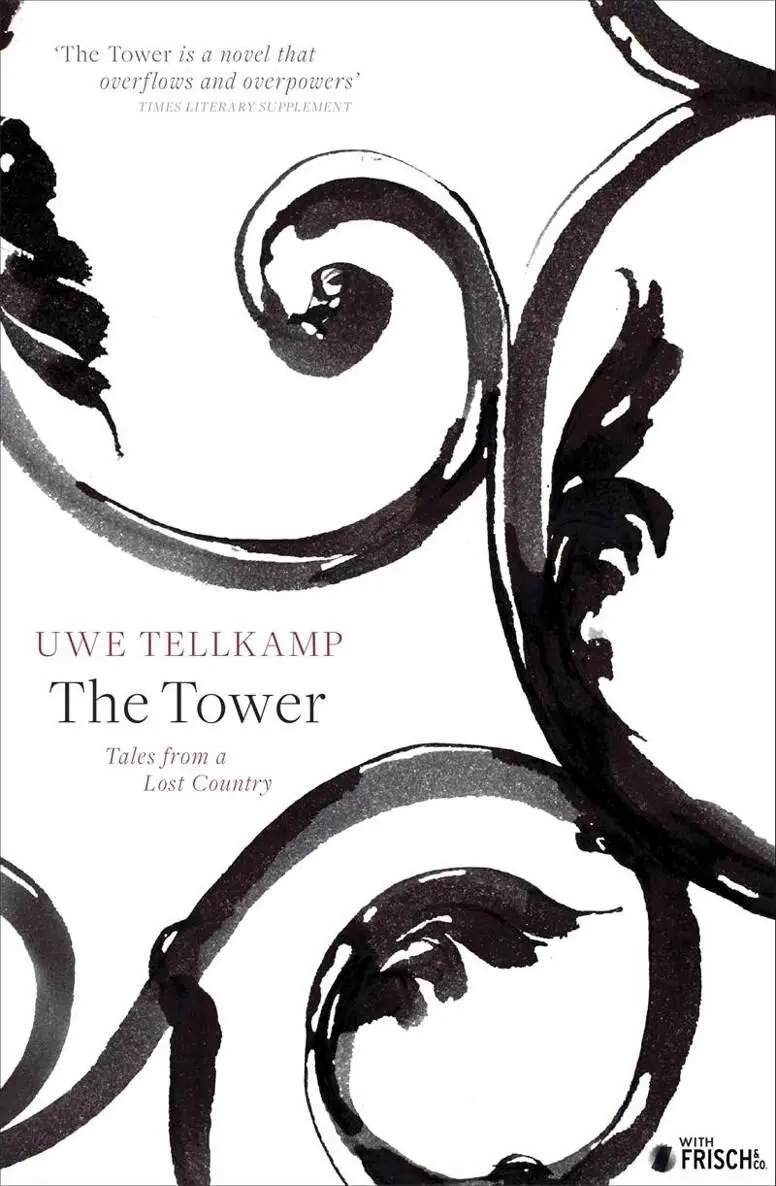
- Название:The Tower
- Автор:
- Издательство:Penguin
- Жанр:
- Год:2014
- ISBN:нет данных
- Рейтинг книги:5 / 5. Голосов: 1
-
Избранное:Добавить в избранное
- Отзывы:
-
Ваша оценка:
The Tower: краткое содержание, описание и аннотация
Предлагаем к чтению аннотацию, описание, краткое содержание или предисловие (зависит от того, что написал сам автор книги «The Tower»). Если вы не нашли необходимую информацию о книге — напишите в комментариях, мы постараемся отыскать её.
The Tower — читать онлайн бесплатно полную книгу (весь текст) целиком
Ниже представлен текст книги, разбитый по страницам. Система сохранения места последней прочитанной страницы, позволяет с удобством читать онлайн бесплатно книгу «The Tower», без необходимости каждый раз заново искать на чём Вы остановились. Поставьте закладку, и сможете в любой момент перейти на страницу, на которой закончили чтение.
Интервал:
Закладка:
He was on his way to the library. Feeling strangely troubled he left his hiding place, went across the market square, past the church on the other side and the Luther memorial, turned into Seifensiedergasse, at the end of which was the town library, which was in a half-timbered house with maxims written on the gables, a weathercock and the bronze figure of Hans the Soapmaker over the door; it had previously been the guildhall of the soapmakers. He still had twenty minutes, the library shut at six. In the lobby, where they had the issue and return desk, the grey-haired librarian was talking to an apprehensive young member of the Thälmann Pioneers, who had brought back a series of ‘Digedags’ comics in what, from the sharpness with which the librarian was expressing her disapproval, must be a terrible state: ‘chocolate stains’ and ‘dog-eared pages’ she groaned as she leafed through the copies. She made a note on the boy’s file card and Christian knew that that was it for him, he’d never be allowed to borrow ‘Digedags’ comics from the library again. Sabine Winkler came and took the books Christian had brought back. She didn’t resemble her sister at all, no one who didn’t know would have associated the two of them. Sabine had blonde hair, hidden at the moment under a batik headscarf, outside she’d take it off and show everyone her Mohican hairstyle. She wore studded jeans, a biker’s jacket one of her father’s patients had given her in exchange for an invaluable ABBA disc and a less valuable one of Oscar Peterson from the Amiga jazz series with the orange ‘J’ on the sleeve, and a pair of men’s boots a couple of sizes too big she’d bought in the ‘For the Young Man’ section of the Centrum department store in Dresden. Sabine Winkler called herself the ‘first punk in the Godforsaken dump of Waldbrunn’. For her Christian, just like her sister and her parents, was a ‘bornor’, a ‘boringly normal person’. She called him Chris, which for him was the most horrible of his nicknames; it made him think of Chris Doerk, a pop singer of the 1960s who, with her ‘canned-roses’ voice, sang with the state-certified heart-throb of schmaltz, Frank Schöbel, and acted in two DEFA film comedies. Summer film festival on the Baltic coast, wicker beach chairs in orderly rows, the half-mast red ball of the storm signal. A tent cinema, food counter, buffet consisting of plastic dishes with limp cucumber salad. A provincial group playing in the communal dining room and in a book, Sally Bleistift in Amerika by Auguste Lazar, from the holiday-camp library he’d found a love letter … His memories were interrupted by Sabine: ‘Hey, Chris, we close in fifteen minutes and I’m buggered if I’m going to stay on later, like I did last time, just because you can’t get your arse in gear.’
Christian nodded and went off to the farthest corner of the library, where the philosophers were sleeping. He tried to repress thoughts of Verena and Siegbert by forcing himself to study the titles of the books; they were extremely boring- and dry-sounding titles with lots of Latin words in them; he found what he was looking for, in a dusty corner with especially boring- and dry-sounding titles, but he needed a few of them to prepare for a big class test in civics in which they would probably be unable to ‘waffle’, but would have to ‘present facts’.
‘Hey, Chris, what’s up with you, you’re not yakking on at me the way you usually do!’ Sabine slammed the issue date on the stuck-in sheet inside his books. ‘My god, what dusty tomes we have in here!’
On 1 May the flags were out all over Waldbrunn. A member of parliament and representatives of the district Party committee and of the local base of the Soviet armed forces were standing on the platform that had been set up in the market square; row upon row of the pupils of the Waldbrunn schools marched past the waving representatives of the people. The gigantic Karl Marx head, on which the Association of Young Artists of the Maxim Gorki schools had been working up to the very last minute, was shining on the canvas sheet rising several metres above the platform, a totem skull made from five kilograms each of gold and silver paint, a mythical ancestor on a sail, the sail of Thor Heyerdahl’s Kon-Tiki , Christian thought, who was walking in a row with Jens and Siegbert. A raft floating towards the sun. They swore at the weight of the banner, ten metres long with the slogan: ‘We dedicate all our strength to building up our socialist Fatherland’ and supported every two metres by a pole. When the wind freshened, the five pupils had to lean against the poles with all their strength, the banner billowed out and flapped like the wings of an unruly dragon. Drums rolled, at the front there was a band of cymbals and shawms with drummers and their oompah-oompah, Christian could see the staff whirling and gleaming. Now fanfares sounded beside the platform; Fahner shouted orders into the microphone and the praise of the future, in which there would be no more exploitation and oppression, never again, brightness for evermore, burst from a thousand young throats. Fahner proudly announced the statistics, the loudspeakers hummed; unmoved, as if separated from the procession by a glass wall, the church bells suddenly rang out; the schoolchildren were sweating.
Now every lesson seemed to consist of demands. Frau Stesny looked at her charges with concern as they devoured their supper in silence, running their forefingers up and down the text of books on the table beside them. When she ordered lights out at ten o’clock, they switched off the lights in the rooms of the eleventh-grade classes and counted to a hundred, by which time Frau Stesny would be too far away to see that they’d switched them back on. Schnürchel demanded essays on Soviet films, sometimes they watched one in class: they were always about the Great Patriotic War, about patriotic women partisans, who, duty-bound, resolutely took up their rifles; about soldiers in an almost hopeless situation that they still managed to overcome thanks to their truly superhuman determination and their unwavering class consciousness. Engelmann fluttered and ploughed his way round the class, checking dates of the Comintern, the differences between absolute and relative truth, the role of productive forces in developed capitalist and socialist society. Uhl demanded they learn to sing ‘The Peat Bog Soldiers’ and ‘I Heard a Sickle Sweeping’. Dr Frank demanded presentations about the reproduction mechanism of ferns. Only Hedwig Kolb, who taught German and French, seemed not to demand anything. She would come into the classroom like an absentminded elf, stand wrapped in thought, her hand still on the door handle, unconcerned by the noise of the pupils hurrying to their desks, look in delicate puzzlement, the class register and material for the lesson clamped under her upper arm, at a patch of brightness on the floor, a little sunlit plate on which she’d perhaps discovered a few goblins sticking out their tongues at her; then she came to again, checked the distance to the teacher’s desk — she made Christian think of a gazelle that some magic spell had placed on a frozen lake — put down her books and took out a handkerchief with crocheted edges to clear her ever slightly runny nose. This was no explosive snort, no trumpet blast such as that made by Engelmann, who didn’t use a handkerchief of normal size but a red-and-white-checked flag that made his trouser pocket bulge as if he had an apple in it; with Hedwig Kolb it was a gentle clear-out, quiet and dry; there was a blue giraffe embroidered on the handkerchief that seemed to be begging their forgiveness. Christian recalled the different ways in which the class would fall silent: with Schnürchel abruptly, a silence that came after murdered noise; with Frank at first the noise grew even louder when he came in because as class teacher he was bombarded with questions and problems; Uhl mowed down the conversations with a thunderous ‘Silence!’ and it was only with Hedwig Kolb that it was a silence that opened up, as if the voices were a tangle of woodland plants that drew back as she stepped forward. The Writing Fairy picked up a piece of chalk and wrote the topic for the class on the board. The class waited; Hedwig Kolb turned round and let her clouded gaze tap along the rows of pupils, as if she had to ascertain whether the class was the same as at the previous day’s lesson, whether a few students had not suddenly changed into grown-ups who would stand up and, instead of talking about delicate things like poems that had to be treated with care, turn to serious activities of direct use to the national economy — hammer a nail into a piece of roofing felt, for example; her eye paused here and there, lingered reflectively above the head of a pupil, as a watering can pauses over flowers while the hand holding it hesitates: one more, two more, or even three more drops? Will they help or harm? Then the eye moved on, concealing its doubts in undifferentiated, though not indifferent, friendliness. Although Hedwig Kohl did not adopt an authoritarian pose, she possessed authority and was respected by the pupils. Things were different, however, with Frau Kosinke, the equally gentle, absentminded, forbearing English teacher. No one took her seriously, the pupils imitated her quirks behind her back and laughed at her. In the other subjects hierarchies had quickly established themselves within the class: Verena and Hagen Schlemmer, a taciturn, gangling beanpole with metal-rimmed glasses and skin that looked as if it was only just out of the home laboratory, were the best in mathematics, Schlemmer and Falk Truschler in physics, in which Verena seemed to have no interest whatsoever, Siegbert and Christian in English, Svetlana in Russian and civics, Reina Kossmann in chemistry, Heike Fieber was the pride and joy of the art teacher, Herr Feinoskar. With Hedwig Kolb, however, all the pupils showed a desire to shine; to write the best essay was difficult, there was a lot of rivalry, to be praised by Hedwig Kolb was like receiving an accolade. Christian’s essays had twice been adjudged the best, perhaps that was what had led to Verena’s allusions to his supposed snootiness. The first time was when they had to write about Büchner’s play Woyzeck ; Christian had put the class-war interpretation to one side and showed himself more interested in power and impotence in the play, setting out his essay as a dialogue in blank verse to be acted out. Hedwig Kolb had asked him if she might keep the essay and put a hectograph copy on the noticeboard, which made Christian very proud. Verena, Svetlana and Siegbert too had been annoyed at this and made tart comments on his essay, especially on the lines that didn’t quite work … Siegbert had also twice had his essay adjudged the best; Verena once (‘Reproducing impressions’, she’d written about a picture in the IX Art Exhibition, 1982, in the Albertinum in Dresden; Heike Fieber once, who in German and art woke from the trance-like daze in which she flowed through the other subjects. Like a large, velvet-fingered seaweed, Christian thought, like something transparent spreading out in a clear lake. Fluid, like the paint in a watercolour. Heike fascinated him, her thoughts seemed to run along different tracks from the usual ones. It occasionally happened that she put her hand up; Hedwig Kolb, taken aback by this unusual activity, immediately called on her to speak, but Heike ignored the question set and said, ‘I’ve just been wondering what the consequence would be if everyone had blue ears.’ Then her arm slowly sank down, she shook her shock of hair back into place, a characteristic gesture, as if she wanted to get rid of something, recurrent troubled dreams, something that ran counter to her snub nose and the hundreds of freckles on her face, she looked earnestly and thoughtfully at Hedwig Kolb, who, equally earnestly but with a hint of astonishment, looked back: ‘Yes, Heike … but is that possible, have you read something about that?’ In this essay Heike had taken the option of choosing a topic of her own and written: ‘Everything comes through juices. If something goes wrong, then it is because there is something wrong with the juices. Blood is a quite special juice, Goethe said. There is a vertical juice axis and a horizontal juice axis. Then there are the juice shops and there are also crimes against juice. WE LIVE IN THE AGE OF CRIMES AGAINST JUICE.’ There followed, in the middle of her essay, a drawing, a brilliant tangle of coloured lines, snakes with arrowheads pointing at each other — in the distance the scribbles resolved themselves in a sad bearded face. ‘We must fight against the crimes against juice’ was written underneath. Hedwig Kolb asked to be allowed to keep that essay as well. She had marked it ‘quite outstanding’ but didn’t put it on the noticeboard. In brackets she had added, in red lily-of-the-valley handwriting: ‘Unusual combination of word and image.’
Читать дальшеИнтервал:
Закладка:
Похожие книги на «The Tower»
Представляем Вашему вниманию похожие книги на «The Tower» списком для выбора. Мы отобрали схожую по названию и смыслу литературу в надежде предоставить читателям больше вариантов отыскать новые, интересные, ещё непрочитанные произведения.



Обсуждение, отзывы о книге «The Tower» и просто собственные мнения читателей. Оставьте ваши комментарии, напишите, что Вы думаете о произведении, его смысле или главных героях. Укажите что конкретно понравилось, а что нет, и почему Вы так считаете.