Uwe Tellkamp - The Tower
Здесь есть возможность читать онлайн «Uwe Tellkamp - The Tower» весь текст электронной книги совершенно бесплатно (целиком полную версию без сокращений). В некоторых случаях можно слушать аудио, скачать через торрент в формате fb2 и присутствует краткое содержание. Год выпуска: 2014, Издательство: Penguin, Жанр: Современная проза, на английском языке. Описание произведения, (предисловие) а так же отзывы посетителей доступны на портале библиотеки ЛибКат.
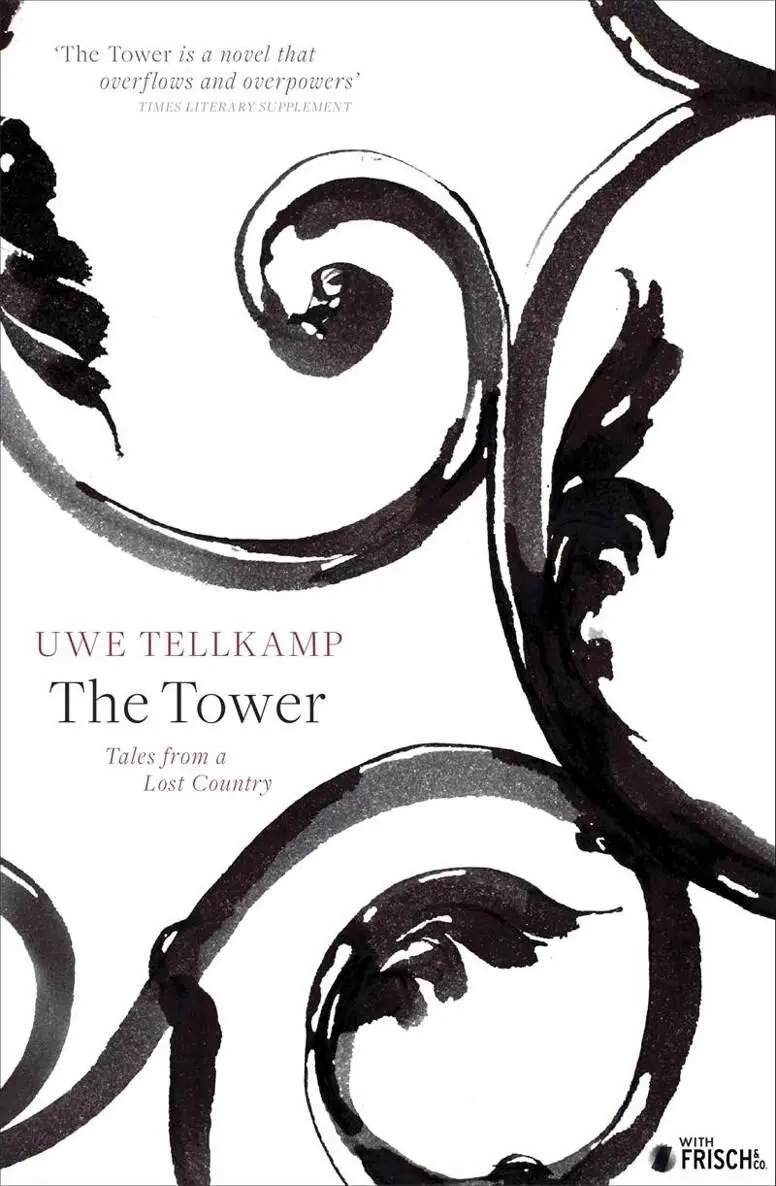
- Название:The Tower
- Автор:
- Издательство:Penguin
- Жанр:
- Год:2014
- ISBN:нет данных
- Рейтинг книги:5 / 5. Голосов: 1
-
Избранное:Добавить в избранное
- Отзывы:
-
Ваша оценка:
The Tower: краткое содержание, описание и аннотация
Предлагаем к чтению аннотацию, описание, краткое содержание или предисловие (зависит от того, что написал сам автор книги «The Tower»). Если вы не нашли необходимую информацию о книге — напишите в комментариях, мы постараемся отыскать её.
The Tower — читать онлайн бесплатно полную книгу (весь текст) целиком
Ниже представлен текст книги, разбитый по страницам. Система сохранения места последней прочитанной страницы, позволяет с удобством читать онлайн бесплатно книгу «The Tower», без необходимости каждый раз заново искать на чём Вы остановились. Поставьте закладку, и сможете в любой момент перейти на страницу, на которой закончили чтение.
Интервал:
Закладка:
Later Christian remembered again how they’d watched Falk leave; he could still hear Jens’s stale jokes as he lay in his bed in the hostel, staring at the ceiling criss-crossed by the lights of the long-distance lorries on the F170; he could hear the murmur of voices from next door, where the twelfth-grade boys had their room, there was a clatter in the corridor, Frau Stesny was still there helping the others prepare their supper and again he saw Falk in his mind’s eye, his hand thumping the stair rail, his green comb in his back pocket and he, Christian, had just realized that he had crawled to Fahner, had betrayed his principles in the most nauseous way … And yet he hadn’t felt that way about it in the principal’s office, he hadn’t lied to Fahner, as he sat facing him he’d been convinced of what he’d been saying. And as Falk gradually disappeared from sight, none of them made any effort to follow him and ask how the interview had gone, they’d not asked him later either, and so far he’d said nothing. Christian could see himself standing outside the office not feeling any pity for Falk. That was the second surprising experience of the day. What he felt was contempt, even hostility. He didn’t know whether Falk had had the courage to stick to the convictions he’d declared to them by Kaltwasser reservoir, that was probably what had happened and what really shook Christian was that that was precisely why he felt contempt for Falk. To stand upright, even and especially when things got tricky, was that not the way his parents had brought him up? At the same time they practised lying with him … Christian recalled another day he would never forget. It was one of the last days of the holiday before he transferred to the senior high school. His father had brought Erik Orré home with him, Tietze’s neighbour and a colleague of Gudrun’s at the Dresden State Theatre. He had been a patient of Richard’s and had come to express his gratitude in an unusual way, by teaching Christian and Robert the art of lying convincingly, which Richard thought was necessary, especially for Christian; the large mirror was brought in from the hall and the actor had thus practised praising enthusiastically with them — and, at Niklas’s request, Ezzo — had corrected their gestures, showed them how to deliberately turn red or pale, how to flatter someone with a certain amount of dignity, how to say stupid things with a serious expression, to drape them like a disguise over your true thoughts, how to churn out compliments that are empty but intelligently flattering, how to dispel suspicion, how, in some cases, to recognize other liars. Anne had gone out during these rehearsals. Christian had heard her crying in his father’s study. Richard, pale and severe, had watched them, later he’d told Anne that it was hard but unfortunately necessary, especially for Christian. The boys, he said, could only profit from these skills, life was a tightrope and he’d wanted to make it easier for them to keep their balance, to see that it was there, even. At the end Erik Orré had expressed the hope they would recommend him to others, he could well imagine there could be ‘further need for his skills in that district’ and he was sure Herr Doktor Hoffmann knew his neighbours better than he did.
From the other side, from the common room, the voice of singer-songwriter Gerhard Schöne could be heard; he was very popular with the girls. He, too, was singing about honesty … Christian lay there, motionless, tormented by his thoughts. Should he not have felt sorry for Falk? Especially when he wanted to be a doctor — a doctor for whom the feeling of contempt should not exist? Did he really want to be a doctor? Would that be just following the family tradition or did he genuinely want it of his own accord? And why had he felt contempt for Falk? He couldn’t say. He could find no answer to all these questions, no explanation.
He listened in the darkness to see if the others in the common room had gone to eat, then he could go and have a shower in the gymnasium. He’d have to hurry because Frau Stesny would certainly notice his absence and knock at his door to call him for supper. He had to wait for the short period when there was no one in the corridor, then he could slip out of his room and have the showers to himself. It was risky and he had to be quick, quick with his shower as well, he always had to be aware that someone might come, even though there was no sports group using the gymnasium that day. He’d copied out the ‘Gymnasium Schedule of Use’ and learnt it off by heart.
27. Music en voyage. All our strength. The Writing Fairy
On one of his walks Christian saw Siegbert waiting outside Verena’s house. He was looking up at the as yet unlit windows in Lohgerbergasse, which was behind the church. Christian, wrapped in thought and tired from hours of schoolwork, had not noticed him at first and almost walked straight into him; but he suspected Siegbert wouldn’t have welcomed that and turned off into the shadow of the church in time. He observed Siegbert, who seemed impatient, nervously smoking a cigarette. The shops would soon be closing, people with shopping bags were hurrying to the market square, Christian thought he recognized Stabenow in a man wearing a scarf and beret pushing a bicycle, and shrank back farther into the shadow of the protruding wall. Darkness fell quickly. There were no street lamps in Lohgerbergasse, light flickered on in the Winklers’ and some of their neighbours’ houses, scattering dull brightness over the cobbled street. Verena came out, nodded to Siegbert and the two went off together. Christian would most likely have followed them but at the end of the street they turned off along the Wilde Bergfrau; they would soon have noticed him on the long street by the riverbank that ran straight as far as the castle and allowed clear views. They were probably going to the cinema or the Vostok Youth Club, which was in a dilapidated building beyond the castle. It had a discotheque where they played a remarkably free range of music, even though it could be seen from the Party district headquarters. Or perhaps they were heading for the ‘Halls of Culture’, where Uhl, the music teacher, doggedly tried to open the eyes and ears of the citizens of Waldbrunn to the Serious Arts.
Uhl, Christian thought, and again in his mind’s eye he saw Verena coming out and setting off with Siegbert. Uhl was a strange person, at odds with himself, liable to fits of rage, selfless, obsessive. With his glossy black hair, his sickle eyebrows and Wagner beard he looked like a Flying Dutchman from the opera. The pupils were afraid of him because of his unpredictability, his furious outbursts. A restless, often cynical person who could expose a pupil’s inability to sing until they were in tears. He was an excellent pianist, but his lips expressed his disdain for those before whom he had to perform, for their deaf ears. Music was everything to him, he loved it, so it seemed to Christian, more than he did some people; perhaps because everything it said was clear, a language in which there were no misunderstandings. He contorted his face when someone sang out of tune and smiled when, during a lesson, he put on one of the records he guarded like a treasure and Sviatoslav Richter played a piece from the Well-Tempered Clavier . Then another Uhl appeared, softer, milder, a wounded, aware man. In the ‘Halls of Culture’ there was, beside the big hall, another room, which Uhl called the ‘closet’, where, ‘in an intimate atmosphere’ as it said on the posters, there were performances of chamber music, illustrated talks — a few years ago Christian’s grandfather had been there to give an illustrated talk on Amazon Indians — and readings organized by the Dresden District Writers’ Association. These cultural evenings, above all the concerts and performances of chamber music organized by Uhl, enjoyed a good reputation, attracting people from the depths of the Erzgebirge and as far away as Karl-Marx-Stadt; the Waldbrunners were often in a minority in the audience. Subscriptions and tickets for individual events went out to Glashütte and Altenberg, the border towns of Zinnwald, Rehefeld and Geising, even hopped over the frontier to Teplice in the ČSSR, from where a married couple, fanatical concert-goers, regularly came, were posted to Freital and Dresden, from where season-ticket holders came by car and bus, went to Flöha, Freiberg, Olbernhau, to the Western Erzgebirge as far as Annaberg-Buchholz. All that was the result of Uhl’s efforts. During the school holidays there was an agreement with Waldbrunn’s city transport services that put a bus, a rickety IFA model that was no longer in service, plus a driver at his disposal to ‘undertake cultural work’ in the Erzgebirge district. Uhl never went on holiday, no one had ever heard him talk about the Baltic or Lake Balaton, of a Free German Trade Union hostel in Graal-Müritz or the Rest Home for Outstanding Teachers, no one had ever had a picture postcard of the Island of Rügen or the Müggelsee from him. In the summer holiday months and also in the autumn holidays Uhl and his wife, who was a music teacher in Glashütte, rattled round Erzgebirge villages in the IFA bus, generally known as ‘Oswald Uhl’s Music Bus’, also called ‘Music en voyage’ by more poetic humorists, ‘making Classical Music accessible’ to the children there. But Uhl would have mentioned it to Christian if there’d been a concert in the ‘Halls of Culture’, for he had not only grown fond of Christian because of his cello playing but also immediately included him in various of his ventures. Also Siegbert and Verena had been too casually dressed to go to a concert. Christian stood motionless, breathing for a few seconds as if he’d just done some heavy physical labour, then held his breath, only realizing he was doing so from his accelerating pulse.
Читать дальшеИнтервал:
Закладка:
Похожие книги на «The Tower»
Представляем Вашему вниманию похожие книги на «The Tower» списком для выбора. Мы отобрали схожую по названию и смыслу литературу в надежде предоставить читателям больше вариантов отыскать новые, интересные, ещё непрочитанные произведения.






Обсуждение, отзывы о книге «The Tower» и просто собственные мнения читателей. Оставьте ваши комментарии, напишите, что Вы думаете о произведении, его смысле или главных героях. Укажите что конкретно понравилось, а что нет, и почему Вы так считаете.