Uwe Tellkamp - The Tower
Здесь есть возможность читать онлайн «Uwe Tellkamp - The Tower» весь текст электронной книги совершенно бесплатно (целиком полную версию без сокращений). В некоторых случаях можно слушать аудио, скачать через торрент в формате fb2 и присутствует краткое содержание. Год выпуска: 2014, Издательство: Penguin, Жанр: Современная проза, на английском языке. Описание произведения, (предисловие) а так же отзывы посетителей доступны на портале библиотеки ЛибКат.
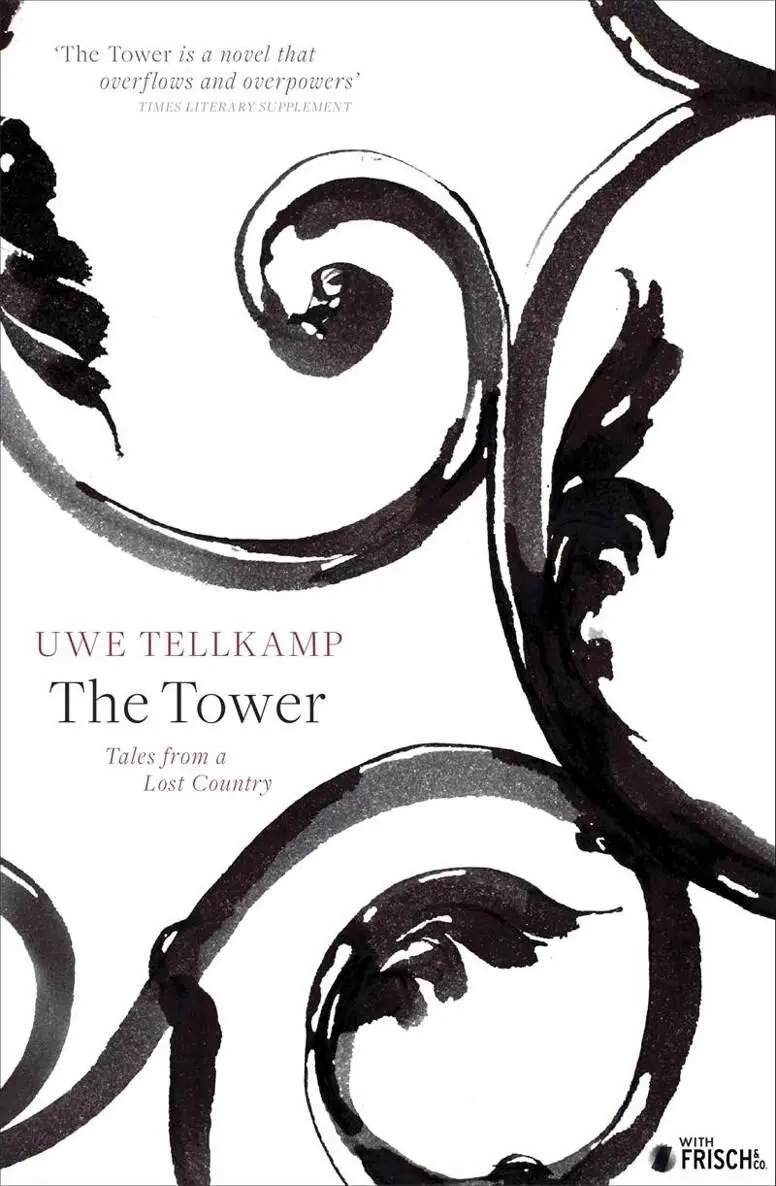
- Название:The Tower
- Автор:
- Издательство:Penguin
- Жанр:
- Год:2014
- ISBN:нет данных
- Рейтинг книги:5 / 5. Голосов: 1
-
Избранное:Добавить в избранное
- Отзывы:
-
Ваша оценка:
The Tower: краткое содержание, описание и аннотация
Предлагаем к чтению аннотацию, описание, краткое содержание или предисловие (зависит от того, что написал сам автор книги «The Tower»). Если вы не нашли необходимую информацию о книге — напишите в комментариях, мы постараемся отыскать её.
The Tower — читать онлайн бесплатно полную книгу (весь текст) целиком
Ниже представлен текст книги, разбитый по страницам. Система сохранения места последней прочитанной страницы, позволяет с удобством читать онлайн бесплатно книгу «The Tower», без необходимости каждый раз заново искать на чём Вы остановились. Поставьте закладку, и сможете в любой момент перейти на страницу, на которой закончили чтение.
Интервал:
Закладка:
‘You’ll stick to that? And if they throw you out?’
‘Now wait a minute, Verena,’ Jens said pretty sharply. ‘It was pretty good recently when you handed in an empty sheet of paper, but you did back down eventually —’
‘You must be out of your mind, Ansorge!’ Reina tapped her forehead. ‘Come on, Verena, what are we doing here?’
‘You’re right,’ Verena said after a while. They looked at each other in surprise, for she’d said it to Jens Ansorge.
Three years in the National People’s Army. Christian knew he would never forget that moment, that 24 April 1983; the day before yesterday. The three of them had been waiting outside Fahner’s office, Jens Ansorge had tried to cover up the situation with jokes, for Falk had come out, a touch paler than usual, his right hand clutching the worn, imitation-leather briefcase with VEB GISAG Schmiedeberg on that he’d got from his father; he nodded and smiled his way past them into the light-grey corridor of the senior high school that was decorated with flags and pennants for the ‘Karl Marx Year 1983’. Jens remained silent, Christian avoided Siegbert’s eye that was trying to make contact with his, none of them called after Falk, asked him to stop, to tell them what had happened; they just watched him, the way he walked: it was a little less shambling than usual, he kept close to the banister, suddenly a fissure seemed to open up between Falk and them, the ball of his hand pounding the rubberized stair rail, the thrumming noise echoing round the stairwell, the trousers that were too big for him with the green plastic comb in his back pocket and its curving handle, shaped like a drop of water, sticking up cheekily over his belt, his angular shoulders under the Free German Youth shirt: it was something they’d let go of, all three of them, though probably each in his own way, and the fissure Christian sensed came from the fact that he felt no pity. It wasn’t just because of the discussion that he would never forget that day.
It had gone differently from the way he’d expected, in an almost friendly atmosphere. Perhaps Fahner had been in a good mood because Siegbert had gone before Christian and signed up for four years, proof of the peace-loving attitude of young citizens with their consciously progressive outlook; once more there was the performance with paper and pencil and silence, the irresolute wait by the door until Fahner, not looking up, murmured ‘Hoffmann’ and, a few seconds later, as if he’d only just remembered his first name, ‘Christian’ and, again after a pause, ‘Sit down.’ Then he’d stretched out his hand and abruptly looked Christian in the face but, with the same motion, pointed to a chair, as if he’d made an error with the gesture, that could be interpreted as impermissible, or at least incompatible with his position as overall principal of the Maxim Gorki educational complex. Christian was embarrassed because Fahner looked good with his tan from holidays in Yugoslavia, his blue eyes and Benjamin Britten hair. ‘From what I hear about you, Hoffmann, you don’t seem to be making a particular effort,’ Fahner had said, his hands clasped over a sheet of paper, at the top of which Christian deciphered his name, below it notes, some typed, some handwritten; among them Christian recognized Dr Frank’s illegible scribble. ‘Medicine,’ said Fahner reflectively, ‘the most sought-after, the most difficult subject. Your marks are good, apart from mathematics. It looks like you’re heading for a disaster there. But grades alone don’t make the medic. What use to us are traitors, who attend the senior high and the university at our cost and then have nothing better to do than to think only of themselves and get out? A sense of social responsibility, Hoffmann, that’s important too. Indeed, it’s more important than anything else. The committed standpoint. The people here make it possible for you to acquire knowledge free from worry, and we have an obligation to those people: you, by doing your best — and me by helping you, if you show goodwill; and by recognizing those who turn out to be parasites, who cannot or will not comprehend what our Workers’ and Peasants’ State is doing for them, by recognizing them as that type of character and treating them for what they are. Our nation invests hundreds of thousands of marks in your training. You must show yourself worthy of that trust and that generosity. That is why I expect your assent to three years’ service in our armed forces, by which you will give back to it a little of what it is doing for you. Especially since, as agitator, you have an exemplary role for your class collective. Your response, please.’ Fahner put down the pencil, the point of which he’d been stabbing at the desk to emphasize what he was saying. Christian had intended to make some objection, to dispute at least one of Fahner’s points, to make it less easy for him, but he couldn’t, he had to agree with Fahner. He could sense that there was a decisive error in Fahner’s arguments, but he couldn’t pin it down, however hard he tried; a discussion would end up with the question as to how he could deny this country a right that all other countries probably demanded, how he could — and at this point the discussion would have become dangerous — make a distinction between the defence of the country over there and here, between the Bundeswehr and the National People’s Army. In his mind’s eye he could see the horrified expressions on the faces of his parents, who had rehearsed this discussion and possible lines of argument over several weekends; he had mentioned the undemocratic character of the armed forces over here that earned him, for the first time after many years, a clip round the ears from his father. You hold your tongue, Christian, understood! And for a moment Christian had hated his father — even though it was Fahner he ought to have been hating; but he didn’t hate him and wondered about that as, sitting in front of him on the edge of his chair, he looked past Fahner with understanding at the faces of the comrade rulers; he didn’t feel hatred, instead he felt a need to agree with Fahner and to do so not only with lukewarm words that the principal would certainly have already heard a hundred times over, their emptiness forming a repulsive combination with the zealous promptness with which they were produced; a kind of bimetallic strip, the fear flowed through it as a current, created warmth, the metal curled and the bulb of the lie lit up. Christian felt the need not to disappoint Fahner, to cooperate with him, to support him. So he avoided the empty phrases and started to lie honestly.
Pale with conviction, he said he’d been going over these arguments ever since he’d applied for a place at the senior high school during the ninth year in Dresden; he knew of a similar case there had been at the time in his class that had aroused controversy among the pupils and then it had been suggested at a school parade that a pupil’s position on that case should form part of all applications for a place at senior high school and he, Christian, had not changed his opinion since then. There’d been pro-peace demonstrations in Dresden in February — Fahner looked up, Christian had no idea why he’d mentioned this, that was taboo in Waldbrunn, why he even went on and brought in the situation in Poland — he said ‘the People’s Republic of Poland’ — and in Afghanistan, Fahner clasped his hands and frowned; given, Christian went on, that the socialist system was threatened by revanchist forces, here Fahner slid the document for the declaration of voluntary enlistment across the table, however Christian didn’t pause to sign, but suddenly found arguments for the three years’ military service that hadn’t even occurred to his father: it was good, he said, for anyone involved in an intellectual profession to live together with simple people for a while and thus get to know them better, what he learnt by this would be especially valuable for someone who wanted to study medicine, for how could one be a good doctor for people if one behaved in a snobbish, superior and condescending manner towards them; at this Fahner looked at the clock for the first time. He had been born here, Christian went on, in this country, twenty years after the war caused by Hitler’s fascism, which had annihilated so many people and had been financed by money from industrial magnates. Never again must there be a repeat of such a terrible war or the criminal regime that had brought it about; medicine was a humane science, the socialist state was humane and humane its army, which was serving peace with its armaments, as could be seen in Wilhelm Busch’s poem about the fox and the hedgehog, fully armed yet bent on peace: once you’ve had your teeth pulled out, I’ll shave my spines from tail to snout. Fahner frowned even more and gave the clock a second glance at the moment when Christian finally looked up, took the pen and signed; the furrows disappeared from Fahner’s brow, his eyes expressed, Christian wasn’t sure whether it was right, a strange mixture of feelings: friendly repugnance. ‘You can go, Hoffmann, I’m proud of your conviction. Send Ansorge in.’
Читать дальшеИнтервал:
Закладка:
Похожие книги на «The Tower»
Представляем Вашему вниманию похожие книги на «The Tower» списком для выбора. Мы отобрали схожую по названию и смыслу литературу в надежде предоставить читателям больше вариантов отыскать новые, интересные, ещё непрочитанные произведения.




Обсуждение, отзывы о книге «The Tower» и просто собственные мнения читателей. Оставьте ваши комментарии, напишите, что Вы думаете о произведении, его смысле или главных героях. Укажите что конкретно понравилось, а что нет, и почему Вы так считаете.