Uwe Tellkamp - The Tower
Здесь есть возможность читать онлайн «Uwe Tellkamp - The Tower» весь текст электронной книги совершенно бесплатно (целиком полную версию без сокращений). В некоторых случаях можно слушать аудио, скачать через торрент в формате fb2 и присутствует краткое содержание. Год выпуска: 2014, Издательство: Penguin, Жанр: Современная проза, на английском языке. Описание произведения, (предисловие) а так же отзывы посетителей доступны на портале библиотеки ЛибКат.
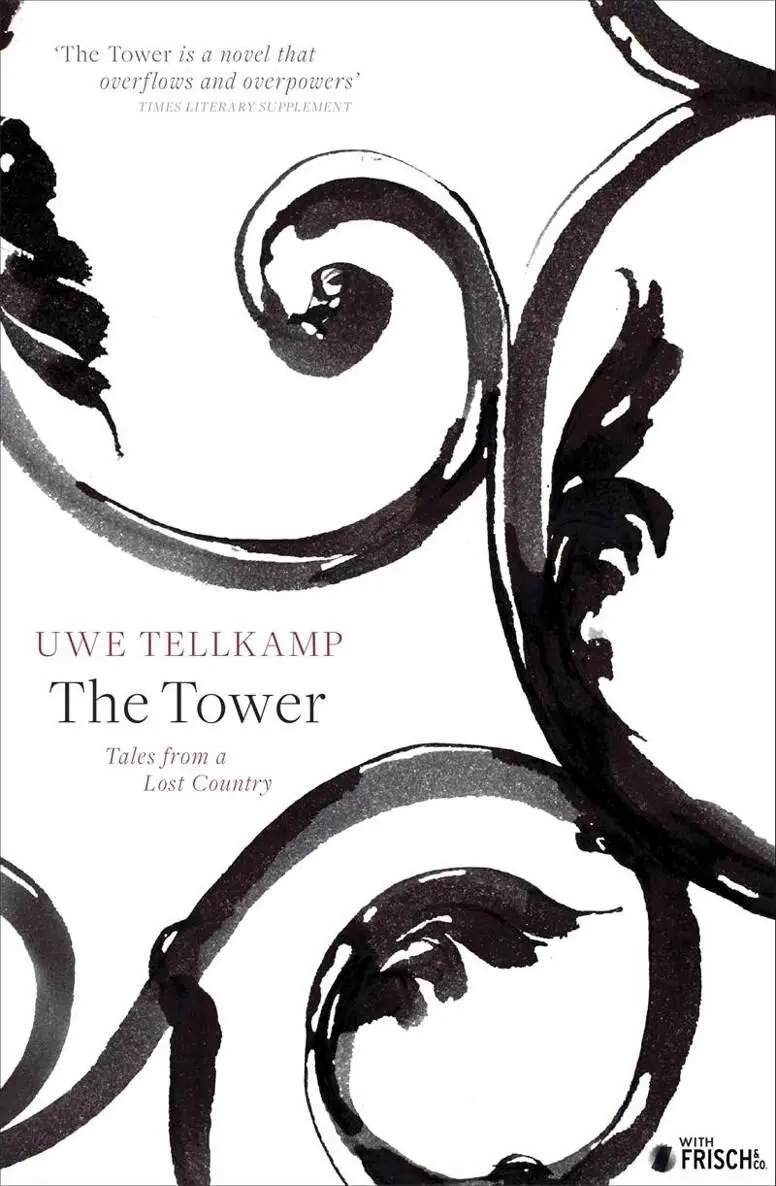
- Название:The Tower
- Автор:
- Издательство:Penguin
- Жанр:
- Год:2014
- ISBN:нет данных
- Рейтинг книги:5 / 5. Голосов: 1
-
Избранное:Добавить в избранное
- Отзывы:
-
Ваша оценка:
The Tower: краткое содержание, описание и аннотация
Предлагаем к чтению аннотацию, описание, краткое содержание или предисловие (зависит от того, что написал сам автор книги «The Tower»). Если вы не нашли необходимую информацию о книге — напишите в комментариях, мы постараемся отыскать её.
The Tower — читать онлайн бесплатно полную книгу (весь текст) целиком
Ниже представлен текст книги, разбитый по страницам. Система сохранения места последней прочитанной страницы, позволяет с удобством читать онлайн бесплатно книгу «The Tower», без необходимости каждый раз заново искать на чём Вы остановились. Поставьте закладку, и сможете в любой момент перейти на страницу, на которой закончили чтение.
Интервал:
Закладка:
‘Ooh, no one’s got anything against women’s movements,’ Jens Ansorge interjected coolly, ‘as long as they’re nice and rhythmical.’
Grunts of laughter came from Falk and Siegbert.
‘Stick to the point for once.’ Christian felt himself blush as Verena looked up, immediately turned his eyes away and stared at his shoes. ‘What do you understand by truth?’
‘Certainly not Schmidtchen Schleicher’s class standpoint —’ That was what they called Schnürchel after a character in a pop song: Schmidtchen Schleicher with the ee-lastic legs …
‘Ansorge showing off his cynical side again,’ Reina Kossmann mocked, ‘it’s just courtship display, Verena. What was it Dr Frank told us about peacocks fanning their tails?’
Jens Ansorge leant up, gave Reina a worried look, puckered up his lips. She slapped her forehead and blew a kiss back.
‘So there you are,’ said Jens, satisfied.
‘Have you heard? The commitment rigmarole is going to start up soon. Fahner wants it done before 1 May. Then we’ll get a heavy roll-call —’
‘And turn into nice and tidy, frigging statistics,’ said Jens, cutting Siegbert short. He frowned, threw the blade of grass away, suddenly serious. ‘Three wasted years … God knows how awful it’ll be, guys. “Every male graduate of this school commits himself to voluntary service in the National People’s Army,” ’ he said, imitating Fahner.
‘Not me,’ said Falk.
‘It’ll be good for your muscles.’
Christian was surprised at how coolly merciless women could be, especially since Reina then pinched Falk’s biceps. Women for whom we did everything — oh the heroes in books, in films! — who mourned us when we fell in battle, who before that wept handkerchiefs full of tears for their beloved on the famous platform to the hiss of steam from the engine preparing to depart — and then this callousness from Reina, whose pale, delicate features with the mouth turned down slightly to the left, he liked looking at –
‘Hey, you look horrified,’ she said, brushing back her hair in a challenging gesture. ‘We don’t often see you look like that. I must have been really good.’
‘She’s keen on you, Chrishan,’ Jens drawled, holding up his hand for a high five with Falk.
‘Get lost, you idiot,’ Reina snapped, throwing up her arm. ‘I don’t want to catch pimples.’
A thrust with a bare bodkin; Siegbert and Jens surveyed Christian, he had the feeling his face had been set on fire, tried a smile.
‘You can leave my muscles out of it,’ said Falk. ‘I’m not going to enlist. Three years … I’d have grey hair by the time I got out. And then … all those tanks and guns … I’m not going to shoot at anyone.’
‘Just let Chief Red Eagle hear that,’ Reina said quietly and Christian realized she’d said it to him as a kind of offer in the group that had fallen silent, an offer he rejected because he didn’t see why he should make the effort to break the silence; he stared down at the bay below them, wondering whether it would be worth coming fishing here with Ezzo and Meno, he’d have to join the local section of the German Angling Association; funny, these nicknames. They had inherited the name ‘Red Eagle’, as they called Herr Engelmann, their civics teacher and principal of the senior high school, from long-departed generations of pupils and accepted it unquestioningly. Did that indicate their lack of imagination or the aptness of the name — Christian decided in favour of the latter. It was true that when Engelmann spread his arms wide and told them, his lips moist with enthusiasm and his fiery red jug-nose shining above them, about the Great Socialist October Revolution, in which his father had taken part under Trotsky’s leadership, when he started to wave his hands, his eyelids behind his thick lenses drooping so he could immerse his gaze in the great times of the past, at such moments Engelmann did resemble an old, ponderous eagle that swept round the class dictating April Theses with words appearing to fall out of his colourless, bubbling chain-smoker’s voice and plop like early plums on the pupils’ cowering heads.
‘First Red Eagle will put the squeeze on you, then Fahner … I’m going away for four years anyway.’
Verena stared at Siegbert in alarm; he was picking up pebbles and, unmoved, flicking them up into the bright blue sky.
‘Four years … Are you crazy?’ Jens scrutinized Siegbert as if he’d been wearing a mask all the time that had now slipped to reveal the face of a monster. Siegbert smiled coolly.
‘Just realistic. I want to be a naval officer. I was in Rostock last summer. They don’t take anyone who hasn’t done a period of service in the People’s Navy.’
‘I thought you wanted to join the merchant navy?’
‘Unfortunately that doesn’t make any difference, Montecristo.’
‘The Count of Montecristo.’ Her lips pursed affectedly, Verena imitated Christian’s habit of brushing his too-long quiff out of his face: she put her head on one side, turned her eyes up and, with an exaggeratedly camp gesture, pushed back an imaginary quiff, a kind of habitual tic that he had and that he would have to get rid of immediately if it looked the way Verena had demonstrated. ‘What an appropriate title for His Dresden Highness —’
‘Shut it,’ Christian growled. The two girls snorted with laughter.
‘Take it easy, old man,’ Jens said soothingly, ‘the women are going through puberty and the nickname won’t last anyway. Much too long and too much trouble to say. — But, my God, Siggi: four years!’
Siegbert shrugged his shoulders. ‘I want to go to sea. They want four years in the navy. So I go into the navy for four years.’
‘Oh, great,’ Verena said. There was a touch of contempt, it seemed to Christian, in her voice, a touch of anger. He thought about Siegbert’s answer, as the others appeared to be doing, they’d fallen silent. He imagined Fahner, who summoned the boys one by one to the principal’s office, which was guarded by his wife at a heavy Optima typewriter; Fahner would definitely be — as he always was when you turned the handle after he had barked ‘Yes!’ — sitting at his desk, writing without looking up, so that you had plenty of time to observe the light cut into strips by the Venetian blinds on the highly polished PVC floor, the severe, shadowed faces of Wilhelm Pieck, Walter Ulbricht and the female Minister of Education on the wall over Fahner’s head, not knowing what to do, for Fahner didn’t say ‘Come in’ or ‘Sit down’; Fahner said nothing at all, just sat there writing, in his elegant suit with the silk oversleeves in the blue of the Free German Youth that he would eventually, with measured movements of his fingertips that spoke of conflicting thoughts, take off and place on the table beside the needle-sharp pencils arranged precisely according to size. In the music class with Herr Uhl they’d recently talked about the English composer Benjamin Britten, and Christian had been amazed at the similarity between Britten’s head and Fahner’s: the same profusion of caterpillar-like locks, the same boyishly soft features; the similarity was so pronounced that Christian had done some research to see whether Britten had had a son in the Erzgebirge … his research had produced no result.
Verena broke the silence. ‘You could just as well say: I want to go to sea, they demand that I kill a person — so I’ll kill a person.’
‘Gentlemen,’ said Jens.
‘Just a minute,’ Siegbert said. ‘I’m the one this is about, I’m the one taking on the four years. Anyway, it’s easy enough for you to talk, Verena, it’s not a problem for you, there’s no military district command awaiting you.’
‘Killing people … that can happen to you in the forces … They say the army units on the border are still on high alert and if you end up there … Enlisted today, invading Poland, gun in hand, tomorrow … Or in Angola. My father says Castro’s troops are supposed to be there, the Russians as well … You can count me out,’ Falk said.
Читать дальшеИнтервал:
Закладка:
Похожие книги на «The Tower»
Представляем Вашему вниманию похожие книги на «The Tower» списком для выбора. Мы отобрали схожую по названию и смыслу литературу в надежде предоставить читателям больше вариантов отыскать новые, интересные, ещё непрочитанные произведения.






Обсуждение, отзывы о книге «The Tower» и просто собственные мнения читателей. Оставьте ваши комментарии, напишите, что Вы думаете о произведении, его смысле или главных героях. Укажите что конкретно понравилось, а что нет, и почему Вы так считаете.