Uwe Tellkamp - The Tower
Здесь есть возможность читать онлайн «Uwe Tellkamp - The Tower» весь текст электронной книги совершенно бесплатно (целиком полную версию без сокращений). В некоторых случаях можно слушать аудио, скачать через торрент в формате fb2 и присутствует краткое содержание. Год выпуска: 2014, Издательство: Penguin, Жанр: Современная проза, на английском языке. Описание произведения, (предисловие) а так же отзывы посетителей доступны на портале библиотеки ЛибКат.
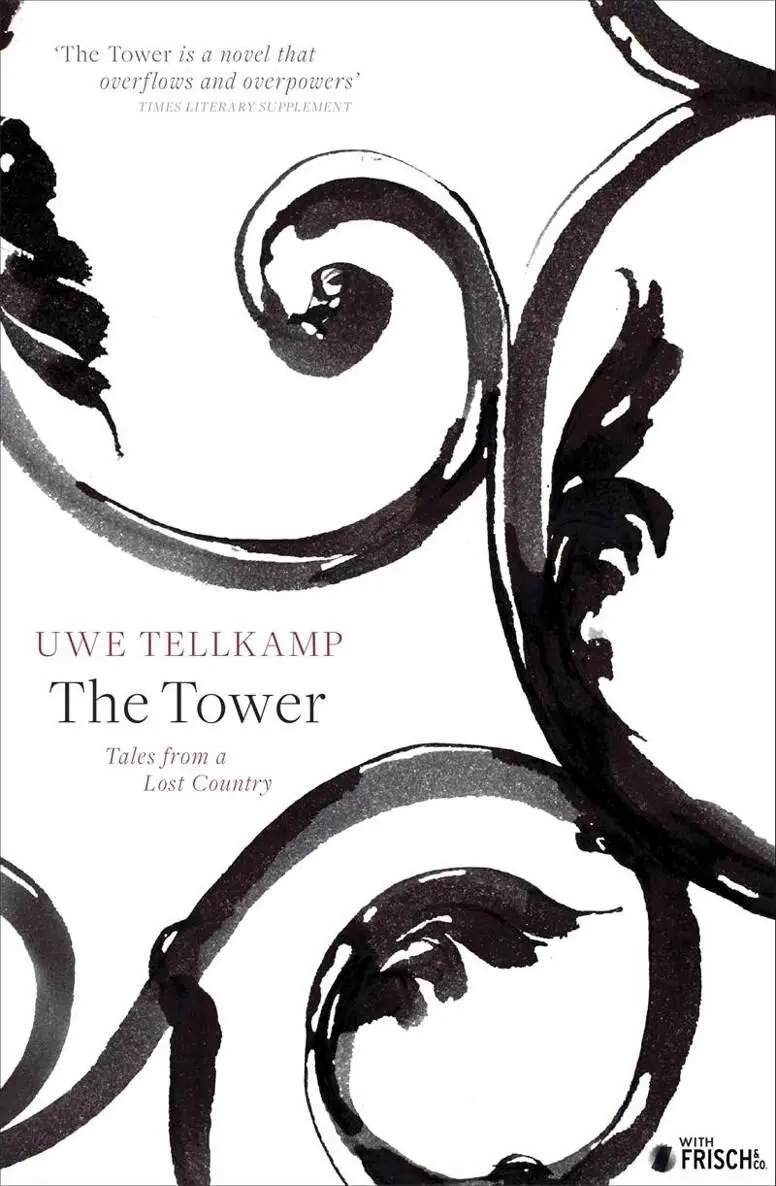
- Название:The Tower
- Автор:
- Издательство:Penguin
- Жанр:
- Год:2014
- ISBN:нет данных
- Рейтинг книги:5 / 5. Голосов: 1
-
Избранное:Добавить в избранное
- Отзывы:
-
Ваша оценка:
The Tower: краткое содержание, описание и аннотация
Предлагаем к чтению аннотацию, описание, краткое содержание или предисловие (зависит от того, что написал сам автор книги «The Tower»). Если вы не нашли необходимую информацию о книге — напишите в комментариях, мы постараемся отыскать её.
The Tower — читать онлайн бесплатно полную книгу (весь текст) целиком
Ниже представлен текст книги, разбитый по страницам. Система сохранения места последней прочитанной страницы, позволяет с удобством читать онлайн бесплатно книгу «The Tower», без необходимости каждый раз заново искать на чём Вы остановились. Поставьте закладку, и сможете в любой момент перейти на страницу, на которой закончили чтение.
Интервал:
Закладка:
‘A close-run thing, Professor.’ — ‘Worth it, though.’ — ‘Have you a list of who gets to read what when?’ A mouthful of tea from the Thermos. A comparison of the contents of the plastic bags. Check the coats. Take a deep breath. Back for round two.)
It was the year of the apocalypse. Almost all the books on display dealt with global catastrophes. The forests were dying. Rockets were being deployed, Pershing and Cruise missiles, there was SALT II and a programme for a war of the stars; the total of explosives in the world was sufficient to blow up the Earth several times. The mood at the Book Fair was gloomy — editors, publishers, authors: all were grimly determined to perish. One raised his glass, hoping he would at least see the end of the world in the evening glow outside his cottage in Tuscany: You don’t feel so afraid then.
When editors from Western publishers came to the Hermes stand, Schiffner would wave them over, give his enterprising smile and whisper, pushing the intimidated Judith Schevola, whom he’d summoned to the Book Fair, forward, ‘One of our most talented writers. We’re going to hear a lot more from her.’ But the editors would just lower their heads sadly and sip the red wine resignedly. Schiffner would pat Schevola on the shoulder and tell her it meant nothing. But the apocalypse made people hungry, the bars and restaurants were crowded, no places left in Auerbachs Keller, Zills Tunnel, the Paulaner restaurant. It was only when they tried the Jägerschänke, not far from the Fair building, that the members of an important Frankfurt publishing house managed, with freely convertible arguments, to persuade a waiter to release the regulars’ table with the ‘Reserved’ sign, in the corner next to a stove, surmounted by a stuffed capercaillie. Hermes-Verlag had been invited: Schiffner was a friend of the Frankfurt publisher Munderloh; they’d both written theses on Hermann Hesse and in a letter to Munderloh, which mainly concerned typographical errors and two passages with incorrect German in a book from their autumn programme five years previously, he had told him that his whole Frankfurt publishing house was nothing other than the Glass Bead Game writ large. The two men formally opened the Book Fair drinking session.
Schevola, taking nervous puffs at her cigarette, was grateful to Meno for offering her a chair next to him. Eschschloraque, the playwright, came in, giving Meno the opportunity to observe him. There was a certain unproletarian grandeur about him. Despite the cool conditions in Leipzig at that time of the year and despite the air that was dirty from the exhaust fumes and brown-coal particles, which was the reason why one seldom saw people in light-coloured clothing in Leipzig, Eschschloraque was wearing a lightweight cream suit of a cut and quality that made its bespoke tailoring apparent. He had a trench coat over his arm and a red cashmere scarf wound several times round his neck, the ends of which, with their long fringes, hung down elegantly, enveloping the writer’s slim figure in a way that was both becoming and discreet. Enveloping — the word seemed appropriate. No, the ends of his scarf did not ‘flatter’ and certainly did not ‘bring out’ Eschschloraque’s slim figure. He took off his hat, stood in the half-light of the large chandelier at the entrance, upright, proud, not part of the noisy, beer-drinking, cutlery-clattering tavern-throng. He scrutinized one table after the other, calmly but with the swift assessment betokening the alertness of an experienced observer. He was still holding his hat in his hand, his right arm half raised in a gesture characteristic of distinguished petitioners or actors who have grown old and know what success they have had but not whether the person they’re facing does, and now, with this politely nonchalant gesture, are attempting to conceal the fact that they have to beg for a part less from the other person than from themselves and, since their internal commentator is not open to bribery and makes ironic remarks, at least execute the gesture perfectly: futile but perfect — they owe that to themselves. Eschschloraque stepped back a little, perhaps he felt the spot where he was standing was too bright: it could be indiscreet to draw attention to oneself in that way, it was platitudinous to say the least; a gentleman does not intrude and it would have been an intrusion if Schiffner or Redlich had felt obliged to leap up and greet him, the author of dramas and poems in the classical style (What does the ‘classical’ style mean here? Meno wondered, for him there is no other style, one ought to say: the author of dramas that have style), profusely and with attention-drawing ceremony. At the same time Eschschloraque could see better in the gloom, wasn’t dazzled. Slowly he lowered his hat. It was a brown Borsalino, an expensive hat scarcely obtainable in shops in this country; Meno remembered having seen a similar one in Lamprecht’s hat shop, it cost 600 marks and was reserved for Arbogast. A waiter jostled Eschschloraque and the way he stood there at that moment: trench coat over his left arm, hat in his right hand, a look of uncertainty in his eyes for a few seconds, Meno felt a sudden upsurge of sympathy for this man who was surrounded by a known but well-glossed-over aura of loneliness. In order to give a reason for his movement (that it was ‘giving a reason’ seemed indisputable to Meno), he gently tapped his hat with his left hand to dust it, accepted that this made his trench coat waggle rather a lot (the unsatisfactory gesture would distract attention all the more because of its unsatisfactory nature), shook his hat as if there were raindrops or snowflakes on the brim, but since it had been neither raining nor snowing and a possible observer would know that, he once more corrected his improvised gesture by rubbing his fingers over the hatband, as if he’d just noticed dust on it. At that moment he seemed to sense that he was being observed, not seen but observed, by someone who knew him, for he abruptly looked across at Meno’s table and, as he passed through the light, he made no attempt to conceal himself: to conceal himself would have been the reaction of an inexperienced person who thus betrayed his suspicion. He went to the coat stand and hung his hat on the hook beside Meno’s, stopped short, looked round quickly, took the other hat, read the name on the inside. His head shot up, Eschschloraque eyed Meno coolly, slowly hung the hat back on the hook. There were no seats free at the table and Meno waited eagerly to see how Eschschloraque would solve the problem. He strolled over, compensating for his uncertainty with exaggerated body movements, staring at an imaginary point — as if he didn’t want another’s eyes to meet his, arousing embarrassment, shame, perhaps even annoyance at their discourtesy in failing to give the dramatist Eschschloraque preferential treatment. The people from the important Frankfurt publishing house had their backs to him. Munderloh was holding a glass of raki, thumped it on the table in the course of an argument with Schiffner, licked the drops off his wrist. Schevola and Josef Redlich had noticed Eschschloraque, Redlich nudged Schiffner, he waved. Now Eschschloraque was at the table, in a kind of stand-to-attention posture, no one stood up. The conversations died away.
‘Could you possibly move up closer?’ Eschschloraque asked with a smile, a smile he managed very well, Meno thought. It was slightly sceptical, with an admixture of modesty and dignity, with no hurt pride and no condescension. Room was found for him on the bench, in the corner where Meno and Schevola were at right angles to him, beneath the carved figure of the nightwatchman with his lantern, French horn and eyes eaten away by woodworm. Schevola leant over to Meno, whispered, ‘Have you read the article he published about your book?’
Читать дальшеИнтервал:
Закладка:
Похожие книги на «The Tower»
Представляем Вашему вниманию похожие книги на «The Tower» списком для выбора. Мы отобрали схожую по названию и смыслу литературу в надежде предоставить читателям больше вариантов отыскать новые, интересные, ещё непрочитанные произведения.


Обсуждение, отзывы о книге «The Tower» и просто собственные мнения читателей. Оставьте ваши комментарии, напишите, что Вы думаете о произведении, его смысле или главных героях. Укажите что конкретно понравилось, а что нет, и почему Вы так считаете.