Uwe Tellkamp - The Tower
Здесь есть возможность читать онлайн «Uwe Tellkamp - The Tower» весь текст электронной книги совершенно бесплатно (целиком полную версию без сокращений). В некоторых случаях можно слушать аудио, скачать через торрент в формате fb2 и присутствует краткое содержание. Год выпуска: 2014, Издательство: Penguin, Жанр: Современная проза, на английском языке. Описание произведения, (предисловие) а так же отзывы посетителей доступны на портале библиотеки ЛибКат.
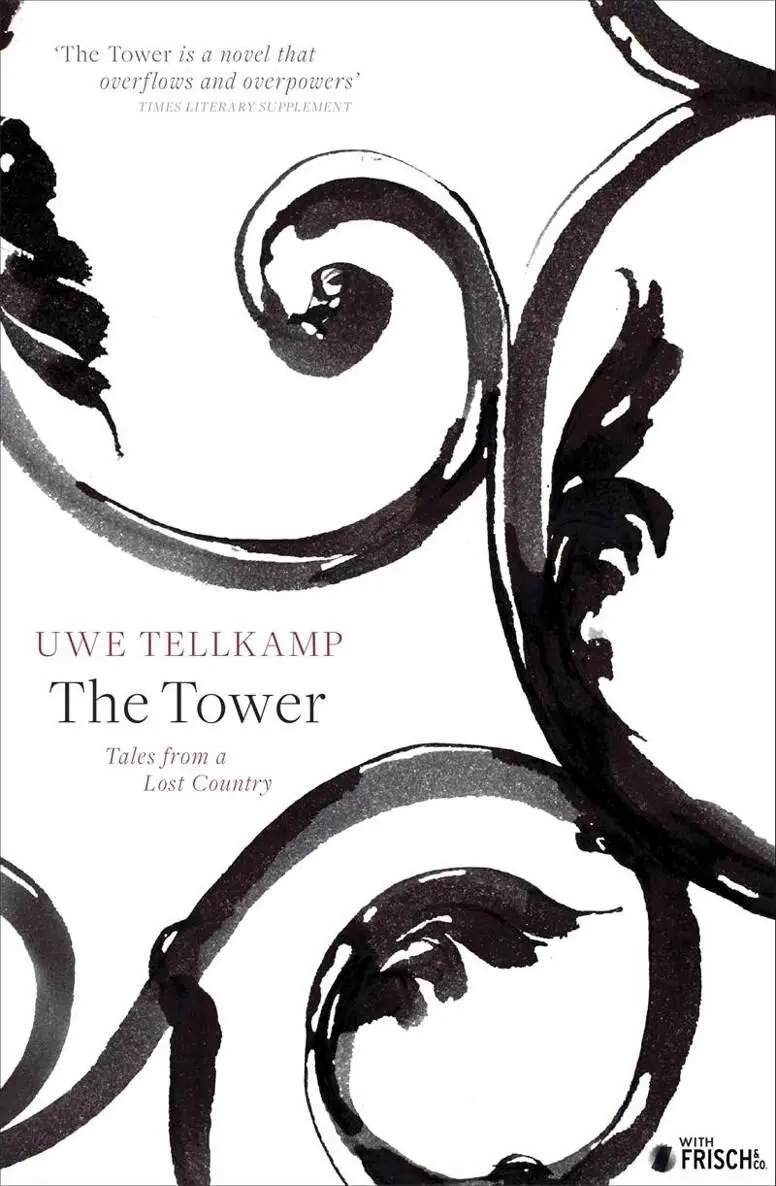
- Название:The Tower
- Автор:
- Издательство:Penguin
- Жанр:
- Год:2014
- ISBN:нет данных
- Рейтинг книги:5 / 5. Голосов: 1
-
Избранное:Добавить в избранное
- Отзывы:
-
Ваша оценка:
The Tower: краткое содержание, описание и аннотация
Предлагаем к чтению аннотацию, описание, краткое содержание или предисловие (зависит от того, что написал сам автор книги «The Tower»). Если вы не нашли необходимую информацию о книге — напишите в комментариях, мы постараемся отыскать её.
The Tower — читать онлайн бесплатно полную книгу (весь текст) целиком
Ниже представлен текст книги, разбитый по страницам. Система сохранения места последней прочитанной страницы, позволяет с удобством читать онлайн бесплатно книгу «The Tower», без необходимости каждый раз заново искать на чём Вы остановились. Поставьте закладку, и сможете в любой момент перейти на страницу, на которой закончили чтение.
Интервал:
Закладка:
The three doctors walked together in silence, deep in thought — what was there to discuss? They’d known each other for a long time and at work it was not usual, unless you were friends like Richard and Weniger, to cross a certain boundary in conversation. Private matters were kept out of it, not through lack of interest but through a sense of tact that appeared as fellow feeling which, according to an unwritten code, would have been violated by too confidential a conversation between colleagues. You knew whom you were dealing with, you knew who you were (or appeared to be), gave a silent nod and that was all, that was sufficient.
They heard hurried steps behind them, Nurse Wolfgang waved to Prokosch.
‘Where?’ he asked.
‘Ward 9D. Your on-call presence is required in Dermatology. The god of night duty doesn’t like sleep.’
‘There’s no point in kicking against the pricks.’ Prokosch shrugged his shoulders in resignation. ‘We’ll see each other later, I should think. Off we go, then.’
An ambulance was approaching from the Academy gate, but without its blue light; they watched where it was going; it turned off to the right beyond the car park, heading for the Stomatology Clinic.
‘Not for us,’ Weniger said. They walked slowly back along the road.
‘May I ask you something, Manfred?’
‘Go ahead.’
‘Have you sometimes thought of leaving?’
Weniger gave Richard a quick glance, then carefully looked all round. They moved to the middle of the road.
‘I imagine we all have. — At the last Gynaecological conference I was offered a post.’
‘I didn’t mean that.’
‘They’re not good thoughts.’
‘But you get them.’
‘Every person’s different. I don’t think you can live with them.’
‘Did you never think, when you were a student, what it’s like to be a father, to have children with a woman, bring them up —’
‘I can’t remember. I don’t think so.’
‘To love one woman in all —’
‘You know that.’ Weniger stared into the darkness.
‘And —’ Richard broke off. A woman was approaching; even from a distance he could tell it was Josta. His first impulse was to turn off onto one of the side paths, but she was looking at him and Weniger had seen her as well. ‘Still here this late, Frau Fischer? Is there something special going on in Administration — something we ought to know about?’
‘No,’ she said tersely, not using his name or saying good evening. ‘Just a lot of work. But nothing special. Construction plans and applications, Herr Doktor.’
‘How is your daughter?’
‘Oh, she’s in the middle group in kindergarten. She loves drawing. I think she ought to go and see the paediatrician, she keeps complaining about earache.’
‘Who are you with?’
She named a name. She avoided looking at Richard.
‘Are you happy with him?’
‘Well, it’s a general hospital, there are long waiting lists and I don’t want it to drag on —’
‘I’ll have a word with Professor Rykenthal, if you’re agreeable. Give me a call tomorrow.’
‘I’ll do that. Thank you, Herr Doktor. — But I won’t hold you up any longer. I wish you a quiet night. Goodbye.’
‘Pretty woman,’ Weniger said when she’d gone. ‘If only I were twenty years younger — and’ — he ran his hand over his bald head — ‘wasn’t as hairy as an ape. God, I can still see her little girl, umbilical cord cut and wrapped up warm, and her face when the midwife gave her the baby. That’s always the best moment.’ Weniger looked at his hands. ‘Then you know why you’re here and what these paws are for. I’m sure it’s the same with you.’
‘Was it a difficult birth?’
‘Yes, pretty difficult. But she didn’t say a word. You don’t often get that nowadays. You used to, out in the country.’
‘We were interrupted.’
‘You want to stick to the topic? — We really ought talk about it some other time, not while we’re on duty and can get called away any moment and have to break off things that would be better made crystal clear.’
‘Agreed,’ Richard said after a cautious glance at Weniger.
‘No, no, that’s OK, no one’s calling us yet,’ Weniger replied with a faint smile, ‘and we’ve known each other long enough to be able to set what’s being said against the situation in which it’s being said.’
‘You’re right there, of course.’
‘I should think so!’ Weniger exclaimed cheerfully. ‘But to go back to what you were saying … You can think about it, but that’s merely theoretical. Thoughts don’t have consequences; you can play with them, like children with building blocks, and if you build a house with them that you don’t like, then you change it … Tell me, aren’t you getting cold? I can lend you my coat.’
‘No, I don’t feel cold … It’s fairly warm.’
‘I saw it was eight degrees on the thermometer just now. — You can change the house any way you like, and with no consequences.’
‘Which isn’t possible in real life.’
‘It’s perhaps possible, Richard, but some people have the problem that they’re never satisfied with the houses they build, they keep building houses and discarding them, they do it their whole life long and never have a house that’s finished, while their neighbour, to whose house they paid no attention because it’s crooked and perhaps not very distinctive, because it’s made of cheap materials, lives in a house that’s finished —’
‘A nice way of describing renunciation.’
‘No, I wouldn’t say that. He’s made a decision, a decision to make the best of what he’s been given — and not to waste his time looking for things he can’t have.’
‘How does he know he can’t have them?’
‘By a sober assessment of his situation.’
‘How do you bring up your children?’
Weniger didn’t answer immediately. ‘I tell them they’re free.’
‘Free? In this country?’
‘In that sense I don’t think people are free anywhere. What I mean is free to find out about themselves — and to build their house. — I have to say, you don’t look well.’
‘Could be. I’ve not been sleeping very well.’
‘It happens to all of us,’ Weniger said with a smile.
‘For example, when something happens to you that makes you furious; something that, let’s say, gives you the impression you’re pretty helpless —’
‘Has something given you that impression?’
‘No, I just mean … As an example, purely as an example to put these thoughts in context. So, if something like that happened to you, would it be better to hit out at once — or to wait and see?’
‘It depends very much on what kind of thing has happened to give you that impression. And what you mean by “hit out”. In this country the opportunities for “hitting out” must be limited. If you aren’t one of them.’
‘Just a minute, I’ve probably not put it very well. “Hit out” really does sound a bit over the top —’
‘Another time, perhaps,’ Weniger said calmly.
25. The Leipzig Book Fair
Philipp Londoner lived in a seventy-square-metre apartment in a working-class district of Leipzig. The building bordered on a canal, the water of which had been turned gelatinous by the effluent from a cotton mill. Dead fish were floating in it, slowly decomposing, flakes of white flesh sliding off the bones; single fins, blind eyes were swept against the bank where they bobbed on the grey foam with the bare elm branches stretching over it, occupied by thousands of crows that found rich pickings there. The inhabitants of the district had a name for the factory: ‘the Flock’; within a radius of several kilometres the streets were covered in cotton flocks that were trodden down, forming a slimy, decomposing crust in which the smell of all the dogs of Leipzig seemed to be concentrated. Drifting cotton got caught in the undergrowth, blocked the chimneys in the summer, floated up in the breezes warmed by the extracted air, formed whirling veils over the roofs, drifted down into puddles and onto railway lines, so that passengers could tell with their eyes closed when the train entered the district: suddenly the sounds were muffled and the general murmur of conversation in the compartment stopped.
Читать дальшеИнтервал:
Закладка:
Похожие книги на «The Tower»
Представляем Вашему вниманию похожие книги на «The Tower» списком для выбора. Мы отобрали схожую по названию и смыслу литературу в надежде предоставить читателям больше вариантов отыскать новые, интересные, ещё непрочитанные произведения.







Обсуждение, отзывы о книге «The Tower» и просто собственные мнения читателей. Оставьте ваши комментарии, напишите, что Вы думаете о произведении, его смысле или главных героях. Укажите что конкретно понравилось, а что нет, и почему Вы так считаете.