Uwe Tellkamp - The Tower
Здесь есть возможность читать онлайн «Uwe Tellkamp - The Tower» весь текст электронной книги совершенно бесплатно (целиком полную версию без сокращений). В некоторых случаях можно слушать аудио, скачать через торрент в формате fb2 и присутствует краткое содержание. Год выпуска: 2014, Издательство: Penguin, Жанр: Современная проза, на английском языке. Описание произведения, (предисловие) а так же отзывы посетителей доступны на портале библиотеки ЛибКат.
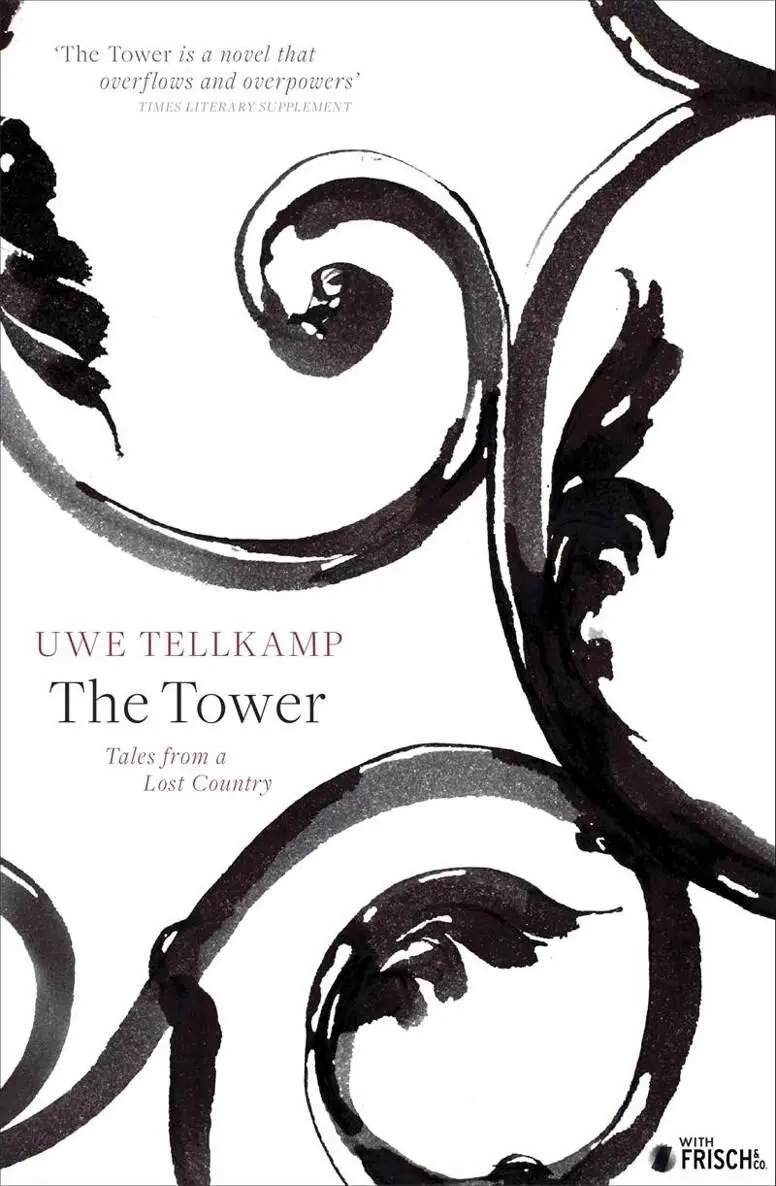
- Название:The Tower
- Автор:
- Издательство:Penguin
- Жанр:
- Год:2014
- ISBN:нет данных
- Рейтинг книги:5 / 5. Голосов: 1
-
Избранное:Добавить в избранное
- Отзывы:
-
Ваша оценка:
The Tower: краткое содержание, описание и аннотация
Предлагаем к чтению аннотацию, описание, краткое содержание или предисловие (зависит от того, что написал сам автор книги «The Tower»). Если вы не нашли необходимую информацию о книге — напишите в комментариях, мы постараемся отыскать её.
The Tower — читать онлайн бесплатно полную книгу (весь текст) целиком
Ниже представлен текст книги, разбитый по страницам. Система сохранения места последней прочитанной страницы, позволяет с удобством читать онлайн бесплатно книгу «The Tower», без необходимости каждый раз заново искать на чём Вы остановились. Поставьте закладку, и сможете в любой момент перейти на страницу, на которой закончили чтение.
Интервал:
Закладка:
‘Your student friend managed it.’
‘He was a serious swimmer, Anne, took part in competitions. He lived alone and knew exactly what he was taking on. If he’d been caught he would have been the only one to take the consequences. Do you know that they falsify our maps? A patient told me recently. According to our maps, you think you’re in the Federal Republic — in reality you’re still in the GDR. Rivers don’t go where they’re supposed to go according to the map, in the border area the roads and paths aren’t marked —’
‘Yugoslavia —’
‘Anne.’
She burst into shrill laughter. Richard looked at her. ‘Let’s go home.’
They lay next to each other, awake, in the beds they’d put together when they were first married; each listening to the other’s breathing.
24. In the clinic
He was still fascinated by the noises in the building; sometimes he would open the door of his office to listen and the gap would seem to him like the bell of an ear trumpet, like the connection between the middle ear and the pharynx, lined with mucus and cilia (it reminded him that he ought to get the paediatrician to have a look at Lucie, she kept swallowing and complaining that it hurt; protracted inflammation of the middle ear was dangerous); once he’d opened the door, he would close his eyes and listen, for you could not only tell the things that were going on in the clinic from the noises, but also the mood in which they were taking place, what the atmosphere was like and how, as if the clinic were a collective organism like a swarm of bees, it would change with the slightest disturbance, the least excitement. It was the time when the clinic prepared itself for the evening; an in-between time: the day’s work was now largely over; the patients who had been operated on were back in their beds, had been examined during the afternoon rounds and had had the attention they needed, the early-shift nurses and the patients’ visitors had left; there were no more lectures or seminars at this hour either. The solidly built carts that looked like cabin trunks, with the insulated boxes for hot meals, and that the nurses pushed from room to room to distribute the food to the patients, were not yet clattering along the PVC of the clinic’s corridors. The castanet click-clack of head nurse Henrike’s clogs doing the evening inspection tour of her realm could still not be heard. She lived alone with her mother, who needed looking after, and her son, who had broken off two apprenticeships, in a cramped apartment on Augsburger Strasse, not 500 metres from the Academy, a chubby, maternal-looking woman who had shown childlike delight at the Hufeland Medal that had been awarded her on ‘Health Service Day’. Phones rang, washing carts rumbled along in the bowels of the building; the doors of the offices beside his banged open and shut. Most of his colleagues were still there, they’d finished their visits to the wards and would now be going to the laboratories, to the libraries, or writing assessments or reports on operations. Richard had gone to his room to have a rest, it had been an exhausting day. He had been in the operating theatre from seven in the morning until five in the evening and had had no more than three cups of coffee and the sandwiches Anne made for him in the morning. He was on duty but he wouldn’t be called for every minor matter; Dreyssiger and Wernstein were experienced specialists, he could rely on them.
He lay down on the examination couch, rolled over and over. Then he lay on his back and stared up into space. Ambulances arrived, sirens wailing, he heard an ambulance of the Emergency Medical Services thunder up the hospital ramp: cries, hurried steps, the clatter of trolleys. They’d call him if he was needed. He couldn’t relax, stood up. He felt dazed with dizziness and tiredness, he went over to the window for a breath of fresh air. He grasped the window latch and leant his forehead against the glass. Then he tried some knee bends, perhaps his tiredness came from a lack of movement, the unhealthy posture in which one was frequently obliged to carry out an operation, recently he had often become exhausted very quickly. He sat down at his desk, on which a few specialist periodicals lay open. He was interested in an article on a new method of operating on Dupuytren’s contracture, a progressive condition affecting the tissue of the palmar fascia; he had intended to study it thoroughly, since the disease seemed to be increasing in frequency. In the last three months alone he had had fourteen outpatients suffering from the condition. Eventually it could lead to the hand being completely deformed, nodules developed in the connective tissue, causing it to shorten; in the final stage of the illness the hand cannot be opened. Who were the authors of the article … Of course, the Hamburg group under Buck-Gramcko, the high priest of hand surgery. He could have bet it would be him. It was the fifth publication since January he’d seen by that team and it was still early in the year. And what did they do here, in this country? Mostly they just copied what they did over there, they evaluated the developments but didn’t determine them themselves, they thought about how other surgeons’ results could be applied creatively to conditions over here; that is: they improvised … He read the few sentences from the abstract of the study. When he’d done so he knew that they’d be unable to use any of the results because they lacked the technical resources. The old story. And they were surprised that people got out … Why hadn’t he got out while there was still time? He couldn’t concentrate any more, pushed the article to one side. How tired he was, he couldn’t even be bothered with his hobby, hand surgery. He couldn’t be bothered with anything since his discussion with Anne … But he mustn’t let himself go, he’d always abominated that. If the world consisted entirely of people who let themselves go as soon as things got difficult, they’d still be living in caves as hunter-gatherers … A couple of coffees and a decent meal would be enough to perk him up again, he decided. As he went to close the window, he saw Weniger coming from the Gynaecological Clinic.
‘Richard.’ Weniger waved. ‘We’re both on call, great! Perhaps we can chat for a bit.’
‘Aren’t you going home?’
‘Then the duty assistant would be left on her own. We’ve got a few difficult births due. Once it starts they’ll fetch me anyway, so I might as well stay here.’
‘Are you coming over for a bite to eat?’ The suppers that the nurses made for those on duty in the Surgical Clinic had a good reputation in the Academy.
‘That’s exactly what I was going to do, old chap.’
‘I just want to go round the wards first —’
‘I’ll join you, if you have no objection.’
They told Casualty they’d be doing a round together. These rounds with colleagues from other clinics were standard practice in the Academy; in that way you learnt the most important innovations and problems of the other field from an expert, as if in a private lecture. In general the hospital routine didn’t leave enough time to keep staff informed about the state of things in neighbouring disciplines.
First of all they went round the general surgical wards, for Richard hardly knew the patients there at all. If he was called during the night, it was useful for him to have at least a rough idea about them. From the duty rosters he saw that capable nurses would be on night duty. He gave the late-shift nurses a routine and preoccupied ‘Good evening’, got them to show him the files of the tricky cases and studied them while Weniger joked and chatted. ‘Well then, Karin, how’s the house coming along?’ The nurses emptied the medicine basket, set out the evening doses.
Читать дальшеИнтервал:
Закладка:
Похожие книги на «The Tower»
Представляем Вашему вниманию похожие книги на «The Tower» списком для выбора. Мы отобрали схожую по названию и смыслу литературу в надежде предоставить читателям больше вариантов отыскать новые, интересные, ещё непрочитанные произведения.












Обсуждение, отзывы о книге «The Tower» и просто собственные мнения читателей. Оставьте ваши комментарии, напишите, что Вы думаете о произведении, его смысле или главных героях. Укажите что конкретно понравилось, а что нет, и почему Вы так считаете.