Uwe Tellkamp - The Tower
Здесь есть возможность читать онлайн «Uwe Tellkamp - The Tower» весь текст электронной книги совершенно бесплатно (целиком полную версию без сокращений). В некоторых случаях можно слушать аудио, скачать через торрент в формате fb2 и присутствует краткое содержание. Год выпуска: 2014, Издательство: Penguin, Жанр: Современная проза, на английском языке. Описание произведения, (предисловие) а так же отзывы посетителей доступны на портале библиотеки ЛибКат.
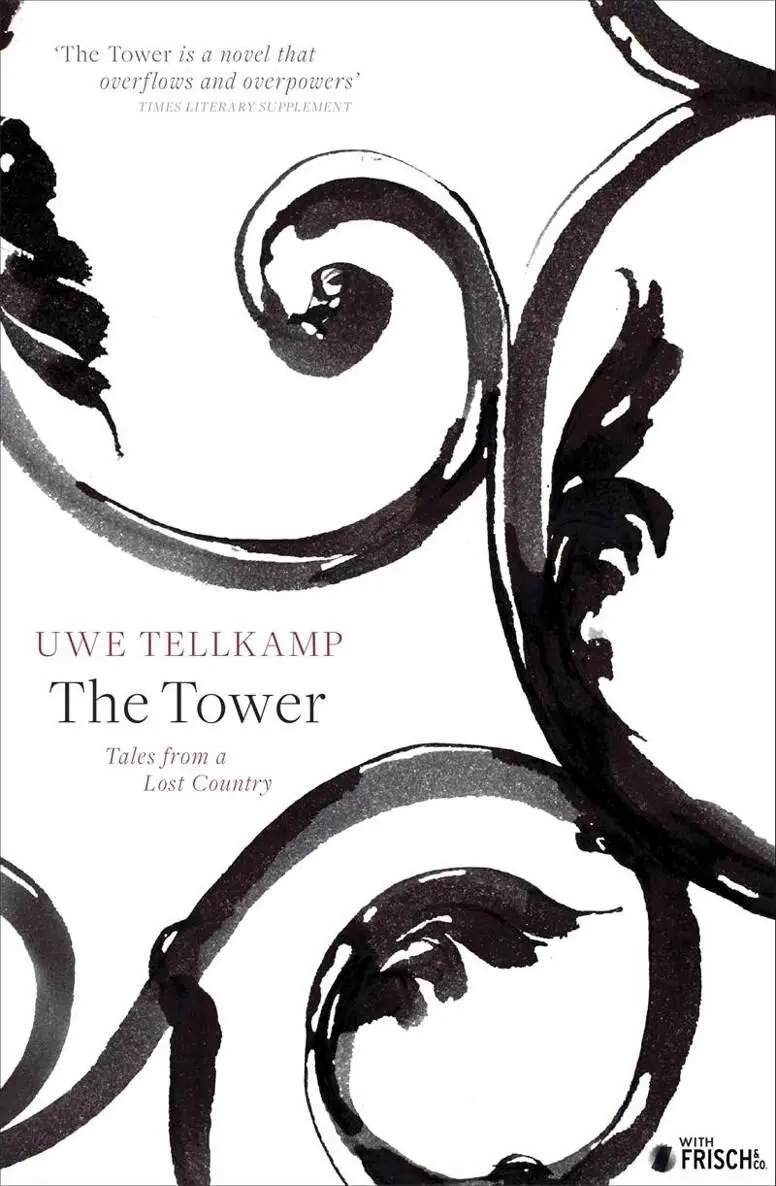
- Название:The Tower
- Автор:
- Издательство:Penguin
- Жанр:
- Год:2014
- ISBN:нет данных
- Рейтинг книги:5 / 5. Голосов: 1
-
Избранное:Добавить в избранное
- Отзывы:
-
Ваша оценка:
The Tower: краткое содержание, описание и аннотация
Предлагаем к чтению аннотацию, описание, краткое содержание или предисловие (зависит от того, что написал сам автор книги «The Tower»). Если вы не нашли необходимую информацию о книге — напишите в комментариях, мы постараемся отыскать её.
The Tower — читать онлайн бесплатно полную книгу (весь текст) целиком
Ниже представлен текст книги, разбитый по страницам. Система сохранения места последней прочитанной страницы, позволяет с удобством читать онлайн бесплатно книгу «The Tower», без необходимости каждый раз заново искать на чём Вы остановились. Поставьте закладку, и сможете в любой момент перейти на страницу, на которой закончили чтение.
Интервал:
Закладка:
23. Breathing
Richard went into the cellar, to the workshop he’d set up in the old laundry. It was quiet down there. He was going to switch on the light, but then he didn’t bother; the twilight in the room calmed him down; the outlines of the objects had already blurred into the darkness, which seemed to be spreading out from the unpainted walls. It smelt of damp, mould and potatoes. He knew that it wasn’t a good idea to stay down there too long, especially not now, at the cold time of the year; in the spring and right through to the late autumn, on the other hand, when you could leave the window open, there was a smell of turpentine and dry wood, of paint and benzine. He had to change when he came to work down here, his clothes absorbed the acrid cellar smell and it was difficult to get rid of it. Despite all the disadvantages of the room, Richard liked being there — apart from the fact that it was a privilege to have extra space available for his hobby; he would have been happy with the smallest of attic rooms and would even have let Griesel have a corner. In his study he could be undisturbed — down here, on the other hand, he was alone. As in the operating theatre, the language was not that of words, but that of hands, which was familiar to him and in which he felt secure. He turned on the light, enjoying the clack as the black Bakelite rotary switch engaged; the carbon filament bulb that some predecessor had left cast an ochre tent over the room. His tools were his pride and joy and when he thought of ‘possessions’ then the first thing that came to mind was not a bank statement, the furniture in the apartment, the record player, the paintings by Querner or the Lada, but the wall cupboards with their rows of ring spanners, open-jawed spanners, the sets of cylinder wrenches, thread cutters and screw-stocks, the chisels. Not rubbish from some state-owned factory, but heavy, pre-war steel goods drop-forged in the Bergisches Land south of the Ruhrgebiet. He saw the thirty screwdrivers in the canvas roll with the broad leather straps, a present from his boss when he’d completed his apprenticeship as a metalworker, hexagonal bars, one blow from which could kill a man, forged from a single piece, the toolmaker’s seal punched into the handle; he saw the old drillbits made of solid brown iron, greased for the winter and wrapped in oiled paper as well, sitting in their birchwood case, in the compartments made to size for the thinnest to ones as thick as your finger. Meno often talked about poetry and Richard couldn’t always follow him, at such times Meno seemed to have gone off into regions that had nothing to do with Richard, had nothing to say to him, but one thing he did understand: when Meno told them that it was hard work and that something like the poems of Eichendorff — deeply moved, he recited them enthusiastically — couldn’t be tossed off in a day, that behind them was an intimation of something that Meno called completeness. And when Meno went on to say that in his experience simple people only rarely had access to that realm, though he begged those gathered there not to misunderstand him, he didn’t want to sound arrogant, but it was a fact that everyone knew but didn’t dare to say out loud because then the Party would be faced with the question as to whether their cultural policy, their image of the reading worker, was not based on false assumptions, Richard simply couldn’t go along with that, he didn’t like what his brother-in-law was saying about workers’ relationship to reading. He knew of enough counter-examples, and Meno’s assertion denied their sense of beauty and quality, and thus of poetry in another but not shallower sense. Oh yes, he understood very well what Meno was saying, even if his brother-in-law would not always accept that. The same feeling of profound satisfaction, of happiness perhaps, and perhaps also of release — that here for once there was a product of the human mind and the human hand that could not be bettered — this feeling that he could see in Meno’s face was something he, Richard, knew as well, only it wasn’t a poem that set it off but this workbench, and for his father it had been the inner life of a mechanical clock from the great period of clock-making in Glashütte, a testimony to craftsmanship and a meticulous technical ingenuity. Meno might well mock and think him a philistine who seriously dared to see poetry in a set of screwdrivers, but his brother-in-law was an odd guy, stuck in his world of the mind and letters but not seeming to know much about people. Hid himself away behind his desk and researches — then talked about workers and their appreciation of higher things … nothing but waffle, waffle. Richard felt tired, went over to the washbasin in the corner, behind the huge tub in which the washing used to be done. Now potatoes were kept in it. He washed his face, then stayed leaning over the washbasin, listening to the drops of water falling from his face and plopping onto the enamel of the basin — like bubbles bursting, unreal in the growing sound of his breathing. He felt so drained that he couldn’t understand how there could ever have been anything inside him: his childhood, his experiences during the war, the bombardment of Dresden, getting burnt, Rieke, his apprenticeship, university, Anne, the children. Perhaps we had a receptacle inside us that gradually filled in the course of our life but his, now, had sprung a leak and everything had run out. He washed his face again. The water was so cold his forehead and temples ached, but after he’d dried himself off with his handkerchief he felt better. He looked at the workbench, which went back to Alvarez’s time, the smooth wood of the work surface, polished by the touch of countless hands. It was so hard the woodworm didn’t attack it. He didn’t know what kind of wood it was, it was a coppery red, unusually solid, unaffected even by damp and mould. On it he’d made the table for Meno, the desks for Christian and Robert, the hundred-drawer cupboard in the study that had even earned the approval of Rabe, the singular, cigar-smoking cabinetmaker, tough as old boots, who, as he would say, couldn’t stand ‘amateurs’. Richard had made the cupboard from the two plum trees that had died during the autumn gales two years ago. What great pleasure the work had given him: planing, cutting to size, fitting the joints, and before that the laborious, detailed design work, repeatedly based on errors, for which he’d studied plans in museums and the Department for the Preservation of Historical Monuments. How he loved the resiny smell, how he’d been delighted when his plane had revealed the strong grain of the plum-wood, the look on Rabe’s face when he’d bought some bone glue that was bubbling in a washpot on an open fire in the cabinetmaker’s workshop — and how Rabe’s expression had brightened when he saw the cupboard and examined it, how the look of suspicion and contempt had turned to appreciation; that was something he would never forget.
There was a knock. Anne came in. ‘What’s the matter with you, Richard?’
‘Nothing’s the matter with me,’ he replied irritatedly.
‘But I can tell there’s something the matter. You’re not yourself, you’re running around like a bear with a sore head, hardly have you got home than you disappear into your study … you yell at Robert for some trifle, you’re grumpy …’
‘Problems at the hospital, that’s all. The usual stuff, for God’s sake. They’ve got this idea about the collective of socialist work, Müller’s demanding overtime from the assistant doctors, and from us as well, of course, the senior doctors are to set a shining example … And then the never-ending struggles in the hospital management meetings, we’re not doing enough to influence our colleagues to bear society in mind in their work and then it’s the Karl Marx Year and we’re supposed to “seize” some stupid initiative with our students —’
Читать дальшеИнтервал:
Закладка:
Похожие книги на «The Tower»
Представляем Вашему вниманию похожие книги на «The Tower» списком для выбора. Мы отобрали схожую по названию и смыслу литературу в надежде предоставить читателям больше вариантов отыскать новые, интересные, ещё непрочитанные произведения.












Обсуждение, отзывы о книге «The Tower» и просто собственные мнения читателей. Оставьте ваши комментарии, напишите, что Вы думаете о произведении, его смысле или главных героях. Укажите что конкретно понравилось, а что нет, и почему Вы так считаете.