Uwe Tellkamp - The Tower
Здесь есть возможность читать онлайн «Uwe Tellkamp - The Tower» весь текст электронной книги совершенно бесплатно (целиком полную версию без сокращений). В некоторых случаях можно слушать аудио, скачать через торрент в формате fb2 и присутствует краткое содержание. Год выпуска: 2014, Издательство: Penguin, Жанр: Современная проза, на английском языке. Описание произведения, (предисловие) а так же отзывы посетителей доступны на портале библиотеки ЛибКат.
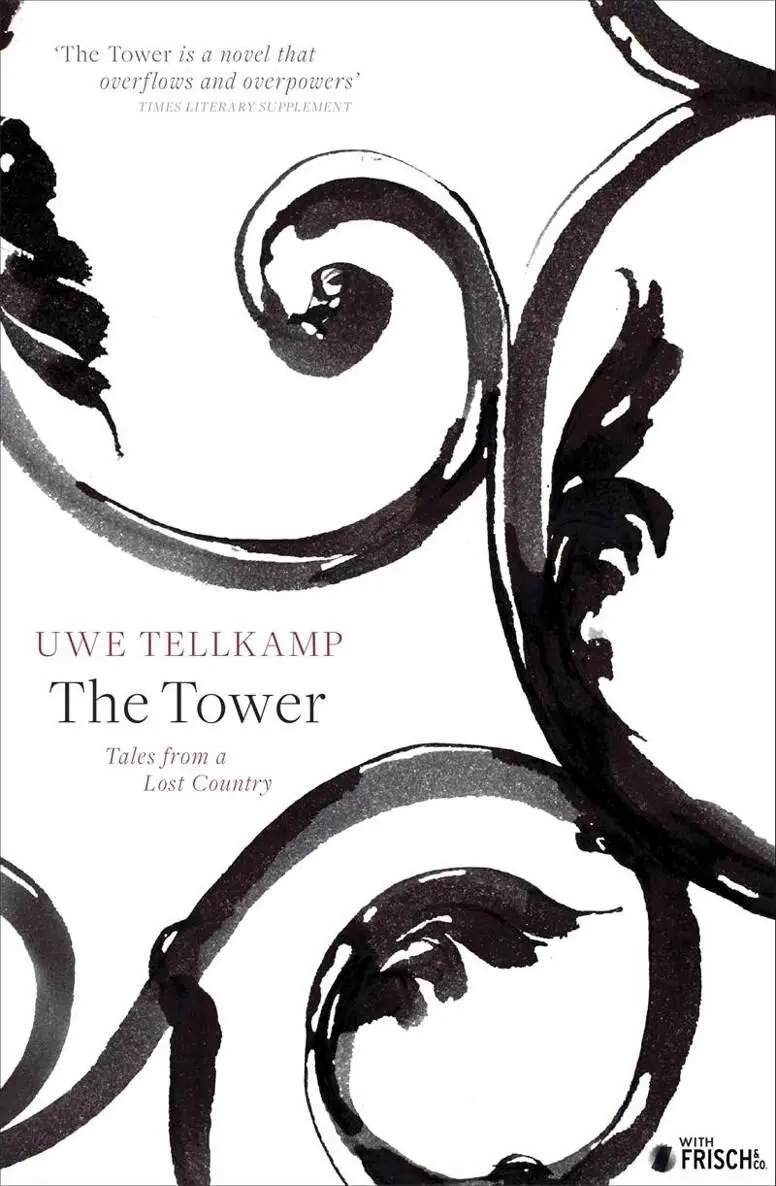
- Название:The Tower
- Автор:
- Издательство:Penguin
- Жанр:
- Год:2014
- ISBN:нет данных
- Рейтинг книги:5 / 5. Голосов: 1
-
Избранное:Добавить в избранное
- Отзывы:
-
Ваша оценка:
The Tower: краткое содержание, описание и аннотация
Предлагаем к чтению аннотацию, описание, краткое содержание или предисловие (зависит от того, что написал сам автор книги «The Tower»). Если вы не нашли необходимую информацию о книге — напишите в комментариях, мы постараемся отыскать её.
The Tower — читать онлайн бесплатно полную книгу (весь текст) целиком
Ниже представлен текст книги, разбитый по страницам. Система сохранения места последней прочитанной страницы, позволяет с удобством читать онлайн бесплатно книгу «The Tower», без необходимости каждый раз заново искать на чём Вы остановились. Поставьте закладку, и сможете в любой момент перейти на страницу, на которой закончили чтение.
Интервал:
Закладка:
‘If that’s your opinion why did you even bother to ask me to come here?’
‘Ah, my dear, it’s good that you’re furious. In general the talent of authors who can get furious is capable of development.’ He contemplated his fingernails, then looked at me: ‘That is a task Herr Rohde will undertake; you are already acquainted with him. An experienced editor of great tact and sensitivity. One more thing.’ He took a book down off the shelves: ‘You make inflationary use of the semi-colon. Here is a book by Gustav Regler. Do you know Gustav Regler? — Well you ought to. You’ll sit down now and study the way Regler uses the semi-colon in chapter four. It is’ — index finger raised, the green stone flashes — ‘a substitute for a full stop! One can also discuss the rule for using it before “but” with a following main clause. Study the old grammarians. And nota bene: German is a complex language with some features that don’t appear to make sense, but when you look more closely there is a good reason for everything. Come and see me again in an hour.’
She does so. In the meantime Schiffner has made a telephone call, leafed through folders of prints, ruminated out loud on the three rules about starting a complete sentence after a colon with a small letter, eaten an ice cream from the office freezer with great relish and freshened up by rubbing his temples with eau de Cologne. He takes the book from her and puts it back on the shelf. He looks at her breasts, gives her a pile of books worth a thousand marks and dismisses her .
We spent weeks preparing for the Leipzig Book Fair. We didn’t go there just to pick up a few books, open then close them; we went to look through a window into the Promised Land. The window could be in sextodecimo, octavo, quarto and folio format but most often it measured 19 × 12 cm, had no hard cover, but three fishes or ‘rororo’ on the front, was in a rainbow-coloured row, or was white and had drawings in pastels: then Niklas or someone would say, we’re in the right place; then the covers were by a man called Celestino Piatti and the books with his scrawl on it became the subject of many a plan. 19 × 12 cm: paperback format. The measurements were established with a ruler and Barbara used them to tailor the inner life of Book Fair coats, for paperbacks needed a pocket into which they fitted snugly.
DIARY
Today I, as a zoologist, learnt something: the African desert locust has an East German relative, the book-grasshopper ( Locusta bibliophila ), a two-legged species wearing Wisent or Boxer jeans, hand-knitted roll-neck pullovers and olive-green or earth-brown ‘habits’ (parkas) that come down over their calves (special models from the Harmony Salon furrier’s on Rissleite, undertaken during free time or by arrangement with the boss — he too has preferences in his reading — after which Barbara and, depending on demand, a colleague are diverted from their contribution to the realization of the socialist to that of the individualist plan) . Locusta bibliophila feeds on books, though only on those from the Non-Socialist Economic Area. Locusta bibliophila ’s attack is planned like a military operation weeks before the Leipzig book-feast and I, happy to be the advance guard in the cyclically recurring paper comet, was given strict orders: ‘Where are they? When are they coming? You must prepare them. For us. You must take lockers at Central Station. We have to think about a system of signals. Perhaps a handkerchief on which you blow your nose at the approach of danger. What d’you mean, it’s the time of year when everyone gets a cold. Of course you have work to do there as well — but you can do that once we’ve left.’
The book-grasshopper’s combat gear (the aforementioned parka-style Book Fair coat) is subjected to a thorough examination about two weeks before the campaign; right interior: two parallel rows of five pockets each, sewn in from breast-top down to about the knee (partly overlapping), size: 21 × 14 cm, the ease of insertion is checked using the Harmony Salon’s copy of Heinrich Böll: ‘ Wanderer, kommst du nach Spa … ’, which has to go
‘smoothly’
‘fully covered’
‘with minimal bulge’
into the pocket. The habit is two sizes too big and not fitted with the standard Solidor zip (the zip gets stuck at the bottom too often, also in this version of the habit it is so low down that the wearer would have to bend, which might perhaps be detrimental to the desired minimality of bulge), but with snap fasteners that can be closed more quickly — and at different points. On the left-hand side are two large pockets for coffee-table books or others of unusual format. On the outside of the Book Fair coat there are more large snap-fastening pockets and, in addition, over each hip a snap karabiner attached to a sturdy leather loop: they are to take the many plastic bags into which it is intended to slip ballpoint pens, brochures, books, chocolate, catalogues, bananas, even more ballpoint pens, Western cigarettes and even more books — leaving the hands free and the bags can’t be appropriated by fellow citizens and sufferers .
The approach of the book-grasshopper takes place in carpools: Anne and Robert in Rohde’s Moskvitch, Malthakus and Dietzsch in Kühnast’s Škoda, Prof. Teerwagen and his wife take the Knabes, whose Wartburg is being repaired, Trüpel, the owner of the record shop, with the Tietzes. Conversations: Oh, look at that magnificent opera book, oh, and that magnificent Picasso book (Däne, the music critic, and Adeling, who arrive by train); the strategy for outwitting the people on the doors (the ‘fall-guy’ system: one starts bellowing and the others take advantage of the subsequent confusion to get their spoils out). I’ve prepared things for my colleagues, I’ve managed to lease two (!) lockers in Leipzig Central. — ‘Only two?’ Däne’s despair comes from ignorance, even after all these years of attending the Book Fair. He should know that lockers in Leipzig are handed down from one generation to the next .
The attack of the book-grasshopper comes in waves, a keen observer will recognize that it is about to begin from the way its eyes, which have a greedy look anyway, narrow to hungry slits. Its hunger is mainly for colours. The more colourful its booty, the better. And the more of it there is, even better. What most arouses its lust are red covers. They spark off the suspicion that it must have something to do with us. Once the hunger-slit has noted the name of a dissident, action must follow immediately. The editor on sentry duty is to be engaged in strategic conversation by book-grasshopper B while book-grasshopper A, heart pounding, breaking out in a cold sweat and blind with courage, trots like lightning over to the shelf (the claw must embrace the book like a soft caress, then comes the decisive pause, the moment of happy fear: I’VE GOT IT! My fingers are enclosing it, the cover is smooth, it’s from the West), now:
release studs on Book Fair coat
glance upwards elegantly, wet dry lips with tongue
feign coughing fit
bend down
intensify coughing
open Book Fair coat
close eyes and
one
two
three –
(‘Hey, you there, what d’you think you’re doing?’ — ‘But you … usually always look the other way?’ Uproar. Form a barrier. Take care not to be recognized as a unit, otherwise a Book Fair ban. Book Fair ban = catastrophe. Catastrophe = drive home with ‘You could have got it if you hadn’t been so stupid!’ Barbara cries out, sinks to one side. Emergency. ‘Thank you, I’m all right now.’ Malthakus and Teerwagen slip away. Spoils: Isaak Deutscher: Stalin. Alexander Solzhenitsyn: The Gulag Archipelago, Part 1. An anthology of writers against atomic weapons. Friedrich Nietzsche: Why I am So Clever. Outside. End of round one. Tranquillizers from the first-aid kit in Ulrich’s car .
Читать дальшеИнтервал:
Закладка:
Похожие книги на «The Tower»
Представляем Вашему вниманию похожие книги на «The Tower» списком для выбора. Мы отобрали схожую по названию и смыслу литературу в надежде предоставить читателям больше вариантов отыскать новые, интересные, ещё непрочитанные произведения.








Обсуждение, отзывы о книге «The Tower» и просто собственные мнения читателей. Оставьте ваши комментарии, напишите, что Вы думаете о произведении, его смысле или главных героях. Укажите что конкретно понравилось, а что нет, и почему Вы так считаете.