Uwe Tellkamp - The Tower
Здесь есть возможность читать онлайн «Uwe Tellkamp - The Tower» весь текст электронной книги совершенно бесплатно (целиком полную версию без сокращений). В некоторых случаях можно слушать аудио, скачать через торрент в формате fb2 и присутствует краткое содержание. Год выпуска: 2014, Издательство: Penguin, Жанр: Современная проза, на английском языке. Описание произведения, (предисловие) а так же отзывы посетителей доступны на портале библиотеки ЛибКат.
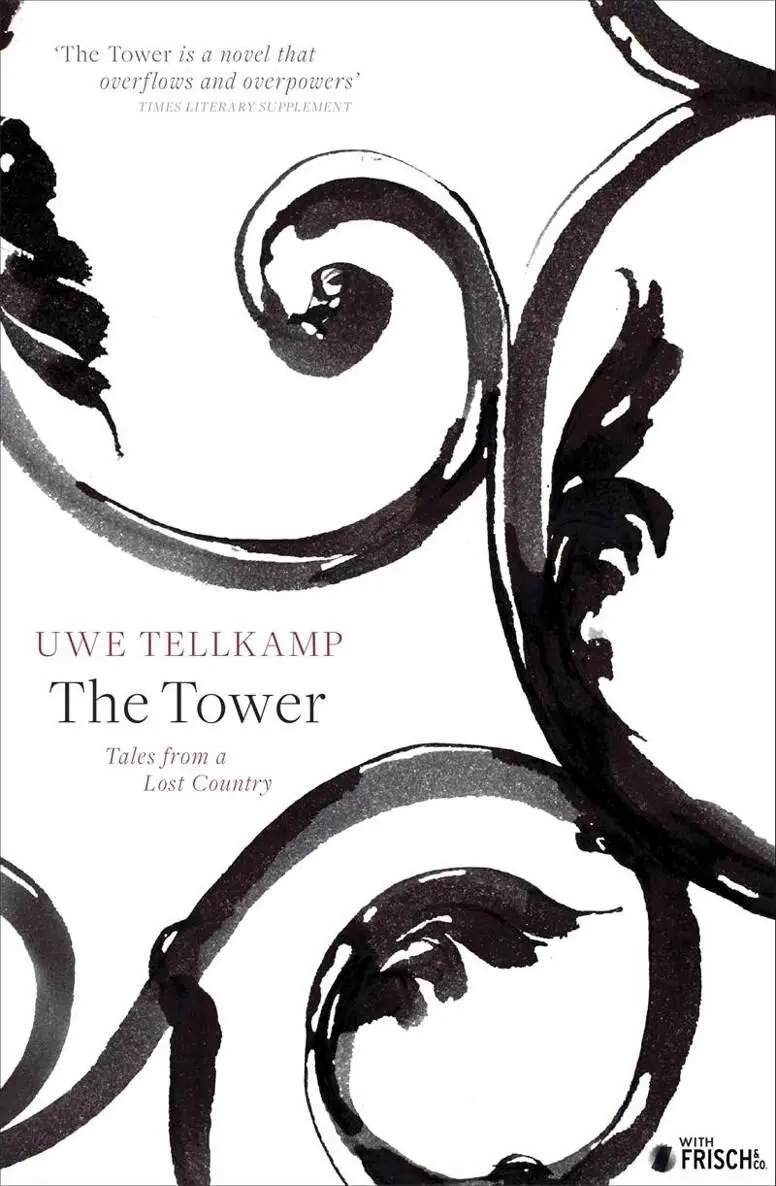
- Название:The Tower
- Автор:
- Издательство:Penguin
- Жанр:
- Год:2014
- ISBN:нет данных
- Рейтинг книги:5 / 5. Голосов: 1
-
Избранное:Добавить в избранное
- Отзывы:
-
Ваша оценка:
The Tower: краткое содержание, описание и аннотация
Предлагаем к чтению аннотацию, описание, краткое содержание или предисловие (зависит от того, что написал сам автор книги «The Tower»). Если вы не нашли необходимую информацию о книге — напишите в комментариях, мы постараемся отыскать её.
The Tower — читать онлайн бесплатно полную книгу (весь текст) целиком
Ниже представлен текст книги, разбитый по страницам. Система сохранения места последней прочитанной страницы, позволяет с удобством читать онлайн бесплатно книгу «The Tower», без необходимости каждый раз заново искать на чём Вы остановились. Поставьте закладку, и сможете в любой момент перейти на страницу, на которой закончили чтение.
Интервал:
Закладка:
It was warm at Philipp’s, Marisa had turned the heating up; Meno and Eschschloraque soon took their jackets off. Philipp seemed to feel cold, he walked up and down restlessly, rubbing his hands, occasionally doing a knees bend when he stopped beside the little Azerbaijani copper table in front of the wall with the thousands of light-brown, blue, white and red spines of Reclam paperbacks. Eschschloraque knew about Meno’s relationship with the Londoner family but had still expressed surprise that he was spending the night at Philipp’s place. Meno had said nothing and on his part was wondering why Eschschloraque was there. Jochen Londoner knew him, Meno also knew that he was a frequent guest in the house on Zetkinweg in East Rome but was surprised at the familiar relationship between Philipp and Eschschloraque.
‘That nightwatchman,’ Eschschloraque said, slowly turning the glass of tea Marisa had given him round and reflectively watching the particles floating in the red liquid, ‘that nightwatchman in the Jägerschänke. Anyone who can write about spiders will notice a nightwatchman as well. What do you think, Philipp, does communism need nightwatchmen? I’m sure friend Rohde here would say yes, he relies on the immutability of certain affairs, especially those of humans — but who knows?’
‘Nightwatchmen? Rubbish. We’ve other problems.’
‘But it would be a rewarding question for your institute. It’s not as humorous a one as you might think.’
Philipp shrugged his shoulders, started walking to and fro again. Marisa came in, made herself comfortable on the sofa beside Eschschloraque, lit one of Philipp’s cigarillos.
‘Tell me instead what the evening was like, with the people from Frankfurt.’
‘A pretty mixed-capitalist soirée. They look on us with both pity and envy. Pity because we are so terribly naive and refuse to give up our belief that the written word can change the world. Envy because, at least in this part of the Fatherland, we are absolutely right. There’s also an element of fury. They don’t like it when we catch them slackening off. Their manufacturing conditions are not determined by the state. The fact that they keep going on about our generally mediocre paper confirms your thesis that under free-market conditions the spirit is like a cow grazing on superficialities. How are things at the Institute, anyway?’ Philipp worked as a lecturer at a Leipzig branch of the Institute for Social Sciences.
‘Nothing special. I’m not getting anywhere.’
‘Because you’re too young?’
‘No, that’s not the problem.’
‘Didn’t you apply for a professorship?’
‘I’ll probably get one but … the Institute’s losing its influence, it’s hardly taken seriously any more.’
‘Then go into politics.’
‘It’s a good thing to know your limits. I’m better off on the theoretical side.’
‘Which doesn’t necessarily say anything against you. Which doesn’t necessarily say anything for the practical side either.’
‘Yes. Theories can be powerful agents of change. And I’m not a demagogue, as old Goatee was, despite everything.’
‘A little more respect, if you please. He wasn’t that bad a politician, taking everything into account. Much better than him up there.’ Eschschloraque jerked his shoulder at a portrait of the General Secretary on one of the shelves.’
‘As a politician — maybe. As a human being … My department’s being cut back a little.’
‘What’s the reason?’
‘My name, I think, paradoxical as it may sound. And probably also because we were in England.’
‘Do you think so? A bit simple, if you ask me. Still, it is possible. They’re not exactly philosemitic, the comrades in the Politburo.’
Philipp broke off. ‘No more of that.’ He looked across at Marisa, who was calmly smoking and staring out of the window. ‘What did you mean with that about the nightwatchman?’
There was something of the clown about Eschschloraque’s face when he smiled. His wrinkled cheeks and the clearly defined bags under his eyes seemed to be part of a mask behind which cunning features were just waiting to leap out like jacks-in-a-box and perform somersaults in the momentarily clear space; also Meno had the impression that, for all his fine speeches, Eschschloraque’s greatest desire was to get up and do a backflip over the table. ‘So he’s made you think, has he, our nightwatchman? Well I’ve got one in the play I’m working on at the moment. I believe a nightwatchman is an idealist out of despair. There’s no one out in the streets any more — at least not officially — apart from him and the darkness. I don’t know, perhaps I’ll have a cat appear as well. His lantern is the only light in the dark. For it is dark, of course, — and not some cosy fairy tale in which the stars turn into silver thalers — and he’s awake. He carries his lantern through the darkness. And has to make do with that. He denies nature, more than that: he hates it — in his official capacity.’
‘Is that another of your defences of classicism against Romanticism?’
‘Why should I defend classicism against something that was cooked up by the English secret service? Unfortunately stupidity seems to be … a metaphor for immortality.’
Philipp burst out laughing. ‘Do you still keep dossiers on your enemies?’
‘That doesn’t concern friend Rohde,’ Eschschloraque replied. ‘Thank you for the tea, madam.’ He stood up and bowed to Marisa.
26. Clouds in April
‘Do you believe truth exists?’ Verena adjusted the pullover that she’d tied across her chest by the sleeves. Siegbert took his time replying. It was warm, April seemed to have taken out a loan from May. They were lying in the grass on a slope above Kaltwasser reservoir, Christian was watching the changing characters inked on the apple-green of the dam by wind and waves. A train of the Erzgebirge railway, small as a model train, was chugging along the opposite bank, steaming up the fir trees along the line.
‘Hey, Verena, I believe in Pink Floyd,’ said Jens Ansorge in bored tones, pulled one hand out from under his head, took the blade of grass he’d been chewing out of his mouth and inspected it suspiciously. ‘You know everything, Chrishan, can you tell me what that is? Tastes as bitter as anti-fever pills, yeuch.’ He pulled a face and spat out.
‘You watch what you’re doing, you mucky pup! Your slobber almost landed on me.’ Reina Kossmann threw back her head in disgust, Jens smirked, bursting imaginary balloons with this forefinger. Falk Truschler let himself fall onto his back and laughed his soft, hoarse, shoulder-twitching laugh. His movements were so shambling Christian felt as if Falk had only borrowed his body for a while; Christian tried to think of the mot juste : clumsy came to mind, and then he remembered sports lessons and Herr Schanzler directing a green-and-white-clad horde round the sports hall with geometries of Prussian precision; Falk’s angular movements as he drew back to throw the Indian clubs for hand-grenade practice, his way of running: legs sticking out sideways like a girl’s, his expression, wavering between despair and self-mockery, at the moment of releasing the club, his hands and fingers waggling, as now at Jens Ansorge’s little joke. Ungainly, he thought, that actually describes him even better than clumsy. But, as Meno said, ‘actually’ is a word to be avoided.
‘Truth,’ Siegbert said, drawing the word out, ‘I don’t know. Just watch out that you don’t turn into a blue-stocking. Intellectual women don’t get no men, then no children, my old mum always says, an’ then they’re unhappy. There’s a truth for you.’
‘You arrogant male chauvinist pig!’ Verena exclaimed indignantly. ‘It’s my mother who’s right: what this country needs is a women’s movement.’
Читать дальшеИнтервал:
Закладка:
Похожие книги на «The Tower»
Представляем Вашему вниманию похожие книги на «The Tower» списком для выбора. Мы отобрали схожую по названию и смыслу литературу в надежде предоставить читателям больше вариантов отыскать новые, интересные, ещё непрочитанные произведения.



Обсуждение, отзывы о книге «The Tower» и просто собственные мнения читателей. Оставьте ваши комментарии, напишите, что Вы думаете о произведении, его смысле или главных героях. Укажите что конкретно понравилось, а что нет, и почему Вы так считаете.