Uwe Tellkamp - The Tower
Здесь есть возможность читать онлайн «Uwe Tellkamp - The Tower» весь текст электронной книги совершенно бесплатно (целиком полную версию без сокращений). В некоторых случаях можно слушать аудио, скачать через торрент в формате fb2 и присутствует краткое содержание. Год выпуска: 2014, Издательство: Penguin, Жанр: Современная проза, на английском языке. Описание произведения, (предисловие) а так же отзывы посетителей доступны на портале библиотеки ЛибКат.
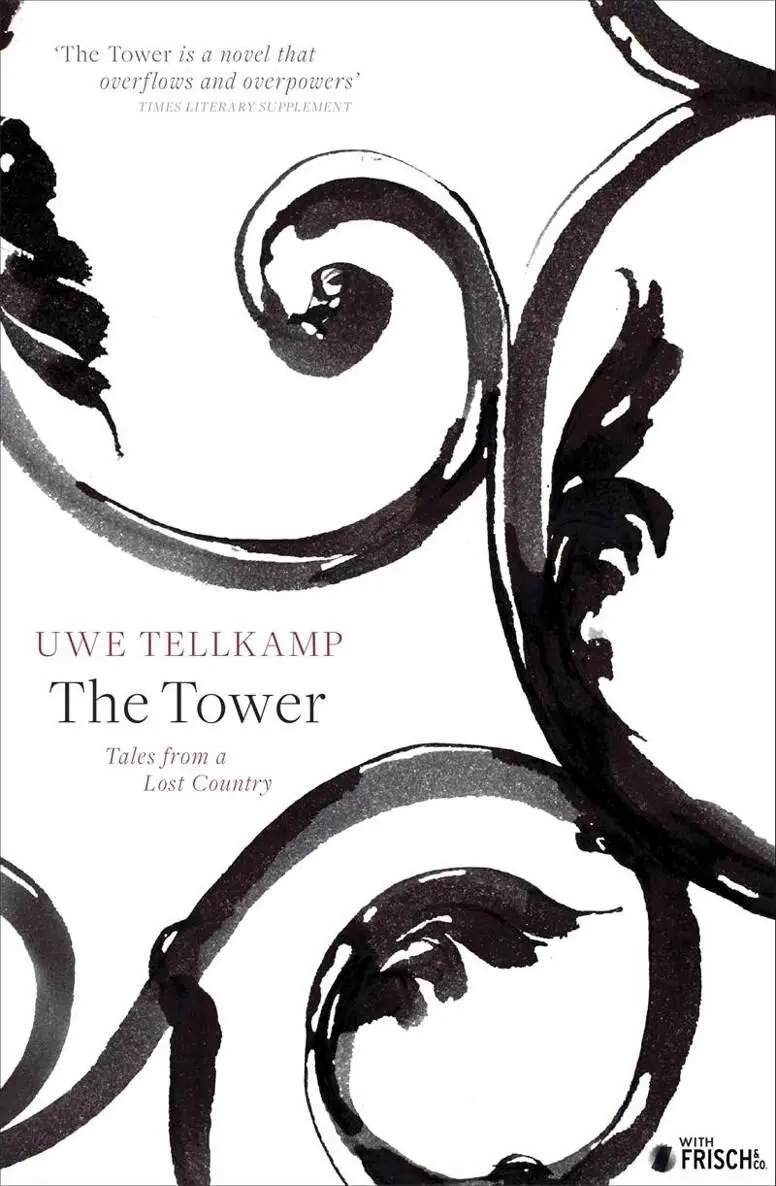
- Название:The Tower
- Автор:
- Издательство:Penguin
- Жанр:
- Год:2014
- ISBN:нет данных
- Рейтинг книги:5 / 5. Голосов: 1
-
Избранное:Добавить в избранное
- Отзывы:
-
Ваша оценка:
The Tower: краткое содержание, описание и аннотация
Предлагаем к чтению аннотацию, описание, краткое содержание или предисловие (зависит от того, что написал сам автор книги «The Tower»). Если вы не нашли необходимую информацию о книге — напишите в комментариях, мы постараемся отыскать её.
The Tower — читать онлайн бесплатно полную книгу (весь текст) целиком
Ниже представлен текст книги, разбитый по страницам. Система сохранения места последней прочитанной страницы, позволяет с удобством читать онлайн бесплатно книгу «The Tower», без необходимости каждый раз заново искать на чём Вы остановились. Поставьте закладку, и сможете в любой момент перейти на страницу, на которой закончили чтение.
Интервал:
Закладка:
28. Black and yellow
Revolving record , Meno wrote, for a few seconds Niklas Tietze’s hands remain over the bobbing undulation of the disc (and I heard the musical clock: Dresden … in the muses’ nests / the sweet sickness of yesteryear rests), it’s dark in the room, only the spotlight over the turntable is on and is dispersed, spun together and dispersed again by the rippling rotation, as if a manikin were sitting at a spinning wheel spinning straw into gold; Niklas takes the needle over the edge of the record, it still pauses, a tiny stiletto ready to strike, a little hook that would grab the music, as I imagined when I was a small boy, by the scruff of the neck, peel it, as I still sometimes think now, out of the groove like a copper engraver’s burin cutting hair-lines out of the metal plate; shadows wandering over the photographs on the music-room wall in Evening Star, where I’m visiting Niklas; photos: time captured in shade and light, pre-war Dresden, the interior of the second Semper Opera House, the chandelier seems to be covered in snow, the Belle Époque sitting in the boxes; then, framed and mischievous, his lady-killer dimples frozen in silver bromide, Jan Dahmen, the Dutch conductor of the Dresden State Orchestra; portraits of singers, Martha Rohs and Maria Cebotari, young, misty-eyed, Torsten Ralf in costume as Lohengrin, the Knight of the Swan, Mathieu Ahlermeyer as Don Giovanni, Margarete Teschemacher, all the photos signed in faded old German handwriting, we will hear their voices over the surge of the orchestra, over the rustling curtains of dust and oblivion that have settled on the moment of performance, music from the sound archives; voices, Magelone in the well of time; doors open in the faded wallpaper, stained from burst pipes, of the music room in 10 Heinrichstrasse, I remembered: the steam engines in the Museum of Transport were unmoving, the cars and railway carriages and the sedan chair of the town council sedan bearers, Anne and I holding father’s hand, he said: Come on, we’re going to practise our seeing; the Reichsbahn locomotives with their empty tenders and red-painted wheels, the wheels must keep on rolling for victory, the connecting rods spun no more yarns of speed and singing rails, the Blériot aeroplane was gathering dust in the wire fetters by which it was hanging from the roof of the hall, melting in the hiss of the record –
Niklas Tietze was a strange man. He was a doctor, one of the rare GPs with their own practice; it used to belong to Dr Citroën and was on Lindwurmring, next to the Paper Boat, Bruno Korra’s second-hand bookshop, and the Roeckler School of Dancing. After deportation, which he was the only member of his extensive family to survive, and the end of the war, Dr Citroën had returned to Dresden and taken Niklas on as his pupil; he revered his teacher and had not changed anything in the practice after Citroën’s death, with the result that it quickly became old-fashioned. Meno hardly ever heard him talk about medical matters. His interest was in music, especially the Dresden Opera. There were hundreds of photos of singers and musicians, many with personal dedications to Citroën and Tietze, who were known throughout the city as music-lovers, hanging in the rooms of the practice and, like Citroën, Niklas preferred to play opera arias to his patients rather than listen to their complaints. For him the present seemed to be one possibility among others in which one could live, and not the most pleasant; for which reason he avoided it. He possessed a lot of books, they were mostly slim volumes and bore the sign of a ship under full sail in a finely inscribed circle which made Meno wonder why the publishing house, if it had chosen the ship as its sign, was called ‘Island’ publishers: was the ship the island? the island a ship? did the island consist of books the ship was carrying as cargo? Niklas didn’t ask those questions, for the books were something different for him than for Meno: time capsules, their presence alone seemed comforting. In the evening, as the clocks struck and night had fallen, Niklas could sit on the chaise longue and take one of the Insel volumes out of the bookcase that was kept specially for them: Mozart’s Journey to Prague , with a cover of pale-blue silhouettes, Gothic script, the pages yellowed and with the mild smell of bread that old paper has, then he would leaf through it, get caught up in the story here and there, nod, adjust his large glasses with the square lenses, read in a murmur a few favourite passages he almost knew off by heart; no one was allowed to disturb him, not Gudrun, who was in the next room reading Leben-Jesu pamphlets or watching television, nor the children who were occupying themselves at the other end of the corridor.
Mused and listened , Meno wrote, sat leaning forward, his aquiline nose cut out of the darkness, a musician’s posture, attentive and at the same time waiting as if, instead of the notes he had anticipated in his inward ear and often played before, different passages had suddenly come, smuggled into the score on a whim of the demons of the opera, scattered over the familiar melodies as a goblin might drop sneezing powder over a devout and quiet congregation, in his mind’s eye he could see the conductor, Furtwängler, writing his cloud-quiver-script with his baton in the electrically charged air, tagged with treble and bass clefs, drum rolls and harp glissandos, over the heads of the orchestra waiting, spellbound, for their entry; the entry melted out of his loops, somewhere in his conjurations a drop formed, ran into the musicians’ fingers, made the contact for the circuits, which were charged up to trembling point: that is, the entry was accepted, the leader decided to harvest it from Furtwängler’s arabesques: to pick it, and he, the leader who, like a herd stallion, had shaken off the paralysis, pulled the whole pack along behind him in a mighty, sonorous chord, the audience, deeply moved, nodded, put handkerchiefs to eyes, hands over left breasts, held its breath: Furtwängler! The way he’s done it again! The way he gets the orchestra to blossom out, inimitable, that softly cushioned precision, the severely delicate sound, hallowed German profundity! Who has mastered the violin bows, tamed the trombones, encouraged the viola and its often misunderstood elegies, knows the vagaries of the oboe reed, of the horn player’s plight when the water level rises in his French horn, Furtwängler reaching the moment of free will and with it the breath of the orchestra, sound comes into being: gauged with the fineness of precision scales –
When Meno came it could happen that a conversation would develop about the book, which Meno thought overrated, and Fürnberg’s Mozart-Novelle , which he thought underrated and better written than the story by the more famous writer. ‘Fürnberg,’ said Niklas in his sonorous, slightly husky voice, ‘ “The Party, the Party, the Party’s always right” ’ and nodded reflectively. Meno gave him one of the eight copies of the little book that he’d bought before they disappeared off the shelves. Niklas leafed through it, praised the drawings by Prof. Karel Müller, Prague, conventional pen-and-ink vignettes, expressed appreciation of the classic Garamond type, was taken with the oval of faded green surrounding the silhouette embossed on the linen cover: Nice, very tastefully done, really: fine — they put their love into the books — and put it away ‘for later’.
However , Meno wrote, is it Furtwängler? Doors in the walls of the music room (and heard the musical clock: Dresden … in the muses’ nests / the sweet sickness of yesteryear rests); there: the ‘Starvation Line’ after the war, the 11 as it pants its way up the Mordgrund laden with firewood and horse fodder, with double basses for the State Orchestra concerts in the ‘Culture Barn’ in Bühlau, the ‘Starvation Line’: like each one of its predecessors, shadows swallowed up in the whirlpool of time that set off up the hill from Neustadt Station pulling goods wagons full of washing, a weary animal, groaning under the burden, to whom the driver shortly before the summit of the climb mutters curses, encouragement, threats, his right hand on the control lever, his left on the brake wheel, his view restricted by the musical instruments lashed to the luggage van, the passengers travelling on the footboards, the musicians, who, in a tight cluster, are clutching the rail of the luggage van, the ‘Starvation Line’ on which it stinks of sweat and sour breath from rumbling stomachs, which won’t be silent in the ‘Culture Barn’ either, admission one briquette, the audience, hungry for culture, emaciated faces marked by deprivation, squeeze up close together, shivering in their uniform coats, in their often-mended trousers, made up out of rags or potato sacks, in Bruckner symphonies the trombonist is so weak his breath gives out; the record surges on, voices from the past will wake, already stained with the rust that has crept over the vinyl disc during the decades it spent resting ‘with the treasures’ — in Niklas’s record cabinet under the Gothic clock, we called it that because the little pendulum looked as if it was swinging in a tiny abbot’s parlour; ‘with the treasures’: hoarded in Trüpel’s archive, under the Philharmonia record shop or with Däne, the music critic of the Sächsisches Tageblatt , who every week in his apartment on Schlehenleite, in which music and paper had grown rampant, played samples of his discoveries to the Friends of Music; the rust in the voices the rose-rust fungus of the Dresden Opera and perhaps that’s Schuch, in a sea-green fantasy uniform, raising his baton, perhaps Hofmannsthal is sitting in the semi-darkness of one of the boxes in front of which reality has put on colourful clothes and a ship with huge yellow sails glides past the window of childhood, where the shadows play –
Читать дальшеИнтервал:
Закладка:
Похожие книги на «The Tower»
Представляем Вашему вниманию похожие книги на «The Tower» списком для выбора. Мы отобрали схожую по названию и смыслу литературу в надежде предоставить читателям больше вариантов отыскать новые, интересные, ещё непрочитанные произведения.




Обсуждение, отзывы о книге «The Tower» и просто собственные мнения читателей. Оставьте ваши комментарии, напишите, что Вы думаете о произведении, его смысле или главных героях. Укажите что конкретно понравилось, а что нет, и почему Вы так считаете.