Uwe Tellkamp - The Tower
Здесь есть возможность читать онлайн «Uwe Tellkamp - The Tower» весь текст электронной книги совершенно бесплатно (целиком полную версию без сокращений). В некоторых случаях можно слушать аудио, скачать через торрент в формате fb2 и присутствует краткое содержание. Год выпуска: 2014, Издательство: Penguin, Жанр: Современная проза, на английском языке. Описание произведения, (предисловие) а так же отзывы посетителей доступны на портале библиотеки ЛибКат.
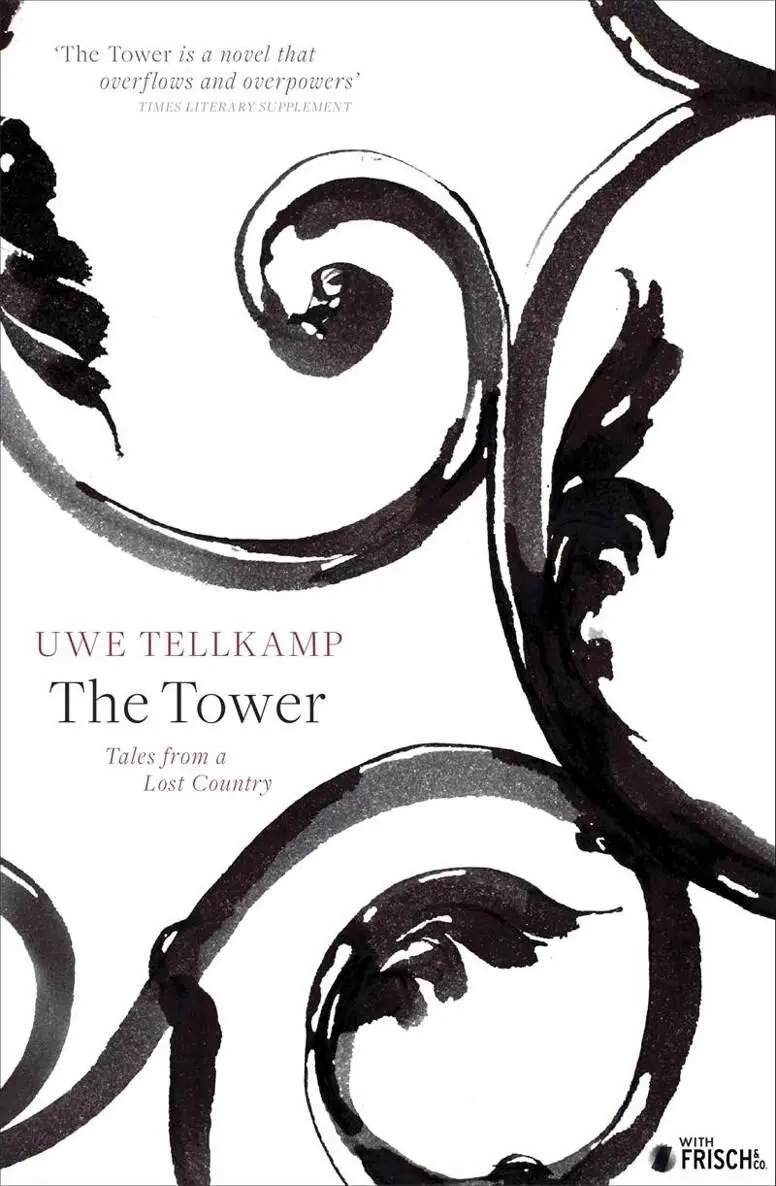
- Название:The Tower
- Автор:
- Издательство:Penguin
- Жанр:
- Год:2014
- ISBN:нет данных
- Рейтинг книги:5 / 5. Голосов: 1
-
Избранное:Добавить в избранное
- Отзывы:
-
Ваша оценка:
The Tower: краткое содержание, описание и аннотация
Предлагаем к чтению аннотацию, описание, краткое содержание или предисловие (зависит от того, что написал сам автор книги «The Tower»). Если вы не нашли необходимую информацию о книге — напишите в комментариях, мы постараемся отыскать её.
The Tower — читать онлайн бесплатно полную книгу (весь текст) целиком
Ниже представлен текст книги, разбитый по страницам. Система сохранения места последней прочитанной страницы, позволяет с удобством читать онлайн бесплатно книгу «The Tower», без необходимости каждый раз заново искать на чём Вы остановились. Поставьте закладку, и сможете в любой момент перейти на страницу, на которой закончили чтение.
Интервал:
Закладка:
In the winter the blinds on the windows of the Steiner Guest House were kept lowered. When you came from the tram stop the lamps were shimmering like green and yellow eyes through the venetian blinds, which were crooked and rattled in the wind, behind them shadows went to and fro. An officer who’d been on the general staff of the Afrika Korps lived in the guest house, next door to a stocky man with a thick moustache dyed black and a shaven head who called himself Hermann Schreiber; rumour had it that in reality he had a Russian name and when he was young he’d been a spy for the Tsarist secret police, the Okhrana, and at the same time for the Red troops that were still operating underground. Romanians, Poles and Russians often stopped at the guest house on their way to the Leipzig Trade Fair; the parties they held with the foreign-language secretaries of the branch of the Council for Mutual Economic Aid, the Russians sometimes also with officers from the hospital of the Soviet forces, formerly a sanatorium, were notorious. Opposite the Steiner Guest House, on the other side of Turmstrasse, was the Central Depot for Automotive Spare Parts. On days when a delivery was rumoured, long queues formed outside. Meno knew nothing about cars but he’d once joined one of those queues on a kind of heroic impulse, having been gripped by the lust for possession. Among those patiently waiting he’d seen Dietzsch, the sculptor, who’d asked him whether he’d registered an application for a car. That was indeed the case — ‘But you’re never going to drive, are you, Herr Rohde? Sell me your application — I’ll pay five thousand marks!’ For that was the first thing many GDR parents gave their children when they reached the age of confirmation or the secular youth dedication: to register them for a car that they would be able to buy after a wait of fifteen years, when they’d long since finished school, an apprenticeship or a degree and would be earning enough to buy one … A registered application such as Meno’s, which dated back to the early seventies, was worth its weight in gold. But Meno was suspicious (moreover his application was to go to Christian) and in a fit of acquisitiveness had joined the queue and purchased two exhaust manifolds for a Polski Fiat, a Wartburg shock absorber and three complete sets of windscreen wipers for a Saporoshez. After that there was ‘Nothing left’, Herr Priebsch, the sales assistant, raised his arms apologetically, not even one of those wires twisted into a tube with a sucker on it in which an artificial flower from Sebnitz in Saxon Switzerland could be attached to the dashboard of a Trabant or a Wartburg, of which there had actually been a delivery that day. Herr Klothe, who lived above the Rohdes in the Italian House and was next in the queue, took it with the composure people had developed for such cases: ‘I presume you haven’t got any beds left?’ — ‘No,’ replied Herr Priebsch in his blue-grey overalls, ‘we only have no winter tyres here. You’ll get no beds in the furniture shop. And you won’t do any better over there either, since we don’t make beds here any more.’ — ‘You don’t say. And why is that?’ — ‘Simple, they’re not necessary! The army’s on peace watch, for the intelligentsia life’s a bed of roses, the politicians sleep abroad, the pensioners in the West, the Party never sleeps — and as for the rest of us, who wants to sleep on a bed of nails?’
Meno had stored the treasures he’d bought in the cellar. They’d turned out to be hard currency, for Stahl, the engineer, had managed to exchange the Wartburg shock absorber for a new mixer tap for the communal bath of the House with a Thousand Eyes.
— And as the needle , Meno wrote, lifted the music out of the record and Niklas’s expression changed, the tension, the strain giving way to a happy calm, coloured photographs, woven from the fiery threads of the music, began to appear inside my head, slid up with jellyfish-soft outlines, stayed there for seconds in which I saw them clearly, like pieces of a retina filled with life, consisting of life; a tide washing up things, the sea’s furnishings: round pebbles ground smooth, stones with holes in them, a seaweed-entwined lump of amber with an insect trapped inside it, a drowned moth, the swell rises, rolls up its gifts, rears into a glassberg and when it reaches its peak the movement stops, the projectionist presses a button and the breaker curdles; and then I saw the musicians moving, the spider made of violin bows going up and down simultaneously, saw faces, pockmarked with the wine-scale of time, drifting among the Amphoridea and medusas of the room, listened, on another evening as we sat over a hectographed booklet in landscape format, to Niklas putting names to the faces and recounting anecdotes: ‘the one with the long neck, standing with his double bass, that’s the Parlour Giraffe’, ‘that one, a ring with a big stone on every finger, in the orchestra they called him Jumbo-Jewels’, then the ‘flautist, Alfred Rucker’, out of whose silver stick the furies of music thundered, ‘the greeeat Alfred Rucker, called Typhoon, he blew everything away’, and at the word ‘great’ Niklas was already leaning back, extending his chin, half closing his eyes behind his square glasses in order to give the adjective, which came from the depths — of his voice and the history of music — that dreamy quality that I heard from the Tower-dwellers when they wanted to characterize some achievement as unrepeatable and superb, as irredeemably lost in the past, in more glorious and perhaps also more sublime ages, as a ‘marvel’; and I sometimes thought that the Tower-dwellers themselves moved through time in a similarly strange and typical way: their future led into the past, the present was merely a pale shadow, an inadequate and stunted variant, a dull rehash of the great days of yore, and sometimes I suspected that it was good when something sank into the past, when it expired and perished, that the Tower-dwellers secretly approved of that, for then it was saved — it was no longer part of the present, that they shunned, and often it was precisely once something was dead that it suddenly shot up into the heaven of their esteem, while they hadn’t even noticed it while it was still living. — The music seems to be flowing out of the tips of Niklas’s fingers, which are white because he wears gloves; I can see the signed photograph of Max Lorenz on the wall over the piano, his arm pointing, the knight is looking into the distance, his voice, revelling like a bare blade, ascends, makes its thrust, the disc spins, heavy with cobwebs, sparks crackle, the label in the middle a yellow magnet, and as the music rose, I saw Niklas growing restless again, a person for whom it was the elixir of life, who would not be capable of breathing for long without it, and I thought it would be the end of him, of his world, if some circumstance should cut him off from music, from his life of longing to be in music; the fishes in the room surged up and down, moved like handkerchiefs on a line the wind was plucking at, the rose under the bell glass seemed petrified –
The old houses with their crumbling plaster … The outlines began to fade, the goods wagons full of ash from the hospital heating plant rumbled; the deep throbbing noise, the origin of which he couldn’t explain, started up, perhaps it came from a transformer or a ventilation system; he had heard it often before on his evening walks.
‘Still out this late?’ It was Judith Schevola. He started and automatically took a step out of the thin light a street lamp cast over the Lingwurmring/Mondleite junction. ‘You gave me a fright. — What are you doing up here?’
‘And if I were to say, I live up here?’
‘I’d reply: In that case I’d have noticed you.’
Читать дальшеИнтервал:
Закладка:
Похожие книги на «The Tower»
Представляем Вашему вниманию похожие книги на «The Tower» списком для выбора. Мы отобрали схожую по названию и смыслу литературу в надежде предоставить читателям больше вариантов отыскать новые, интересные, ещё непрочитанные произведения.




Обсуждение, отзывы о книге «The Tower» и просто собственные мнения читателей. Оставьте ваши комментарии, напишите, что Вы думаете о произведении, его смысле или главных героях. Укажите что конкретно понравилось, а что нет, и почему Вы так считаете.