Uwe Tellkamp - The Tower
Здесь есть возможность читать онлайн «Uwe Tellkamp - The Tower» весь текст электронной книги совершенно бесплатно (целиком полную версию без сокращений). В некоторых случаях можно слушать аудио, скачать через торрент в формате fb2 и присутствует краткое содержание. Год выпуска: 2014, Издательство: Penguin, Жанр: Современная проза, на английском языке. Описание произведения, (предисловие) а так же отзывы посетителей доступны на портале библиотеки ЛибКат.
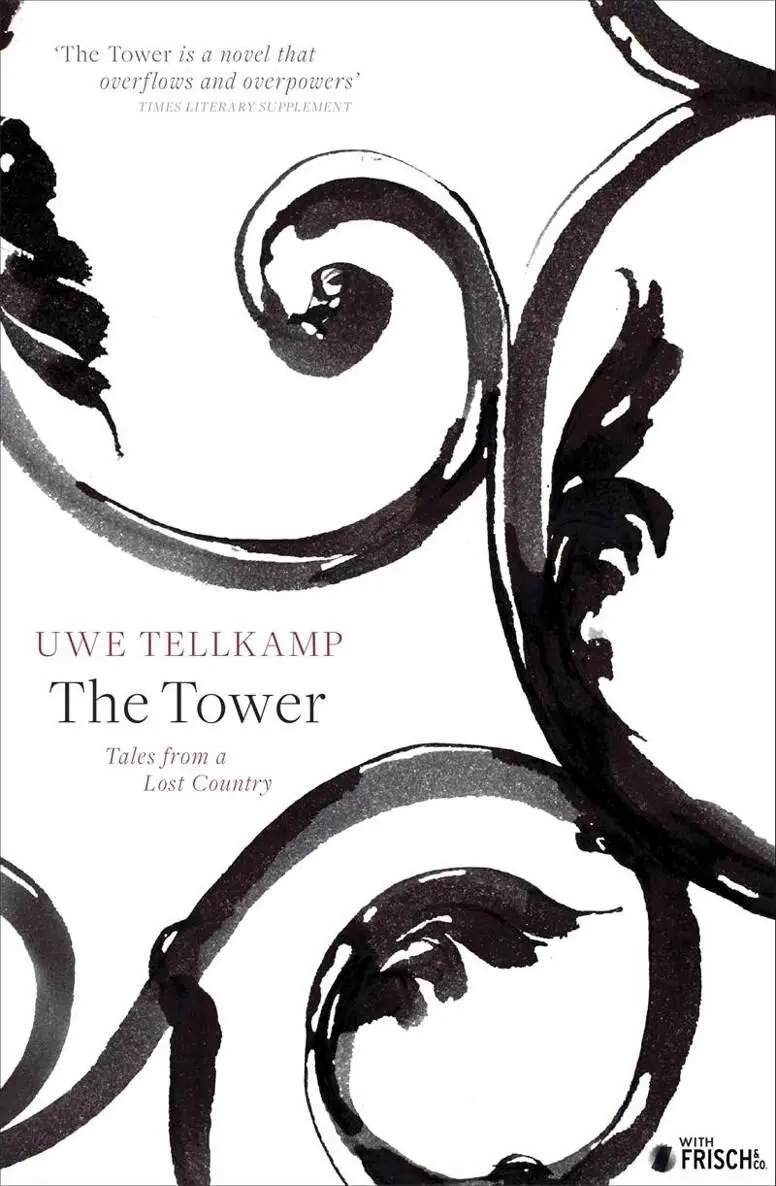
- Название:The Tower
- Автор:
- Издательство:Penguin
- Жанр:
- Год:2014
- ISBN:нет данных
- Рейтинг книги:5 / 5. Голосов: 1
-
Избранное:Добавить в избранное
- Отзывы:
-
Ваша оценка:
The Tower: краткое содержание, описание и аннотация
Предлагаем к чтению аннотацию, описание, краткое содержание или предисловие (зависит от того, что написал сам автор книги «The Tower»). Если вы не нашли необходимую информацию о книге — напишите в комментариях, мы постараемся отыскать её.
The Tower — читать онлайн бесплатно полную книгу (весь текст) целиком
Ниже представлен текст книги, разбитый по страницам. Система сохранения места последней прочитанной страницы, позволяет с удобством читать онлайн бесплатно книгу «The Tower», без необходимости каждый раз заново искать на чём Вы остановились. Поставьте закладку, и сможете в любой момент перейти на страницу, на которой закончили чтение.
Интервал:
Закладка:
‘No.’
‘I actually met Hauptmann. It so happened that my aunt was in the Weidner Sanatorium, from where he observed the air raid. I visited her and saw him. Unforgettable, that Goethe noddle he had.’
‘Anyone who has forgotten how to cry will remember at the destruction of Dresden.’ Sandor, on a visit from Ecuador, ten years old at the time of the bombing, turns away in silence. They remember. ‘Everything used to be quite different up here. Nothing’s what it used to be. No comparison. No, no. Today it’s Dresdengrad. A province of the UGSSR: the Union of the German-Speaking Soviet Republics.’ Ruins are still standing after years and years. Electrification along with bombsites, ugly dual carriageways, draughty tenement blocks, fifteen-storey blocks rammed into the famous, now gap-ridden Canaletto skyline. And in the old days: ‘We used to be a capital. A royal capital! Yes, well … in the old days …’ They sigh. Photos are taken out. The view of the Frauenkirche from the Brühlsche Terrasse. A lamp with needles of light in Münzgasse. The conjurations began, the Dresdeners’ longing for Utopia, a fairy-tale city. The city of alcoves, of quotations from Goethe, of music-making in the home, looks back in mourning to the world of yesterday; their tiresome, eroded everyday life is supplemented with dreams: shadow Dresden, the illusion behind reality flows through its pores creating hybrid beings à la E. T. A. Hoffmann. Double exposures. Tannhäuser sang, sang of the Army Museum, where needle-guns were aimed at Napoleon, Saxony’s days of splendour and soldiers marching to ‘Preussens Gloria’, uhlans’ lances and cuirassiers’ helmets of the Belle Époque (and I heard the musical clock: Dresden … in the muses’ nests / the sweet sickness of yesteryear rests), wraiths groping their way in the gas war of the trenches, the blue-cross gas of Ypres, the sappers danced, Verdun, Doctor Gottfried Benn, a poet going round the morgue, Otto Dix painting animals in human form and the shattered glass of the photo of the old Frauenkirche, Dresden … ‘I will give this pearl the setting it deserves’ … The Synagogue burnt .
How does one drink wine in Dresden, the city with the guilty smile? Tannhäuser’s ship sailed away, to Canaletto’s archipelago … Bells sound on 13 February. From all parts of the city people pour to the centre, place candles by the devastated Frauenkirche, two great ruined walls stretching up into the sky like arms begging for help. The boys’ choir of the Church of the Holy Cross sings Mauersberger’s Requiem. Driving home at night, in the Hoffmanns’ Lada or the Tietzes’ Shiguli: in this perspective the ‘Woda’ indicator flashing across the dashboard is as big as the birch tree on the gloomy bulk of the ruined castle and looks like a phosphorous needle restlessly scanning the sooty remains of the stepped walls where by day suites of rooms and the lines of paintings burnt into them can still be made out .
‘The Great Hall in the castle, what splendid concerts there were there. And kings ate from the swan dinner service, at a table with a thousand pieces of finest Meissen china,’ Frau von Stern, a former lady-in-waiting, would tell them. ‘Chandeliers hanging down like coral reefs of light! They tumbled down, lumps of glass on the floor, melted and fused over people, the faces, the faces.’
‘Florence on the Elbe, such an Italian softness, a smiling city!’
‘And the social situation? How did people really live back then? A beautiful façade for a lot of misery? Weren’t there 100,000 out of work in 1933? Weren’t the murderers among us?’
‘Oh, that’s enough. If they hadn’t elected the Nazis, it would still be smiling.’
‘You can’t be a proper Dresdener if you can say things like that, you don’t love your city.’
‘For you love’s glossing over things, is it? Come off it! Sometimes I think you need a bit of that. Basically you wouldn’t even be happy if the old Dresden were suddenly to reappear!’
‘I’m not going to say one more word to you!’
Who is talking? The Tower-dwellers, they talk at the soirées and Frau Fiebig’s roses bloomed, had the fragrance of dust, eau de Cologne and furniture polish, shining clean silver spoons dipped into the Dresden custard pie from Wachendorf’s bakery, outside the frost patterns grew, creeping over the river and the stairs and the clocks; in the evening the Tower-dwellers would sit in their apartments telling each other stories, they told each other about chandeliers found in the loft or in forgotten chests (‘somewhere out on the prairie’), covered in soot and unsightly — for the layman, but in their eyes immediately valuable for the engraved detail that careful, expectant rubbing had brought to light; the Tower-dwellers were familiar with every screw of these chandeliers and if they weren’t, they became uneasy, for they had to know where every screw came from, had to know every hand that had worked on the chandelier and I sometimes asked myself: What’s the point? as I watched them. What did it give them, what adventurous form of satisfaction, to know the name of the master craftsman who had cut that tiny screw? Was it despair at the incompleteness of the world, despair at a missed detail that might cause everything to collapse?
Target coordinates N51°03´/E13°36´. At 9.55 p.m. a radio announcer in the Albertinum cellars reports the approach of large formations of Lancaster bombers of the Royal Air Force … ‘I will give this pearl the setting it deserves!’ The first marker bomb falls on Ostragehege, the grounds of a slaughterhouse in a bend of the Elbe between Friedrichstadt, Übigau and Pieschen. At 10.13 p.m. the first bombs explode in the centre of Dresden
to collapse, to destruction, to loss, was it despair at the passage of time?
and hear the voice of a Dresdener whose right hand, as if suffering from compulsive checking, keeps running up and down the fastened buttons of his coat: ‘I loved my city but … I survived because it was destroyed,’ said Herr Rosenbaum after a long silence .
The Tower-dwellers … Do they want a hermetically sealed world? Was their god the god of the sphere, of clock faces, of ships?
Star of the Sea Evening Star sank, the needle went into an idle loop, the fishes and Amphoridea on the wallpaper froze, doors closed, the photographs on the walls clouded over, Max Lorenz lowered his sword, the roar of the waves of time died away, the good ship Tannhäuser ran aground
Niklas remained in his frozen posture, I stood up to turn the record over (and I heard the musical clock: Dresden … in the muses’ nests / the sweet sickness of yesteryear rests)
Meno wrote
30. Young woman on a windless evening
Calm: the day seemed to be drifting like a boat after one last stroke of the oars, no longer straining, not yet at its goal, the sky, in which only a few light-as-a-feather cloud-eyebrows were raised in astonishment, expanded to balloon-blue, into which the roofs of the old Academy stuck up like sail-fins; in the park beneath it watercolours of green, the white and purple rhododendrons, were already submerging into twilight. For one moment, when a shimmering burst of swallows had dispersed in the saffron-yellow above the treetops in front of the Dermatology Clinic, there seemed to be an equilibrium of all the balances in which the sense impressions of the late afternoon had risen and fallen: the clitter-clatter-clump, clitter-clatter-clump of a nurse’s hurried steps; the metallic pink and white of coats and caps; patients in bathrobes strolling round the park with X-ray photos under their arms; doctors with their hands buried in their coat pockets, in which they moved them impatiently as soon as a nurse came within greeting distance; the scent of apple flowers drowsing down from the gardens on Händelallee; the whine of the electric carts; cars puttering past on Akademiestrasse.
Читать дальшеИнтервал:
Закладка:
Похожие книги на «The Tower»
Представляем Вашему вниманию похожие книги на «The Tower» списком для выбора. Мы отобрали схожую по названию и смыслу литературу в надежде предоставить читателям больше вариантов отыскать новые, интересные, ещё непрочитанные произведения.




Обсуждение, отзывы о книге «The Tower» и просто собственные мнения читателей. Оставьте ваши комментарии, напишите, что Вы думаете о произведении, его смысле или главных героях. Укажите что конкретно понравилось, а что нет, и почему Вы так считаете.