Uwe Tellkamp - The Tower
Здесь есть возможность читать онлайн «Uwe Tellkamp - The Tower» весь текст электронной книги совершенно бесплатно (целиком полную версию без сокращений). В некоторых случаях можно слушать аудио, скачать через торрент в формате fb2 и присутствует краткое содержание. Год выпуска: 2014, Издательство: Penguin, Жанр: Современная проза, на английском языке. Описание произведения, (предисловие) а так же отзывы посетителей доступны на портале библиотеки ЛибКат.
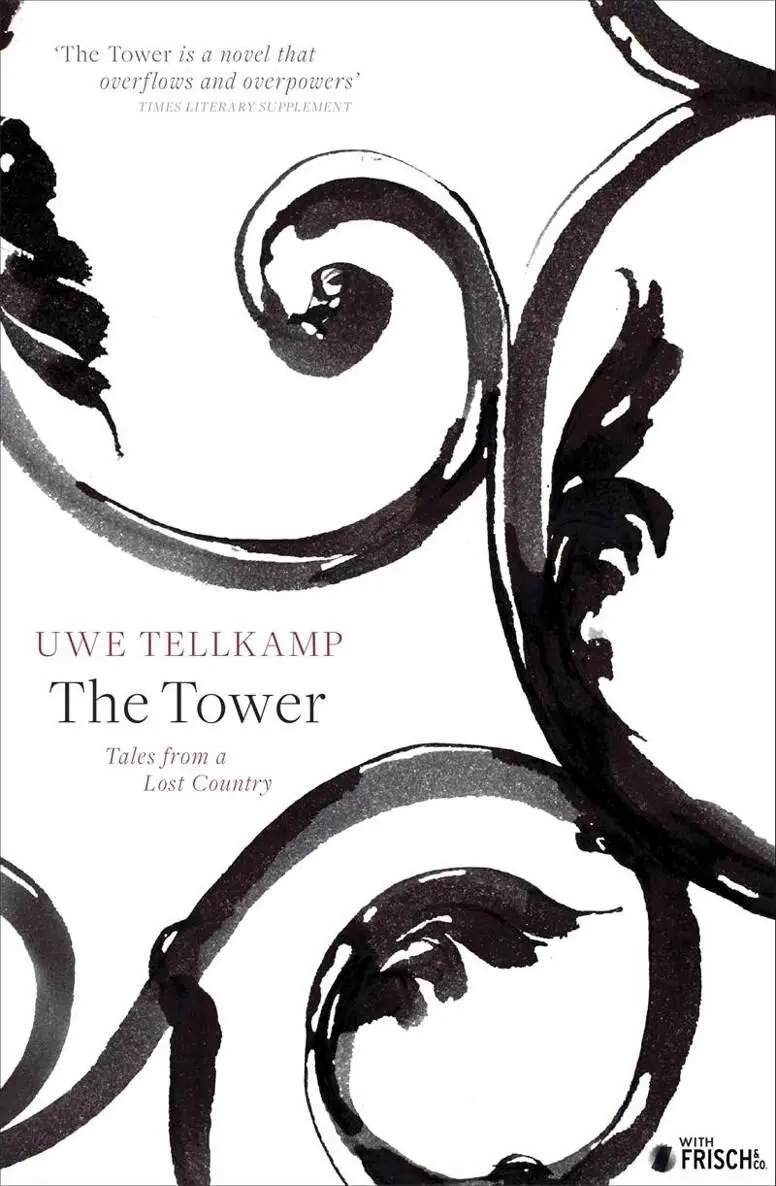
- Название:The Tower
- Автор:
- Издательство:Penguin
- Жанр:
- Год:2014
- ISBN:нет данных
- Рейтинг книги:5 / 5. Голосов: 1
-
Избранное:Добавить в избранное
- Отзывы:
-
Ваша оценка:
The Tower: краткое содержание, описание и аннотация
Предлагаем к чтению аннотацию, описание, краткое содержание или предисловие (зависит от того, что написал сам автор книги «The Tower»). Если вы не нашли необходимую информацию о книге — напишите в комментариях, мы постараемся отыскать её.
The Tower — читать онлайн бесплатно полную книгу (весь текст) целиком
Ниже представлен текст книги, разбитый по страницам. Система сохранения места последней прочитанной страницы, позволяет с удобством читать онлайн бесплатно книгу «The Tower», без необходимости каждый раз заново искать на чём Вы остановились. Поставьте закладку, и сможете в любой момент перейти на страницу, на которой закончили чтение.
Интервал:
Закладка:
Then it returned in waves and orders, only for moments, his weary body, the piercing brightness of a lamp aimed at him, demands, a student who nodded to him and, as if he wanted something from him, stopped as if uncertain what to do; it lopped off the threads back to childhood that had fluttered out for a long second, Josta’s letter, that Richard felt for. He had stood up and left without having given the student an encouraging look; he hadn’t been in the mood for discussions about lectures, for proposing a topic for a thesis or whatever else the young man might be concerned about. They were always coming with requests, these young people, and they were always similar, and if they wanted to be surgeons then they had to be neurosurgeons or, even better, heart surgeons; and if they had questions, they were almost always complicated and almost never simple; they didn’t seem to be interested in why a violin bow was able to produce a certain note, why all rivers flowed when the Earth was round and consequently there ought to be some rivers that were faced with an uphill course. Or why you could carry a letter from a woman round with you and not know whether you should be pleased or afraid, and why a letter, nothing but a piece of paper, could weigh so heavy.
He didn’t read through the letter again, he knew it almost off by heart. Why don’t you come, why do you stay away from me, why do you avoid me when I’d like to see you and our paths cross in the Academy, Lucie’s asking after you, we have a right to you as well, I don’t know how long I can stand this, you’ll have to make up your mind some time or other, or have you had enough of us already, of me, is this your ‘just going out to get some cigarettes’?
Richard went back to the clinic. He’d arranged for an operation and had some appointments in the Outpatients’ department for hands. After the operation he went to the ward to have a coffee and something to eat. His secretary was still there. ‘You go home,’ Richard said, ‘you can just as well do the operation reports tomorrow.’
‘Frau Fischer from Administration rang. She’ll call again.’
‘I’m not in.’
‘She said it was important. It’s about Doctor Wernstein.’
‘I’ll be in hand Outpatients in five minutes. She can call me there if she likes.’ Outpatients was full and he let the telephone ring. He would have ignored it but the nurse assisting him picked up the phone. ‘For you.’
‘Can we meet, Richard? Have you read my letter?’
‘Good afternoon, Frau Fischer, what is it?’
‘Can I wait for you, outside Administration today? It’s less noticeable than in the park, if anyone should see us,’ Josta said quickly, perhaps expecting him to object in the hackneyed phrases concealing the secret language they’d worked out for telephone conversations when others were present; ‘It’s a bit awkward at the moment’ meant ‘8 p.m. at the place you suggest.’
‘It’s a bit awkward at the moment.’
‘Or you can come to my place. You can always say things took longer than expected in the clinic.’
‘Could you ring me again tomorrow? Thank you.’ That meant: no. He hung up.
It was still light when Richard left the clinic. He had taken his time changing, even though it was getting on for eight when he finished with the last outpatient; he had even wondered whether to have a shave, but had put his razor back in the cupboard when it occurred to him that there was a discrepancy between a long day at work and a smooth chin smelling of aftershave that might arouse doubts and further suspicion. He recognized Josta from a distance, she was standing on one of the forsythia-framed paths by the Eye Clinic talking to a few younger doctors who were pulling in their stomachs. He was furious that she hadn’t stuck to their agreement, at the same time he felt a sudden spurt of jealousy when he saw her coquettishly playing with her ponytail, throwing back her head, sniffing, as if casually, at the forsythia twig she had in her hand when one of the doctors went up and down on his toes as he spoke. Of course, she saw me ages ago, Richard thought, and now she’s making it clear to me that she only needs to snap her fingers. Josta left the doctors and headed, about fifty metres in front of him, for the Administration building. She was wearing a light dress and had her coat over her arm. He knew that the picture would stay in his memory for ever: a young woman on a windless May evening, the folds of her dress swaying to and fro, a slow-motion image amid the blurred brightness of the other passers-by.
‘Why are you so late? Why did you make me wait? Have you any idea when we last saw each other?’
‘You shouldn’t phone me at the clinic.’
‘Is it asking too much that I’d like to see you?’
‘Josta … they know about our relationship. I’m having my arm twisted. They’ll make it known, if —’
‘Who is “they”?’
‘— if I don’t collaborate with them.’ He swallowed, exhaled audibly. ‘Write reports, gather information.’
She frowned, looking past him. He observed her out of the corner of his eye and was astonished at how differently from Anne she reacted; the expression on her face swung between arrogance and coolness, as if she had not so much feared as hoped for something like that, as if, he thought with alarm, she had wished for it.
‘One day you’ll have to make a decision.’ Her voice broke. ‘If you leave me, I’ll kill myself.’
‘Really?’ That was the cynic speaking that every surgeon recognized inside himself, the sceptical, brutal detachment to which no one was immune after a few years in the profession. He regretted it immediately. ‘What’s this about Wernstein?’ he said, incapable at the moment of finding any way of apologizing.
‘He’s going to have problems,’ Josta replied icily, ‘perhaps because of you? How did you put it? Reports, information —’
‘Josta —’ He felt for her hand, she pulled it away. ‘I didn’t mean it like that. Please. I’m sorry.’
‘Kohler and your Clinic Party Committee have submitted a complaint. Disparagement of socialist achievements,’ Josta said after a while.
Kohler. Müller’s favourite from the General Department. Very efficient as far as clinic management, as it was now called, was concerned. Apart from Müller and Administration, no one seemed to like him.
‘What nonsense is that now?’
‘I don’t know. But it’s on the Rector’s desk.’
‘What is he proposing to do? Call a meeting, the Arbitration Commission? Dismiss Wernstein?’
‘I just wanted to warn you in advance. It could be that this time he’s going to have recourse to drastic measures, recently there’ve been a lot of people from the District Committee here and even from Berlin. There were nasty arguments and one of those characters, you could smell where he came from at ten metres, threatened him openly. Suggesting he was perhaps out of his depth as principal.’
‘Come, let’s walk on a bit. I don’t want people to see us here together. They might think you were letting out secrets. What is it this Kohler actually wants? Have you seen his complaint?’
‘Only the reference and a couple of lines of the letter, they were clear enough. — He wants to get on. Next month he’s being transferred to your section and Wernstein’s in his way there. They’re suggesting he be taken out of the rotation system and transferred.’
‘They want to get him out of the clinic?’
‘Müller’s already talked to the head of Orthopaedics in Friedrichstadt.’
‘And I know nothing about it. Damned schemers. — Will you wait for me outside? I’ll fetch the car.’
He parked in a side street not far from her flat.
‘Won’t you come up? At least for a few minutes?’
Читать дальшеИнтервал:
Закладка:
Похожие книги на «The Tower»
Представляем Вашему вниманию похожие книги на «The Tower» списком для выбора. Мы отобрали схожую по названию и смыслу литературу в надежде предоставить читателям больше вариантов отыскать новые, интересные, ещё непрочитанные произведения.






Обсуждение, отзывы о книге «The Tower» и просто собственные мнения читателей. Оставьте ваши комментарии, напишите, что Вы думаете о произведении, его смысле или главных героях. Укажите что конкретно понравилось, а что нет, и почему Вы так считаете.